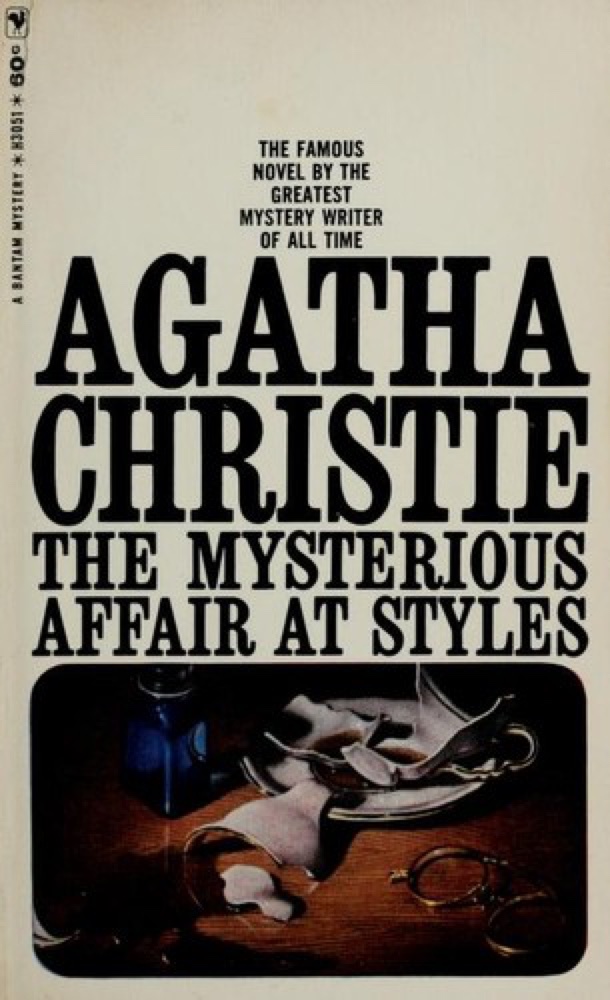
 The Mysterious Affair at Styles
Quotes from the Book
The young people think the old people are fools -- but the old people know the young people are fools.
I often wonder why the whole world is so prone to generalise. Generalisations are seldom if ever true and are usually utterly inaccurate.
At my time of life, one knows that the worst is usually true.
Intuition is like reading a word without having to spell it out. A child can't do that because it has had so little experience. A grown-up person knows the word because they've seen it often before.
There is no detective in England equal to a spinster lady of uncertain age with plenty of time on her hands.
It's so much nicer to be a secret and delightful sin to anybody than to be a feather in his cap.
I was thinking, that when my time comes, I should be sorry if the only plea I had to offer was that of justice. Because it might mean that only justice would be meted out to me.
What they need is a little immorality in their lives. Then they wouldn't be so busy looking for it in other people's.
Was bad language used?” asked Colonel Melchett. “It depends on what you call bad language.” “Could you understand it?” I asked. “Of course I could understand it.” “Then it couldn’t have been bad language,” I said. Mrs. Price Ridley looked at me suspiciously. “A refined lady,” I explained, “is naturally unacquainted with bad language.
One's own troubles sharpen one's eyes sometimes.
I daresay idle tittle-tattle is very wrong and unkind, but it is so often true, isn't it.
I use the word drifted advisedly. I have read novels in which young people are described as bursting with energy—joie de vivre, the magnificent vitality of youth … Personally, all the young people I come across have the air of animal wraiths.
They say all the world loves a lover—apply that saying to murder and you have an even more infallible truth.
Mary seemed to have taken a perverse pleasure in seeing how best she could alternate undercooking and overcooking.
Marriage, I have always held, is a serious affair, to be entered into only after long deliberation and forethought, and suitability of tastes adn inclinations is the most important consideration.
Inestimable harm may be done by foolish wagging of tongues in ill-natured gossip
We think with horror now of the days when we burnt witches. I believe the day will come when we will shudder to think that we ever hanged criminals.
Nothing, I believe, is so full of life under the microscope as a drop of water from a stagnant pool.
A very correct butler opened the door, with just the right amount of gloom in his bearing.
There seems to be a general idea that a clergyman is incapable of behaving like a gentleman. That is not true.
Some oysters which Griselda had ordered, and which would seem to be beyond the reach of incompetence, we were, unfortunately, not able to sample as we had nothing in the house to open them with—an omission which was discovered only when the moment for eating them arrived.
Nothing is more dangerous than the well-meant efforts of the younger generation to assist you and show their sympathy.
Miss Marple is a white-haired old lady with a gentle appealing manner- Miss Wetherby is a mixture of vinegar and gush. Of the two Miss Marple is the more dangerous.
I had just finished carving some boiled beef (remarkably tough by the way) and on resuming my seat I remarked, in a spirit most unbecoming to my cloth, that anyone who murdered Colonel Protheroe would be doing the world at large a service.
It's awfully easy to appear silly, Mr. Clement. It's one of the easiest things in the world.
What are you doing this afternoon, Griselda?” “My duty,” said Griselda. “My duty as the Vicaress. Tea and scandal at four thirty.
Miss Marple always sees everything. Gardening is as good as a smoke screen, and the habit of observing birds through powerful glasses can always be turned to account.
and proceeding to follow the example of the devil in quoting Scripture for his own ends I added: “She looketh to the ways of her household….
as long as Mary can’t cook and has those awful manners—well, we’re safe, nobody else would have her.” I perceived that my wife’s methods of housekeeping were not so entirely haphazard as I had imagined. A certain amount of reasoning underlay them. Whether it was worthwhile having a maid at the price of her not being able to cook, and having a habit of throwing dishes and remarks at one with the same disconcerting abruptness, was a debatable matter.
Did you know?
- It was the first full-length novel to feature Miss Marple, who had earlier appeared only in short stories.
- The book is set in the fictional English village of St Mary Mead.
- The story is narrated in the first person by the local vicar, Reverend Leonard Clement.
- It was first published in the UK by the Collins Crime Club on 20 October 1930.
- The novel was published in the US by Dodd, Mead and Company later in 1930.
About Agatha Christie
Agatha Christie (1890-1976) was a British writer best known for her detective novels, and the creator of the detectives Hercule Poirot and Miss Marple. She is among the best-selling fiction authors of all time.
More about the author →More by Agatha Christie
The Mysterious Affair at Styles
 Death on the Nile
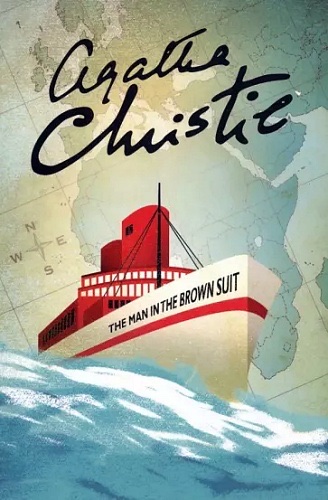 The Man in the Brown Suit
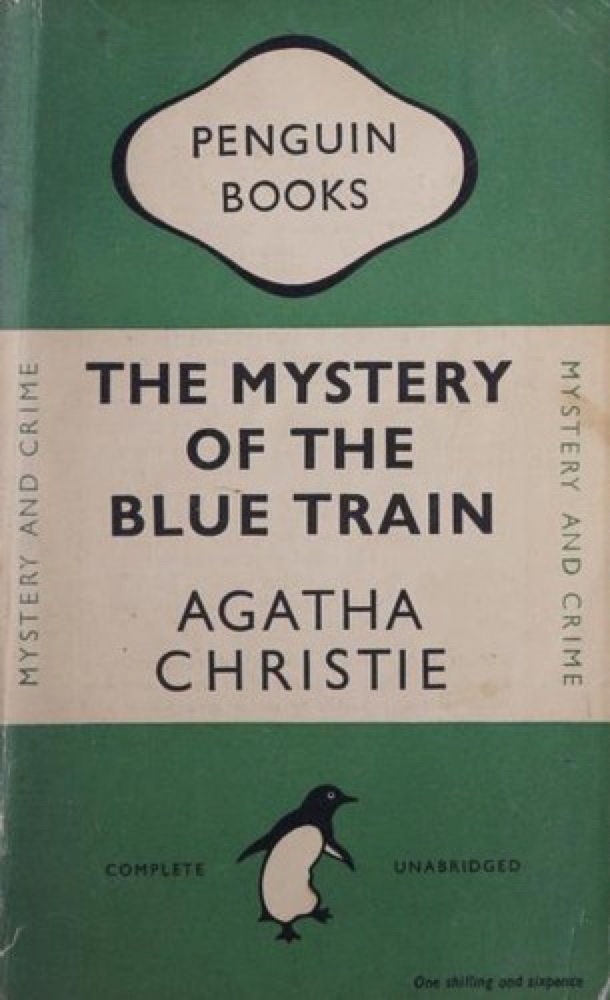 The Mystery of the Blue Train
About the book
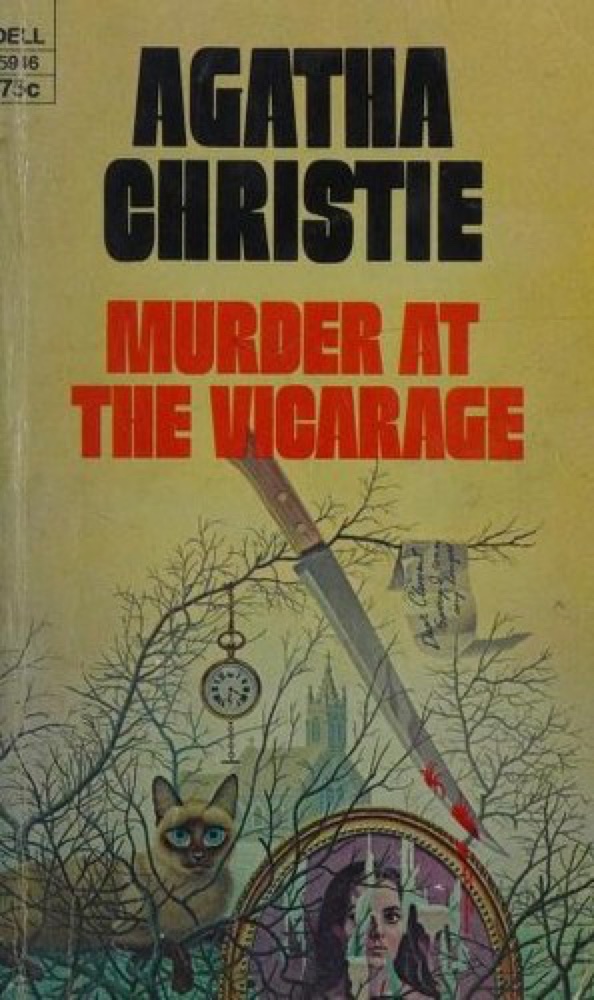
The Murder at the Vicarage is a mystery novel by Agatha Christie, first published in the UK by the Collins Crime Club on 20 October 1930. It is the first full-length novel to feature Miss Jane Marple, the elderly, sharp-eyed spinster of the village of St Mary Mead, who had previously appeared only in short stories. The story is narrated by the Reverend Leonard Clement, vicar of St Mary Mead, and opens with the shooting of Colonel Lucius Protheroe, a wealthy and widely disliked churchwarden, who is found dead at the vicarage.
When more than one person confesses to the crime and the local police are baffled, Miss Marple applies her quiet, methodical understanding of human nature to sift through the village's tangle of gossip, alibis, and hidden motives. Christie uses the closed world of the English village as her stage, and much of the book's texture comes from its narrator's dry domestic observations and the interplay of small-town personalities.
The novel established the template for the Miss Marple series and helped cement Christie's reputation as a master of the classic puzzle mystery, with its restrained village setting and its emphasis on psychology over spectacle. Miss Marple would go on to appear in many further novels and stories, and The Murder at the Vicarage has been adapted repeatedly for stage, television, and radio, remaining one of the enduring works of Golden Age detective fiction.
Key characters
- Miss Jane MarpleElderly spinster amateur detective of St Mary Mead
- Reverend Leonard ClementVicar of St Mary Mead and narrator of the story
- Colonel Lucius ProtheroeWealthy, abrasive churchwarden who is murdered
- Anne ProtheroeColonel Protheroe's much younger second wife
- Lawrence ReddingVisiting artist involved with Anne Protheroe
- Griselda ClementThe vicar's much younger wife
- Inspector SlackBrusque police detective investigating the case
Book details
- First published
- 1930
- Length
- 256 pages
- Reading time
- 5 hours
- Author
- Agatha Christie
- Genre
- Classics
- Goodreads rating
- 4.04 (220k ratings) →
Movie & TV adaptations
- IMDb
- IMDb
If you liked this, read…
- 1The Body in the LibraryAnother Miss Marple village mystery by Agatha Christie
- 2The Mysterious Affair at StylesChristie's classic country-house puzzle mystery introducing Poirot
- 3A Murder Is AnnouncedA later, highly regarded Miss Marple novel in the same village-mystery vein
Keep reading
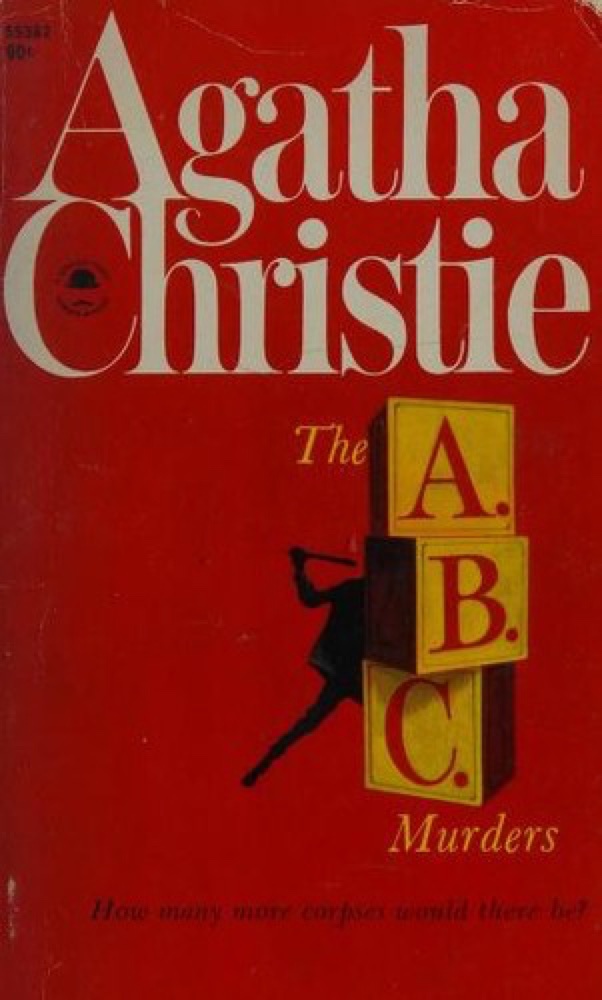 The A.B.C. Murders
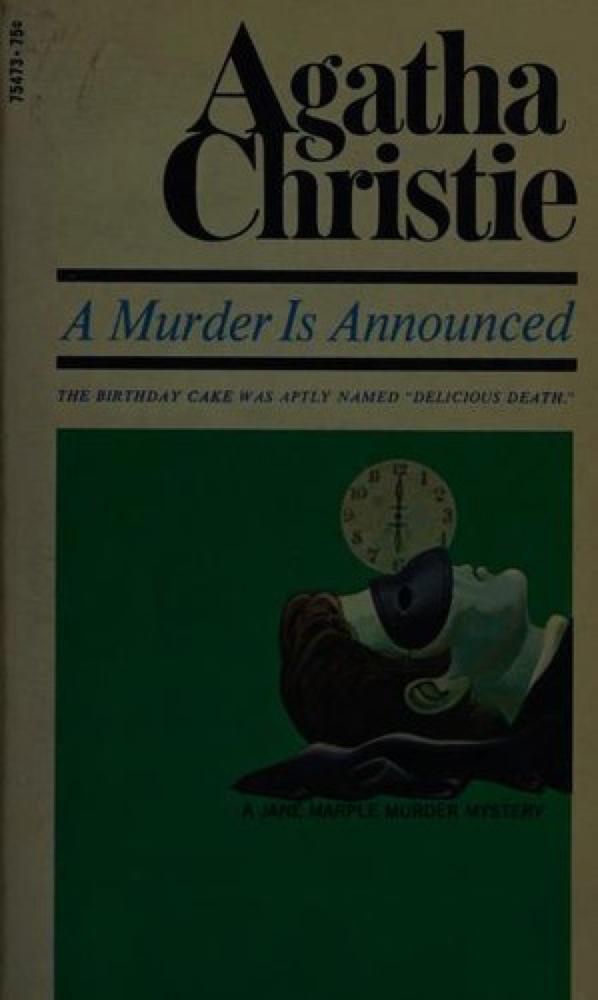 A Murder Is Announced
 What Time the Sexton's Spade Doth Rust
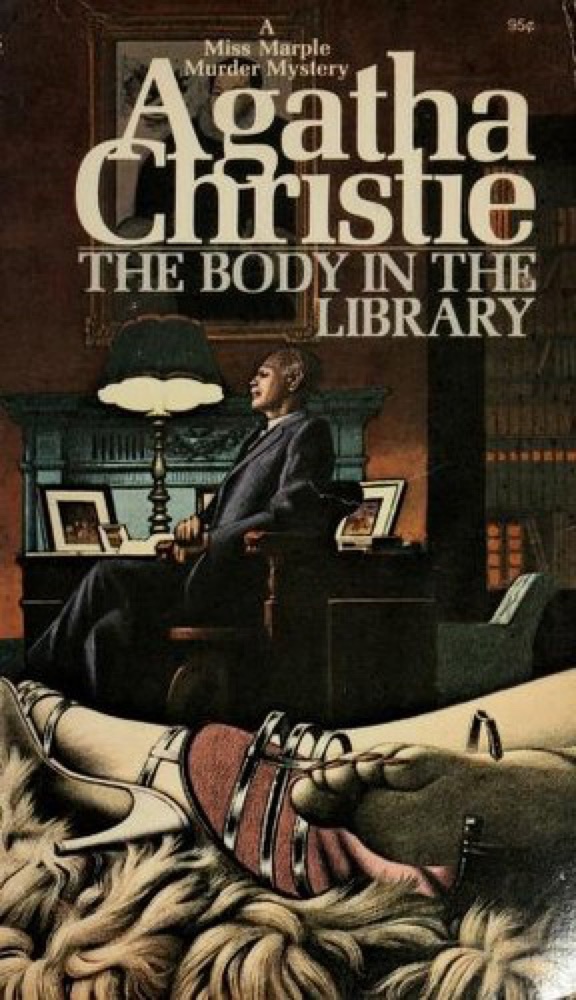 The Body in the Library
 Gaudy Night
 Whose Body?
 The Moonstone
 The Golden Tresses of the Dead
 Thrice the Brinded Cat Hath Mew'd
 Strong Poison
 The Eyre Affair
 The Jewel in the Crown
 A Beautiful Blue Death
 A Curious Beginning
 Excellent Women
 Bleak House
 Wives and Daughters
 Snuff
Snuff
 The Complete Saki
 Alias Grace
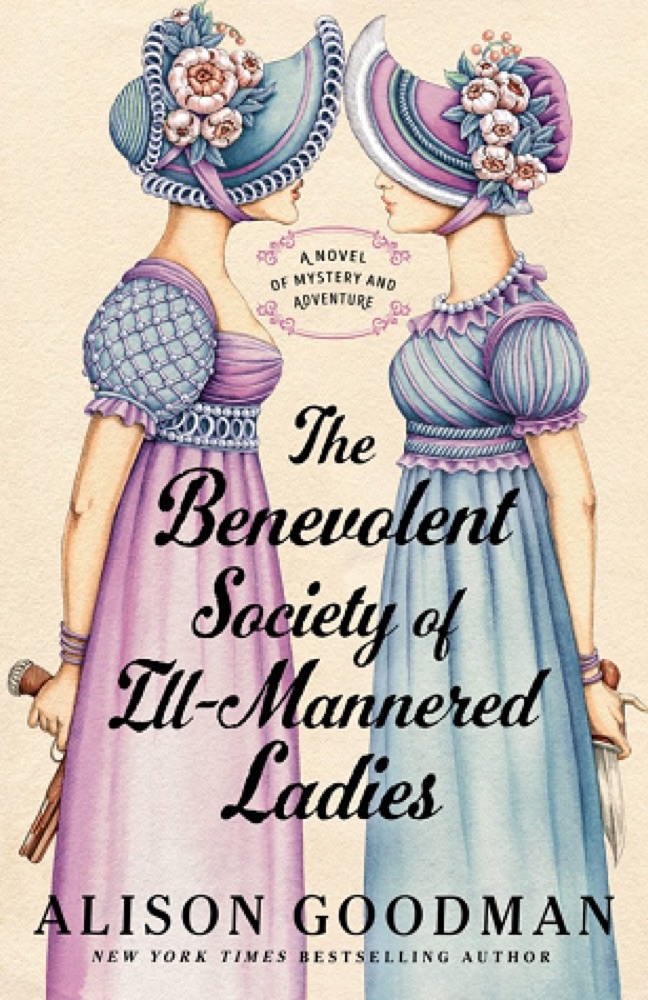 The Benevolent Society of Ill-Mannered Ladies
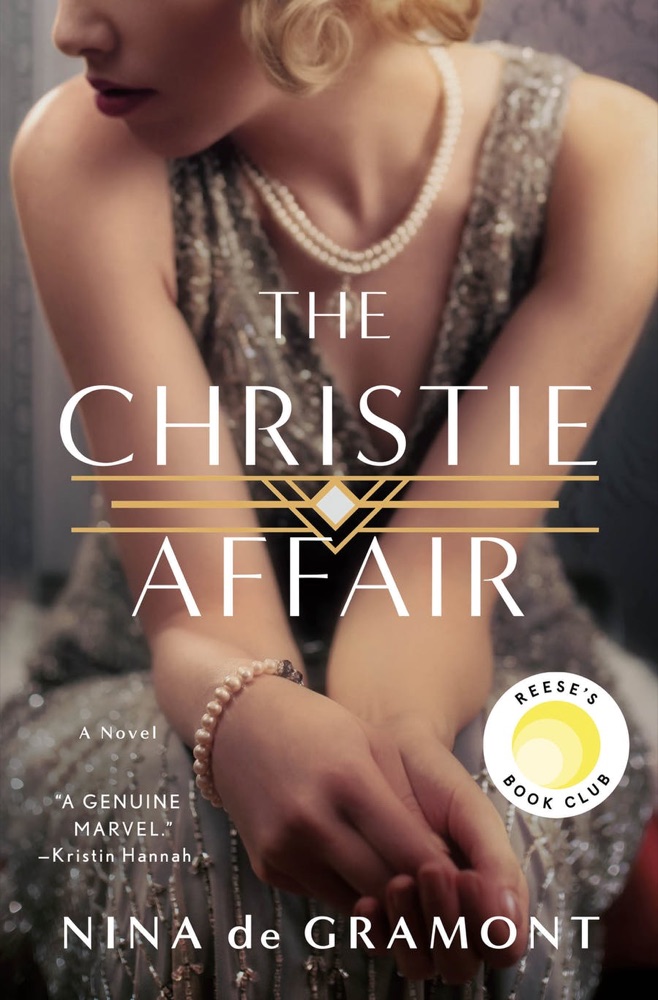 The Christie Affair
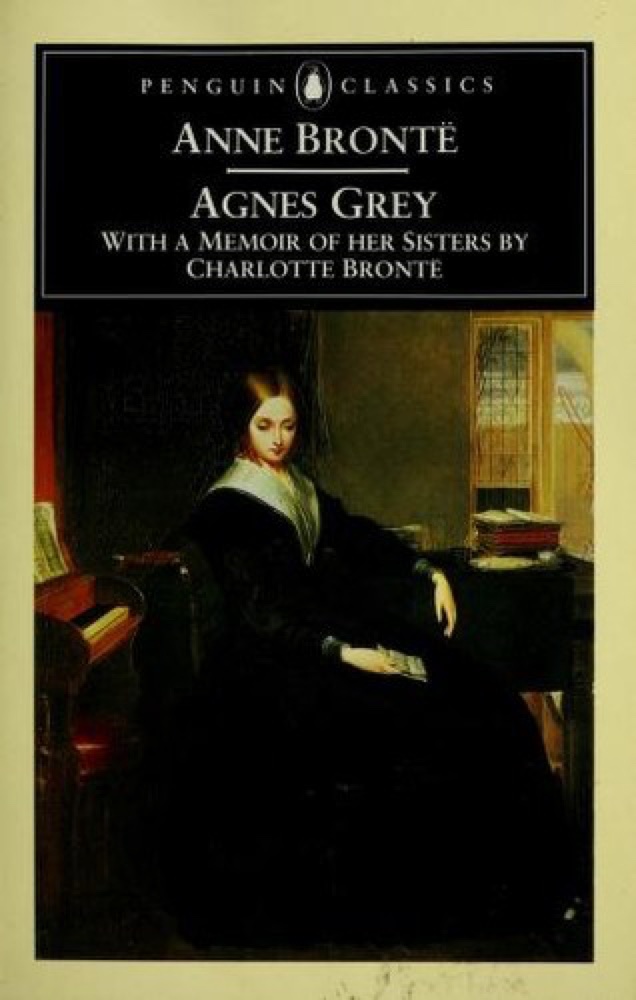 Agnes Grey
 Shades of Grey
 The Penultimate Peril
 Armadale
 The Way We Live Now
 Can You Forgive Her?
 Mansfield Park
 Vanity Fair
 A Perilous Undertaking
 Carpe Jugulum
 Barchester Towers
 A Dance to the Music of Time: 1st Movement
 The Truth: Stage Adaptation
 The Mystery of Three Quarters
 Uncle Silas
 The Other Typist
 The Alienist
 Mary Barton
 The Long Dark Tea-Time of the Soul
 The Rebel Angels
 Manners & Mutiny
 New Grub Street
 Middlemarch
 The House of the Seven Gables
 Victorian Psycho
 Cranford
 The Complete Works of Charles Dickens
 The Memoirs of Sherlock Holmes
 Truly, Devious
 Less Than Angels
 The Adventures of Sherlock Holmes
 Hard Times
![What Was She Thinking? [Notes on a Scandal]](/i/book/g/08/what-was-she-thinking-notes-on-a-scandal.jpg) What Was She Thinking? [Notes on a Scandal]
What Was She Thinking? [Notes on a Scandal]
 In Cold Blood
 Lord Arthur Savile's Crime and Other Stories
 An Unsuitable Job for a Woman
 Sheever's Journal, Diary of a Poison Master
 A Widow for One Year