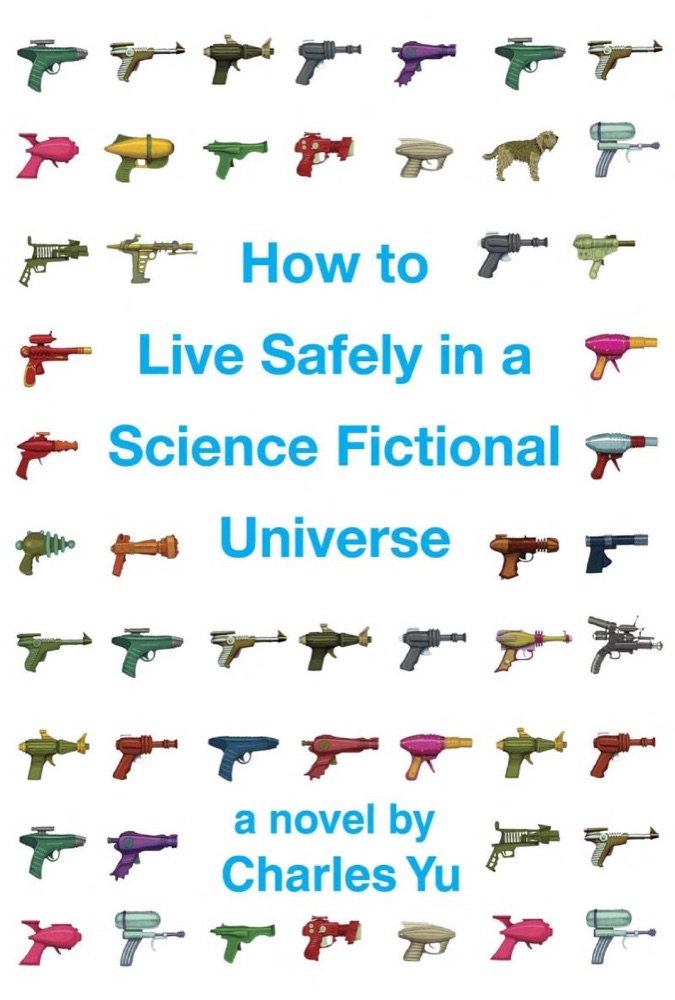
Quotes from the Book
...unfortunately, it's true: time does heal. It will do so whether you like it or not, and there's nothing anyone can do about it. If you're not careful, time will take away everything that ever hurt you, everything you have ever lost, and replace it with knowledge. Time is a machine: it will convert your pain into experience. Raw data will be compiled, will be translated into a more comprehensible language. The individual events of your life will be transmuted into another substance called memory and in the mechanism something will be lost and you will never be able to reverse it, you will never again have the original moment back in its uncategorized, preprocessed state. It will force you to move on and you will not have a choice in the matter.
147
If I could be half the person my dog is, I'd be twice the human I am.
87
Most people I know live their lives moving in a constant forward direction, the whole time looking backward.
70
I don't miss him anymore. Most of the time, anyway. I want to. I wish I could but unfortunately, it's true: time does heal. It will do so whether you like it or not, and there's nothing anyone can do about it. If you're not careful, time will take away everything that ever hurt you, everything you have lost, and replace it with knowledge. Time is a machine: it will convert your pain into experience... It will force you to move on and you will not have a choice in the matter.
64
Maybe we spend most of our decades being someone else, avoiding ourselves, maybe a man is only himself, his true self, for a few days in his entire life.
59
Sometimes when I'm brushing my teeth, I'll look at the mirror and I swear my reflection seems kind of disappointed. I realized a couple of years ago that not only am I not super-skilled at anything, I'm not even particularly good at being myself.
48
You want to tell a story? Grow a heart. Grow two. Now, with the second heart, smash the first one into bits. Gross, right? A bloody pulpy liquid mess. Look at it, try to make sense of it. Realize you can't. Because there is no sense. Ask your computer to print out a list of every lie you have ever told. Ask yourself how much of the universe you have ever really seen. Look in the mirror. Are you sure you're you? Are you sure you didn't slip out of yourself in the middle of the night, and someone else slipped into you, without you or you or any of you even noticing?
46
Failure is easy to measure. Failure is an event.Harder to measure is insignificance. A nonevent. Insignificance creeps, it dawns, it gives you hope, then delusion, then one day, when you’re not looking, it’s there, at your front door, on your desk, in the mirror, or not, not any of that, it’s the lack of all that. One day, when you are looking, it’s not looking, no one is. You lie in your bed and realize that if you don’t get out of bed and into the world today, it is very likely no one will even notice.
44
At some point in your life, this statement will be true: tomorrow you will lose everything forever.
43
Life is, to some extent, an extended dialogue with your future self about how exactly you are going to let yourself down over the coming years.
40
Everyone has a time machine. Everyone *is* a time machine. It's just that most people's time machines are broken. The strangest and hardest kind of time travel is the unaided kind. People get stuck, people get looped. People get trapped. But we are all time machines.
38
Time isn't an orderly stream. Time isn't a placid lake recording each of our ripples. Time is viscous. Time is a massive flow. It is a self-healing substance, which is to say, almost everything will be lost. We're too slight, to inconsequntial, despite all of our thrashing and swimming and waving our arms about. Time is an ocean of inertia, drowning out the small vibrations, absorbing the slosh and churn, the foam and wash, and we're up here, flapping and slapping and just generally spazzing out, and sure, there's a little splashing on the surface, but that doesn't even register in the depths, in the powerful undercurrents miles below us, taking us wherever they are taking us.
30
How many times have I failed before? How many times have I stood here like this, in front of my own image, in front of my own person, trying to convince him not to be scared, to go on, to get out of this rut? How many times before I finally convince myself, how many private, erasable deaths will I need to die, how may self-murders is it going to take, how many times will I have to destroy myself before I learn, before I understand?
27
This is what I say: I've got good news and bad news. The good news is, you don't have to worry, you can't change the past. The bad news is, you don't have to worry, no matter how hard you try, you can't change the past. The universe just doesn't put up with that. We aren't important enough. No one is. Even in our own lives. We're not strong enough, willful enough, skilled enough in chronodiegetic manipulation to be able to just accidentally change the entire course of anything, even ourselves.
25
You can only go to places that you will let yourself go.
23
What is this called, what I am doing, to myself, to my life, this wallowing, this pondering, this rolling over and over in the same places of my memory, wearing them thin, wearing them out? Why don't I ever learn? Why don't I ever do anything different?
20
This, then, is my choice: I can allow the events of my life to happen to me. Or I can take those very same actions and make them my own. I can live in my own present, risk failure, be assured of failure.
16
I am transcribing a book that I have, in a sense, not yet written, and in another sense, have always written, and in another sense, am currently writing, and in another sense, am always writing, and in another sense, will never write.
16
Enjoy the elastic present, which can accommodate as little or as much as you want to put in there. Stretch it out, live inside of it.
15
Look at that," he said. "How the ink bleeds." He loved the way it looked, to write on a thick pillow of the pad, the way the thicker width of paper underneath was softer and allowed for a more cushiony interface between pen and surface, which meant more time the two would be in contact for any given point, allowing the fiber of the paper to pull, through capillary action, more ink from the pen, more ink, which meant more evenness of ink, a thicker, more even line, a line with character, with solidity. The pad, all those ninety-nine sheets underneath him, the hundred, the even number, ten to the second power, the exponent, the clean block of planes, the space-time, really, represented by that pad, all of the possible drawings, graphs, curves, relationships, all of the answers, questions, mysteries, all of the problems solvable in that space, in those sheets, in those squares.
13
Sometimes at night I worry about TAMMY. I worry that she might get tired of it all. Tired of running at sixty-six terahertz, tired of all those processing cycles, every second of every hour of every day. I worry that one of these cycles she might just halt her own subroutine and commit software suicide. And then I would have to do an error report, and I don't know how I would even begin to explain that to Microsoft.
13
You can just sit in here, impervious and invisible. So invisible you might even forget yourself.
12
You haven’t experienced awkwardness until you’ve seen a three-million-dollar piece of software cry.
12
How do you convince someone to change, to stop being afraid of himself? How do you convince yourself not to be so scared all the time?
12
All of her heart, a meaningless phrase, but correct and precise, too. She used her heart to love him, not her head, and not her words and not her thoughts or ideas or feelings or any other vehicle or object or device people use to deliver love or love-like things.
11
For the past several years, I have gone to sleep every night in this same little pocket, the most uneventful piece of time I could find. Same exact thing every night, night after night. Total silence. Absolutely nothing. That's why I chose it. I know for a fact nothing bad can happen to me in here.
10
If a lifetime in the end is remembered for a handful of days, this is one of them.
9
nostalgia, underlying cosmological explanation for Weak but detectable interaction between two neighboring universes that are otherwise not causally connected. Manifests itself in humans as a feeling of missing a place one has never been, a place very much like one’s home universe, or as a longing for versions of one’s self that one will never, and can never know.
9
How many times before I finally convince myself, how many private, erasable deaths will I need to die, how many self-murders is it going to take, how many times will I have to destroy myself before I learn, before I understand?
9
Watch on YouTube
About Charles Yu

We have collected 80 quotes from 3 books by Charles Yu on BookQuoters.
More about the author →More by Charles Yu
 Interior Chinatown
About the book
A story of a son searching for his father . . . through quantum space–time. Minor Universe 31 is a vast story-space on the outskirts of fiction, where paradox fluctuates like the stock market, lonely sexbots beckon failed protagonists, and time travel is serious business. Every day, people get into time machines and try to do the one thing they should never do: change the past. That’s where Charles Yu, time travel technician—part counselor, part gadget repair man—steps in. He helps save people from themselves. Literally. When he’s not taking client calls or consoling his boss, Phil, who could really use an upgrade, Yu visits his mother (stuck in a one-hour cycle of time, she makes dinner over and over and over) and searches for his father, who invented time travel and then vanished. Accompanied by TAMMY, an operating system with low self-esteem, and Ed, a nonexistent but ontologically v
Book details
- First published
- 2010
- Author
- Charles Yu
- Genre
- Science Fiction
- Goodreads rating
- 3.45 (21k ratings)
Keep reading
 How to Stop Time
 All Our Wrong Todays
 The Shock of the Fall
 No One Writes Back
 The Gum Thief
 No Cure for Being Human: And Other Truths I Need to Hear
 The Dream of Perpetual Motion
 Goodbye Days
 A Long Way Down
 The Book of Dreams
 Special Topics in Calamity Physics
 Recursion
 1Q84
1Q84
 Everything, Everything
 A Tale for the Time Being
 Kafka on the Shore
 Holding Up the Universe
 The Book of Tomorrow
 Choke
Choke
 At the Edge of the Universe
 Awaken
 Someday
 The Gap of Time
 Cassandra in Reverse
 I Miss You When I Blink: Essays
 Mosquitoland
 Bang
Bang
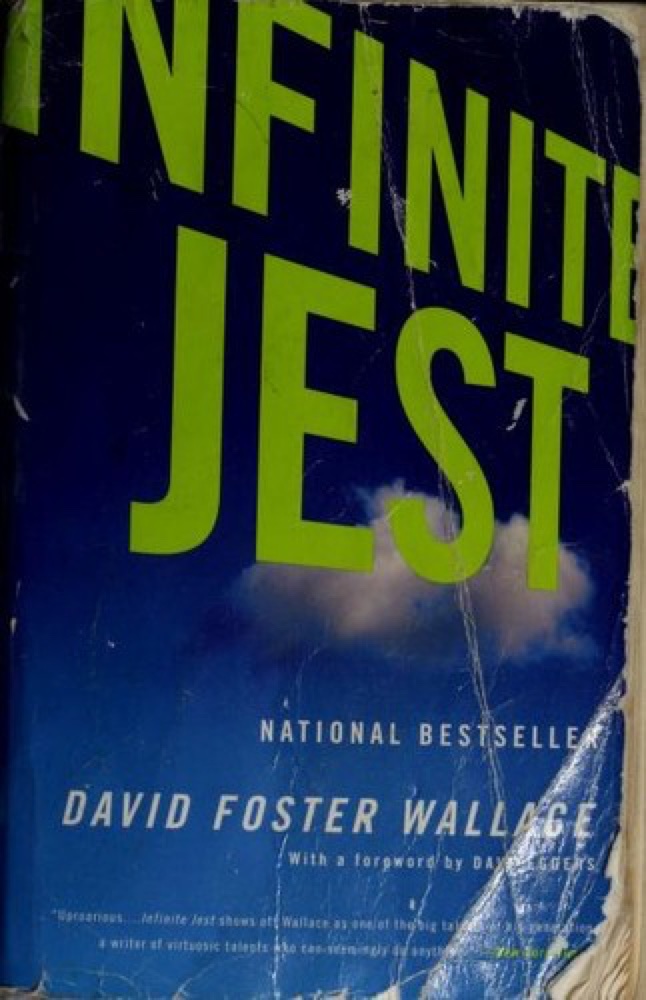 Infinite Jest
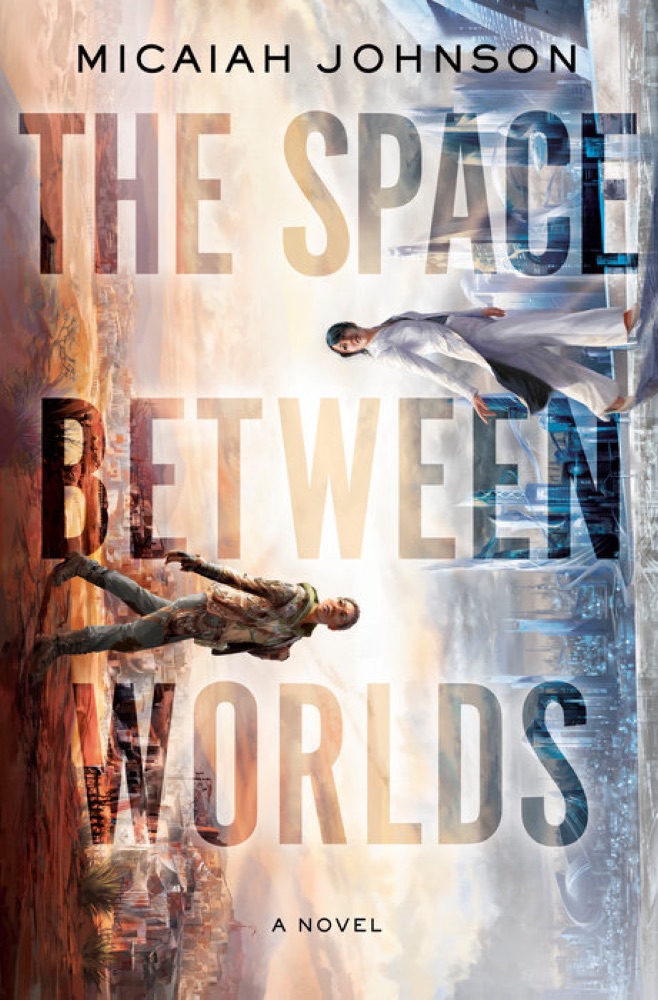 The Space Between Worlds
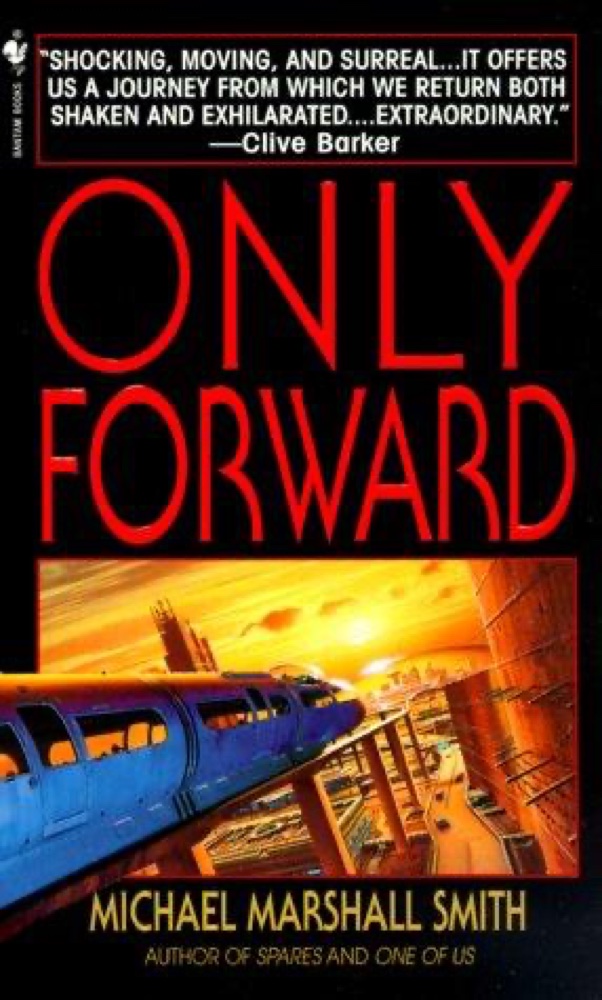 Only Forward
 Nineteen Minutes
 Tell Me What You Did
 The Man Who Folded Himself
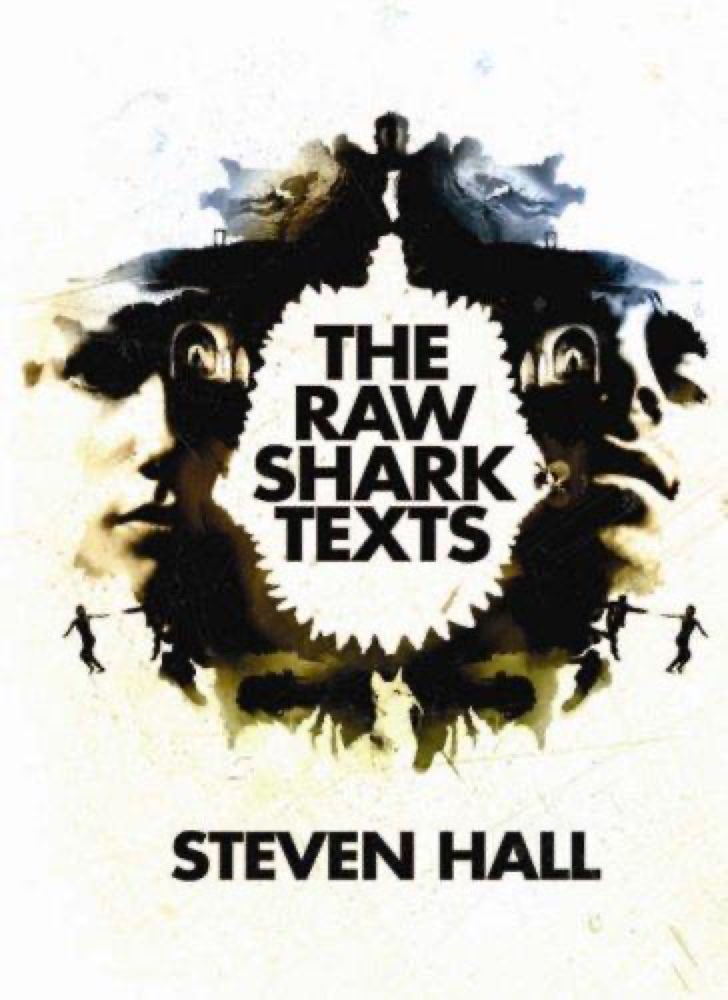 The Raw Shark Texts
 Ripe
Ripe
 Nutshell
 Under the Whispering Door
 Just One Day
 Beacon 23
 The Nobleman's Guide to Scandal and Shipwrecks
 Microserfs
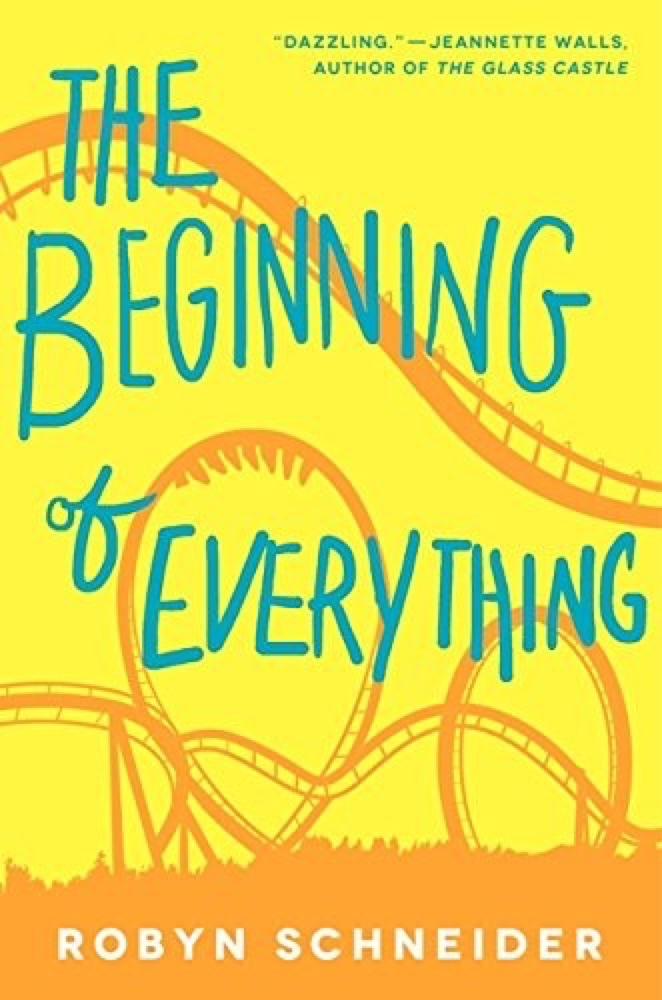 The Beginning of Everything
 If Cats Disappeared from the World
 How To Talk To A Widower
 Winter Journal
 The Saturday Night Ghost Club
 These Silent Woods
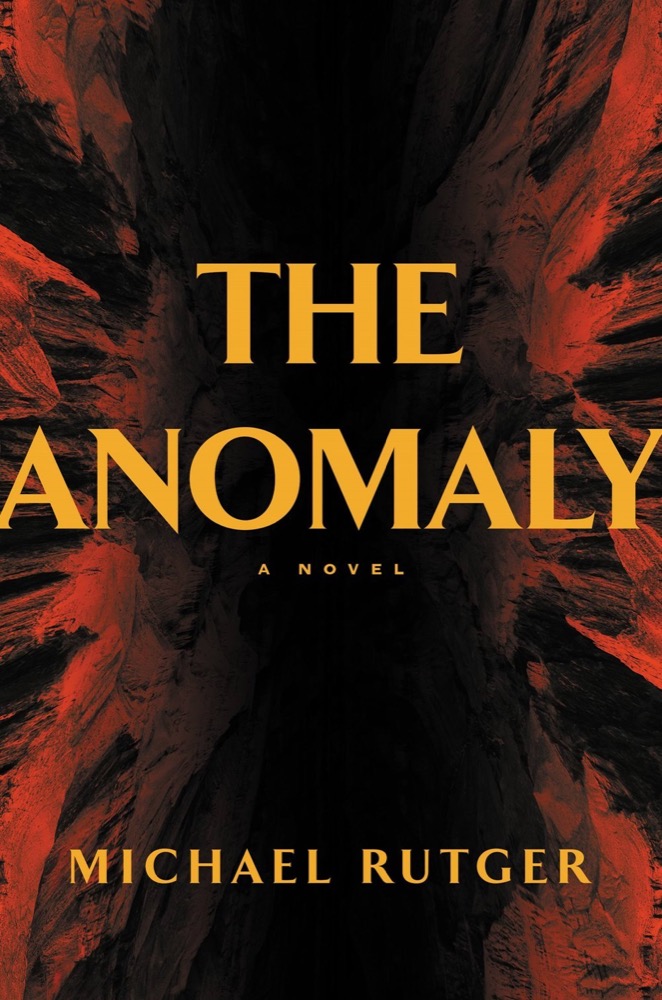 The Anomaly
 The Folded Clock: A Diary
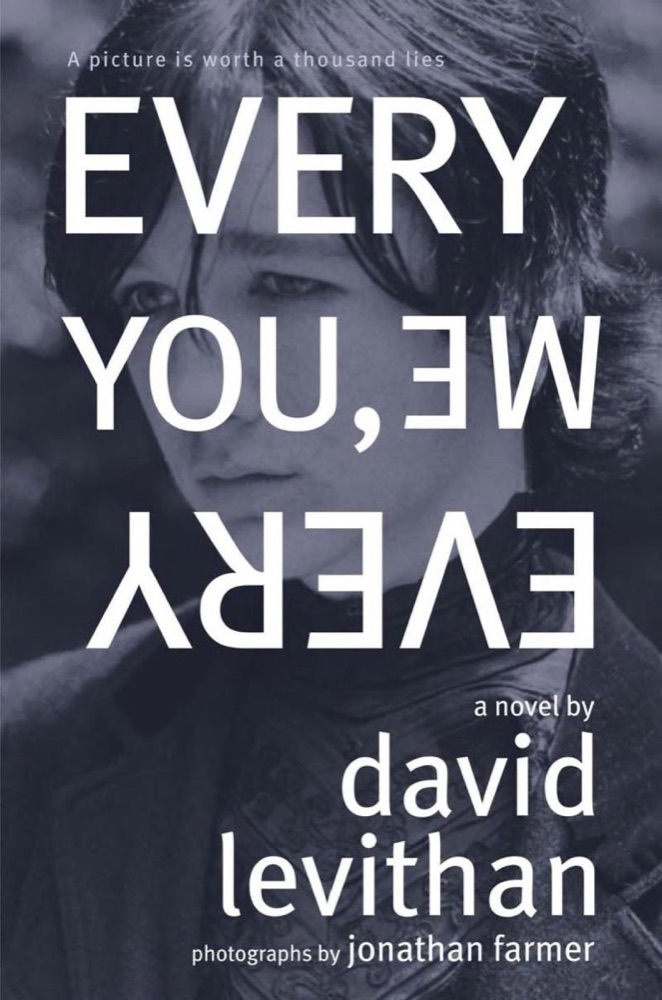 Every You, Every Me
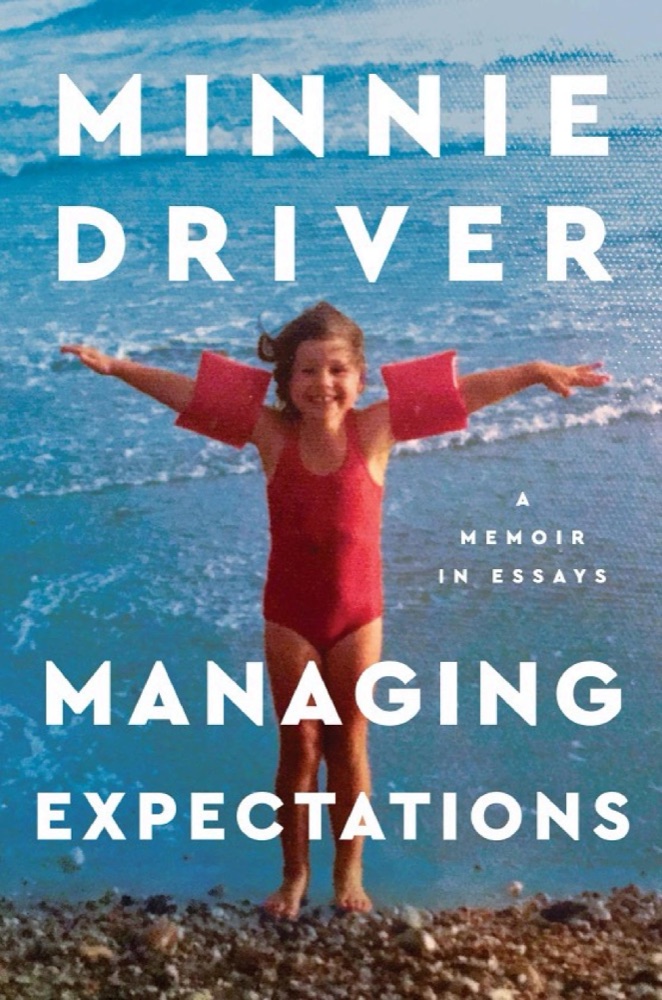 Managing Expectations: A Memoir in Essays – A Poignant Collection of Personal Stories on Acting, Failure, and Motherhood's Joy
 Mostly Void, Partially Stars
 Point Omega
 Hourglass: Time, Memory, Marriage
 In the Lives of Puppets
 Invisibility
 Suspect