
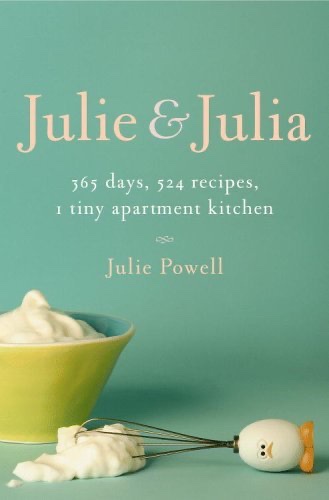
 Julie and Julia: 365 Days, 524 Recipes, 1 Tiny Apartment Kitchen: How One Girl Risked Her Marriage, Her Job, and Her Sanity to Master the Art of Living
Quotes from the Book
Like the muscles knew from the beginning that it would end with this, this inevitable falling apart... It's sad, but a relief as well to know that two things so closely bound together can separate with so little violence, leaving smooth surfaces instead of bloody shreds.
34
My brother wrote another refrigerator magnet poem, when he was probably nineteen or twenty: 'When the flood comes/ I will swim to a symphony/ go by boat to some picture show/ and maybe I will forget about you.' How did he know way, way back then? How is it I know only now?
4
I can’t imagine D ever having such a problem, ever having any sort of problem with sex at all. Though maybe the way he paraglided right off my planet, as soundlessly and utterly as the ivory-billed woodpecker that birders will spend the rest of their lonesome lives searching for, is a symptom of his own disease. I’d like to believe that.
1
Last night I had a dream that I was about halfway up a sheer cliff, endlessly high. Up ahead of me was, it seemed, everyone I’d ever known—the guys at the shop, my family, Gwen, Eric, D—and they were pulling ahead, climbing fast, leaving me behind. I tried to call out but found I had no voice, that my words slurred and died in my mouth, that I could not be heard. I awoke with a terrified lurch, unable to scream. I have this dream all the time.
1
But to think about Eric, now, after these years of pain, is to contemplate something incomprehensible to me. Separation. Of course I’ve thought about it. We both have. We’ve even done it. But because I’ve spoken the words, because I’ve lived without him for a period of time, doesn’t mean I understand it. Eric’s right, I don’t think about our marriage that much, not in the way I think about being in bed with D. But it’s for the same reason I don’t ponder my veins, or the floor of my room. I don’t ponder because I don’t even see the world without it. It’s too big, or buried too deep, with edges that thin out to nothingness, binding itself to everything else. It’s embedded in my dark, precious flesh.
1
Eventually I say my good-nights and return to my tent. I should stay up, it’s not late and I’m not even terribly tired. I just suddenly want to be alone. So I lie down in my tent, staring up through the near pitch-black at the vague dim rippling of the nylon. The women have begun to sing, separately—I can hear that they are farther away, perhaps as far as the school tree. They are overlapping with the men, perhaps competing with them, or just complementing them. It is ravishingly beautiful, fiercely joyful and yet somehow evocative of yearning, and it goes on and on for hours into the night. I think of my phone, put away, its silence almost a part of the music. Lying there, sleepless, listening, I feel maybe the most peaceful I’ve felt in years, in forever.
Kesuma translates, the women ponder my answer. Another woman asks, “But if you don’t have age groups, how do you know how to show and receive proper respect?” “Um… respect? I don’t know. I guess maybe respect doesn’t mean as much to us. Or it isn’t the same somehow. I respect someone for what he’s accomplished or who he is as a person, not because of how old he is.” The women look horrified. “But respect… respect is what makes us people. It’s what holds together families. Respect is the most important thing!” “For me, respect is nice, but I’d rather have, well—love, I guess.” For some minutes we try to bridge this terrible gulf between us; they are too polite to confess they think me a dangerously insolent heathen, and I am too polite to say I think they’re trapped in some benighted patriarchy. But then I have a sort of revelation—more of an instinct than a reasoned explanation. “You say respect holds people together. I say love. I think—I don’t know how to explain this. I think when I love someone, really love someone… not, um…” I turn to Kesuma. “Not, you know, sexual love, or a crush or something?” He translates, and the women giggle again. “But when I really love someone it’s because I respect him. Or, my respect for him comes out of my love. I think maybe they’re the same, really.” I don’t know if this actually means something or not. But it seems to satisfy the women. There are smiling nods all around.
So this happens, only very occasionally. Someone who’s read my book and has somehow managed to recognize me. Generally it’s pretty thrilling. But the problem is that that first book is about, among other things, the sweet certainty of my love for my sainted husband and the particular perfection of our union. It wasn’t a lie, what I wrote. But things are not so simple anymore. It may be that they never were, that I just ignored the complications. In any case, I have either way made a mess of a relationship that people I don’t even know look to as a paragon of the genre, and being spotted making out with some strange man in front of a Mario Batali restaurant strikes me as a dread occurrence. My mind races as the woman chats about my book, how she loved it and gave it to her best friend, and asks what am I doing now?
When Hans asks for more volunteers, half a dozen people step eagerly forward, but I am not one of them. I tell myself it’s because I should let the tuition-paying students, those who are here legitimately, get the experience, but the truth is that somewhere deep inside I don’t want to be a party to this slaughter, that I feel somehow less culpable as an observer than as a participant. Nonsense, of course.
I have been secretly feeling kind of sorry for myself ever since the spurting sausage. Pitying myself for my flailing marriage, for my lost lover, for getting older and maybe never having sex again. And then Juan tells me his story about crossing the border in the middle of the night, an experience so arduous and uncertain and frightening that rich tourists pay money, this is true, to get a Disneyfied version of the experience. And he tells it with a giggle. It’s just what he has to do whenever he wants to visit his mother. And I think, I really ought to get over myself.
It’s sad, but a relief as well, to know that two things so closely bound together can separate with so little violence, leaving smooth surfaces instead of bloody shreds.
Watch on YouTube
About Julie Powell
We have collected 41 quotes from 2 books by Julie Powell on BookQuoters.
More about the author →More by Julie Powell
Julie and Julia: 365 Days, 524 Recipes, 1 Tiny Apartment Kitchen: How One Girl Risked Her Marriage, Her Job, and Her Sanity to Master the Art of Living
About the book
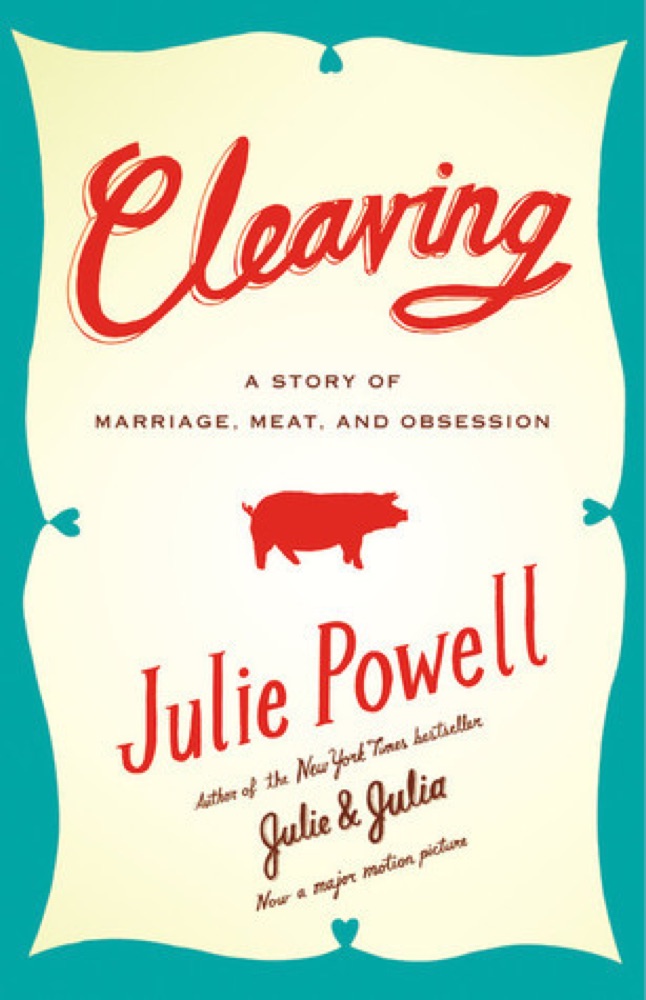
Julie Powell thought cooking her way through Julia Child's Mastering the Art of French Cooking was the craziest thing she'd ever do--until she embarked on the voyage recounted in her new memoir, CLEAVING.Her marriage challenged by an insane, irresistible love affair, Julie decides to leave town and immerse herself in a new obsession: butchery. She finds her way to Fleischer's, a butcher shop where she buries herself in the details of food. She learns how to break down a side of beef and French a rack of ribs--tough, physical work that only sometimes distracts her from thoughts of afternoon trysts.The camaraderie at Fleischer's leads Julie to search out fellow butchers around the world--from South America to Europe to Africa. At the end of her odyssey, she has learned a new art and perhaps even mastered her unruly heart.
Book details
- First published
- 2009
- Author
- Julie Powell
- Genre
- Biography
- Goodreads rating
- 2.48 (5k ratings)
Keep reading
 Inferno
 All of Us: The Collected Poems
 Dear Medusa
 Tell No One
 What Comes Next and How to Like It
 Fear of Flying
 What I Loved
 The Return
 The Night Diary
 The Crane Wife: A Memoir in Essays
 Good Morning, Destroyer of Men's Souls: A Memoir of Women, Addiction, and Love
 Edinburgh
 The Raw Shark Texts
 Imagine Me Gone
 More: A Memoir of Open Marriage
 Super Sad True Love Story
 The Bedwetter: Stories of Courage, Redemption, and Pee
 Ballad: A Gathering of Faerie
 Belong to Me
 Her Body and Other Parties
 Em and The Big Hoom
 In the Heart of the Heart of the Country and Other Stories
 Swimming in the Dark
 First Love and Other Novellas
 Mischling
 A Little Devil in America: Notes in Praise of Black Performance
 Lust & Wonder
 The Shepherd's Hut
 What Is the What
 The Dogs of Babel
 The Madness Vase
 Broken Music
 The Red Parts
 The Hurting Kind: Poems
 The Carrying
 The Pisces
 The Swan Thieves
 Wild Awake
 You Could Make This Place Beautiful
 When We Collided
 Motherthing
 Just Above My Head
 A Small Indiscretion
 Self-Help
 Raise High the Roof Beam, Carpenters & Seymour: An Introduction
 In the Woods
 Anthropology of an American Girl
 Mr. Fox
 Millennium Approaches
 Plainwater: Essays and Poetry
 Skeleton Crew
 Banyan Moon
 Heartburn
 Tropic of Cancer
 Gut Symmetries
 Liberation Day
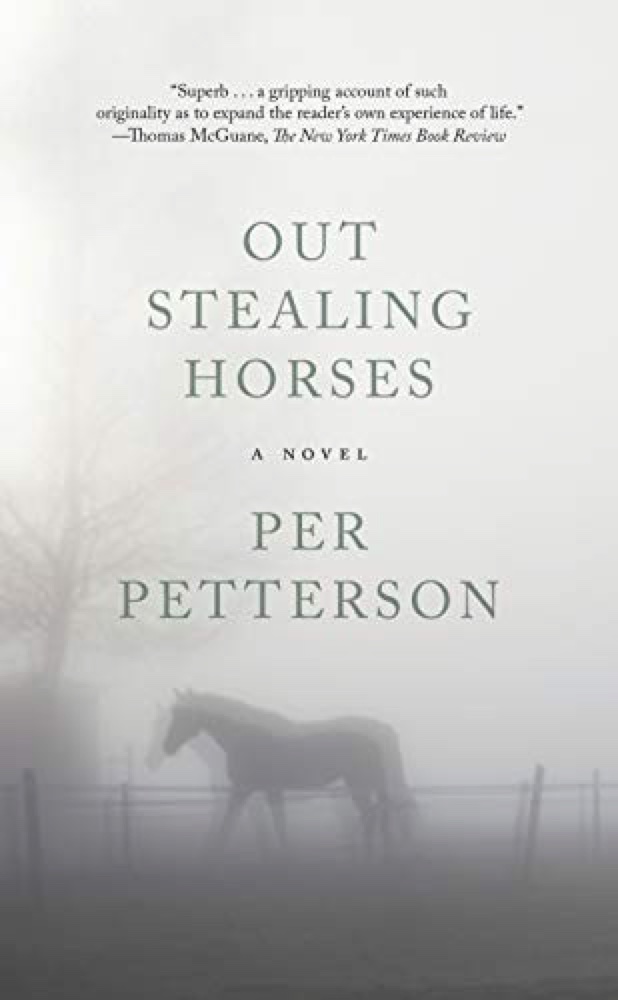 Out Stealing Horses
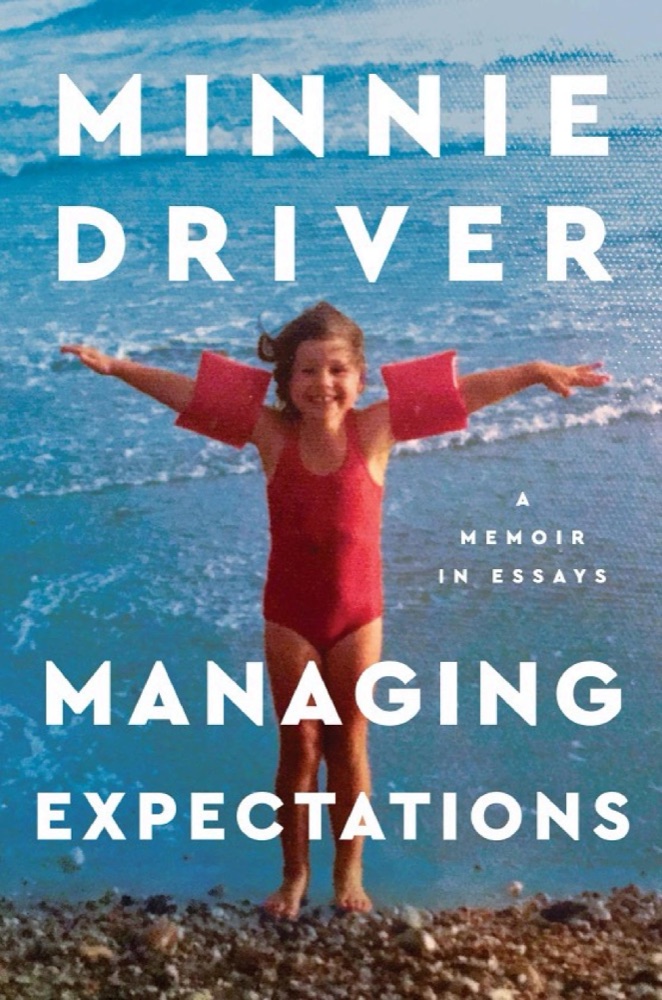 Managing Expectations: A Memoir in Essays – A Poignant Collection of Personal Stories on Acting, Failure, and Motherhood's Joy
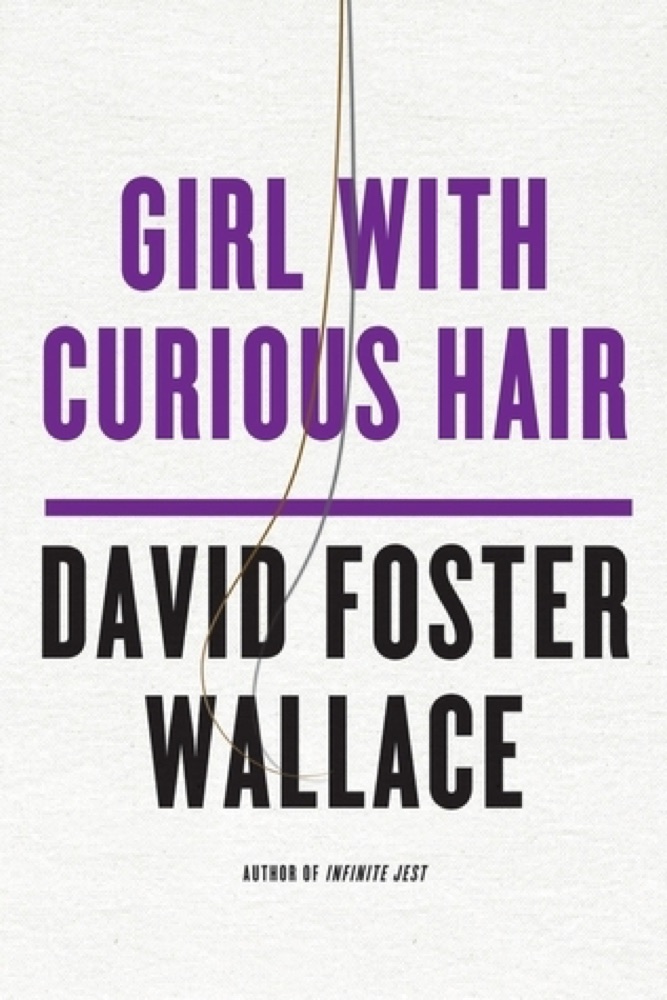 Girl with Curious Hair