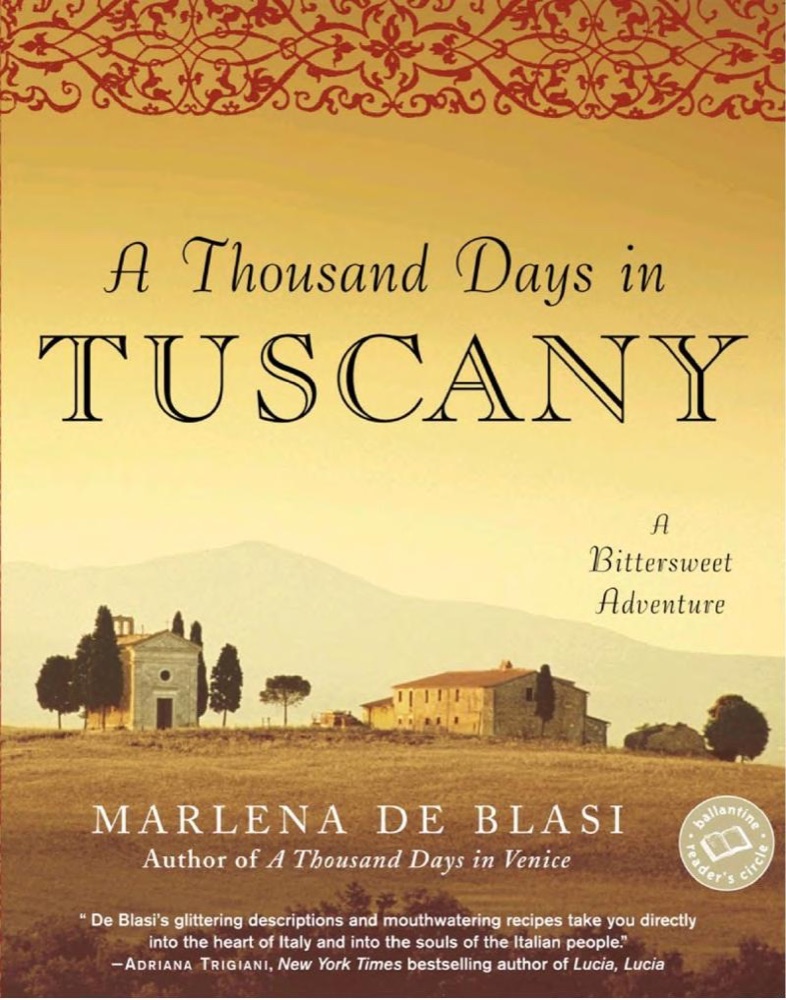

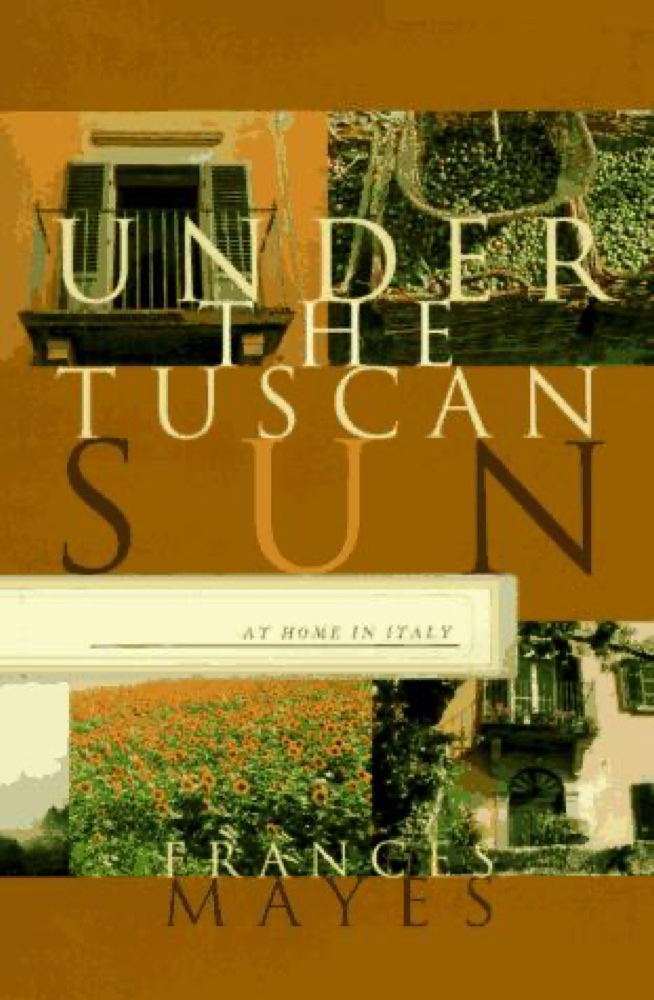
 Under the Tuscan Sun
Quotes from the Book
Maybe the only thing that matters is to make our lives last as long as we do. You know, to make a life last until it ends, to make all the parts come out even, like when you rub the last piece of bread in the last drop of oil on your plate and eat it with the last sip of wine in your glass.
15
They all know the truth, that there are only three subjects worth talking about. At least here in these parts," he says, "The weather, which, as they're farmers, affects everything else. Dying and birthing, of both people and animals. And what we eat - this last item comprising what we ate the day before and what we're planning to eat tomorrow. And all three of these major subjects encompass, in one way or another, philosophy, psychology, sociology, anthropology, the physical sciences, history, art, literature, and religion. We get around to sparring about all that counts in life but we usually do it while we're talking about food, it being a subject inseparable from every other subject. It's the table and the bed that count in life. And everything else we do, we do so we can get back to the table, back to the bed.
11
I run down to meet Floriana who is breathless from her hike. She stops in the road, the last light at her back. Prickles of rain cling to her unkerchiefed, loosened hair, capturing in her the flickering russet frame of it. Topaz almonds are her eyes, lit tonight from some new, old place, from some exquisitely secret oubliette, which she must often forget she possesses. We talk for a minute and Barlozzo passes us by like a boy too shy to speak to two girls at once.
5
All of Venice is tattered, resewn, achingly lovely, and like an enchantress, she disarms me, making off with the very breath of me.
1
You rob time, Fernando. How arrogant you are, taking an evening like this one as though it were some sour cherry, spitting half its flesh into the dirt. Every time you pitch yourself back into the past, you lose time. Have you so much of it to spare, my love?
1
know the truth, that there are only three subjects worth talking about. At least here in these parts,” he says. “The weather, which, as they’re farmers, affects everything else. Dying and birthing, of both people and animals. And what we eat—this last item comprising what we ate the day before and what we’re planning to eat tomorrow. And all three of these major subjects encompass, in one way or another, philosophy, psychology, sociology, anthropology, the physical sciences, history, art, literature, and religion. We get around to sparring about all that counts in a life but we usually do it while we’re talking about food, it being a subject inseparable from every other subject. It’s the table and the bed that count in life. And everything else we do, we do so we can get back to the table, back to the bed.
1
Live gracefully in plenty and live gracefully in need. Embrace them both or swindle yourself out of half a life.
Barlozzo’s word for nonchalance is sprezzatura. A hard word, a hard concept. The translation is “the state of effortlessness.” It means the mastering of something—an art, a life—without really working at it, with the result being nonchalance.
Cominciamo dal fondo. Let’s begin at the beginning. St. Augustine said it most clearly, We are, every one of us, going to die. Rotting is the way of all things. A tree, a cheese, a heart, a whole human chassis. Now, knowing that, understanding that, living begins to seem less important than living the way you’d like to live. Do you agree with that?
sotto le cenere, beans in a flask braised under ash. Now he’s pouring the cooled, herb-scented beans from all the flasks into a huge white bowl, drizzling on more oil and tossing them. When everyone is seated he and his wife will carry the bowl together, passing the creamy-fleshed beans table to table, person to person, just like his grandparents used to do.
Federico hurries me on to the next glory. Under the ashes of last evening’s fire in a hearth wide and deep as a small room, he’d set fat white beans to braise in bulbous-bottomed wine bottles, most of them remnants from his grandfather’s winemaking days, he says. He’d mixed the beans with water, sage, garlic and rosemary, sea salt, just-cracked pepper and a dose of extra virgin oil. He’d stopped the bottles with pieces of wet flannel so the steam would hiss away without exploding the glass and left the beans to cook all night long. Fagioli al fiasco
his “ma guarda che roba, but will you look at this,” when he sees the flowers and then his tinkering search for the espresso pot while I’m pulling on shorts and sandals, shouting down, “Why don’t we just run up the hill for cappuccini?
Watch on YouTube
About Marlena de Blasi
We have collected 12 quotes from 1 book by Marlena de Blasi on BookQuoters.
More about the author →About the book
They had met and married on perilously short acquaintance, she an American chef and food writer, he a Venetian banker. Now they were taking another audacious leap, unstitching their ties with exquisite Venice to live in a roughly renovated stable in Tuscany.
Once again, it was love at first sight. Love for the timeless countryside and the ancient village of San Casciano dei Bagni, for the local vintage and the magnificent cooking, for the Tuscan sky and the friendly church bells. Love especially for old Barlozzo, the village mago, who escorts the newcomers to Tuscany’s seasonal festivals; gives them roasted country bread drizzled with just-pressed olive oil; invites them to gather chestnuts, harvest grapes, hunt truffles; and teaches them to caress the simple pleasures of each precious day. It’s Barlozzo who guides them across the minefields of village history and into the warm and fi
Book details
- First published
- 2004
- Author
- Marlena de Blasi
- Genre
- Nonfiction
- Goodreads rating
- 3.85 (7k ratings)
Keep reading
Under the Tuscan Sun
 Dandelion Wine
 Return to Valetto
 The Book of Unholy Mischief
 Where Angels Fear to Tread
 The Art of Eating
 The Floating Opera
 My Father's House
 Cinnamon and Gunpowder
 The Art of Inheriting Secrets
 The Telling Room: A Tale of Love, Betrayal, Revenge, and the World's Greatest Piece of Cheese
 Plainwater: Essays and Poetry
 Land of Milk and Honey
 A Year in the World: Journeys of a Passionate Traveller
 Diary of a Tuscan Bookshop: A Memoir
 A Soldier of the Great War
 The Supper of the Lamb: A Culinary Reflection
 The Sharper Your Knife, the Less You Cry: Love, Laughter, and Tears at the World's Most Famous Cooking School
 The Food of Love
 Arcadia
 Money
Money
 Corelli's Mandolin
 A Room with a View
 Tortilla Flat
 Running in the Family
 Gourmet Rhapsody
 Baumgartner
 Notes of a Dirty Old Man
 The Art of Breathing
 Identity
 Sexus
Sexus
 Sweetbitter
 Take the Cannoli
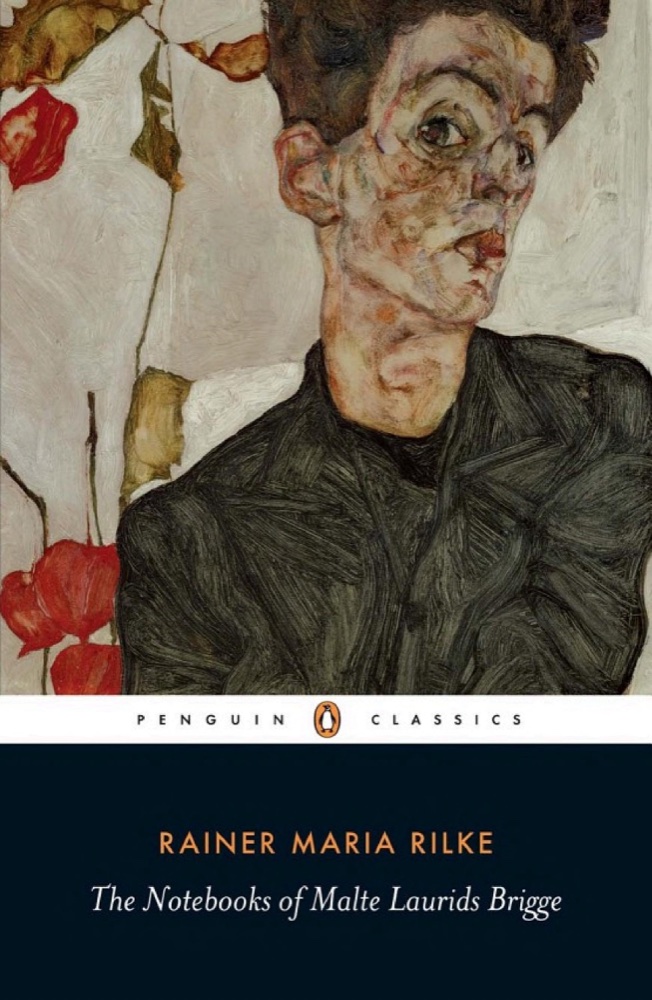 The Notebooks of Malte Laurids Brigge
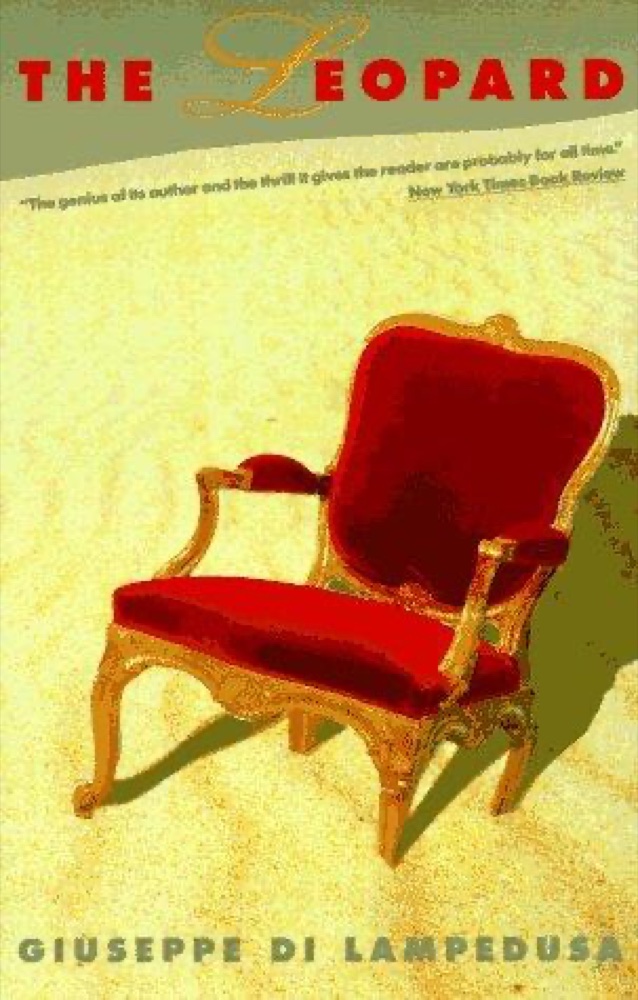 The Leopard
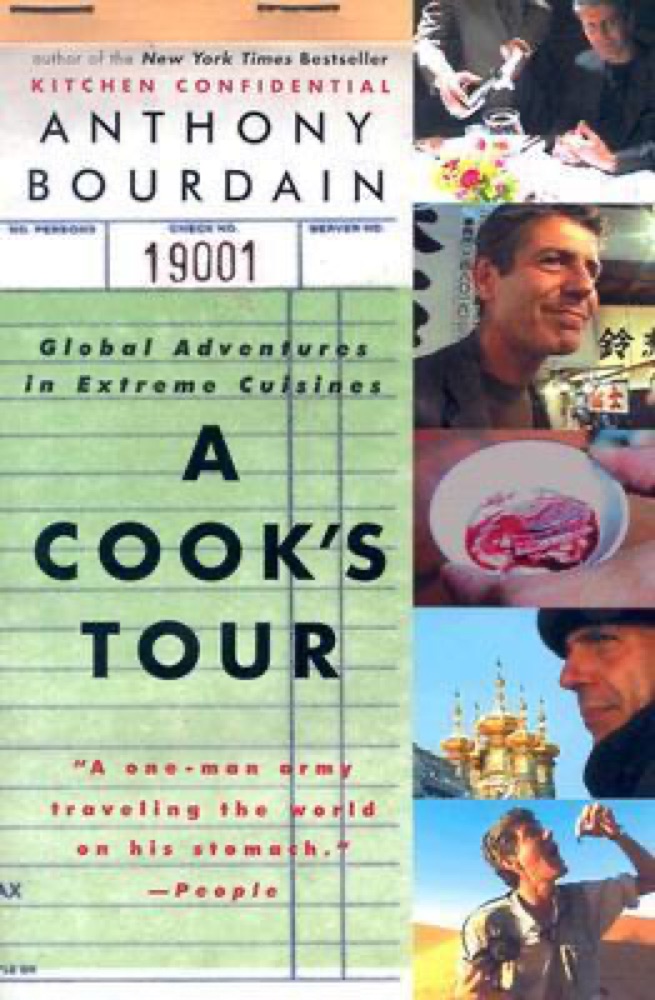 A Cook's Tour: Global Adventures in Extreme Cuisines
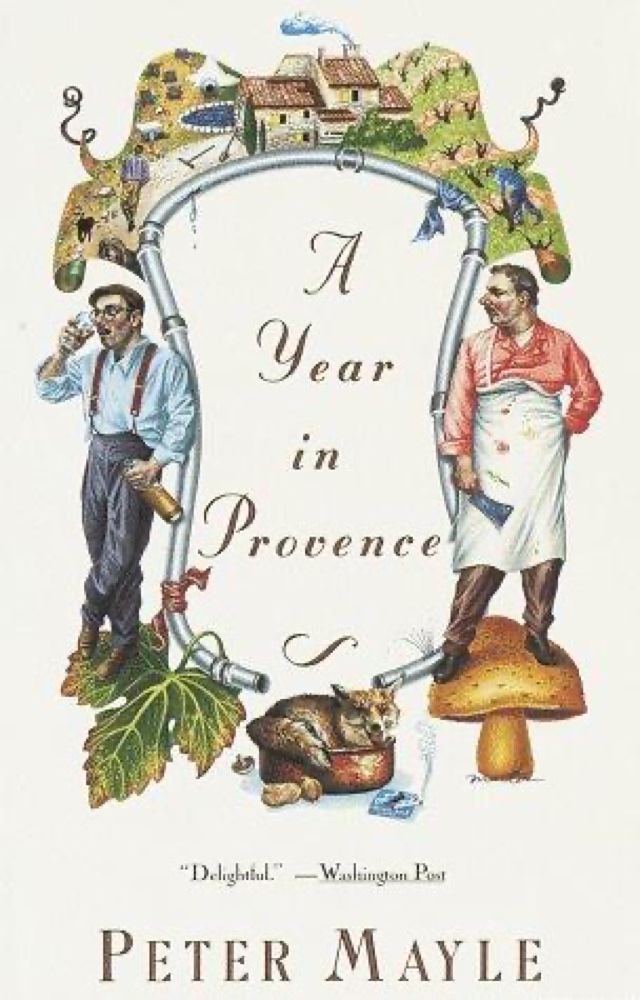 A Year in Provence
 Tell Them of Battles, Kings, and Elephants
 The Paris Novel
 Moravagine
 Light Years
 Brideshead Revisited: The Sacred and Profane Memories of Captain Charles Ryder
 Moth Smoke
 Spring Snow
 All of Us: The Collected Poems
 The Diving Bell and the Butterfly
 The Complete Works of Charles Dickens
 Vianne
 The Enchantress of Florence
 From Scratch: A Memoir of Love, Sicily, and Finding Home
 Underworld
 Blood, Bones, and Butter: The Inadvertent Education of a Reluctant Chef
 Traveler of the Century
 How I Paid for College: A Novel of Sex, Theft, Friendship & Musical Theater
 Kitchen
 Tristessa
 The Angel Esmeralda
 The Baron in the Trees