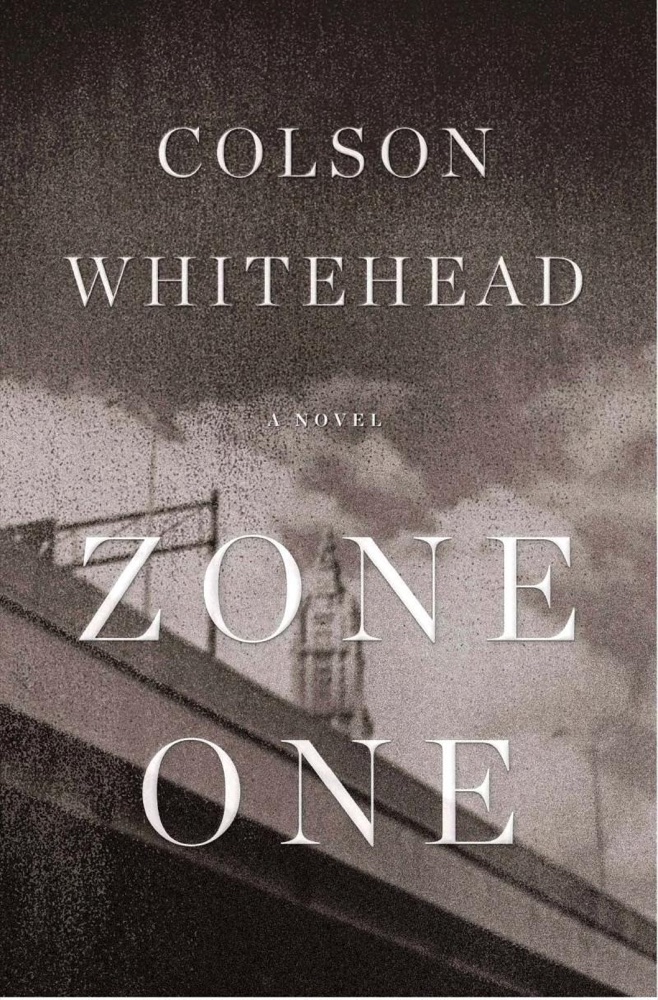

 Apex Hides the Hurt
Quotes from the Book
We never see other people anyway, only the monsters we make of them.
165
A society manufactures the heroes it requires.
28
Best to let the broken glass be broken glass, let it splinter into smaller pieces and dust and scatter. Let the cracks between things widen until they are no longer cracks but the new places for things. That was where they were now. The world wasn't ending: it had ended and now they were in the new place. They could not recognize it because they had never seen it before.
23
New York City in life was much like New York City in death. It was still hard to get a cab, for example.
22
Pain could be killed. Sadness could not, but the drugs did shut its mouth for a time.
20
There were plenty of things in the world that deserved to stay dead, yet they walked.
18
He told himself: Hope is a gateway drug, don't do it.
16
Everyone was fucked up in their own way; as before, it was a mark of one’s individuality.
14
Mark Spitz didn't ask about Harry. You never asked about the characters that disappeared from a Last Night story. You knew the answer. The plague had a knack for narrative closure.
11
It had been a humdrum couple of days, reaffirming his belief in reincarnation: everything was so boring that this could not be the first time he'd experienced it.
10
And what else but a being cursed with the burden of free will would wear a poncho.
6
Mark Spitz had met plenty of the divine-retribution folks over the months. This was their moment; they were umbrella salesmen standing outside a subway entrance in a downpour. The human race deserved the plague, we brought it on ourselves for poisoning the planet, for the Death of God, the calculated brutalities of the global economic system, for driving primordial species to extinction: the entire collapse of values as evidenced by everything from nuclear fission to reality television to alternate side of the street parking. Mark Spitz could only endure these harangues for a minute or two before he split. It was boring.The plague was the plague. You were wearing galoshes, or you weren't.
6
Emptiness was an index. It recorded the incomprehensible chronicle of the metropolis, the demographic realities, how money worked, the cobbled-together lifestyles and roosting habits. The population remained at a miraculous density, it seemed to him, for the empty rooms brimmed with evidence, in the stragglers they did or did not contain, in the busted barricades, in the expired relatives on the futon beds, arms crossed over their chests in ad hoc rites. The rooms stored anthropological clues re: kinship rituals and taboos. How they treated their dead. The rich tended to escape. Entire white-glove buildings were devoid, as Omega discovered after they worried the seams of and then shattered the glass doors to the lobby (no choice, despite the No-No Cards). The rich fled during the convulsions of the great evacuation, dragging their distilled possessions in wheeled luggage of European manufacture, leaving their thousand-dollar floor lamps to attract dust to their silver surfaces and recount luxury to later visitors, bowing like weeping willows over imported pile rugs. A larger percentage of the poor tended to stay, shoving layaway bureaus and media consoles up against the doors. There were those who decided to stay, willfully uncomprehending or stupid or incapacitated by the scope of the disaster, and those who could not leave for a hundred other reasons - because they were waiting for their girlfriend or mother or soul mate to make it home first, because their mobility was compromised or a relative was debilitated, crutched, too young. Because it was too impossible, the enormity of the thought: This is the end. He knew them all from their absences.
6
They jostled one another, competed for space below as they did above, in a minuet of ruin and triumph. In the subway, down in the dark, no citizen was more significant or more decrepit than another. All were smeared into a common average of existence, the A's and the C's tumbling or rising to settle into a ruthless mediocrity. No escape.
5
But it's like riding a bike. A hell-bike, made out of hell.
5
Their lives had been an interminable loop of repeated gestures; now their existences were winnowed to this discrete and eternal moment.
5
Nowdays, Rosie the Rivetere was a former soccer mom who had just opened her own catering business when Last Night came down and her husband and kids were eaten by a parking attendant at the local megamall’s discount- appliance emporium.
4
It was the sound of the god of death from one of the forgotten religions, the one that got it right, upstaging the pretenders with their billions of duped faithful. Every god ever manufactured by the light of cave fires to explain the thunder or calling forth the fashionable supplications in far-flung temples was the wrong one. He had come around after all this time, preening as he toured the necropolis, his kingdom risen at last.
3
He stopped hooking up with other people once he realized the first thing he did was calculate whether or not he could outrun them.
3
It was a gorgeous and intricate delusion, Manhattan, and from crooked angles on overcast days you saw it disintegrate, were forced to consider this tenuous creature in its true nature.
3
He had nerve damage: input could not penetrate. The world stalled out at his edges. Sometimes he had trouble speaking to other people, rummaging for language, and it seemed to him that an invisible layer divided him from the rest of the world, a membrane of emotional surface tension.
3
He was a mote cycling in the wheels of a giant clock. Millions of people tended to this magnificent contraption, they lived and sweated and toiled in it, serving the mechanism of metropolis and making it bigger, better, story by glorious story and idea by unlikely idea. How small he was, tumbling between the teeth.
3
This isn't going to un-fuck itself.
3
In his mind, the business of existence was about minimizing consequences. The plague had raised the stakes, but he had been in training for this his whole life.
3
He missed the women he’d never get to sleep with. On the other side of the room, tantalizing at the next table, that miracle passing by the taqueria window giving serious wake. They wore too much make up or projected complex emotions onto small animals, smiled exactly so, took his side when no one else would, listened when no one else cared to. They were old money or fretted over ludicrously improbable economic disasters, teetotaled or drank like sailors, pecked like baby birds at his lips or ate him up greedily. They carried slim vocabularies or stooped to conquer in the wordsmith board games he never got the hang of. They were all gone, these faceless unknowables his life’s curator had been saving for just the right moment, to impart a lesson he’d probably never learn. He missed pussies that were raring to go when he slipped a hand beneath the elastic rim of the night-out underwear and he missed tentative but coaxable recesses, stubbled armpits and whorled ankle coins, birthmarks on the ass shaped like Ohio, said resemblance he had to be informed of because he didn’t know what Ohio look like. The size. They were sweet-eyed or sad-eyed or so successful in commanding their inner turbulence so that he could not see the shadows. Flaking toenail polish and the passing remark about the scent of a nouveau cream that initiated a monologue about its provenance, special ingredients, magic powers, and dominance over all the other creams. The alien dent impressed by a freshly removed bra strap, a garment fancy or not fancy but unleashing big or small breasts either way. He liked big breasts and he liked small breasts; small breasts were just another way of doing breasts. Brains a plus but negotiable. Especially at 3:00am, downtown. A fine fur tracing an earlobe, moles at exactly the right spot, imperfections in their divine coordination. He missed the dead he’d never lose himself in, be surprised by, disappointed in.
2
The red tears of tracers shrieked through the thoroughfares and stray bullets cratered the faces of banks, churches, condos, and franchises, every place of worship a city has to offer.
2
Manhattan was empty except for soldiers and legions of the damned, and already gentrification had resumed.
2
each opportunity for escape was undermined by his certainty that things were about to go back to normal, that this savage new reality could not hold.
2
He was a mediocre man. He had led a mediocre life exceptional only in the magnitude of its unexceptionality. Now the world was mediocre, rendering him perfect.
2
On barstools they ogled the bachelorettes in the club and discussed their chances, recalling near-conquests from previous visits. In the buffet lines they foraged from the heat lamps and steam trays, and impaled and then swirled wasabi around tiny ceramic saucers, tinting soy sauce.
2
Watch on YouTube
About Colson Whitehead
We have collected 243 quotes from 9 books by Colson Whitehead on BookQuoters.
More about the author →More by Colson Whitehead
All books by Colson Whitehead →
About the book
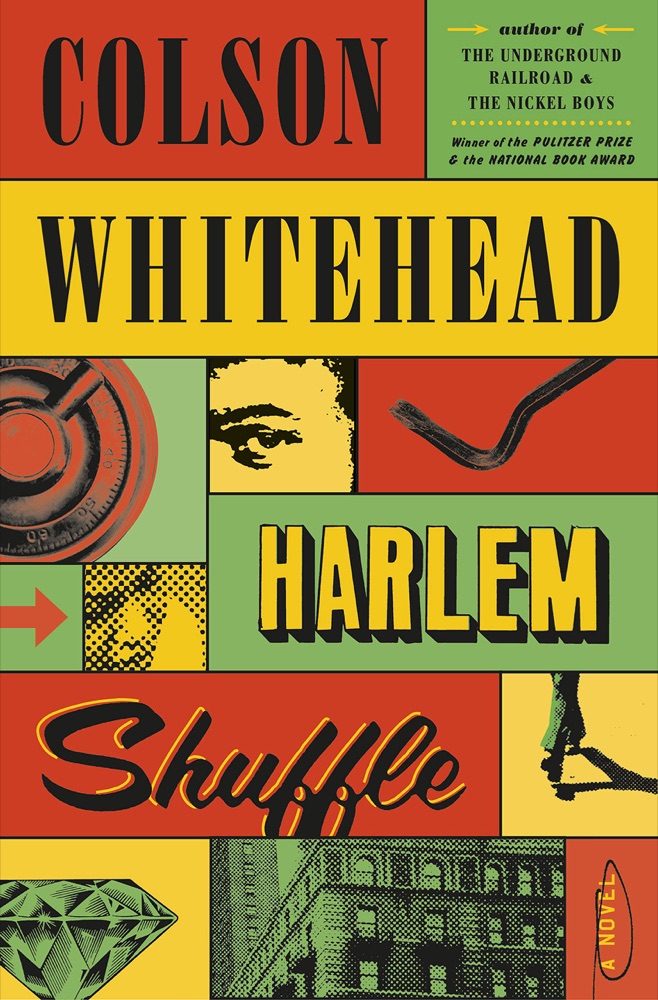
In this wry take on the post-apocalyptic horror novel, a pandemic has devastated the planet. The plague has sorted humanity into two types: the uninfected and the infected, the living and the living dead. Now the plague is receding, and Americans are busy rebuilding civilization under orders from the provisional government based in Buffalo. Their top mission: the resettlement of Manhattan. Armed forces have successfully reclaimed the island south of Canal Street—aka Zone One—but pockets of plague-ridden squatters remain. While the army has eliminated the most dangerous of the infected, teams of civilian volunteers are tasked with clearing out a more innocuous variety—the “malfunctioning” stragglers, who exist in a catatonic state, transfixed by their former lives. Mark Spitz is a member of one of the civilian teams working in lower Manhattan. Alternating between flashbacks of Spitz’s
Book details
- First published
- 2011
- Author
- Colson Whitehead
- Genre
- Horror
- Goodreads rating
- 3.24 (28k ratings)
The buzz
- The New York TimesReview in The New York Timesprofessional review (via Book Marks)
- The Washington PostReview in The Washington Postprofessional review (via Book Marks)
- The GuardianReview in The Guardianprofessional review (via Book Marks)
- NPRReview in NPRprofessional review (via Book Marks)
- Los Angeles TimesReview in Los Angeles Timesprofessional review (via Book Marks)
- The Boston GlobeReview in The Boston Globeprofessional review (via Book Marks)
Keep reading
 Against the Day
 The Naked and the Dead
 The Association of Small Bombs
 The Damnation Game
 The Quick and the Dead
 The Silent Corner
 A Time of Torment
 The Star Fraction
 Cage of Souls
 Severance
 I, Zombie
 Revenant Gun
 Wanderers
 Fall; or, Dodge in Hell
 Consider Phlebas
 Schismatrix Plus
 A Rule Against Murder
 Blackfish City
 Ragtime
 The Water Knife
 City on Fire
 The Wasted Vigil
 The Jungle
 Shift
Shift
 Dust
Dust
 Frankenstein in Baghdad
 Every Dead Thing
 Babylon's Ashes
 The Whisper Man
 Sleeping Beauties
 The Fear Institute
 Tree of Smoke
 Guardian
 The Prophets
 Selected Stories of Philip K. Dick
 What Strange Paradise
 The Book of My Lives
 The Fortress of Solitude
 The Killing Kind
 The Passage
 Orient
 The Shipping News
 Perdido Street Station
 The Staircase in the Woods
 Roadwork
 Sole Survivor
 The Hellbound Heart
 Dead Souls
 The Faith of Beasts
 The Last Mortal Bond
 The Chocolate War
 Ohio
Ohio
 The Scarlet Gospels
 The Book of the Unnamed Midwife
 Reamde
 The New Hunger
 Alas, Babylon
 Miss Lonelyhearts
 Last First Snow