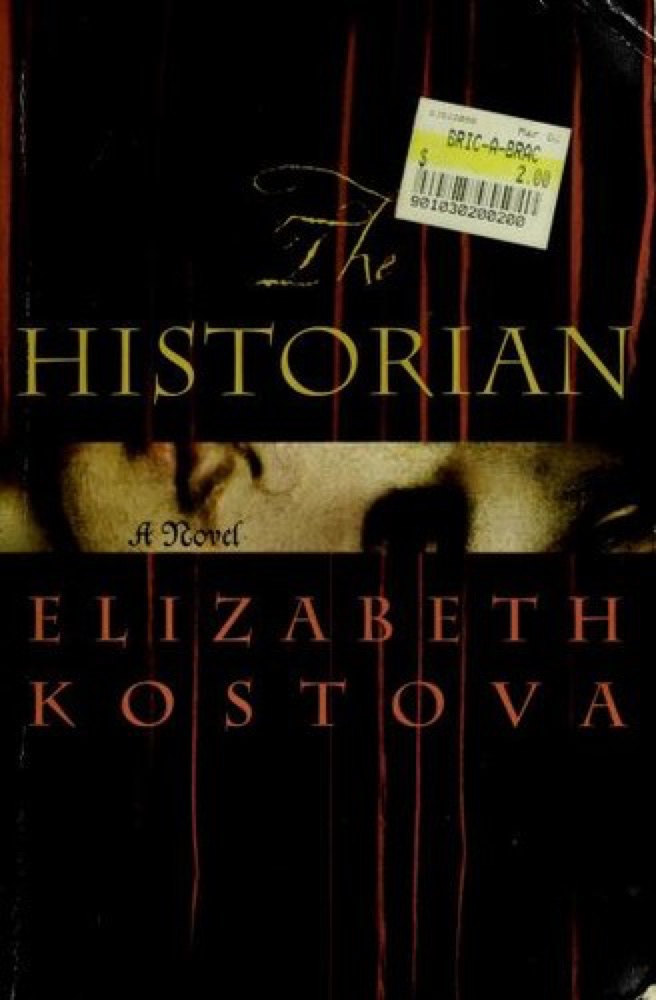

 The Swan Thieves
Quotes from the Book
It was good to walk into a library again; it smelled like home.
When you handle books all day long, every new one is a friend and a temptation.
You are a total stranger and you want to take my library book.
As a historian, I have learned that, in fact, not everyone who reaches back into history can survive it. And it is not only reaching back that endangers us; sometimes history itself reaches inexorably forward for us with its shadowy claws.
The very worst impulses of humankind can survive generations, centuries, even millennia. And the best of our individual efforts can die with us at the end of a single lifetime.
Never before had I known the sudden quiver of understanding that travels from word to brain to heart, the way a new language can move, coil, swim into life under the eyes, the almost savage leap of comprehension, the instantaneous, joyful release of meaning, the way the words shed their printed bodies in a flash of heat and light.
It touched me to be trusted with something terrible.
The thing that most haunted me that day, however...was the fact that these things had - apparently - actually occurred...For all his attention to my historical education, my father had neglected to tell me this: history's terrible moments were real. I understand now, decades later, that he could never have told me. Only history itself can convince you of such a truth. And once you've seen that truth - really seen it - you can't look away.
Today I will go to wait for her again, because I cannot help it, because my whole being seems now to be bound up in the being of one so different from myself and yet so exquisitely familiar that I can scarely understand what has happened.
It was strange, I reflected.. that even in the weirdest circumstances, the most troubling episodes of one's life, the greatest divides from home and familiarity, there were these moments of undeniable joy.
I've always been interested in foreign relations. It's my belief that study of history should be our preparation for understanding the present rather than an escape from it.
As you know, human history is full of evil deeds, and maybe we ought to think of them with tears, not fascination.
As an adult I have often known that peculiar legacy time brings to the traveler: the longing to seek out a place a second time, to find deliberately what we stumbled on once before, to recapture the feeling of discovery. Sometimes we search out again even a place that was not remarkable itself - we look for it simply because we remember it. If we do find it, of course, everything is different. The rough-hewn door is still there, but it's much smaller; the day is cloudy instead of brilliant; it's spring instead of autumn; we're alone instead of with three friends. Or worse, with three friends instead of alone.
I wondered why she craved this knowledge and found myself remembering that she was, after all, an anthropologist.
It was not the brutality of what occurred next that changed my mind and brought home to me the full meaning of fear. It was the brilliance of it.
I've read there is no such thing as a single tear, that old poetic trope. And perhaps there isn't, since hers was simply a companion to my own.
I've noticed Dracula was often as practical a fellow as he was a nasty one.
These atheist cultures were certainly diligent in preserving the relics of their saints.
[I]t seemed to me now that a Catholic church was the right companion for all these horrors. Didn't Catholicism deal with blood and resurrected flesh on a daily basis? Wasn't it expert in superstition? I somehow doubted that the hospitable plain Protestant chapels that dotted the university could be much help; they didn't look qualified to wrestle with the undead. I felt sure those big square Puritan churches on the town green would be helpless in the face of a European vampire. A little witch burning was more in their line--something limited to the neighbors.
For the first time, I had been struck by the excitement of the traveler who looks history in her subtle face.
...History it seemed could be something entirely different a splash of blood whose agony didn't fade overnight or over centuries.
It was a paradise of learning, and I prayed for eventual admission.
He brought his great hand to rest on an early edition of Bram Stoker's novel and smiled, but said nothing. Then he moved quietly away into another section.
In my mortal life, I saw mainly those texts that the church sanctioned--the gospels and the Orthodox commentary on them, for example. These works were of no use to me, in the end.
We Gypsies know that where Jews are killed, Gypsies are always murthered too. And then a lot of other people, usually.
These are works of history about your century, the twentieth. A fine century-I look forward to the rest of it.
If there is any good in life, in history, in my own past, I invoke it now. I invoke it with all the passion with which I have lived.
It gave me a feeling of temporary acceptance into that elite community, to stroll across the quad at his side. It also gave me my first faint quiver of sexual belonging, the elusive feeling that if I slipped my hand into his as we walked along, a door would fall open somewhere in the long wall of reality as I knew it, never to be closed again.
Did you know?
- The Historian was the first debut novel to reach number one on the New York Times hardcover fiction bestseller list in its first week.
- Elizabeth Kostova worked on the book for about ten years before its publication.
- Sony Pictures reportedly paid around $1.5 million for the film rights before the novel was even published.
- The novel grew out of stories about Dracula that Kostova's father told her during her childhood.
- The book interweaves three separate timelines set in the 1930s, 1950s, and 1970s.
About Elizabeth Kostova
Elizabeth Kostova is an American novelist born in 1964 who earned an MFA from the University of Michigan, where she won a Hopwood Award. The Historian (2005) was her debut novel, and she later founded a foundation supporting Bulgarian creative writing.
More about the author →More by Elizabeth Kostova
The Swan Thieves
 The Shadow Land
About the book
The Historian is a Gothic novel that reimagines the Dracula legend as a scholarly detective story spanning three generations and three timelines. In 1972 Amsterdam, a sixteen-year-old girl discovers among her diplomat father's books an ancient volume, blank except for a woodcut of a dragon, and a bundle of letters addressed to "My dear and unfortunate successor." As her father Paul reluctantly reveals his own history, the narrative moves back to the 1950s, when Paul and a fellow researcher named Helen crossed Cold War Eastern Europe searching for his vanished mentor, Professor Bartholomew Rossi, and for the tomb of Vlad the Impaler, the fifteenth-century warlord who may have become the undead Dracula.
The novel weaves together archives, libraries, monasteries, and folklore across Istanbul, Budapest, and Bulgaria, using letters, oral accounts, and historical documents to build its mystery. Its central themes are the seductions and dangers of scholarship, the persistence of the past into the present, and the way inherited history binds parents and children; Dracula himself is imagined less as a monster of appetite than as a bibliophile collecting scholars into his secret library. Atmosphere and place are as important as plot, and Kostova has been widely praised for her evocation of European landscapes and cities.
Kostova spent roughly a decade writing the book, drawing on childhood stories her father told her and on her own travels in the Balkans. Published in 2005 as her debut, it became the first debut novel to reach number one on the New York Times hardcover fiction bestseller list in its first week, and it won the Quill Award for Debut Author of the Year. Its blend of literary historical fiction and Gothic thriller made it a landmark commercial success and helped renew popular interest in the Dracula myth.
Key characters
- The narratorPaul's teenage daughter, who uncovers the family mystery in 1972
- PaulThe narrator's father, a historian and former diplomat
- Helen RossiAnthropologist who joins Paul's search; the narrator's mother
- Professor Bartholomew RossiPaul's mentor, whose disappearance sets the quest in motion
- Vlad Ţepeş / DraculaThe undead fifteenth-century warlord sought throughout the novel
- Turgut BoraIstanbul University professor who aids the searchers
Book details
- First published
- 2005
- Length
- 656 pages
- Reading time
- 15 hours
- Author
- Elizabeth Kostova
- Genre
- Fiction
- Goodreads rating
- 3.80 (280k ratings) →
- First line
- “In 1972 I was sixteen — young, my father said, to be traveling with him on his diplomatic missions.”
Keep reading
 The Marriage of Opposites
 The Brutal Telling
 Underworld
 Agnes Grey
 Library of Souls
 The Golden Tresses of the Dead
 The World of Yesterday
 The Tropic of Serpents
 The Hour I First Believed
 The Secret History
 Brideshead Revisited: The Sacred and Profane Memories of Captain Charles Ryder
 Memoirs of Hadrian
 Year of Wonders
 The Untouchable
 Out of Oz
 The Memoirs of Cleopatra
 The Lords of Discipline
 Fifth Business
 The Distant Hours
 David Copperfield
The Swan Thieves
David Copperfield
The Swan Thieves
 Testament of Youth
 The Round House
 My Friends
 The Book of Negroes
 Merrick
 The Postcard
 The Mill on the Floss
 Our Hideous Progeny
 The Real Life of Sebastian Knight
 March
March
 Thrice the Brinded Cat Hath Mew'd
 A Thousand Acres
 I Know This Much Is True
 The Midnight Train
 Remarkable Creatures
 The Secret Scripture
 The Sea, the Sea
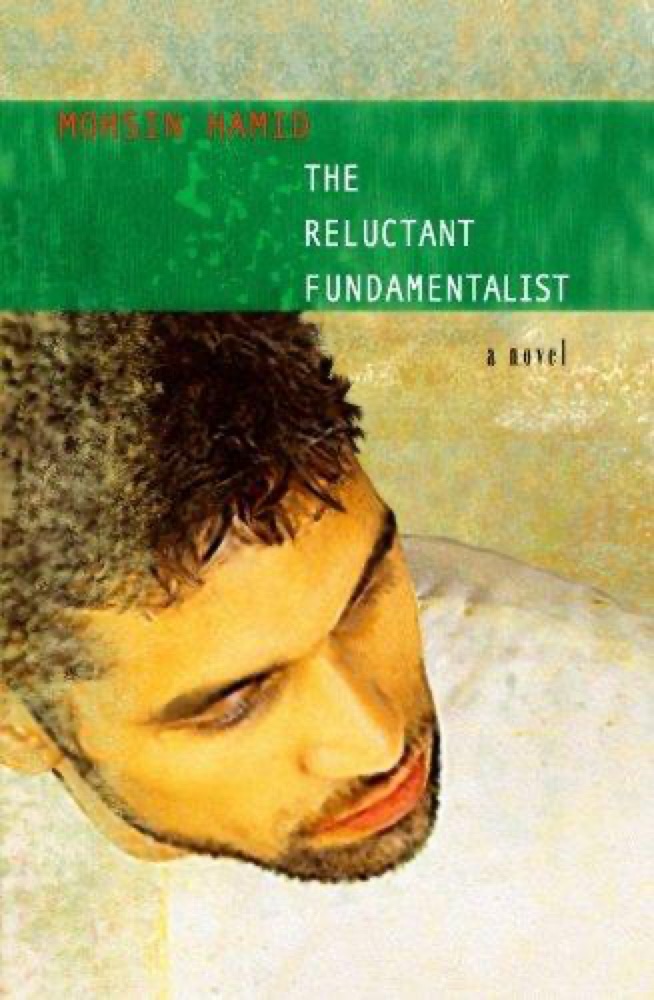 The Reluctant Fundamentalist
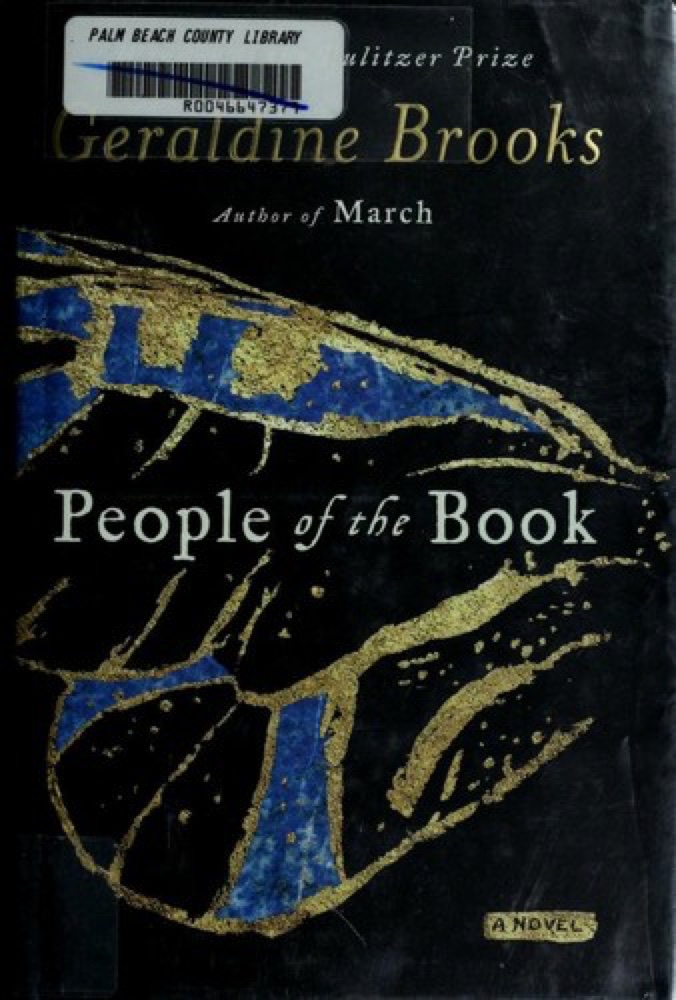 People of the Book
 South of Broad
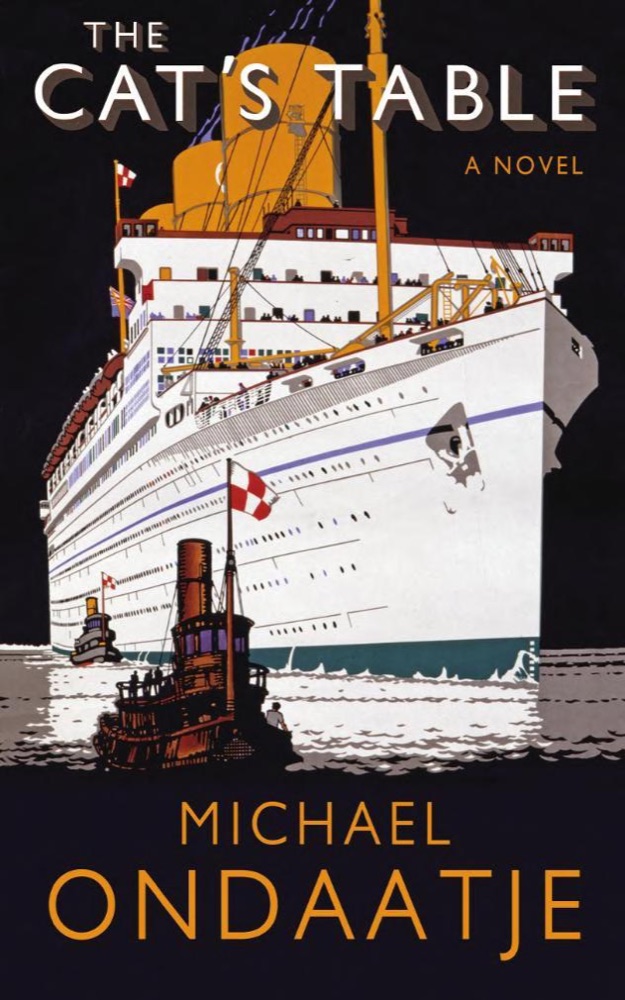 The Cat's Table
 The Story of My Life
 The Jewel in the Crown
 The Absolutist
 Open City
 Speaking from Among the Bones
 The Witching Hour
 Vampire Chronicles: Interview with the Vampire, The Vampire Lestat, The Queen of the Damned (Anne Rice)
 The Arabian Nights
 The Last Man
 The Clockmaker's Daughter
 The Story of the Lost Child
 Rebecca
 Sixty Stories
 The Great Gatsby
 Dracula
 The House at Riverton
 Living to Tell the Tale
 The Likeness