 I, Robot
Quotes from the Book
Any planet is 'Earth' to those that live on it.
1.9k
They won't listen. Do you know why? Because they have certain fixed notions about the past. Any change would be blasphemy in their eyes, even if it were the truth. They don't want the truth; they want their traditions.
311
There never can be a man so lost as one who is lost in the vast and intricate corridors of his own lonely mind, where none may reach and none may save.
183
Old men tend to forget what thought was like in their youth; they forget the quickness of the mental jump, the daring of the youthful intuition, the agility of the fresh insight. They become accustomed to the more plodding varieties of reason, and because this is more than made up by the accumulation of experience, old men think themselves wiser than the young.
59
Of course there are worlds. Millions of them! Every star you see has worlds, and most of those you don't see.
57
It was obvious that bigotry was never a one-way operation, that hatred bred hatred!
44
You see, proteins, as I probably needn't tell you, are immensely complicated groupings of amino acids and certain other specialized compounds, arranged in intricate three-dimensional patterns that are as unstable as sunbeams on a cloudy day. It is this instability that is life, since it is forever changing its position in an effort to maintain its identity--in the manner of a long rod balanced on an acrobat's nose.
23
One might accept death reasoningly, with every aspect of the conscious mind, but the body was a brute beast that knew nothing of reason.
21
Do not forget that a traitor within our ranks, known to us, can do more harm to the enemy than a loyal man can do good to us.
18
Give us but the chance and a new generation of Earthmen would grow to maturity, lacking insularity and believing wholeheartedly in the oneness of Man.
6
All right, Schwartz, tackle my mind now. Go as deep as you want. I was born on Baronn in the Sirius Sector. I lived my life in an atmosphere of anti-Terrestrialism in the formative years, so I can't help what flaws and follies lie at the roots of my subconscious. But look on the surface and tell me if, in my adult years, I have not fought bigotry in myself. Not in others; that would be easy. But in myself, and as hard as I could.
5
Earthmen may even rule at Trantor for a generation, but their children will become Trantorians, and in their turn will look down upon the remnant on Earth.
4
Yet he had expended much of an inquisitive nature upon random reading. By the sheer force of indiscriminate voracity, he had gleaned a smattering of practically everything, and by means of a trick memory had managed to keep it all straight.
2
The elderly man, flushed with pleasure, was recounting in voluble fashion his experiences and impressions. His wife joined in periodically, with meticulous corrections involving completely unimportant points; these being given and taken in the best of humor.
2
Grew told him of variations of chess. There was four-handed chess, in which each player had a board, touching each other at the corners, with a fifth board filling the hollow in the center as a common No Man’s Land. There were three-dimensional chess games in which eight transparent boards were placed one over the other and in which each piece moved in three dimensions as they formerly moved in two, and in which the number of pieces and pawns were doubled, the win coming only when a simultaneous check of both enemy kings occurred. There were even the popular varieties, in which the original position of the chessmen were decided by throws of the dice, or where certain squares conferred advantages or disadvantages to the pieces upon them, or where new pieces with strange properties were introduced.
1
He felt that dull, heart-choking pain that feeds on itself, the pain of a wife no longer by his side at waking, of a familiar world lost…
1
And as long as it is so believed, Procurator, and as long as we of Earth are treated as pariahs, you are going to find in us the characteristics to which you object.
1
That was the result of a childhood immersed in an atmosphere of bigotry so complete that it was almost invisible, so entire that you accepted its axioms as second nature. Then you left it and saw it for what it was when you looked back.
Pode-se aceitar a morte racionalmente, com todos os aspectos da mente consciente, mas o corpo era uma fera brutal, que não sabia nada sobre a razão.
daria para perder a esperança na inteligência da humanidade quando vejo o que a mente dos homens é capaz de conter.
Grew ensinou-lhe variações do xadrez. Havia o xadrez a quatro mãos, no qual cada jogador tinha um tabuleiro, encostados uns aos outros pelas pontas, com um quinto tabuleiro preenchendo o vazio no meio como uma Terra de Ninguém, comum a todos. Havia partidas de xadrez tridimensionais, nas quais oito tabuleiros transparentes eram colocados um sobre o outro e cada peça se movia em três dimensões da forma como antes se moviam em duas, e nos quais o número de peças e peões era dobrado, a vitória sendo conquistada apenas quando ocorria um xeque simultâneo em ambos os reis do adversário. Havia até as variedades populares, nas quais a posição original dos enxadristas era decidida jogando-se dados, outras onde certas casas conferiam vantagens e desvantagens às peças que estavam nelas, ou outras em que peças com estranhas propriedades eram introduzidas.
A comida, diferente daquela que ele vira os outros comendo, estava fria; mas isso era um detalhe. Só depois de um minuto é que percebeu que a comida estava sendo aquecida e que o recipiente ficara quente ao toque. Ele parou, alarmado, e esperou.
O sistema nervoso nos homens e nos animais é composto de material neuroproteico. Esse material consiste em enormes moléculas em um estado de equilíbrio elétrico muito precário. O mais ínfimo dos estímulos agitará uma delas, que vai se reestabelecer por mexer outra, a qual vai repetir o processo até que se chegue ao cérebro. O próprio cérebro é um imenso agrupamento de moléculas semelhantes, conectadas umas às outras de todas as maneiras possíveis. Já que no cérebro existe algo por volta de um elevado a décima ou a vigésima potência (ou seja, o número um seguido de vinte zeros) dessas neuroproteínas, o número possível de combinações é de uma ordem entre a décima e a vigésima potência fatorial. Trata-se de um número tão grande que, se todos os elétrons e prótons do universo fossem transformados em universos, e todos os elétrons e prótons de todos esses novos universos fossem de novo transformados em universos, então todos os elétrons e prótons de todos os universos criados assim ainda não seriam nada em comparação...
Em algum lugar nas entranhas do armário (talvez a criação mecânica mais universalmente popular da inventividade humana), um barman entrou em ação... um barman não humano cuja alma eletrônica misturava as coisas não por medidas, mas por contagem de átomos; as proporções eram sempre perfeitas e ele não poderia ser comparado a ninguém de carne e osso, por maiores que fossem suas habilidades artísticas.
Quando pensavam nisso, em geral, era para desejar que alguma proeza dos céus impedisse a natureza humana (e a maldita inventividade humana) de transformar cada descoberta inocente e interessante em uma arma mortal.
Watch on YouTube
About Isaac Asimov
We have collected 398 quotes from 23 books by Isaac Asimov on BookQuoters.
More about the author →More by Isaac Asimov
All books by Isaac Asimov →
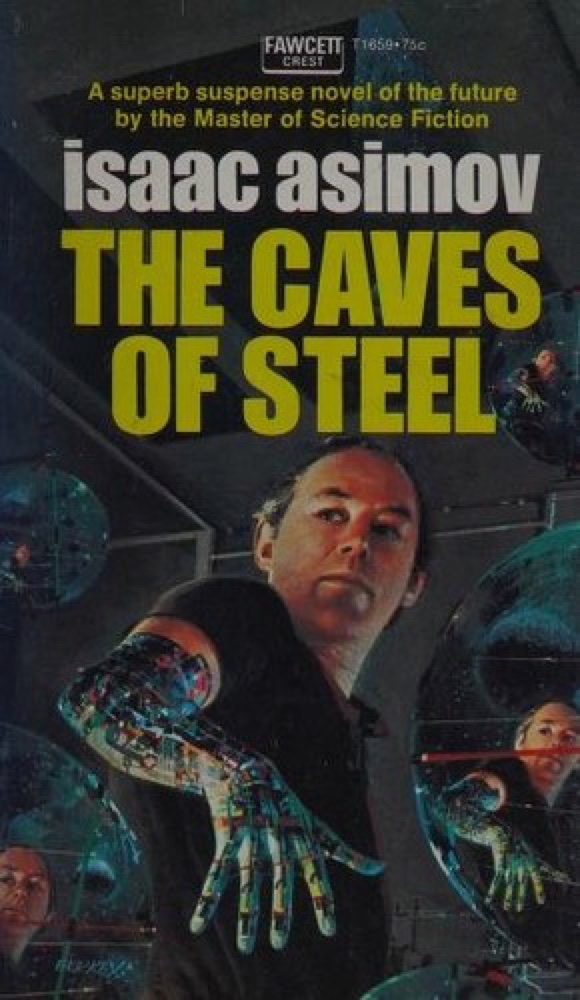
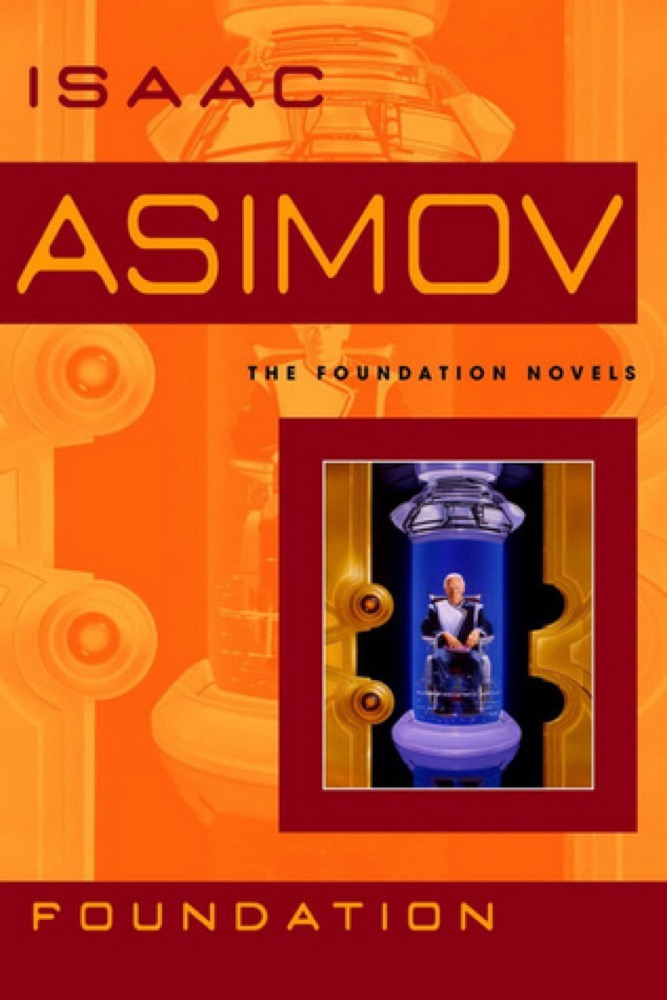
About the book
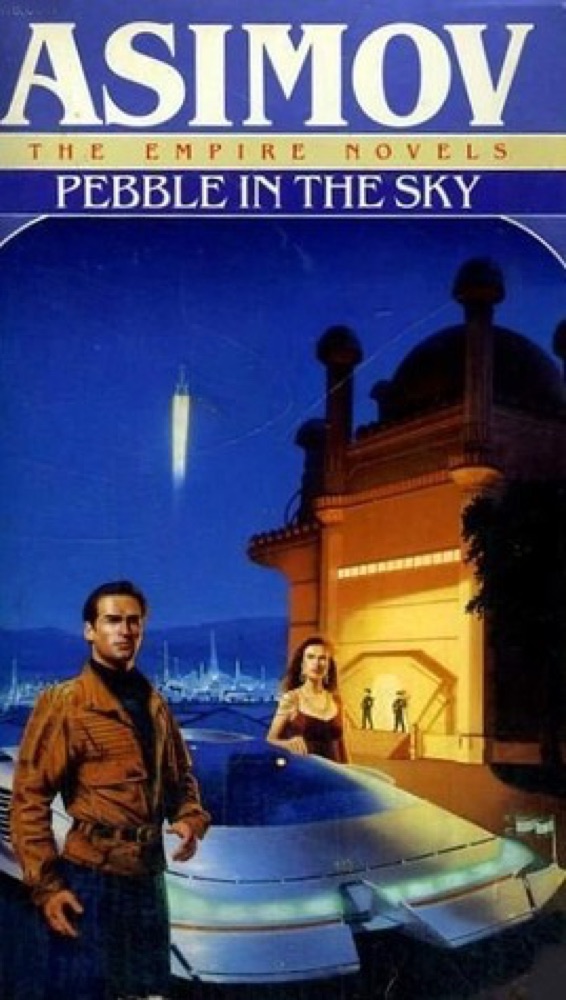
One moment Joseph Schwartz is a happily retired tailor in 1949 Chicago. The next he's a helpless stranger on Earth during the heyday of the first Galactic Empire. Earth, he soon learns, is a backwater, just a pebble in the sky, despised by all the other 200 million planets of the Empire because its people dare to claim it's the original home of man. And Earth is poor, with great areas of radioactivity ruining much of its soil--so poor that everyone is sentenced to death at the age of sixty.
Joseph Schwartz is sixty-two.
This is young Isaac Asimov's first novel, full of wonders and ideas, the book that launched the novels of the Galactic Empire, culminating in the Foundation books and novels. It is also one of that select group of SF adventures that since the early 1950s has hooked generations of teenagers on reading science fiction. This is Golden Age SF at its finest.
Book details
- First published
- 1950
- Author
- Isaac Asimov
- Genre
- Science Fiction
- Goodreads rating
- 3.90 (28k ratings)
Keep reading
 The Star Diaries
 The Empusium
 Under Western Eyes
 Eyeless in Gaza
 Re: Colonised Planet 5, Shikasta
 2312
2312
 The Man Without Qualities
 The Fall of Hyperion
 The Elementary Particles
 The Man in the High Castle
 House Corrino
 The House of the Dead
 The Human Stain
 Primeval and Other Times
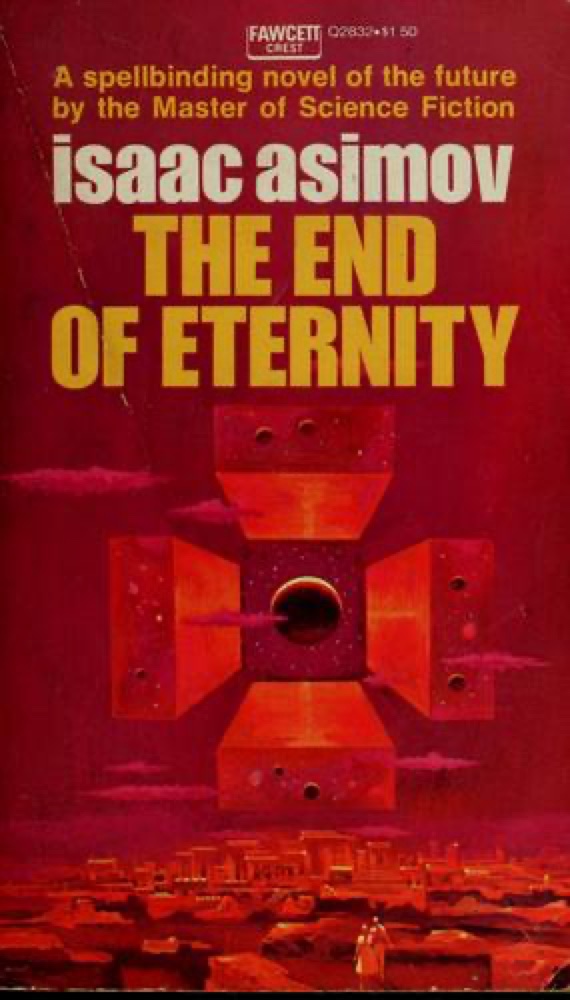 The End of Eternity
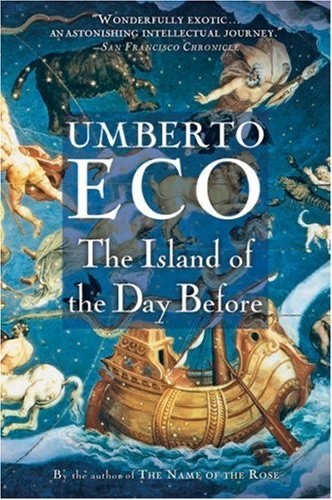 The Island of the Day Before
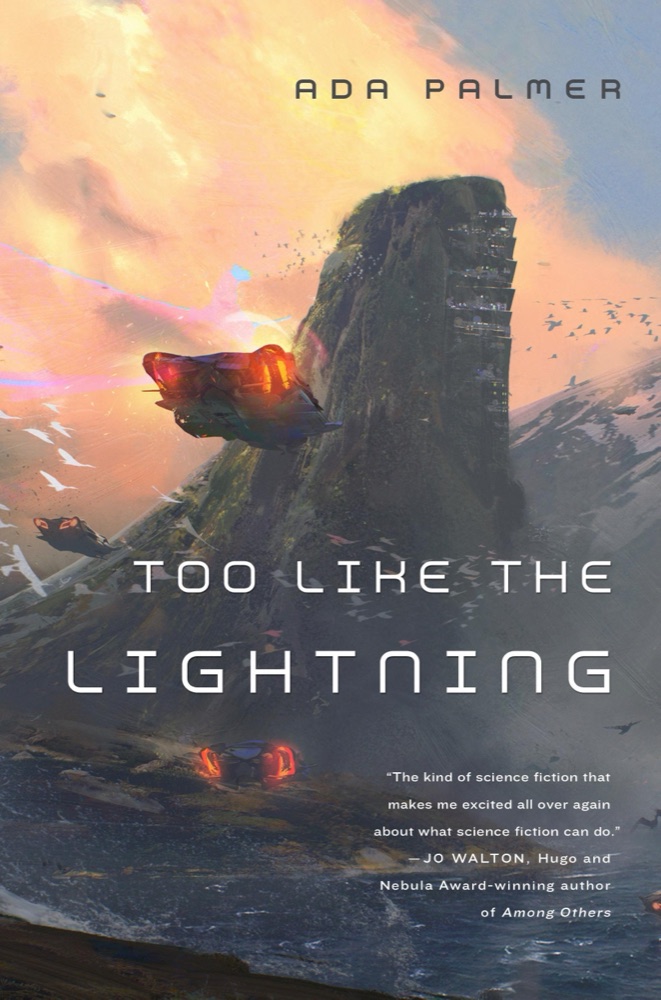 Too Like the Lightning
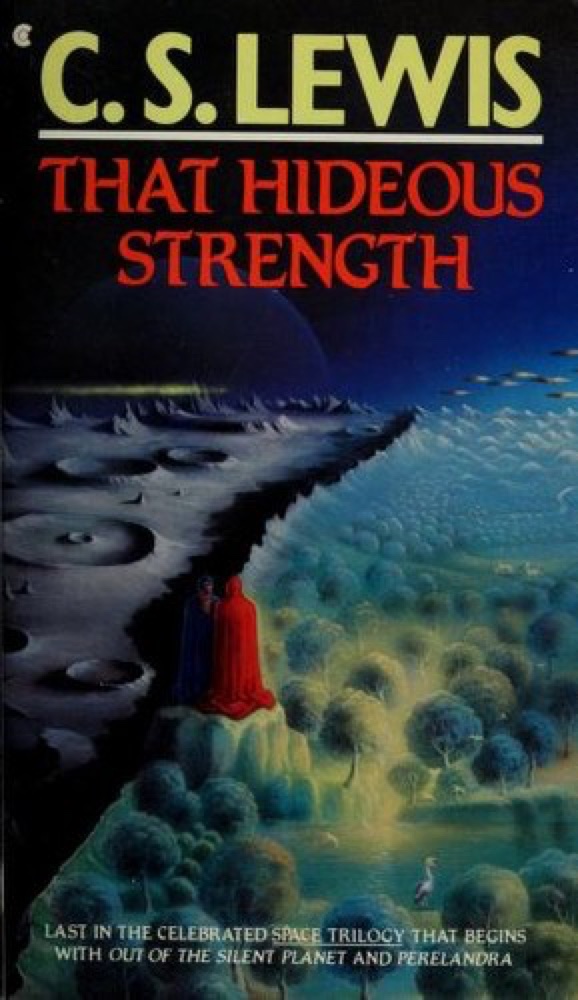 That Hideous Strength
 The Aleph and Other Stories
 Seven Surrenders
 Solar
Solar
 The Dwarf
 Songs of Distant Earth
 Consider Phlebas
 You Can't Go Home Again
 Sexus
Sexus
 Dead Souls
 Schismatrix Plus
 The Star Rover
 Second Foundation
 The Enchantress of Florence
 Two Years Eight Months and Twenty-Eight Nights
 The Futurological Congress: From the Memoirs of Ijon Tichy
 Ship of Fools
 The Gay Science
 Human, All Too Human
 Ficciones
 The First Circle
 The Three-Body Problem
 The Fall of Babel
 Point Counter Point
 The Fall
 The Captive Mind
 The Western Lands
 The Magic Mountain
 The Fifth Science
 Man and His Symbols
 The Toilers of the Sea
 Endymion
 The Shape of Water
 If This Is a Man / The Truce
 The White Luck Warrior
 Fall of Light
 Persian Letters
 Xenocide
 Zeno's Conscience
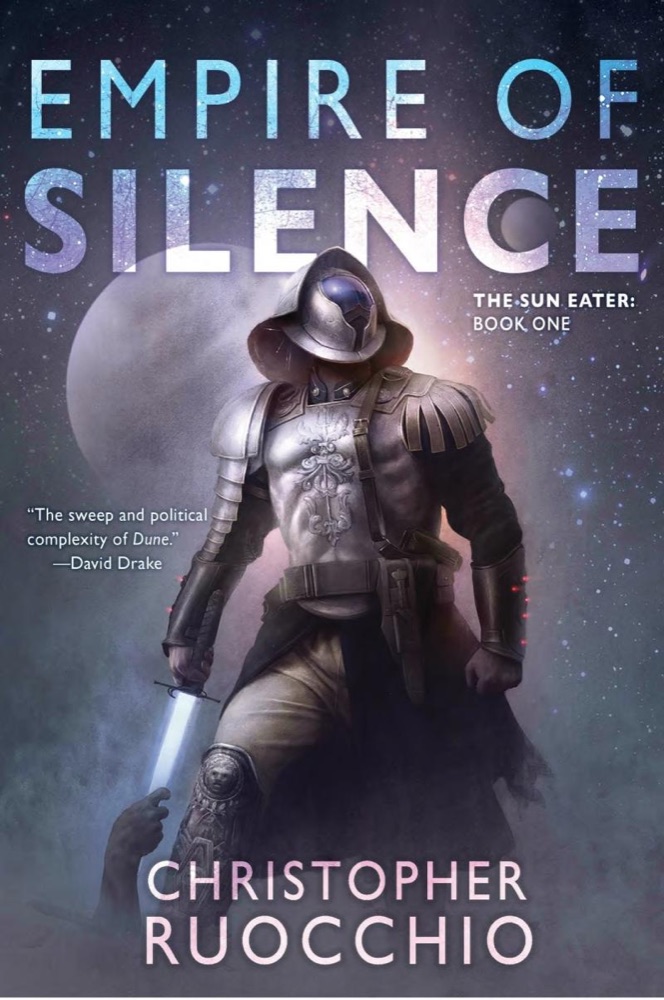 Empire of Silence
 The Gone-Away World
 The Stone Gods
 Maldoror and the Complete Works