 No One Writes Back
Quotes from the Book
Life is bearable even when it's unbearable: that is what's so terrible, that is the unbearable thing about it.
46
To be interested in something is to be involved in what is essentially a stressful relationship with that thing, to suffer anxiety on its behalf.
27
When I'm working I'm wishing I was doing nothing and when I'm doing nothing I'm wondering if I should be working. I hurry through what I've got to do and then, when I've got nothing to do, I keep glancing at the clock, wishing it was time to go out. Then, when I'm out, I'm wondering how long it will be before I'm back home.
11
I am always on the edge of what I am doing. I do everything badly, sloppily, to get it over with so that I can get on to the next thing that I will do badly and sloppily so that I can then do nothing - which I do anxiously, distractedly, wondering all the time if there isn't something else I should be getting on with.
11
I had read four thousand pages of letters by Lawrence and I wanted thousands of pages more... I wanted them not to end. And yet, at the same time that I was wishing they would not come to an end, I was hurrying through these books because however much you are enjoying a book, however much you want it never to end, you are always eager for it to end. However much you are enjoying a book you are always flicking to the end, counting to see how many pages are left, looking forward to the time when you can put the book down and have done with it. At the back of our minds, however much we are enjoying a book, we come to the end of it and some little voice is always saying, "Thank Christ for that!
9
My greatest urge in life is to do nothing. It's not even an absence of motivation, a lack, for I do have a strong urge: to do nothing. To down tools, to stop. Except I know that if I do that I will fall into despair, and I know that it is worth doing anything in one's power to avoid depression because from there, from being depressed, it is only an imperceptible step to despair: the last refuge of the ego.
8
The perfect life, the perfect lie, I realised after Christmas, is one which prevents you from doing that which you would ideally have done (painted, say, or written unpublishable poetry) but which, in fact, you have no wish to do.
4
That is why Lawrence, like Rilke, hated photographs of himself. To both writers photographs prefigured an end of becoming.
3
It was so hot we spent our waking hours dozing and our sleeping hours lying awake, trying to sleep.
3
since the only way to avoid giving into depression and despair is to do something, even something you hate, anything in fact, I force myself to keep bashing away at something, anything.
2
thinking of giving up is probably the one thing that’s kept me going. I think about it on a daily basis but always come up against the problem of what to do when I’ve given up. Give up one thing and you’re immediately obliged to do something else. The only way to give up totally is to kill yourself but that one act requires an assertion of will equal to the total amount that would be expanded in the rest of a normal lifetime.
2
The sea: you watch it for a while, lose interest, and then, because there is nothing else to look at, go back to watching it. It fills you with great thoughts which, leading nowhere and having nothing to focus on except the unfocused mass of the sea, dissolve into a vacancy which in turn, for want of any other defining characteristic, you feel content to term 'awe'.
2
It was impossible to say where one gesture ended and the next began.
2
It is a simple choice: work or succumb to melancholia, depression and despair. Like it or not you have to try to do something with your life, you have to keep plugging away. Besides, the alternatives to giving in and giving up are never as simple as they seem.
1
London is the worst. Lawrence realised this in 1916: London was ‘so foul’, he reckoned, that ‘one would die in it in a fortnight’. Since then it’s got even worse. Now it’s the world capital of flu. The sky in London drizzles flu, it rains flu. People from all over the world go there and get flu. Whether they come to see the changing of the guard, or to take ecstasy at raves, they all end up getting flu. Those who work in London are all either going down with flu, recovering from flu, or in the grip of flu – even though most of the people going down with flu, recovering from flu or in the grip of flu don’t have flu at all. What they’re actually suffering from is verbal inflation because no one says they have a cold any more, it’s always flu. If people have a cold they say they have flu; if they say they have a cold it means there’s nothing wrong with them. Flu and cold are becoming interchangeable. We say flu when we mean cold but we say flu when we mean flu because no one wants to say they have pneumonia when all they’ve got is flu because if you say you have pneumonia people might think you have AIDS. It’s even possible that people who do have pneumonia call it flu so that flu now runs the whole gamut of illness from the common cold upwards. To say we have flu is merely to express the common condition of urban life at the tail-end of the twentieth century.
1
Sheets and towels hung from every balcony. Washing hanging out to dry: that is the real national flag of Italy, emblem and proof of how the fabric of daily life endures.
1
New laws are always being passed but they alter almost nothing. Their real purpose is, precisely, to engender debate, to give the people of Italy a chance to express a lively opposition to the state so unanimous that it actually creates a supportive atmosphere of unity and national well-being. Everyone feels the state is fleecing them, treating them unfairly, so that feeling cheated by the state - and finding some small ways of cheating the state - turns out to be the cement that binds the nation together. In this way, the state is sacrificed to the idea of the nation.
1
The mountains in the background were cut from the same cloth as the sky: a slightly darker shade, that was the only difference. Had we the capacity to analyse it there would almost certainly be a geology of the air as well as of rock.
1
I was too irritable from the drive to go straight into the D. H. Lawrence Birthplace Museum and Gift Shop so I ordered a calming cup of tea in the White Peacock Cafe. 'Mug or cup?' 'Cup please,' I said, thinking that I could have said 'I said "cup".' I said cup because I have never enjoyed tea from a mug - and for that matter, only rarely from a cup. Basically I don't like tea but what else is there? Life is really no more than a search for a hot drink one likes.
1
So why did I do it? I ask myself. Why did I do it? I had to live somewhere. You have to live somewhere. This is the awful truth, the latest increment of the immense fund of wisdom that I have been building up over the years. You have to live somewhere. Wherever you are, you have to live somewhere. And not Rome, I decided. Oh, I got into a terrible state there. The winter was cold and Rome is one of the worst places to be when it is cold. We were cold at home, cold in cafés, cold in pizzerias and cold on the buses we were forced to take because it was too cold to be on the moped. Staying in was cold, going out was colder. It was uncharacteristically cold, apparently. This is how Romans cope with the cold: every year everyone declares ‘it never gets this cold’ and in this way, even though it gets this cold every year, enough rhetorical heat is generated to get through the unseasonably seasonable cold. You are better off in a seriously cold place like England.
Watch on YouTube
About Geoff Dyer
About the book
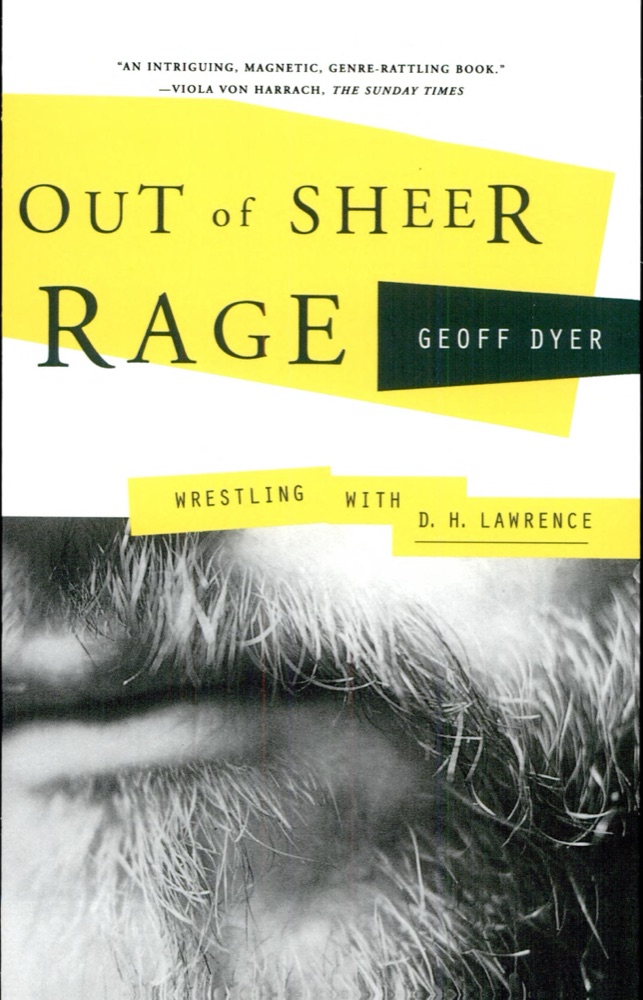
Geoff Dyer had always wanted to write a book about D. H. Lawrence. He wanted, in fact, to write his "Lawrence book." The problem was, he had no idea what his "Lawrence book" would be, though he was determined to write a "sober academic study." Luckily for the reader, he failed miserably.Out of Sheer Rage is a harrowing, comic, and grand act of literary deferral. At times a furious repudiation of the act of writing itself, this is not so much a book about Lawrence as a book about writing a book about Lawrence. As Lawrence wrote about his own study of Thomas Hardy, "It will be about anything but Thomas Hardy, I am afraid-queer stuff-but not bad."
Book details
- First published
- 1997
- Author
- Geoff Dyer
- Genre
- Nonfiction
- Goodreads rating
- 4.03 (2k ratings)
Keep reading
No One Writes Back
 Blueberries: Essays Concerning Understanding
 Money
Money
 The Complete Stories
 The Complete Short Stories
 Flights
 Concrete
 The Wind-Up Bird Chronicle
 Point Counter Point
 The Golden Notebook
 Min kamp 2
 A Long Way Down
 Travels with Charley: In Search of America
 Journal of a Solitude
 Checkout 19
 Whatever
 The Loser
 Sometimes a Great Notion
 Smilla's Sense of Snow
 Selected Stories
 Tropic of Capricorn
 Betting on the Muse: Poems & Stories
 Dhalgren
 The Story of the Lost Child
 Encyclopedia of an Ordinary Life
 Special Topics in Calamity Physics
 Drive Your Plow Over the Bones of the Dead
 Flaubert's Parrot
 Correction
 Infinite Jest
 The Sea, the Sea
 The Pale King
 The Salmon of Doubt
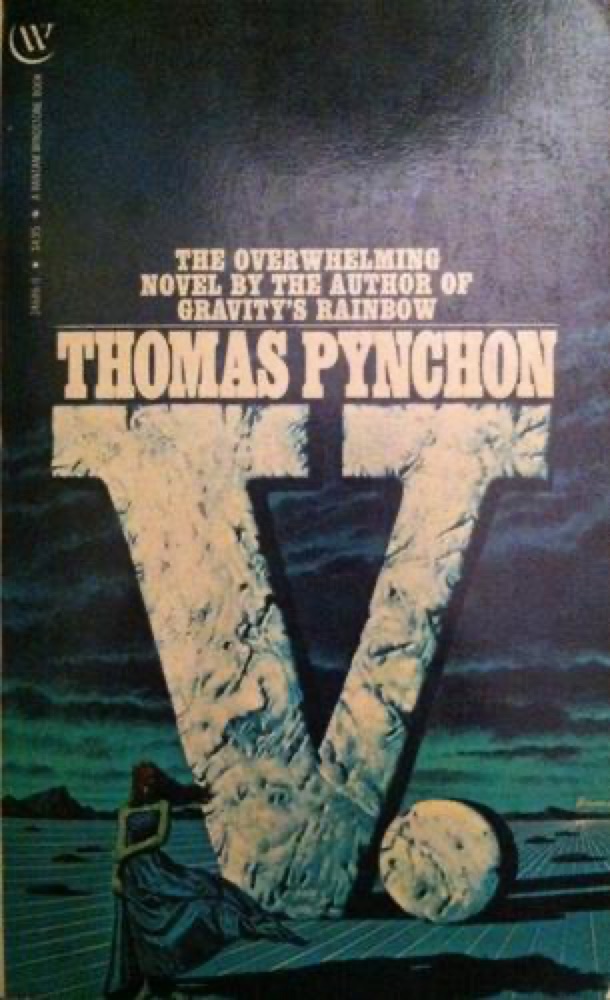 V.
V.
 Lanark
 Hard-Boiled Wonderland and the End of the World
 The Fall
 Nausea
 Everyone Burns
 Tropic of Cancer
 Fear of Flying
 Plainwater: Essays and Poetry
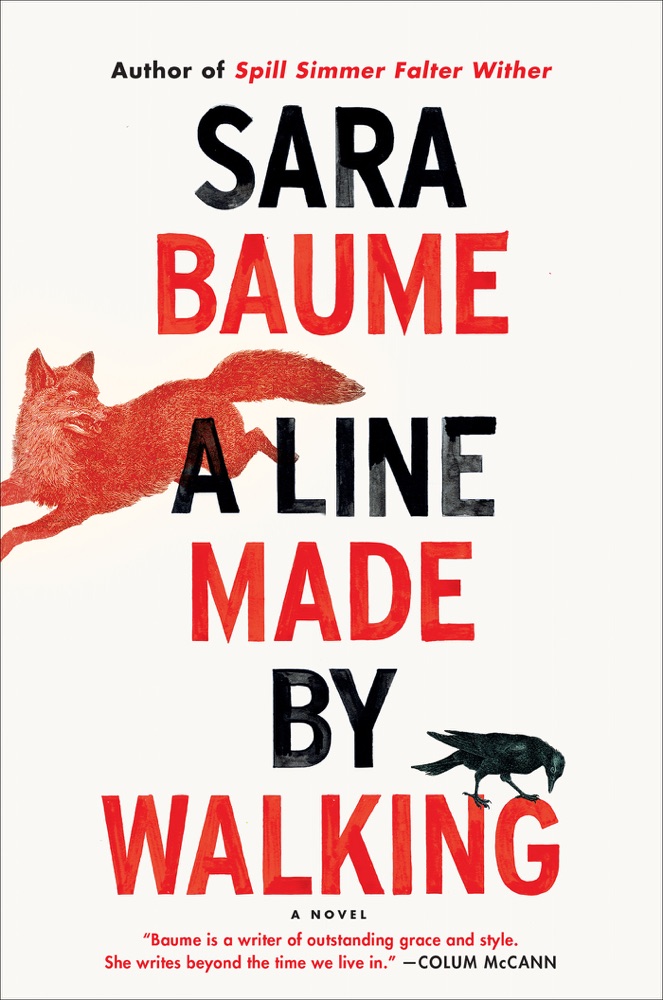 A Line Made By Walking
 Selected Stories of Anton Chekhov
 Dream Count
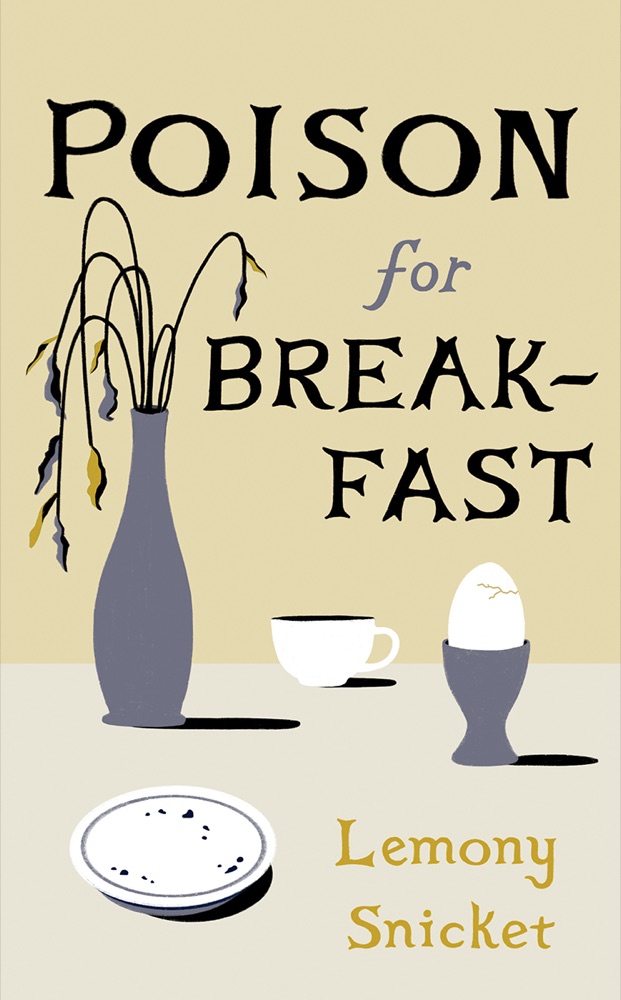 Poison for Breakfast
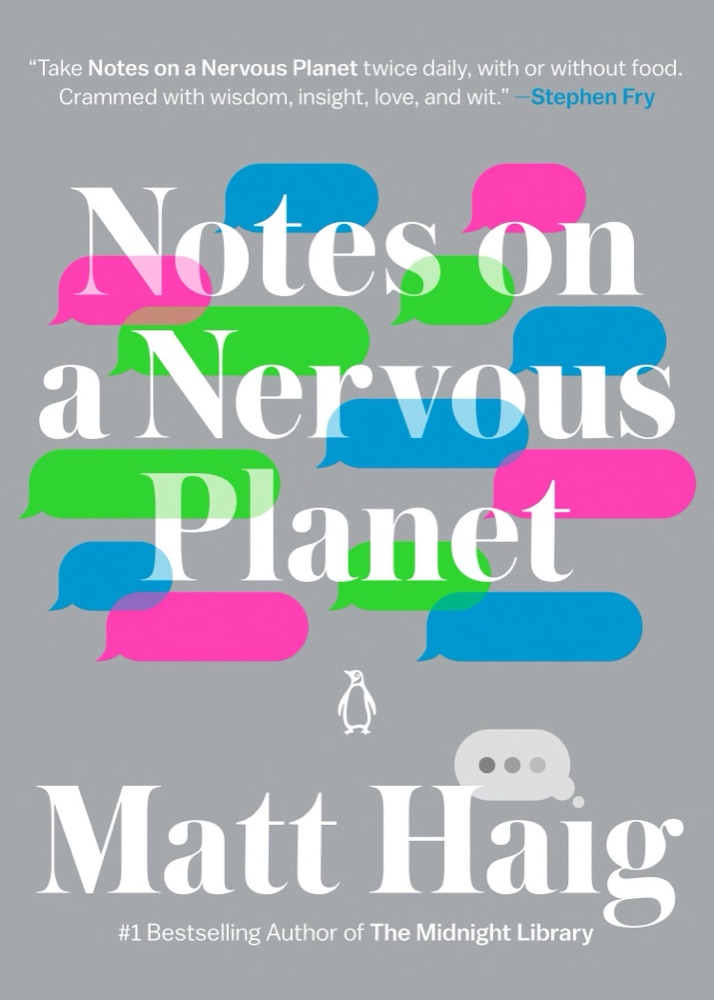 Notes on a Nervous Planet
 Schoolgirl
 Embers
 Postcards from No Man's Land
 Kafka on the Shore
 The Tent
 White Noise
 Humboldt's Gift
 Night Train to Lisbon
 The Book of Disquiet
 My Booky Wook
 No Time To Spare: Thinking About What Matters
 Where Reasons End
 Madly, Deeply: The Diaries of Alan Rickman