
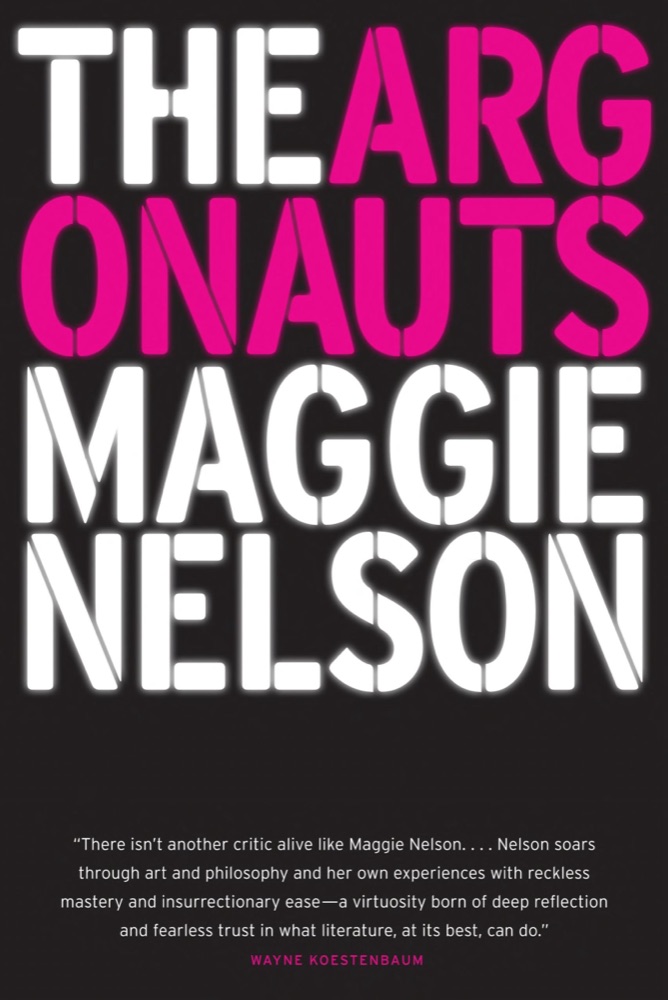
 The Argonauts
Quotes from the Book
I had not chosen to be single but love is rare and it is frequently unreciprocated. Without love I saw no reason to form a permanent attachment to any particular place. Love determined how humans arrayed themselves in space. Because it affixed people into their long-term arrangements, those around me viewed it as an eschatological event, messianic in its totality. My friends expressed a religious belief that it would arrive for me one day, as if love were something the universe owed to each of us, which no human could escape. I had known love, but having known love I knew how powerless I was to instigate it or ensure its duration. Still, I nurtured my idea of the future, which I thought of as the default denouement of my sexuality, and a destiny rather than a choice. The vision remained suspended, jewel-like in my mind, impervious to the storms of my actual experience, a crystalline point of arrival. But I knew that it did not arrive for everyone, and as I got older I began to worry that it would not arrive for me.
3
The beauty of science fiction was that its authors never had to work out the logistics of how we would arrive in the future. The future was presented as a fait accompli, and the difficult work by which a society accepted new social configurations did not have to be explained.
2
The body, I started to learn, was not a secondary entity. The mind contained very few truths that the body withheld. There was little of import in an encounter between two bodies that would fail to be revealed rather quickly. The epistolary run up to the date only rarely revealed the truth of a man's good humor or introversion, his anxiety or social grace. Until the bodies were introduced, seduction was only provisional.
2
The history of the sexual vanguard in America was a long list of people who had been ridiculed, imprisoned, or subjected to violence. So it was annoying to hear the hubris of technologists, while knowing that gadgetry or convenience in telecommunication was the easy kind of futurism, the kind that attracted money. A real disruption or hack was a narration that did not make any sense to us the first time it was told, that would provoke too much repugnance to show in a cell phone ad.
1
It was as if we had made something very simple incredibly complicated. Here were these bodies, ready to reproduce, controlled against reproduction, then stimulated for an eventual reproduction that was put on ice. My friends who wanted to prolong their fertility did so, now that they were in their thirties and professionally successful, because circumstances in their lives had not lined up as planned. They had excelled at their jobs. They had nice apartments and enough money to comfortably start a family, but they lacked a domestic companion who would provide the necessary genetic material, lifelong support, and love. They wanted to be the parents they had grown up under, but love couldn't be engineered, and ovaries could. Hanging over all of this was an idea of choice, an arbitrary linking of goals and outcomes, which reduced structural, economic and technological change to individual decision. "The right to choose"―the right to birth control and abortion services―is different from the idea of choice I mean here. I mean that the baby question justified a fiction that one had to conform one's life to a uniform box by a certain deadline. If the choice were only to have a baby or not, then anybody who wanted a baby and was physically able would simply have one (as many people did), but what I saw with my friends was that it wasn’t actually about the choice of having a baby but of setting up a nuclear family, which unfortunately could not, unlike making a baby, happen more or less by fiat.
1
It was the same old question, whether a declaration of purpose might protect you from failure.
1
If the future was to be defined by a more honest and nuanced sexual culture, one in which sexual diversity was valued, the people with maximalist ambitions were futurists, and they had knowledge unavailable to those who had not considered their extremes. A better sexuality, if such a thing were possible, would be discovered by people who explored the widest range of sexual practice, not those who treated it as resistant to literal representation. I valued the ideas of feminism that spoke of liberating feminine sexuality from masculine ideas of sexiness, but it was as if, having cleaned out the clutter of masculine pornographic language and imagery, the only inoffensive concept left was a spartan white room dotted with patches of sunlight, starched curtains gently blowing from the open floor-to-ceiling windows.
The year I turned thirty a relationship ended. I was very sad but my sadness bored everyone, including me. Having been through such dejection before, I thought I might get out of it quickly. I went on Internet dates but found it difficult to generate sexual desire for strangers. Instead I would run into friends at a party, or in a subway station, men I had thought about before. That fall and winter I had sex with three people, and kissed one or two more. The numbers seemed measured and reasonable to me. All of them were people I had known for some time. I felt happier in the presence of unmediated humans, but sometimes a nonboyfriend brought with him a dark echo, which lived in my phone. It was a longing with no hope of satisfaction, without a clear object. I stared at rippling ellipses on screens. I forensically analyzed social media photographs. I expressed levity with exclamation points, spelled-out laughs, and emoticons. I artificially delayed my responses. There was a great posturing of busyness, of not having noticed your text until just now. It annoyed me that my phone could hold me hostage to its clichés. My goals were serenity and good humor. I went to all the Christmas parties.
Watch on YouTube
About Emily Witt
We have collected 8 quotes from 1 book by Emily Witt on BookQuoters.
More about the author →About the book
A funny, fresh, and moving antidote to conventional attitudes about sex and the single woman
Emily Witt is single and in her thirties. She has slept with most of her male friends. Most of her male friends have slept with most of her female friends. Sexual promiscuity is the norm. But up until a few years ago, she still envisioned her sexual experience "eventually reaching a terminus, like a monorail gliding to a stop at Epcot Center." Like many people, she imagined herself disembarking, finding herself face-to-face with another human being, "and there we would remain in our permanent station in life: the future."
But, as we all know, things are more complicated than that. Love is rare and frequently unreciprocated. Sexual acquisitiveness is risky and can be hurtful. And generalizing about what women want or don't want or should want or should do seems to lead nowhere. Don't our tem
Book details
- First published
- 2015
- Author
- Emily Witt
- Genre
- Nonfiction
- Goodreads rating
- 3.39 (3k ratings)
Keep reading
The Argonauts
 The Post-Birthday World
 Private Citizens
 Stories of Your Life and Others
 Anthropology of an American Girl
 An Experiment in Love
 The Rules Do Not Apply
 The Elementary Particles
 The Crane Wife: A Memoir in Essays
 All Fours
 Sex, Drugs, and Cocoa Puffs: A Low Culture Manifesto
 Machines like Me
 Love and Trouble: A Midlife Reckoning
 The Summer Without Men
 A Certain Hunger
 Machine Man
 A History of the World in 10½ Chapters
 The Game: Penetrating the Secret Society of Pickup Artists
 The Mother of All Questions
 Brief Interviews with Hideous Men
 The Candy House
 Girl with Curious Hair
 A Language Older Than Words
 Purity
 Stars in My Pocket Like Grains of Sand
 The Fixed Stars
 The Rachel Incident
 NW
NW
 Fear of Flying
 Make It Scream, Make It Burn
 Trick Mirror: Reflections on Self-Delusion
 Mating in Captivity: Reconciling the Erotic and the Domestic
 Woman: An Intimate Geography
 Asymmetry
 I Love Dick
 The Book of Love
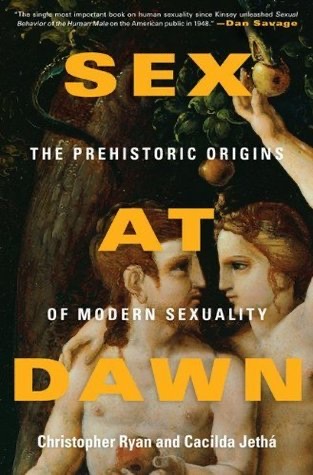 Sex at Dawn: The Prehistoric Origins of Modern Sexuality
 Burning Questions: Essays and Occasional Pieces, 2004 to 2021
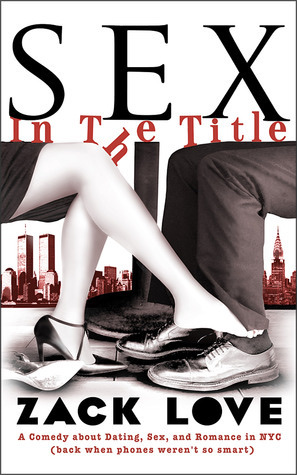 Sex in the Title: A Comedy about Dating, Sex, and Romance in NYC (Back When Phones Weren't So Smart)
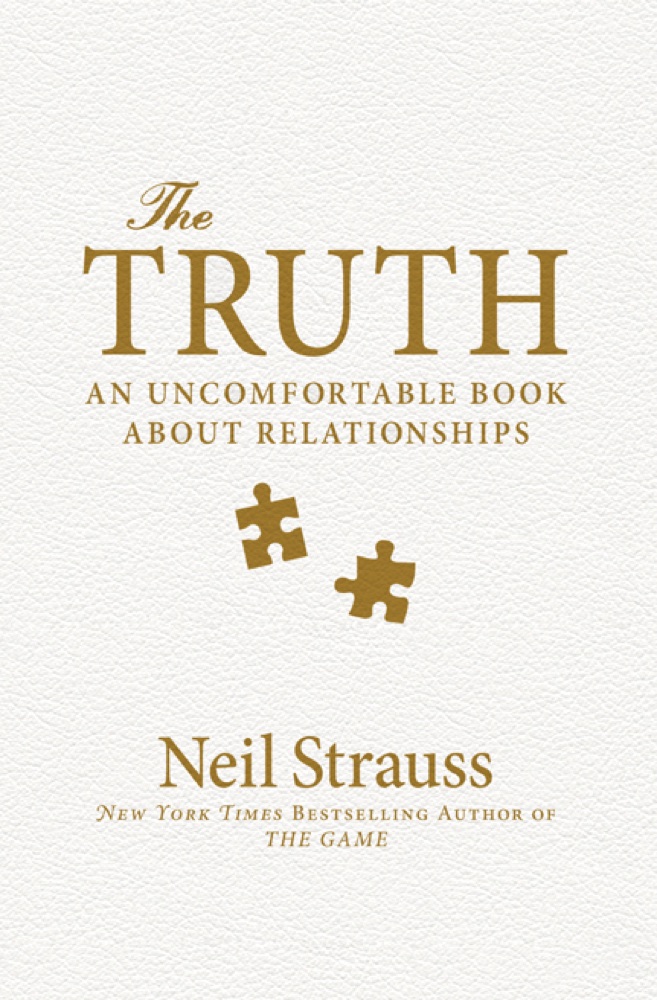 The Truth: An Uncomfortable Book About Relationships
 Youth in Revolt
 Uncanny Valley
 Permutation City
 2312
2312
 Surprised by Joy: The Shape of My Early Life
 Whatever
 Arcadia
 The Fifth Science
 Confessions of a Mask
 Herland
 Summertime
 The Atrocity Exhibition
 The Rachel Papers
 The Futurological Congress: From the Memoirs of Ijon Tichy
 Axiomatic
 On Freedom: Four Songs of Care and Constraint
 Slow Days, Fast Company: The World, the Flesh, and L.A.
 Life After God
 The Possibility of an Island
 Under the Net