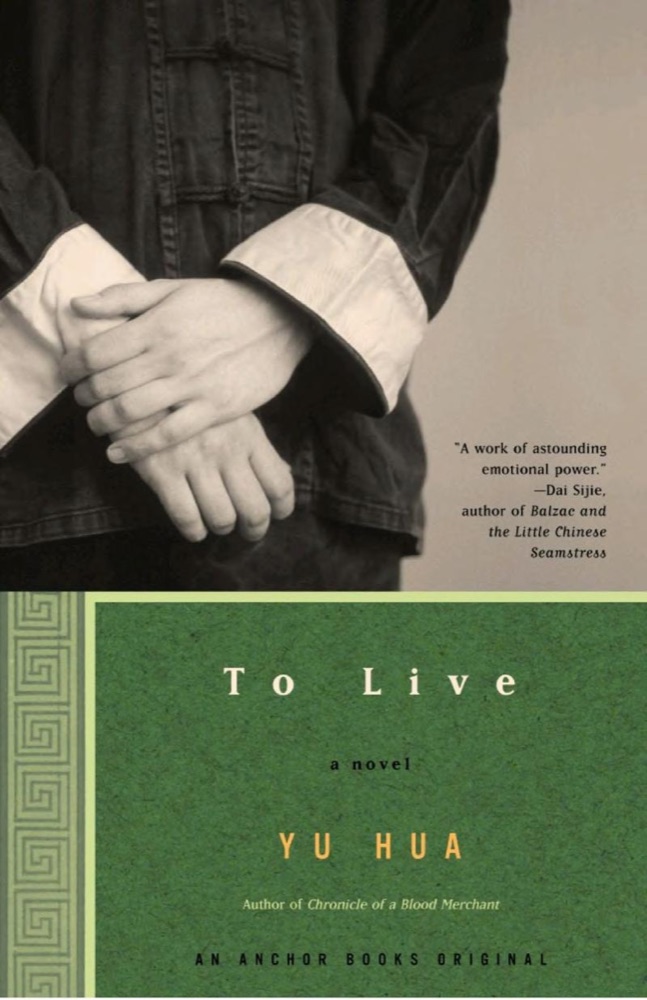
Quotes from the Book
Your life is given to you by your parents. If you don't want to live, you have to ask them first.
33
It’s better to live an ordinary life. If you go on striving for this and that, you’ll end up paying with your life.
22
As the black night descended from the heavens, I knew that in the blink of an eye I would witness the death of the sunset. I saw the exposed and firm chest of the vast earth; its pose was one of calling, of beckoning. And just as a mother beckons her children, so the earth beckoned the coming of night.
20
No matter how lucky a person is, the moment he decides he wants to die, there's nothing that will keep him alive.
18
The emperor beckons me; he wants me to marry his daughter. The road to the capital is long and distant; I don't want her.
11
It was just as summer arrived that I met an old man named Fugui.
4
A ripensarci questa vita è passata così veloce, una vita del tutto normale: mio padre sperava che facessi onore ai miei antenati, diciamo che aveva scelto la persona sbagliata; io, be'... il mio destino era questo. Da giovane ho fatto la bella vita per un po' grazie ai soldi lasciati dai miei avi; poi sono arrivati giorni sempre più neri, ma è stato meglio così: se guardo chi mi stava accanto, Long Er e Chunsheng, anche loro se la sono spassata per un po', ma alla fine hanno perso la vita. È meglio avere una vita normale, chi lotta per avere questo o quello, a furia di lottare ci rimette la propria vita. Prendi uno come me: in effetti mi sono dimostrato sempre più incapace di risalire il fiume dell'esistenza, eppure ho vissuto a lungo; tutte le persone che conoscevo sono morte, una dopo l'altra, io invece sono ancora vivo.
1
This time”, I said to myself, “I’ve got to keep on living.
Jiazhen ise Fengxia'nın sırtında mutluydu. 'Tedavi edilemez olması iyi bir şey, yoksa tedavi masrafları için parayı nereden bulabilirdik?' dedi.
Tarlayı yalnız başına sürdüğünü anlamasından korkuyorum, bu yüzden onu kandırmak için birkaç tane isim sayıyorum. Etrafında, diğer öküzlerin de onunla beraber tarlayı sürdüğünü duyunca üzülmez, daha verimli çalışır.
When I was ten years younger than I am now, I had the carefree job of going to the countryside to collect popular folk songs. That year, for the entire summer, I was like a sparrow soaring recklessly. I would wander amid the village houses and the open country, which was full of cicadas and flooded with sunlight.
...yanı başımdaki tarlada bir ihtiyarın, yaşlı bir öküzle tarlayı sürdüğünü gördüm. Yaşlı öküz, tarlayı sürmekten yorulmuş olacak ki başını öne eğmiş öylece dikiliyordu. Arkasında, sırtı çıplak, sabana yaslanmış ihtiyar adam, anlaşılan öküzün tembelliğine kızmıştı; öfkeyle bağırdığını işittim. "Öküzler toprağı sürer, rahipler yoksullara bağış toplar, horozlar şafağı haber eder, kadınlar kumaş dokur. Tarlayı sürmeyen öküz mü olurmuş? Bu ezelden beri böyledir, hadi yürü, yürü!" Yaşlı ve bitkin öküz, ihtiyarın azarını işitince hatasını kabul eder gibi başını kaldırdı ve sabanı çekmeye başladı. İhtiyarın sırtının da öküzünki kadar kara olduğunu fark ettim. İkisi de, hayatlarının alaca karanlığında bile olsalar, o çakıllı taşlı tarlayı sürebiliyorlardı, tıpkı dalgaların sahile vurması gibi.
The little one or the big one?
Watch on YouTube
About Yu Hua
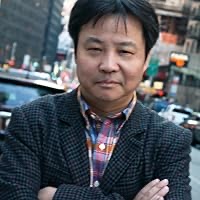
We have collected 13 quotes from 1 book by Yu Hua on BookQuoters.
More about the author →About the book
From the author of Brothers and China in Ten Words this celebrated contemporary classic of Chinese literature was also adapted for film by Zhang Yimou. This searing novel, originally banned in China but later named one of that nation's most influential books, portrays one man's transformation from the spoiled son of a landlord to a kindhearted peasant. After squandering his family's fortune in gambling dens and brothels, the young, deeply penitent Fugui settles down to do the honest work of a farmer. Forced by the Nationalist Army to leave behind his family, he witnesses the horrors and privations of the Civil War, only to return years later to face a string of hardships brought on by the ravages of the Cultural Revolution. Left with an ox as the companion of his final years, Fugui stands as a model of gritty authenticity, buoyed by his appreciation for life in this narrative of humbling
Keep reading
 Rooftops of Tehran
 The Kite Runner
 The Girl Who Played Go
 Malina
 Violeta
 The Complete Stories
 The Seagull
 The Complete Short Stories
 Honor
Honor
 Poor Folk
 And Then
 Now I Rise
 Black Spring
 Mutant Message Down Under
 Oblomov
 Papillon
 Twenty Fragments of a Ravenous Youth
 Sea of Silver Light
 The Dragon Reborn
 His Dark Materials
 Persepolis 2: The Story of a Return
 Journey to Ixtlan
 A Soldier of the Great War
 Four Treasures of the Sky
 A Suitable Boy
 Go
Go
 The Devil in the Flesh
 Travels With My Aunt
 Independent People
 Spoon River Anthology
 A Song to Drown Rivers
 Notes of a Dirty Old Man
 Selected Stories
 Moth Smoke
 Where the Wind Leads: A Refugee Family's Miraculous Story of Loss, Rescue, and Redemption
 Sword & Citadel
 Ask the Dust
 Timbuktu
 The Arabian Nights
 Life & Times of Michael K
 The Illustrated Man
 We the Living
 The Setting Sun
 Hardboiled & Hard Luck
 The Son
 The Orphan Master's Son
 FUTU.RE
 Arch of Triumph
 Selected Stories of Anton Chekhov
 Sweet Bean Paste
 Iron Gold
 Eragon, Eldest & Brisingr
 Soul Mountain
 Ferdydurke
 The Door
 The Fairy Tales of Hermann Hesse
 Sacred Journey of the Peaceful Warrior
 Plainwater: Essays and Poetry