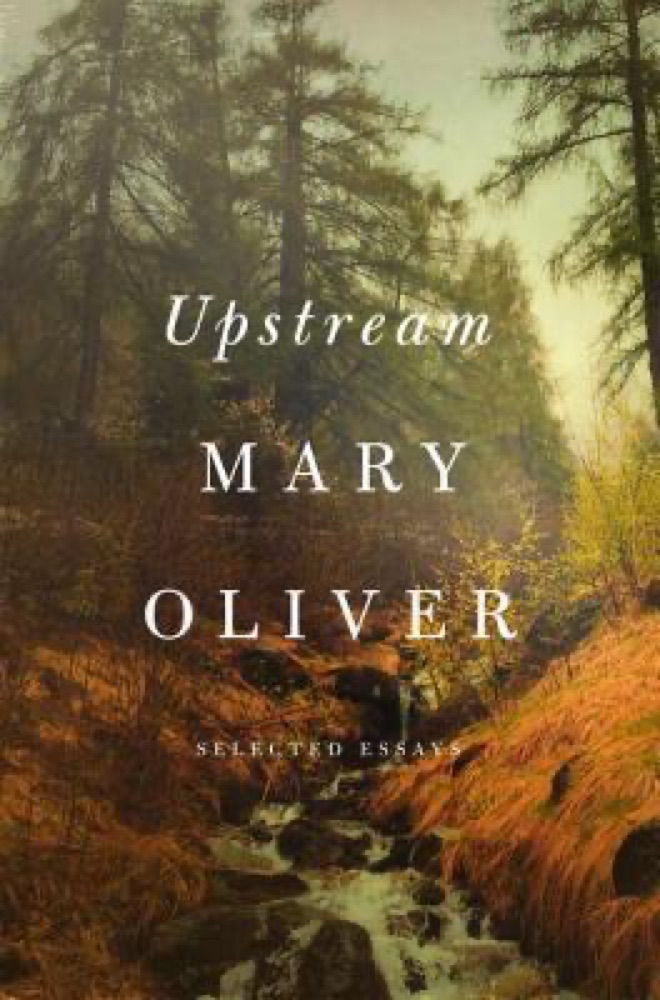
 Upstream: Selected Essays
Quotes from the Book
How I go to the wood Ordinarily, I go to the woods alone, with not a single friend, for they are all smilers and talkers and therefore unsuitable. I don’t really want to be witnessed talking to the catbirds or hugging the old black oak tree. I have my way of praying, as you no doubt have yours. Besides, when I am alone I can become invisible. I can sit on the top of a dune as motionless as an uprise of weeds, until the foxes run by unconcerned. I can hear the almost unhearable sound of the roses singing. If you have ever gone to the woods with me, I must love you very much.
1.2k
If you suddenly and unexpectedly feel joy, don’t hesitate. Give in to it. There are plenty of lives and whole towns destroyed or about to be. We are not wise, and not very often kind. And much can never be redeemed. Still life has some possibility left. Perhaps this is its way of fighting back, that sometimes something happened better than all the riches or power in the world. It could be anything, but very likely you notice it in the instant when love begins. Anyway, that’s often the case. Anyway, whatever it is, don’t be afraid of its plenty. Joy is not made to be a crumb. (Don't Hesitate)
677
I Worried" I worried a lot. Will the garden grow, will the rivers flow in the right direction, will the earth turn as it was taught, and if not how shall I correct it? Was I right, was I wrong, will I be forgiven, can I do better? Will I ever be able to sing, even the sparrows can do it and I am, well, hopeless. Is my eyesight fading or am I just imagining it, am I going to get rheumatism, lockjaw, dementia? Finally I saw that worrying had come to nothing. And gave it up. And took my old body and went out into the morning, and sang.
199
The poet dreams of the mountain Sometimes I grow weary of the days, with all their fits and starts. I want to climb some old gray mountains, slowly, taking The rest of my lifetime to do it, resting often, sleeping Under the pines or, above them, on the unclothed rocks. I want to see how many stars are still in the sky That we have smothered for years now, a century at least. I want to look back at everything, forgiving it all, And peaceful, knowing the last thing there is to know. All that urgency! Not what the earth is about! How silent the trees, their poetry being of themselves only. I want to take slow steps, and think appropriate thoughts. In ten thousand years, maybe, a piece of the mountain will fall.
135
When When it’s over, it’s over, and we don’t know any of us, what happens then. So I try not to miss anything. I think, in my whole life, I have never missed The full moon or the slipper of its coming back. Or, a kiss. Well, yes, especially a kiss.
100
On the beach, at dawn: Four small stones clearly Hugging each other. How many kinds of love Might there be in the world, And how many formations might they make And who am I ever To imagine I could know Such a marvelous business? When the sun broke It poured willingly its light Over the stones That did not move, not at all, Just as, to its always generous term, It shed its light on me, My own body that loves, Equally, to hug another body.
88
The sweetness of dogs (fifteen) What do you say, Percy? I am thinking of sitting out on the sand to watch the moon rise. Full tonight. So we go and the moon rises, so beautiful it makes me shudder, makes me think about time and space, makes me take measure of myself: one iota pondering heaven. Thus we sit, I thinking how grateful I am for the moon’s perfect beauty and also, oh! How rich it is to love the world. Percy, meanwhile, leans against me and gazes up into my face. As though I were his perfect moon.
80
Did you too see it, drifting, all night, on the black river? Did you see it in the morning, rising into the silvery air - An armful of white blossoms, A perfect commotion of silk and linen as it leaned into the bondage of its wings; a snowbank, a bank of lilies, Biting the air with its black beak? Did you hear it, fluting and whistling A shrill dark music - like the rain pelting the trees - like a waterfall Knifing down the black ledges? And did you see it, finally, just under the clouds - A white cross Streaming across the sky, its feet Like black leaves, its wings Like the stretching light of the river? And did you feel it, in your heart, how it pertained to everything? And have you too finally figured out what beauty is for? And have you changed your life?
49
Percy wakes me (fourteen) Percy wakes me and I am not ready. He has slept all night under the covers. Now he’s eager for action: a walk, then breakfast. So I hasten up. He is sitting on the kitchen counter Where he is not supposed to be. How wonderful you are, I say. How clever, if you Needed me, To wake me. He thought he would a lecture and deeply His eyes begin to shine. He tumbles onto the couch for more compliments. He squirms and squeals: he has done something That he needed And now he hears that it is okay. I scratch his ears. I turn him over And touch him everywhere. He is Wild with the okayness of it. Then we walk, then He has breakfast, and he is happy. This is a poem about Percy. This is a poem about more than Percy. Think about it.
45
In your hands The dog, the donkey, surely they know They are alive. Who would argue otherwise? But now, after years of consideration, I am getting beyond that. What about the sunflowers? What about The tulips, and the pines? Listen, all you have to do is start and There’ll be no stopping. What about mountains? What about water Slipping over rocks? And speaking of stones, what about The little ones you can Hold in your hands, their heartbeats So secret, so hidden it may take years Before, finally, you hear them?
38
The poet dreams of the classroom I dreamed I stood up in class And I said aloud: Teacher, Why is algebra important? Sit down, he said. Then I dreamed I stood up And I said: Teacher, I’m weary of the turkeys That we have to draw every fall. May I draw a fox instead? Sit down, he said. Then I dreamed I stood up once more and said: Teacher, My heart is falling asleep And it wants to wake up. It needs to be outside. Sit down, he said.
28
How heron comes It is a negligence of the mind not to notice how at dusk heron comes to the pond and stands there in his death robes, perfect servant of the system, hungry, his eyes full of attention, his wings pure light
20
Sing, if you can sing, and if not still be musical inside yourself.
15
Tom Dancer’s gift of a whitebark pine cone You never know What opportunity Is going to travel to you, Or through you. Once a friend gave me A small pine cone- One of a few He found in the scat Of a grizzly In Utah maybe, Or Wyoming. I took it home And did what I supposed He was sure I would do- I ate it, Thinking How it had traveled Through that rough And holy body. It was crisp and sweet. It was almost a prayer Without words. My gratitude, Tom Dancer, For this gift of the world I adore so much And want to belong to. And thank you too, great bear
14
I own a house, small but comfortable. In it is a bed, a desk, a kitchen, a closet, a telephone. And so forth you know how it is: things collect. Outside the summer clouds are drifting by, all of them with vague and beautiful faces. And there are the pines that bush out spicy and ambitious, although they do not even know their names. And there is the mockingbird; over and over he rises from his thorn-tree and dances—he actually dances, in the air. And there are days I wish I owned nothing, like the grass.
4
and the heart, if it is still alive, feels something— a yearning for which we have no name but which we may remember, years later, in the darkness, from “A Fox in the Dark
2
Ordinarily I go to the woods alone, with not a single friend, for they are all smilers and talkers and therefore unsuitable. I don’t really want to be witnessed talking to the catbirds or hugging the old black oak tree. I have my ways of praying, as you no doubt have yours. Besides, when I am alone I can become invisible. I can sit on the top of a dune as motionless as an uprise of weeds, until the foxes run by unconcerned. I can hear the almost unhearable sound of the roses singing. If you have ever gone to the woods with me, I must love you very much.
1
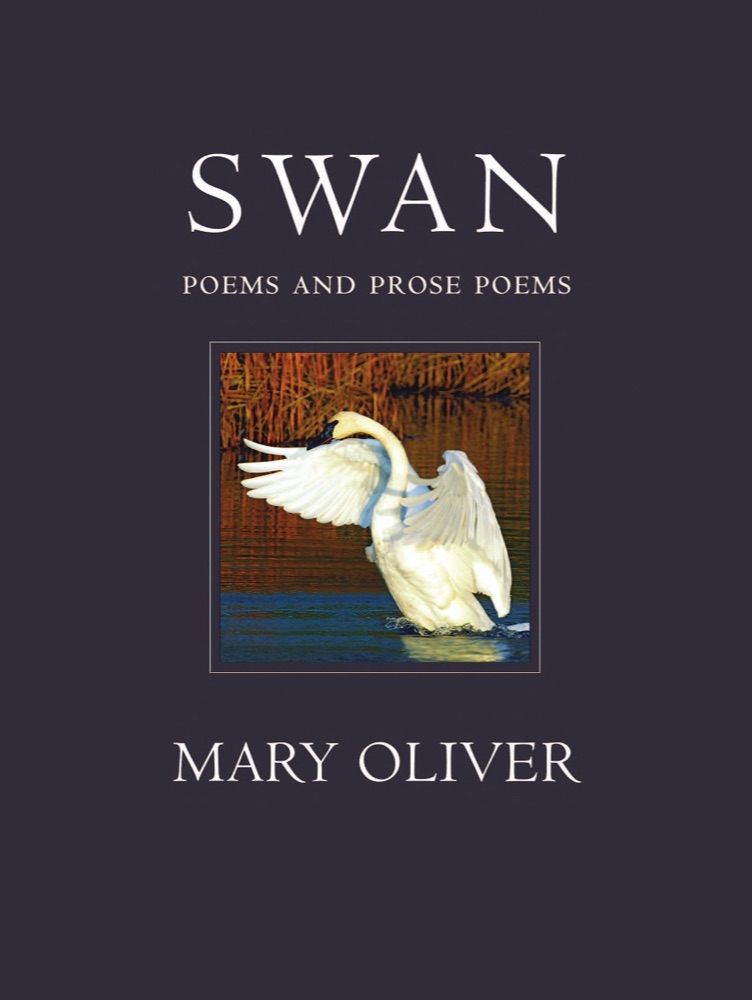
I have my ways of praying, as you no doubt have yours. Besides, when I am alone I can become invisible. I can sit on the top of a dune as motionless as an uprise of weeds, until the foxes run by unconcerned. I can hear the almost unhearable sound of the roses singing. — Mary Oliver, from “How I Go to the Woods,” Swan: Poems and Prose Poems (Beacon Press, 2010)
1
Or, how sweet just to say of a great, burly man: he's a honey.
1
Watch on YouTube
About Mary Oliver
More by Mary Oliver
All books by Mary Oliver →
About the book
“Joy is not made to be a crumb,” writes Mary Oliver, and certainly joy abounds in her new book of poetry and prose poems. Swan , her twentieth volume, shows us that, though we may be “made out of the dust of stars,” we are of the world she captures here so the acorn that hides within it an entire tree; the wings of the swan like the stretching light of the river; the frogs singing in the shallows; the mockingbird dancing in air. Swan is Oliver’s tribute to “the mortal way” of desiring and living in the world, to which the poet is renowned for having always been “totally loyal.”
As the Los Angeles Times noted, innumerable readers go to Oliver’s poetry “for solace, regeneration and inspiration.” Few poets express the immense complexities of human experience as skillfully, or capture so memorably the smallest nuances. Speaking, for example, of stones, she writes, “the little ones you can
Book details
- First published
- 2010
- Author
- Mary Oliver
- Genre
- Literature
- Goodreads rating
- 4.26 (3k ratings)
Keep reading
 Blue Horses
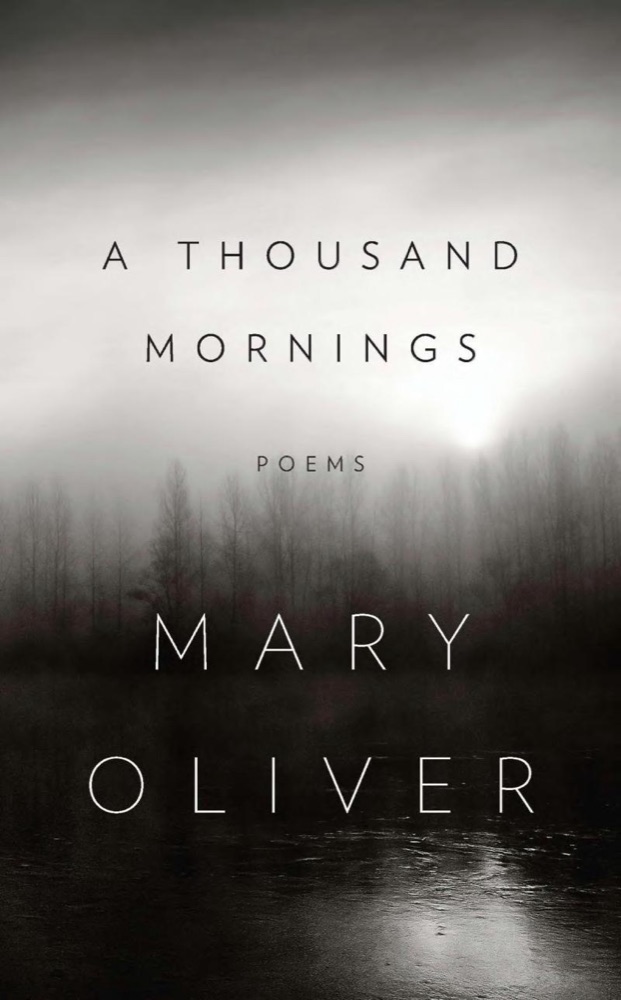 A Thousand Mornings: Poems
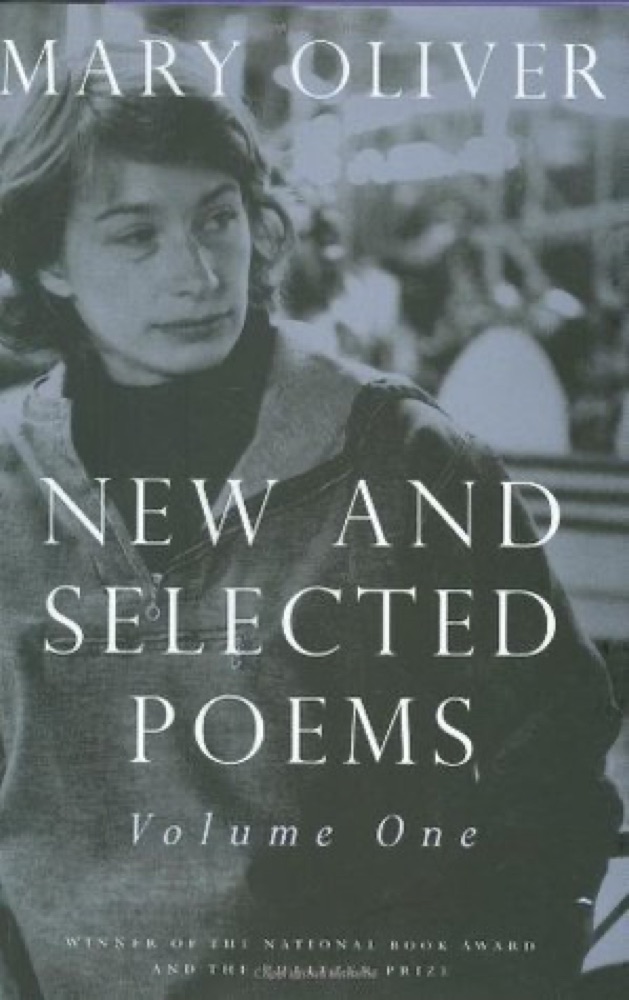 New and Selected Poems, Vol. 2
 The Soul of Rumi: A New Collection of Ecstatic Poems – Coleman Barks's Sublime Renderings of the 13th-Century Sufi Mystic's Insights into Divine Love and the Human Heart
 Rose
Rose
 Collected Poems
 The Collected Poems of W.B. Yeats
 The Complete Poems
 Gitanjali
 The Complete Poems
 Dearly
 The Complete Poems
 Edinburgh
 The Sandman: Endless Nights
 Corrag
 Selected Poems
 The Complete Poems of Emily Dickinson
 Wandering
 Rilke's Book of Hours: Love Poems to God
 100 Selected Poems
 Lunch Poems
 The Complete Poems and Plays, 1909-1950
 Selected Poems
 A Shropshire Lad
 Selected Poems
 Sonnets to Orpheus
 The Complete Poems
 Abarat
 Duino Elegies
 The Carrying
 Madness, Rack, and Honey: Collected Lectures
 Songs of Innocence and of Experience
 Selected Poems
 In the Wild Light
 All of Us: The Collected Poems
 The Poetry of Robert Frost
 Leaves of Grass
 Poems New and Collected
 Poems, 1962-2012
 Pilgrim at Tinker Creek
 World of Wonders: In Praise of Fireflies, Whale Sharks, and Other Astonishments
 A Pocketful of Crows
 The World and Other Places: Stories
 The Collected Poems
 Plainwater: Essays and Poetry
 Dandelion Wine
 The Complete Poems
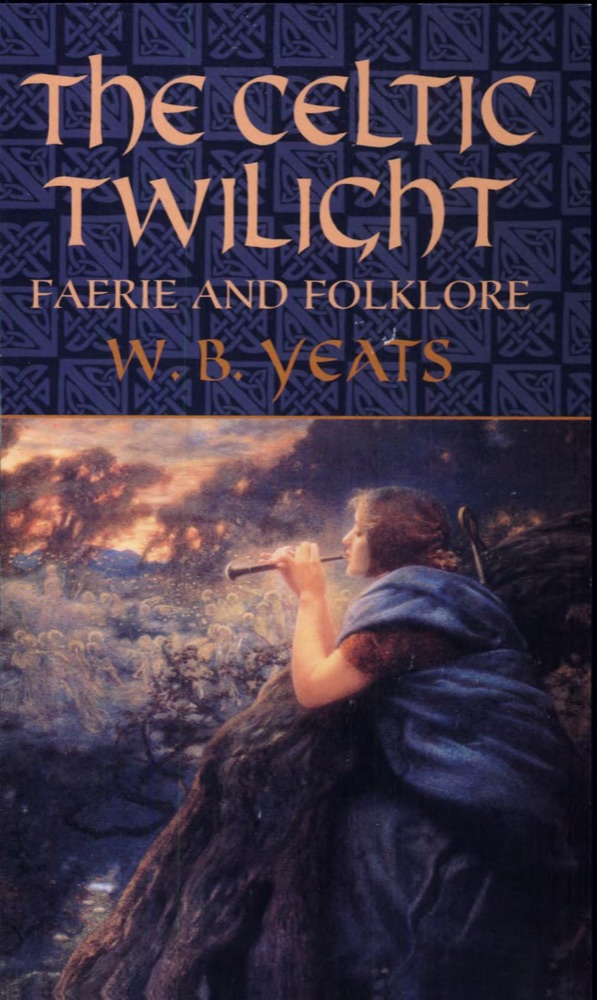 The Celtic Twilight: Faerie and Folklore
 Heartwood
 Phantastes
 The Story of My Life
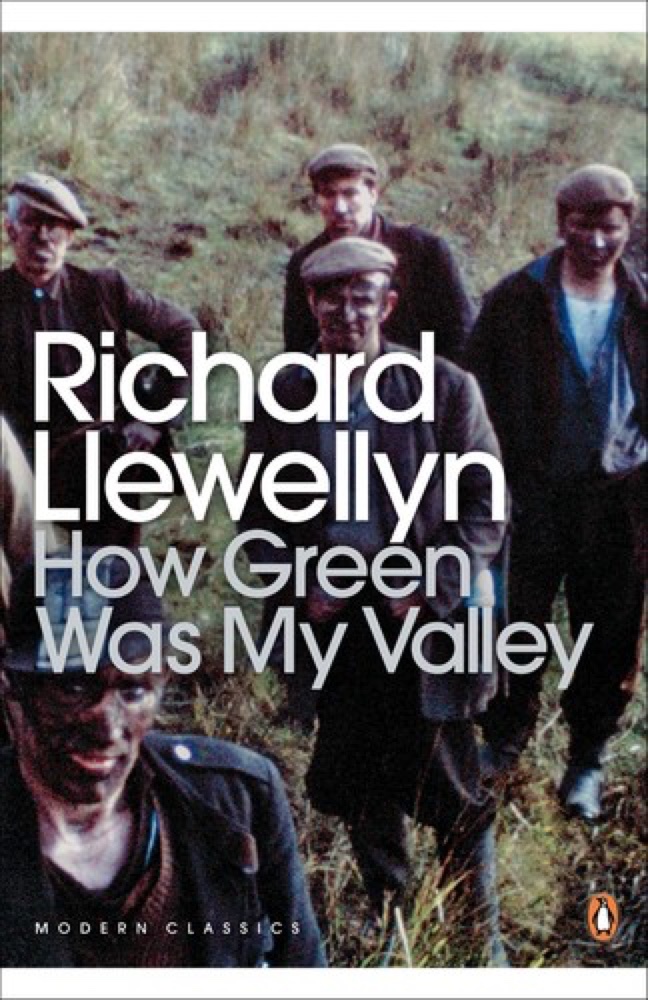 How Green Was My Valley
 The Madness Vase
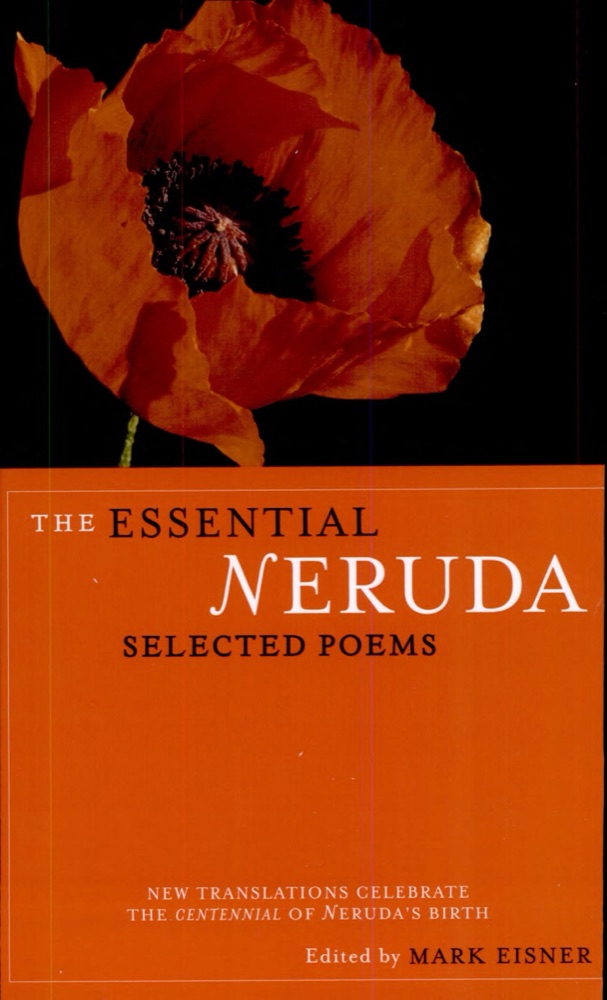 The Essential Neruda: Selected Poems
 Crazy Brave
 Perennials
 Either/Or: A Fragment of Life
 Notes From The Tilt-A-Whirl: Wide-Eyed Wonder in God's Spoken World
 Wind, Sand and Stars
 Field Guide to the Haunted Forest