
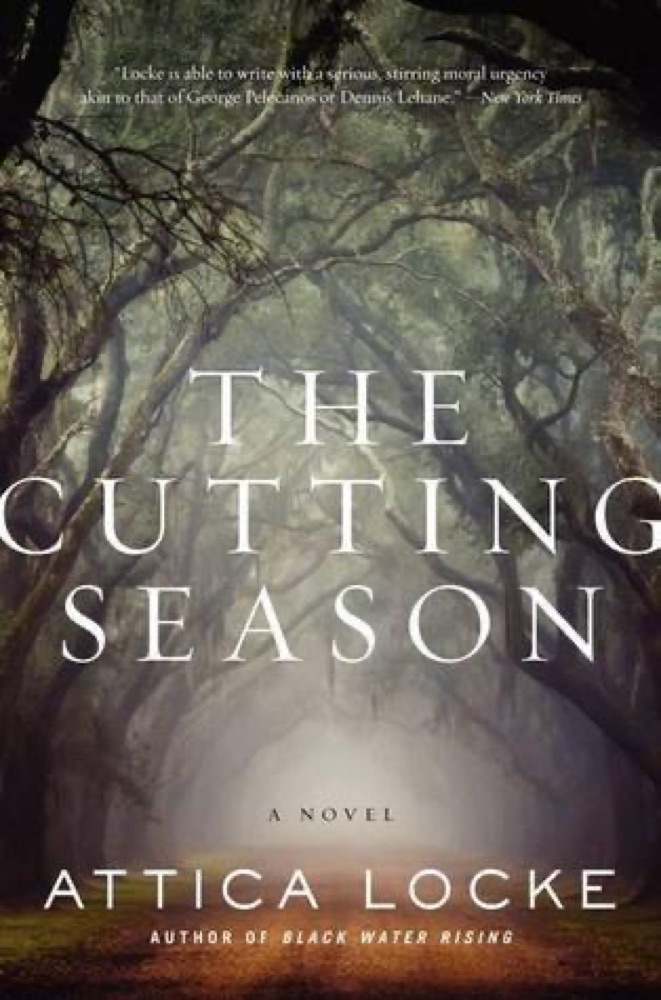
 The Cutting Season
Quotes from the Book
This is America,” Jay says. “You can sue anybody over anything.
1
Standing over his bathroom sink at dawn, staring at the blood-crusted aftermath, he found the darkest center of the blackest bruise and stuck his middle finger straight into it, feeling nothing that a year without his wife hadn’t overprepared him for. What, after all, was a scratch on the surface of a body that had already been hollowed out?
Her voice caught. She swallowed and tried to go on. "It was the wallet--that's how I knew it was Michael," she said. "I bought it for him our last Christmas together." She started to cry again, softly and with a sense of deflation, oxygen leaking out slowly as she sank into herself, salty tears falling.
Her voice caught. She swallowed and tried to goon. "It was the wallet--that's how I knew it was Michael," she said. "I bought it for him our last Christmas together." She started to cry again, softly and with a sense of deflation, oxygen leaking out slowly as she sank into herself, salty tears falling.
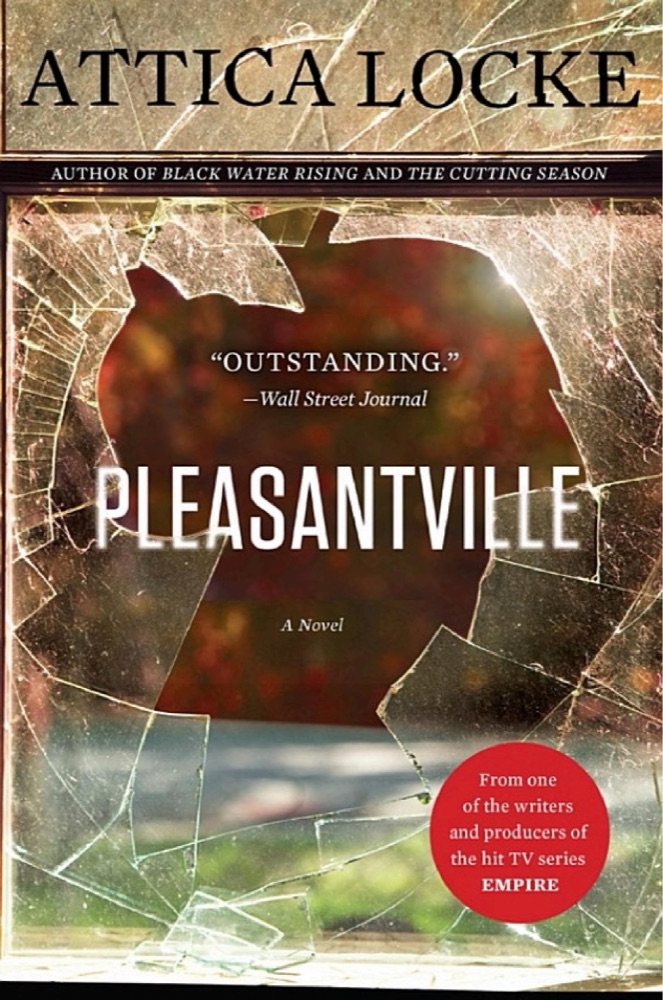
As he looks closer at the parade of crepe myrtles down Ledwicke, the carefully tended lawns and proud homes, lived in and loved by settlers, pioneers who, a generation before Jay, had paved the way for everything he has in his life, starting with the power of protest, the example they gracefully laid, brick by brick—and as he thinks of Arlee on her knees, caring for the memorial of a girl she didn’t know—it dawns on him that he may have kept Pleasantville on his desk not for the money, his supposed way out, but for a back way in, a way back to himself.
He felt inexplicably, undeservedly free. And he owed it to somebody to do something with this, didn’t he? Do it for them.
They’re trying to break Pleasantville.” The mighty 259 no more, he says, but a voting bloc that can be destabilized. The misleading flyers, the targeted approach in the streets—if they were able to do something similar in urban precincts across the country, pull votes that shouldn’t on paper belong to them, they could actually swing a national race. “This isn’t about Wolcott, or even about Houston. This is about the White House in 2000.
Trials tell a story, of course, at least two sides of one, the witness list playing like chapter headings, signposts along the way, directing your attention this way or that.
The Harris County District Civil Court has long set, by its own bylaws, an ancillary judge, a name assigned and rotated every two weeks, to handle emergency motions, and Judge Irwin Little, through no choice of his own, got this one. A “doozy,” he calls it from the bench.
Now, see, how would you know that?” Jay says. “Last I checked, grand jury testimony is sealed. Hell, I won’t even see it till discovery. So unless you’re prepared to admit to having an inside track to the district attorney’s office, the head of which you just so happen to be backing in the mayor’s race, I don’t see how you could know the details of what went on in that grand jury room.
Well, back in ’94, it wasn’t a truck driving, but rather idling on Guinevere, on the back side of Gethsemane Baptist Church, the very day Deanne went missing. And it wasn’t an eighteen-wheeler, but a van with a white guy, midthirties, sitting at the wheel. Same thing last year, a white van, idling on the edges of the neighborhood the day Tina Wells disappeared.
According to the autopsy report, Deanne Duchon was alive as little as eight hours before she was found in the creek. With Tina Wells, it was estimated at as little as five hours before she was discovered. “He didn’t kill them right away. They were alive somewhere for five days,” Lon says. “And found on the sixth.
Here on paper, they are mirror images of each other. Each figure has an X marked across the throat, and the following notation, in Lonnie’s handwriting: fractured hyoid bone (strangulation). Down the arms and legs, there are more notes: little to no bruising (no defensive wounds), followed by a question mark. And the worst of it, the words scribbled near the tight V between the legs: semen on the inner thighs (no sign of vaginal penetration). Jay feels a sour heat at the back of his throat, his dinner threatening to come back up.
Nice to see you, Axe,” Jay says. He, after all these years, remembers the man fondly, remembers when Hathorne was the only name he trusted on a police force filled with good ol’ boys.
The leaflets show Axel’s picture, an image of the candidate surrounded by a handful of men in blue. The Houston Police Department endorsed him in the general, and there is every reason to assume it will back him again in the runoff against Sandy Wolcott, the D.A., who easily scored the endorsement of the Harris County sheriff. The battle of the law-and-order candidates has made for one of the oddest campaign seasons in Houston’s history.
What was once a segregated oasis, a black Levittown where flowers grew and families thrived, now seems hardly worth the gas money for young black professionals, not for a daily commute ten miles past downtown, not when they can buy property anywhere these days. No matter the best efforts of the old-timers to keep the neighborhood as it’s always been, to secure its borders, keep the money in and the newcomers out, there are, every year, new families who are buying their way in, working-class blacks from places like Fifth Ward and South Park, and Latino families from the north side, who see in its quaint, tree-lined streets their chance at the American dream. You can’t put up fences on change.
Alicia Nowell makes three girls now who have gone missing in and around Pleasantville. The first one in ’94, the second last year. Two girls, more than a year apart, is a mean coincidence. Three girls is officially a problem.
The judgment itself has gone unpaid, held up on countless appeals for well over ten years now. Neither Jay nor his clients has seen a penny.
Watch on YouTube
About Attica Locke
We have collected 32 quotes from 2 books by Attica Locke on BookQuoters.
More about the author →More by Attica Locke
The Cutting Season
About the book
WINNER OF THE HARPER LEE PRIZE FOR LEGAL FICTION
Wall Street Journal BEST BOOK OF THE YEAR
LONGLISTED FOR THE BAILEY’S WOMEN’S PRIZE FOR FICTION
From Attica Locke, a writer and producer of FOX’s Empire, this sophisticated thriller sees lawyer Jay Porter—hero of her bestseller Black Water Rising—return to fight one last case, only to become embroiled in a dangerous game of shadowy politics and a witness to how far those in power are willing to go to win.
Fifteen years after his career-defining case against Cole Oil, Jay Porter is broke and tired. That victory might have won the environmental lawyer fame, but thanks to a string of appeals, he hasn't seen a dime. His latest case—representing Pleasantville in the wake of a chemical fire—is dragging on, shaking his confidence and raising doubts about him within this upwardly mobile black community on Houston's north side. Thou
Book details
- First published
- 2015
- Author
- Attica Locke
- Genre
- Mystery
- Goodreads rating
- 3.96 (4k ratings)
Keep reading
 The Brass Verdict
 Sycamore Row
 The Cold Dish
 Just One Look
 Turning Angel
 The Bone Tree
 Crook Manifesto
 The Client
 City Spies
 Harlem Shuffle
 The Scarecrow
 The Last Coyote
 Good Girl, Bad Blood
 The Boys from Biloxi
 Betrayal of Faith
 The Trees
 The Only Good Indians
 Clown Town
 Y is for Yesterday
 Little Boy Lost
 The Force
 Intruder in the Dust
 Mohawk
 The Burgess Boys
 The Simple Truth
 End of Watch
 L.A. Requiem
 Down Cemetery Road
 Welcome to Braggsville
 Lovecraft Country
 Orient
 Scavenger Hunt
 The Good Daughter
 The Complete Stories
 Omens
Omens
 The Big Over Easy
 Caught
 The Fact of a Body: A Murder and a Memoir
 I'll Be Gone in the Dark: One Woman's Obsessive Search for the Golden State Killer
 Crave
Crave
 The Night in Question
 Joe Country
 A Knock at Midnight: A Story of Hope, Justice, and Freedom
 All American Boys
 Whalefall
 Fade Away
 The Innocent
 The Wolf in Winter
 A Fatal Grace
 The Shipping News
 The Bullet That Missed
 The Hunter
 Life in a Fishbowl
 Helter Skelter: The True Story of the Manson Murders
 Sea of Silver Light
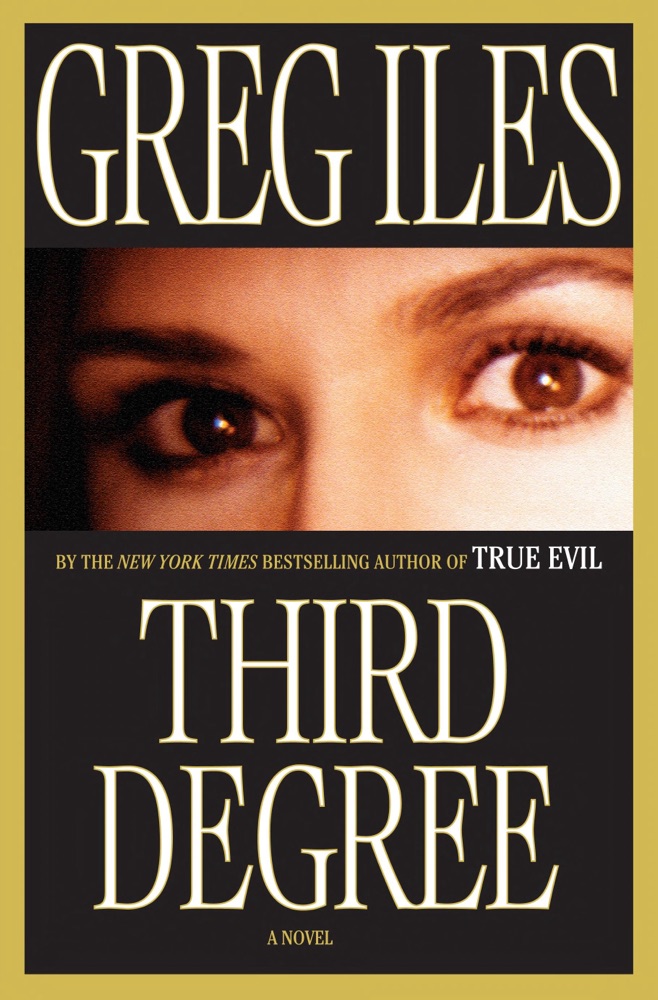 Third Degree
 I Have Some Questions for You