
 Raise High the Roof Beam, Carpenters & Seymour: An Introduction
Quotes from the Book
The fact is always obvious much too late, but the most singular difference between happiness and joy is that happiness is a solid and joy a liquid.
686
Poets are always taking the weather so personally. They're always sticking their emotions in things that have no emotions.
596
I mean they don't seem able to love us just the way we are. They don't seem able to love us unless they can keep changing us a little bit. They love their reasons for loving us almost as much as they love us, and most of the time more.
287
If I were God, I certainly wouldn't want people to love me sentimentally. It's too unreliable.
205
She wrote to him fairly regularly, from a paradise of triple exclamation points and inaccurate observations.
155
You asked me how to get out of the finite dimensions when I feel like it. I certainly don't use logic when I do it. Logic's the first thing you have to get rid of.
142
Written in ink, in German, in a small, hopelessly sincere handwriting, were the words "Dear God, life is hell." Nothing led up to or away from it. Alone on the page, and in the sickly stillness of the room, the words appeared to have the stature of an uncontestable, even classic indictment. X stared at the page for several minutes, trying, against heavy odds, not to be taken in. Then, with far more zeal than he had done anything in weeks, he picked up a pencil stub and wrote down under the inscription, in English, "Fathers and teachers, I ponder, 'What is Hell?' I maintain that it is the suffering of being unable to love.
135
The worst thing that being an artist could do to you would be that it would make you slightly unhappy constantly.
106
They love their reasons for loving us almost as much as they love us, and most of the time more. It's not so good, that way.
93
You know that apple Adam ate in the Garden of Eden, referred to in the Bible?' he asked. 'You know what was in that apple? Logic. Logic and intellectual stuff. That was all that was in it. So—this is my point—what you have to do is vomit it up if you want to see things as they really are....' The trouble is,' Teddy said, 'most people don't want to see things the way they are. They don't even want to stop getting born and dying all the time, instead of stopping and staying with God, where it's really nice.' He reflected. 'I never saw such a bunch of apple-eaters,' he said. He shook his head.
81
She was a girl who for a ringing phone dropped exactly nothing. She looked as if her phone had been ringing continually ever since she had reached puberty.
79
You take a really sleepy man, Esmé, and he always stands a chance of again becoming a man with all his fac—with all his f-a-c-u-l-t-i-e-s intact.
75
Her joke of a name aside, her general unprettiness aside, she was, in terms of permanently memorable, immoderately perceptive, small-area faces, a stunning and final girl.
64
Each of his phrases was rather like a little ancient island, inundated by a miniature sea of whiskey.
50
Listen, if you're not going to be a nun or something, you might as well laugh.
48
I prayed for the city to be cleared of people, for the gift of being alone—a-l-o-n-e: which is the one New York prayer that rarely gets lost or delayed in channels, and in no time at all everything I touched turned to solid loneliness.
40
I mean it's very hard to meditate and live a spiritual life in America. People think you're a freak if you try to.
40
That cat was a spy. You had to take a pot shot at it. It was a very clever German midget dressed up in a cheap fur coat.
36
But doctors talk about cells as if they had such unlimited importance all by themselves. As if they didn't really belong to the person that has them." Teddy brushed back his hair from his forehead with one hand. "I grew my own body," he said. "Nobody else did it for me. So if I grew it, I must have known how to grow it. Unconsciously, at least. I may have lost the conscious knowledge of how to grow it sometime in the last few hundred thousand years, but the knowledge is still there, because—obviously—I've used it.
34
I've never seen such a bunch of apple-eaters.
29
You know Sven? The man who takes care of the gym?' he asked. He waited till he got a nod from Nicholson. 'Well, if Sven dreamed tonight that his dog died, he'd have a very, very bad night's sleep, because he's very fond of that dog. But when he woke up in the morning, everything would be all right. He'd know it was only a dream.' Nicholson nodded. 'What's the point exactly?' The point is if his dog really died, it would be exactly the same thing. Only he wouldn't know it. I mean he wouldn't wake up till he died himself.
28
I see you are looking at my feet," he said to her when car was in motion. "I beg your pardon?" said the woman. "I said I see you're looking at my feet". "I beg your pardon. I happened to be looking at the floor," said the woman, and faced the doors of the car. "If you want to look at my feet, say so," said the young man. "But don't be a God-damned sneak about it." "Let me out here, please," the woman said quickly to the girl operating the car. The car doors opened and the woman got out without looking back. "I have two normal feet and I can't see the slightest God-damned reason why anybody should stare at them," said the young man.
24
My father wrote beautifully,” Esmé interrupted. “I’m saving a number of his letters for posterity.” I said that sounded like a very good idea. I happened to be looking at her enormous-faced, chrono-graphic-looking wristwatch again. I asked if it had belonged to her father. She looked down at her wrist solemnly. “Yes, it did,” she said. “He gave it to me just before Charles and I were evacuated.” Self-consciously, she took her hand off the table, saying, “Purely as a momento, of course.” She guided the conversation in a different direction. “I’d be extremely flattered if you’d write a story exclusively for me sometime. I’m an avid reader.” I told her I certainly would, if I could. I said that I wasn’t terribly prolific. “It doesn’t have to be terribly prolific! Just so that isn’t childish and silly.” She reflected. “I prefer stories about squalor.” “About what?” I said, leaning forward. “Squalor. I’m extremely interested in squalor.
21
You're just being logical...You're just giving me a regular, intelligent answer. I was trying to help you. You asked me how I get out of the finite dimensions when I feel like it. I certainly don't use logic when I do it. Logic's the first thing you have to get rid of.
20
Look at 'em,' he said. 'Goddam fools.' 'Who?' said Ginnie. 'I don't know. Anybody.
19
Mary Jane. Listen. Please," Eloise said, sobbing. "You remember our freshman year, and I had that brown-and-yellow dress I bought in Boise, and Miriam Ball told me nobody wore those kind of dresses in New York, and I cried all night?" Eloise shook Mary Jane's arm. "I was a nice girl," she pleaded, "wasn't I?
17
Father said I have no sense of humor at all. He said I was unequipped to meet life because I have no sense of humor.
17
Ah, Sharon Lipschutz," said the young man. "How that name comes up. Mixing memory and desire.
16
Tilting his head back he slowly released an enormous quantity of smoke from his mouth and drew it up through his nostrils. He continued to smoke in this "French-inhale" style. Very probably, it was not part of the sofa vaudeville of a showoff but, rather, the private, exposed achievement of a young man who, at one time or another, might have tried shaving himself left-handed.
13
Did you know?
- The collection's epigraph is a Zen koan attributed to the Rinzai master Hakuin Ekaku: "We know the sound of two hands clapping. But what is the sound of one hand clapping?"
- Outside the United States the book is often published under the title For Esme - with Love and Squalor, and Other Stories, taking its name from one of its best-known stories.
- The opening story, "A Perfect Day for Bananafish," introduces Seymour Glass, a character central to much of Salinger's later Glass family fiction.
- Most of the nine stories first appeared in magazines, with several originally published in The New Yorker.
- It was J.D. Salinger's only published collection of short stories.
About J.D. Salinger
J.D. Salinger (1919-2010) was an American author best known for his 1951 novel The Catcher in the Rye. Famously reclusive in his later life, he wrote about the Glass family across several works and largely withdrew from publishing after the mid-1960s.
More about the author →More by J.D. Salinger
Raise High the Roof Beam, Carpenters & Seymour: An Introduction
 Franny and Zooey
 The Catcher in the Rye
About the book
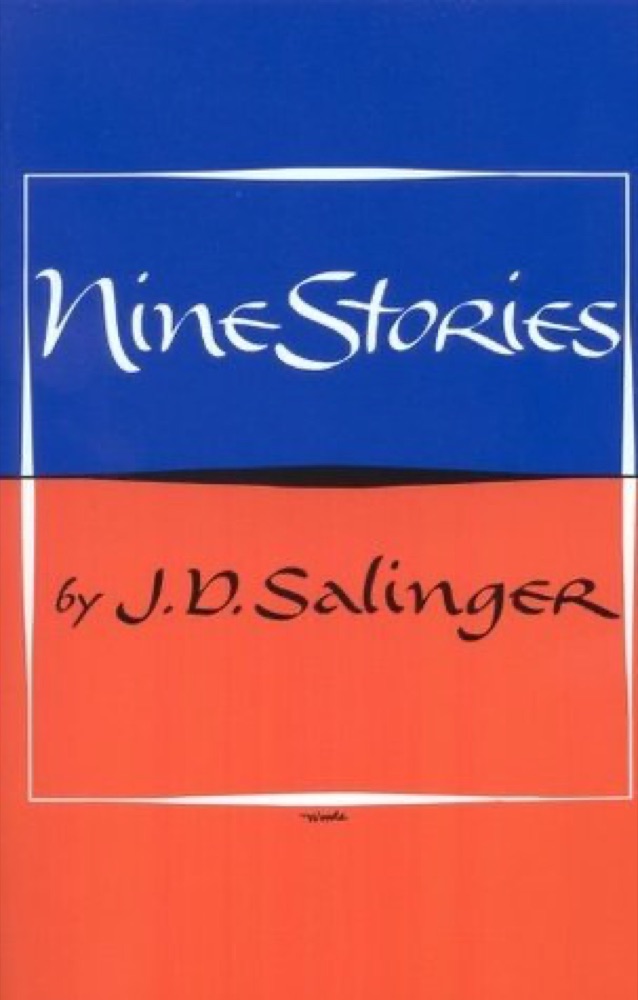
Nine Stories is J.D. Salinger's only published collection of short fiction, gathering nine pieces that had appeared in magazines such as The New Yorker between the late 1940s and early 1950s. It opens with "A Perfect Day for Bananafish," which introduces Seymour Glass, and includes other celebrated stories like "For Esme—with Love and Squalor," "Uncle Wiggily in Connecticut," and "Teddy." The stories move among returning soldiers, disillusioned adults, and unusually perceptive children, often turning on a single charged encounter or a sudden, unsettling ending.
Recurring concerns run through the collection: the lingering trauma of World War II, the loss of innocence, the gulf between children's clarity and adult phoniness, and a search for spiritual or emotional connection. Salinger threads Zen and Eastern thought through the book, most visibly in its epigraph, the famous koan asking what the sound of one hand clapping is, an invitation to read the stories' ambiguous endings as puzzles to be intuited rather than solved.
Published by Little, Brown and Company on April 6, 1953, Nine Stories was a notable commercial success for a story collection, spending several months on the New York Times bestseller list. It helped cement Salinger's reputation after The Catcher in the Rye and remains widely studied and admired, with "A Perfect Day for Bananafish" and "For Esme—with Love and Squalor" frequently cited among the finest American short stories of the twentieth century.
Book details
- First published
- 1953
- Length
- 302 pages
- Reading time
- 5 hours
- Author
- J.D. Salinger
- Genre
- Fiction
- Goodreads rating
- 4.18 (150k ratings)
- First line
- “There were ninety-seven New York advertising men in the hotel, and, the way they were monopolizing the long-distance lines, the girl in 507 had to wait from noon till almost two-thirty to get her call through.”
Critical reception
- The collection was a commercial success notable for a volume of short stories, spending several months on the New York Times bestseller list.
- It received generally positive reviews and is widely regarded as a landmark of American short fiction.
- Stories such as "A Perfect Day for Bananafish" and "For Esme—with Love and Squalor" are frequently anthologized and studied as classics of the form.
Keep reading
 The Color Master: Stories
 Dept. of Speculation
 Make Something Up: Stories You Can't Unread
 The Illustrated Man
 Jailbird
 Too Much Happiness: Stories
 Girl with Curious Hair
 Fathers and Sons
 The Moonstone
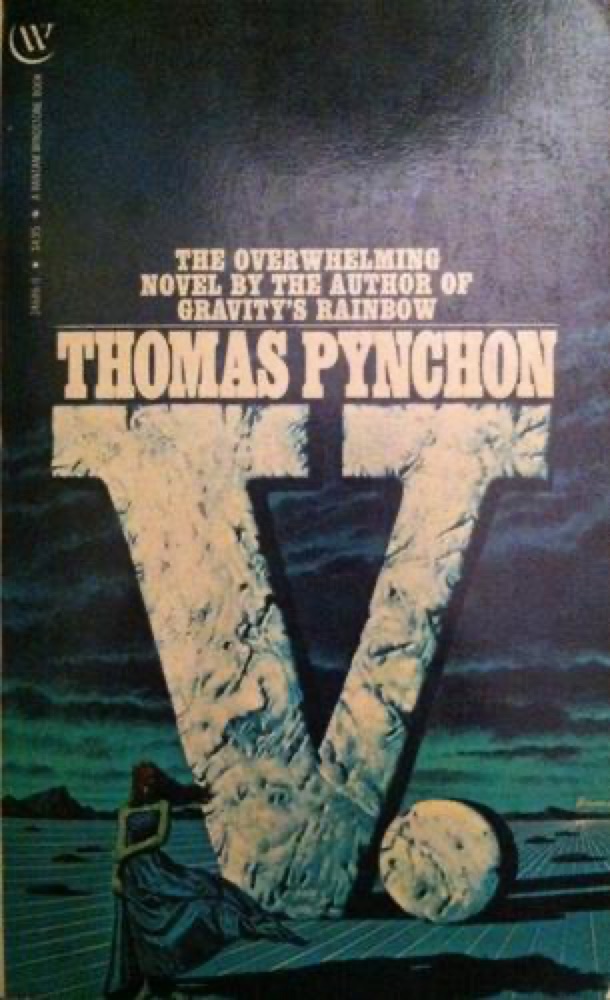 V.
V.
 The Mandarins
 Lit
Lit
 A Fraction of the Whole
 Sixty Stories
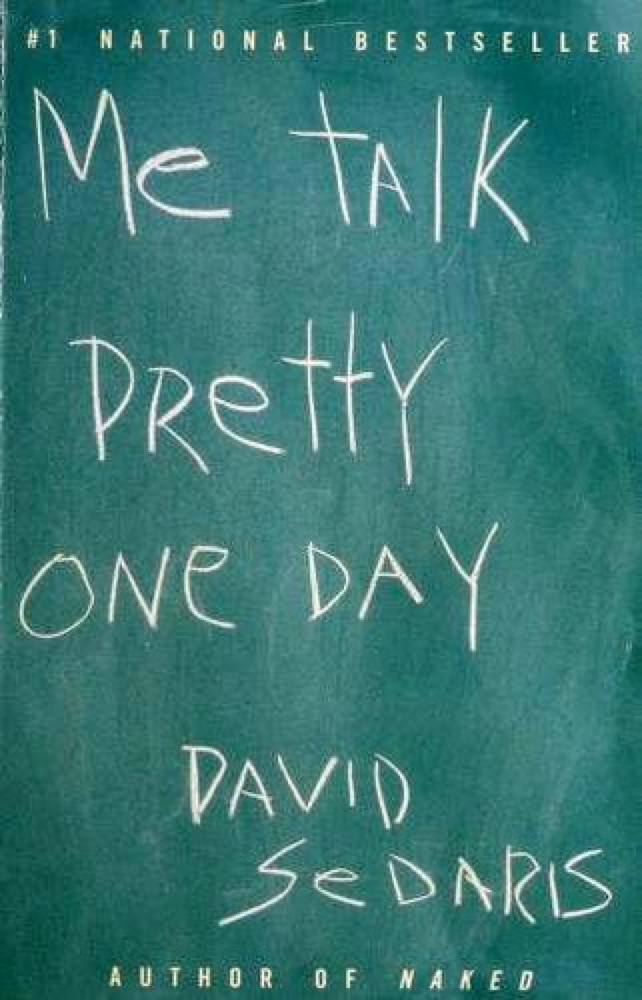 Me Talk Pretty One Day
 Pastoralia
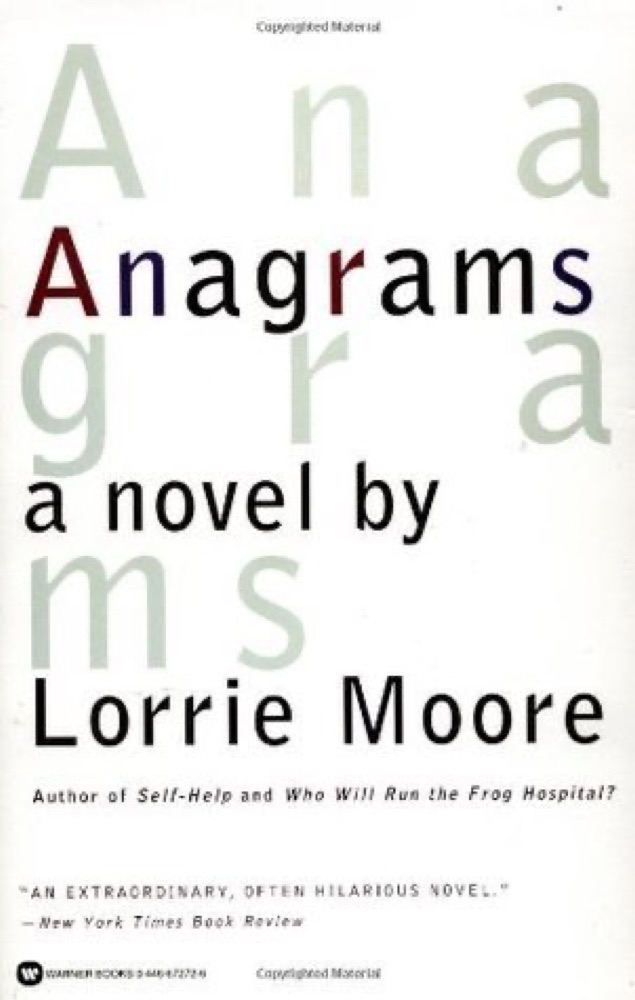 Anagrams
 Gaudy Night
 The Adolescent
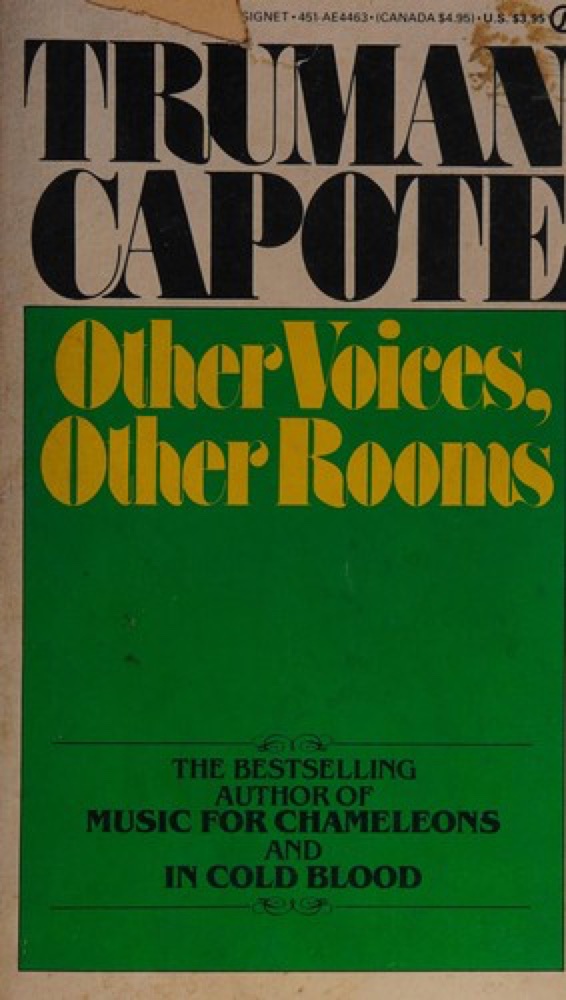 Other Voices, Other Rooms
 I Have No Mouth & I Must Scream
 On Beauty
 Homesick for Another World
 The Liar
 The Corrections
 The Blythes Are Quoted
 A Manual for Cleaning Women: Selected Stories
 Needful Things
 False Memory
 In the Heart of the Heart of the Country and Other Stories
 The Brooklyn Follies
 Brief Interviews with Hideous Men
 Selected Stories
 The Story of a New Name
 The Sleepwalker's Guide to Dancing
 Speedboat
 Notes of a Dirty Old Man
 The Adventures of Augie March
 The Tsar of Love and Techno
 Cat's Cradle
 Take the Cannoli
 The Complete Stories
 Old Babes in the Wood: Stories
 The Imperfectionists
 Crazy Little Thing
 Bradbury Stories: 100 of His Most Celebrated Tales
 The Moving Finger
 The Finkler Question
 Speaking from Among the Bones
 Birds of America
 NOS4A2
 Manalive
 NW
NW
 Purity
 The Broom of the System
 The Story of the Lost Child
 Super Sad True Love Story
 A Fine and Private Place
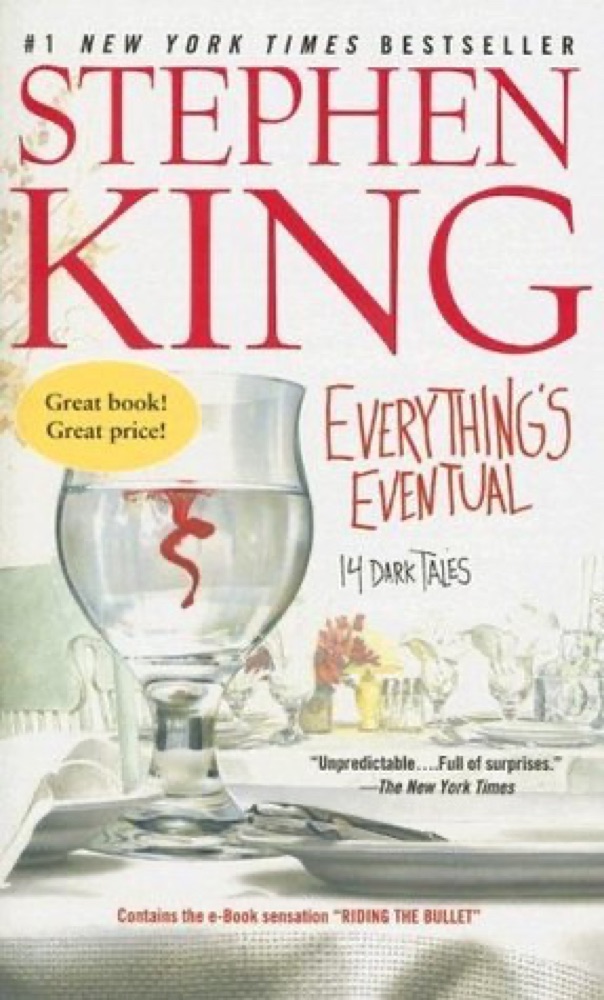 Everything's Eventual