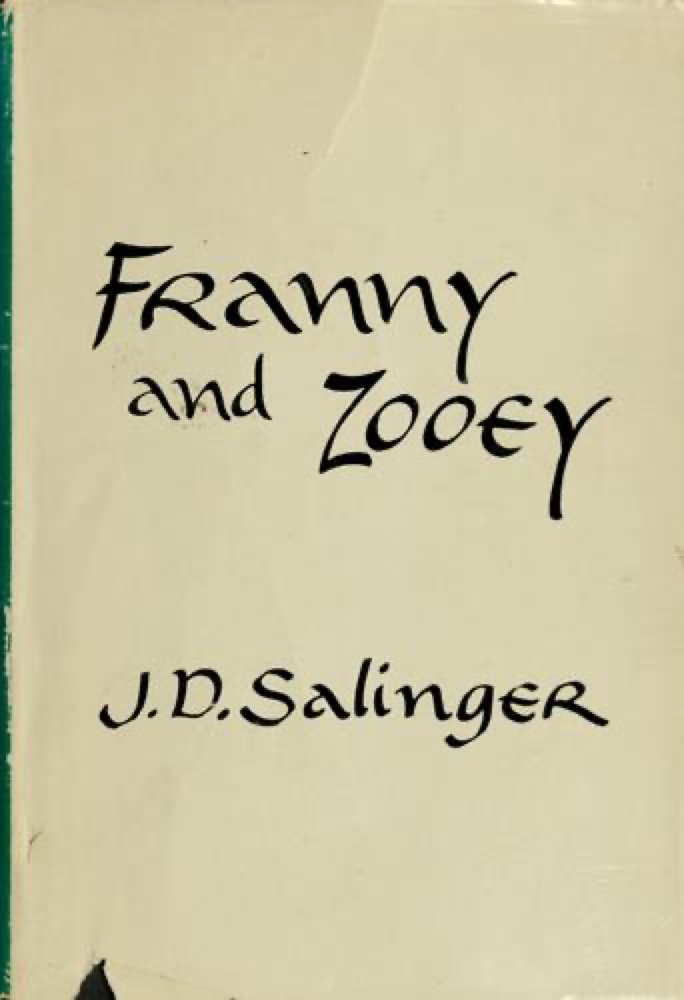

 Raise High the Roof Beam, Carpenters & Seymour: An Introduction
Quotes from the Book
I'm sick of just liking people. I wish to God I could meet somebody I could respect.
I'm sick of not having the courage to be an absolute nobody.
I’m just sick of ego, ego, ego. My own and everybody else’s. I’m sick of everybody that wants to get somewhere, do something distinguished and all, be somebody interesting. It’s disgusting.
And I can't be running back and fourth forever between grief and high delight.
An artist's only concern is to shoot for some kind of perfection, and on his own terms, not anyone else's.
It's everybody, I mean. Everything everybody does is so — I don't know — not wrong, or even mean, or even stupid necessarily. But just so tiny and meaningless and — sad-making. And the worst part is, if you go bohemian or something crazy like that, you're conforming just as much only in a different way.
I don't know what good it is to know so much and be smart as whips and all if it doesn't make you happy.
I love you to pieces, distraction, etc.
You don't know how to talk to people you don't like. Don't love, really. You can't live in the world with such strong likes and dislikes.
She was not one for emptying her face of expression.
You're lucky if you get time to sneeze in this goddam phenomenal world.
I'm not afraid to compete. It's just the opposite. Don't you see that? I'm afraid I will compete — that's what scares me. That's why I quit the Theatre Department. Just because I'm so horribly conditioned to accept everybody else's values, and just because I like applause and people to rave about me, doesn't make it right. I'm ashamed of it. I'm sick of it. I'm sick of not having the courage to be an absolute nobody. I'm sick of myself and everybody else that wants to make some kind of a splash.
She said she knew she was able to fly because when she came down she always had dust on her fingers from touching the light bulbs.
I don’t think it would have all got me quite so down if just once in a while—just once in a while—there was at least some polite little perfunctory implication that knowledge should lead to wisdom, and that if it doesn't, it's just a disgusting waste of time! But there never is! You never even hear any hints dropped on a campus that wisdom is supposed to be the goal of knowledge. You hardly ever even hear the word 'wisdom' mentioned!
Sometimes I see me dead in the rain.
Your heart, Bessie, is an autumn garage.
I do like him. I'm sick of just liking people. I wish to God I could meet somebody I could respect.... .... Listen, don't hate me because I can't remember some person immediately. Especially when they look like everybody else, and talk and dress and act like everybody else." Franny made her voice stop. It sounded to her caviling and bitchy, and she felt a wave of self-hatred that, quite literally, made her forehead begin to perspire again. But her voice picked up again, in spite of herself. "I don't mean there's anything horrible about him or anything like that. It's just that for four solid years I've kept seeing Wally Campbells wherever I go. I know when they're going to be charming, I know when they're going to start telling you some really nasty gossip about some girl that lives in your dorm, I know when they're going to ask me what I did over the summer, I know when they're going to pull up a chair and straddle it backward and start bragging in a terribly, terribly quiet voice--or name-dropping in a terribly quiet, casual voice. There's an unwritten law that people in a certain social or financial bracket can name-drop as much as they like just as long as they say something terribly disparaging about the person as soon as they've dropped his name—that he's a bastard or a nymphomaniac or takes dope all the time, or something horrible." She broke off again. She was quiet for a moment, turning the ashtray in her fingers. Franny quickly tipped her cigarette ash, then brought the ashtray an inch closer to her side of the table. "I'm sorry. I'm awful," she said. "I've just felt so destructive all week. It's awful, I'm horrible.
[...] don't you know who that Fat Lady really is? ... Ah, buddy. Ah, buddy. It's Christ Himself. Christ Himself, buddy.
Against my better judgment I feel certain that somewhere very near here—the first house down the road, maybe—there's a good poet dying, but also somewhere very near here somebody's having a hilarious pint of pus taken from her lovely young body, and I can't be running back and forth forever between grief and high delight.
I just never felt so fantastically rocky in my entire life.
Listen, I don't care what you say about my race, creed, or religion, Fatty, but don't tell me I'm not sensitive to beauty. That's my Achilles' heel, and don't you forget it. To me, everything is beautiful. Show me a pink sunset, and I'm limp, by God. Anything. Peter Pan. Even before the curtain goes up at Peter Pan I'm a goddamn puddle of tears.
In the first place, you’re way off when you start railing at things and people instead of at yourself.
My god, there's absolutely nothing tenth-rate about you, and yet you're up to your neck at this minute in tenth-rate thinking.
This is God's universe, buddy, not yours, and he has the final say about what's ego and what isn't.
Bessie: 'Why don't you get married?' Zooey: 'I like riding in trains too much. You never get to sit next to the window anymore when you're married.
Oh, it's lovely to see you!' Franny said as the cab moved off. 'I've missed you.' The words were no sooner out than she realized that she didn't mean them at all.
Franny was staring at the little blotch of sunshine with a special intensity, as if she were considering lying down in it.
You can't exist in this world with such strong likes and dislikes.
Did you know?
- The book collects two pieces, "Franny" and "Zooey," that were first published separately in The New Yorker.
- "Franny" appeared in The New Yorker on January 29, 1955, and "Zooey" on May 4, 1957.
- Both Franny and Zooey are the two youngest siblings of Salinger's recurring Glass family.
- Franny's spiritual crisis revolves around the "Jesus Prayer" from the Russian text The Way of a Pilgrim.
- The stories draw on Zen Buddhism, Hindu Vedanta, and Christian mysticism.
- It followed the success of Salinger's novel The Catcher in the Rye.
About J.D. Salinger
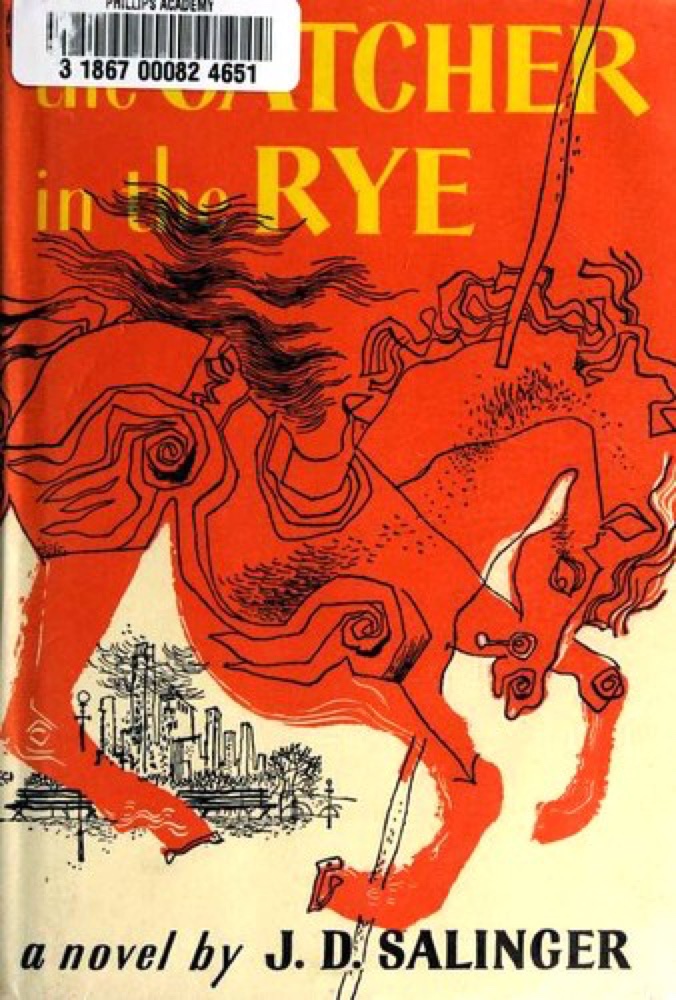
J.D. Salinger (1919-2010) was an American writer best known for his 1951 novel The Catcher in the Rye. Much of his later work, including Franny and Zooey, centers on the fictional Glass family, after which he largely withdrew from public life.
More about the author →More by J.D. Salinger
About the book
"Franny and Zooey" pairs two linked works by J.D. Salinger, the short story "Franny" and the longer novella "Zooey," both first published in The New Yorker and collected in a single book in 1961. The pieces center on the two youngest members of the Glass family: Franny, a college student who arrives for a football weekend already in the grip of a spiritual crisis, and her older brother Zooey, an actor who tries to talk her through her breakdown at their family's New York apartment. Together the stories form a continuous account of one young woman's collapse and the difficult consolation her family offers.
At the heart of the book is Franny's fixation on the "Jesus Prayer" drawn from the Russian devotional text "The Way of a Pilgrim," and her revulsion at what she sees as the ego and phoniness of the academic and social worlds around her. Zooey, wrestling with the legacy of their brilliant, troubled elder brothers Seymour and Buddy, responds with a mix of exasperation and love, and the work draws openly on Zen Buddhism, Hindu Vedanta, and Christian mysticism as it probes questions of authenticity, faith, and how to live without contempt for other people.
Following the enormous success of "The Catcher in the Rye," "Franny and Zooey" was among Salinger's most widely read books and helped cement the Glass family as the recurring subject of his later fiction. Deeply interior and dialogue-driven, it has remained a touchstone for readers drawn to its blend of comedy, spiritual searching, and precisely observed family talk, even as Salinger himself withdrew from public life.
Key characters
- Franny GlassCollege student and youngest Glass sibling, undergoing a spiritual crisis
- Zooey GlassFranny's older brother, an actor who tries to help her
- Bessie GlassFranny and Zooey's mother
- Lane CoutellFranny's college boyfriend, her lunch date in "Franny"
- Buddy GlassElder Glass brother and writer, present through a letter he wrote
- Seymour GlassEldest, revered Glass brother, deceased before the events
Book details
- First published
- 1961
- Length
- 201 pages
- Reading time
- 2 hours
- Author
- J.D. Salinger
- Genre
- Classics
- Goodreads rating
- 3.95 (244k ratings) →
- First line
- “Though brilliantly sunny, Saturday morning was overcoat weather again, not just topcoat weather, as it had been all week and as everyone had hoped it would stay for the big weekend—the weekend of the Yale game.”
Keep reading
 Second Helpings
 Breakfast at Tiffany's
 Humans of New York
 Anatomy of a Misfit
 Sloppy Firsts
 Dumplin'
 Unlit Star
 Cracked Up to Be
 She's Come Undone
 Please Ignore Vera Dietz
 Gone Girl
 The Help
 Making Faces
 No One Belongs Here More Than You
 Holding Up the Universe
 An Abundance of Katherines
 Without Merit
 Fiesta
 Let it Snow
 Nice Try, Jane Sinner
 Highly Suspicious and Unfairly Cute
 How to Be Good
 Speechless
 Looking for Alibrandi
 Flappers and Philosophers
 Dry
Dry
 Crazy Little Thing
 We Were Liars
 My Booky Wook
 Leah on the Offbeat
 Take Me With You
 Eleanor Oliphant Is Completely Fine
 A Little Something Different
 Hidden Bodies
 Funny Story
 The Jewel
 Pigs in Heaven
 The Love of My Afterlife
 The Rules of Attraction
 Two Serious Ladies
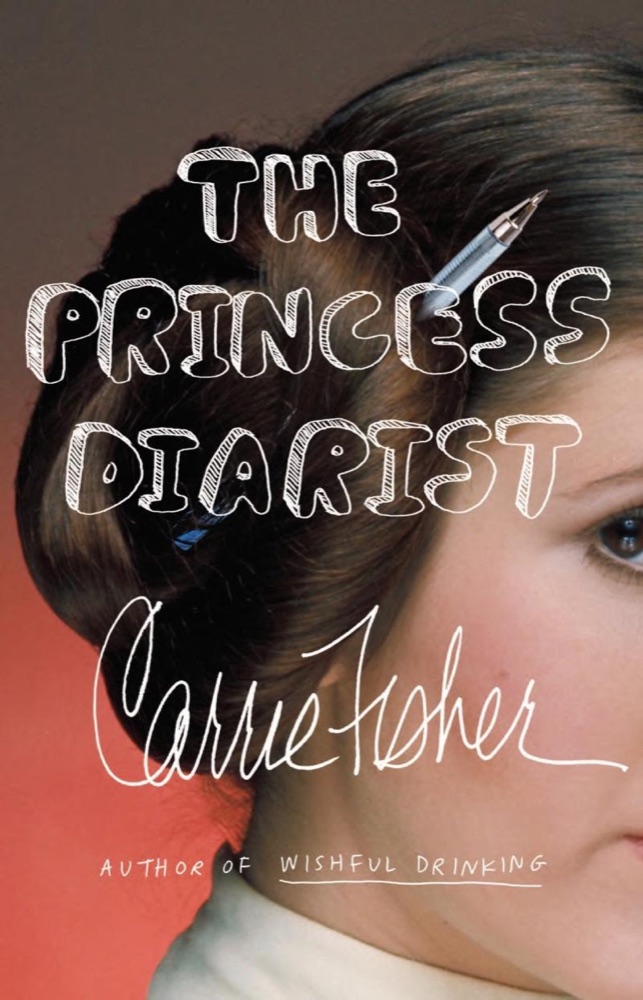 The Princess Diarist
 The Dud Avocado
 Scrappy Little Nobody
 How to Say Goodbye in Robot
 Unteachable
 Norwegian Wood
 Twenties Girl
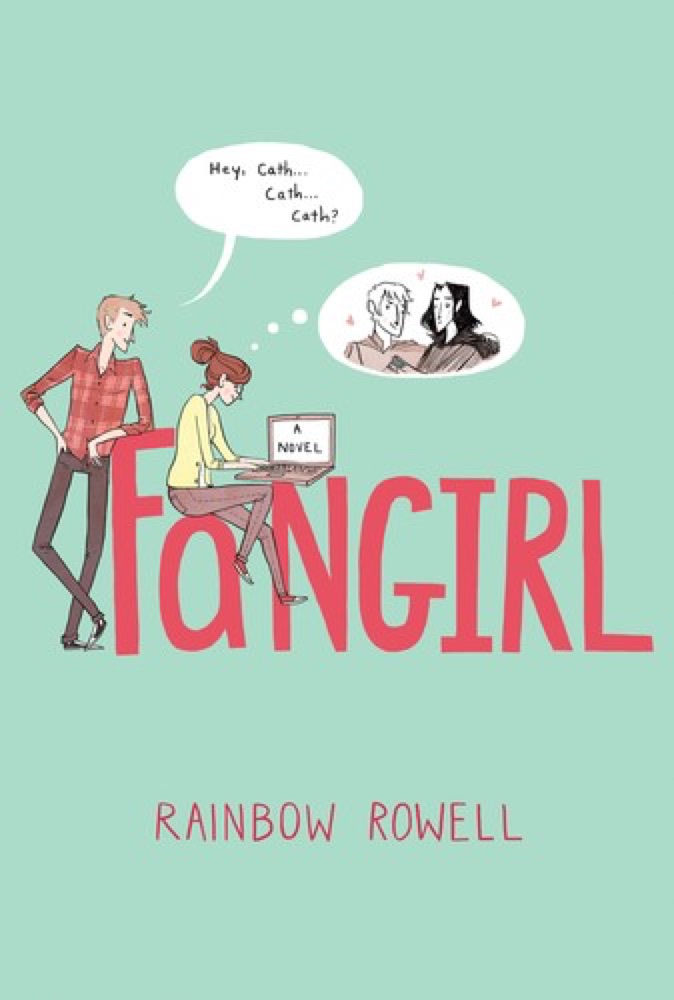 Fangirl
 Where'd You Go, Bernadette
 A Great and Terrible Beauty
 How To Talk To A Widower
 Yolk
Yolk
 Paper Towns
 The Guest List
 Struck by Lightning: The Carson Philips Journal
 One of Us Is Next
 You
You
 You Know Me Well
 My Not So Perfect Life
 Cackle