
 Purification of the Heart: Signs, Symptoms and Cures of the Spiritual Diseases of the Heart
Quotes from the Book
No one must ever let power or social, economic, or political interest turn him or her away from other human beings, from the attention they deserve and the respect they are entitled to. nothing must ever lead to a person to compromise this principle or faith in favor of a political strategy aimed at saving or protecting a community from some peril. The freely offered, sincere heart of a poor, powerless individual is worth a thousand times more in the sight of God than the assiduously courted, self-interested heart of a rich one.
30
The desert is often the locus of prophecies because it naturally offers to the human gaze the horizons of the infinite.
5
active acceptance” of God’s will: to question with one’s mind, to understand with one’s intelligence, and to submit with one’s heart.
5
Nothing is ever final” is a lesson in humility; “no final judgment should be passed” is a promise of hope. The
4
teach the heart not to give way to proud emotions and arrogant thinking; bring the mind to heart-soothing solutions that make it possible to control oneself gently and wisely.
3
The Prophet’s life is an invitation to a spirituality that avoids no question and teaches us—in the course of events, trials, hardships, and our quest—that the true answers to existential questions are more often those given by the heart than by the intelligence. Deeply, simply: he who cannot love cannot understand.
3
The first verses establish an immediate correspondence with what Revelation was later to recount about the creation of humankind: “He [God] taught Adam the names of all things.”8 Reason, intelligence, language, and writing will grant people the qualities required to enable them to be God’s khalifahs (vicegerents) on earth, and from the very beginning, Quranic Revelation allies recognition of the Creator to knowledge and science, thus echoing the origin of creation itself.
3
Muhammad particularly loved cats, but, more generally, he constantly made his Companions aware of the need to respect all animal species. He
2
[Human] wisdom is the believer’s lost belonging; he is the most worthy of it wherever he finds it.
2
Spirituality means both accepting and mastering one’s instincts: living one’s natural desires in the light of one’s principles is a prayer. It is never a misdeed, nor is it hypocrisy.
2
Communion in faith, in the intimacy of meaning, cannot remain purely conceptual; it can maintain its vivifying energy only if it associates with communion in speech and action within a common space of social and cultural references. Faith needs culture.
1
questioned by a Companion about the best possible hijrah, the Prophet was to answer: “It is to exile yourself [to move away] from evil [abominations, lies, sins].”12 This requirement of spiritual exile was to be repeated in different forms.
1
Only after making intelligent and thorough use of his human powers had he trusted himself to the divine will, thereby clarifying for us the meaning of at-tawakkul ala Allah (reliance on God, trusting oneself to God): responsibly exercising all the qualities (intellectual, spiritual, psychological, sentimental, etc.) each one of us has been granted and humbly remembering that beyond what is humanly possible, God alone makes things happen. Indeed, this teaching is the exact opposite of the temptation of fatalism: God will act only after humans have, at their own level, sought out and exhausted all the potentialities of action. That is the profound meaning of this Quranic verse: “Verily never will God change the condition of a people until they change what is in themselves.
1
For three years, he quietly built up the first community of believers, whose particular feature was that it gathered, without distinction, women and men of all clans and all social categories (although the bulk were young or poor).
1
There are in you two qualities that God loves: clemency [al-hilm] and forbearance [al-ana, “nobleness,” “tolerance”].
1
That gentleness and kindness were the very essence of his teaching. He kept saying: “God is gentle [rafiq] and he loves gentleness [ar-rifq] in everything.
1
the desert, more than anything else, opens the human mind to observation, meditation, and initiation into meaning.
1
The message of Islam is by no means a closed value system at variance or conflict with other value systems. From the very start, the Prophet did not conceive the content of his message as the expression of pure otherness versus what the Arabs or the other societies of his time were producing. Islam does not establish a closed universe of reference but rather relies on a set of universal principles that can coincide with the fundamentals and values of other beliefs and religious traditions (even those produced by a polytheistic society such as that of Mecca at the time). Islam is a message of justice that entails resisting oppression and protecting the dignity of the oppressed and the poor, and Muslims must recognize the moral value of a law or contract stipulating this requirement, whoever its authors and whatever the society, Muslim or not. Far from building an allegiance to Islam in which recognition and loyalty are exclusive to the community of faith, the Prophet strove to develop the believer's conscience through adherence to principles transcending closed allegiances in the name of a primary loyalty to universal principles themselves. The last message brings nothing new to the affirmation of the principles of human dignity, justice, and equality: it merely recalls and confirms them. As regards moral values, the same intuition is present when the Prophet speaks of the equalities of individuals before and in Islam: 'The best among you [as to their human and moral qualities] during the era before Islam [al-jahiliyyah] are the best in Islam, provided they understand it [Islam].' The moral value of a human being reaches far beyond belonging to a particular universe of reference; within Islam, it requires added knowledge and understanding in order to grasp properly what Islam confirms (the principle of justice) and what it demands should be reformed (all forms of idol worship).
Umar, despite his strong character and impressive personality, had lost control of himself for a short while, his emotions seizing him so strongly that it brought out a heretofore unsuspected fragility, causing him to react like a child refusing the ruling of God, of reality, of life. By contrast, Abu Bakr, who was normally so sensitive, who wept so abundantly and so intensely when he read the Quran, had received the news of the Prophet’s death with deep sorrow but also with extraordinary calm and unsuspected inner strength. At that particular moment, the two men’s roles were inverted, thus showing that through his departure the Prophet offered us a final teaching: in the bright depths of spirituality, sensitivity can produce a degree of strength of being that nothing can disturb. Conversely, the strongest personality, if it forgets itself for a moment, can become vulnerable and fragile. The
This is the profound meaning of at-tawbah, offered to everyone: sincerely returning to God after a slip, a mistake, a sin. God loves that sincere return to Him and He forgives and purifies. The
The Prophet answered: “How could I but be a thankful servant?”1 He did not demand of his Companions the worship, fasting, and meditations that he exacted of himself.
Don’t you take on too much [worship] while God has already forgiven all your past and future sins?” The Prophet answered: “How could I but be a thankful servant?”1 He did not demand of his Companions the worship, fasting, and meditations that he exacted of himself.
From the very start, the Prophet did not conceive the content of his message as the expression of pure otherness versus what the Arabs or the other societies of his time were producing. Islam does not establish a closed universe of reference but rather relies on a set of universal principles that can coincide with the fundamentals and values of other beliefs and religious traditions (even those produced by a polytheistic society such as that of Mecca at the time). Islam is a message of justice that entails resisting oppression and protecting the dignity of the oppressed and the poor, and Muslims must recognize the moral value of a law or contract stipulating this requirement, whoever its authors and whatever the society, Muslim or not. Far from building an allegiance to Islam in which recognition and loyalty are exclusive to the community of faith, the Prophet strove to develop the believer’s conscience through adherence to principles transcending closed allegiances in the name of a primary loyalty to universal principles themselves.
Watch on YouTube
About Tariq Ramadan
We have collected 23 quotes from 1 book by Tariq Ramadan on BookQuoters.
More about the author →About the book
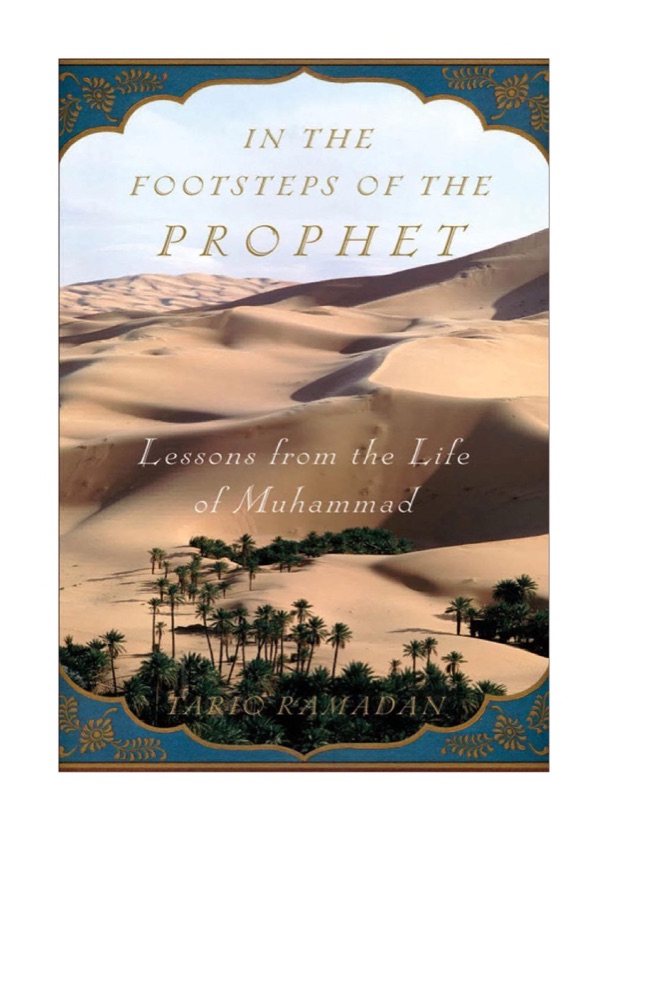
Named by Time magazine as one of the 100 most important innovators of the century, Tariq Ramadan is a leading Muslim scholar, with a large following especially among young European and American Muslims. Now, in his first book written for a wide audience, he offers a marvelous biography of the Prophet Muhammad, one that highlights the spiritual and ethical teachings of one of the most influential figures in human history.
In the Footsteps of the Prophet is a fresh and perceptive look at Muhammad, capturing a life that was often eventful, gripping, and highly charged. Ramadan provides both an intimate portrait of a man who was shy, kind, but determined, as well as a dramatic chronicle of a leader who launched a great religion and inspired a vast empire. More important, Ramadan presents the main events of the Prophet's life in a way that highlights his spiritual and ethical teachings. The
Book details
- First published
- 2007
- Author
- Tariq Ramadan
- Genre
- Nonfiction
- Goodreads rating
- 4.45 (4k ratings)
Keep reading
Purification of the Heart: Signs, Symptoms and Cures of the Spiritual Diseases of the Heart
 The Productive Muslim: Where Faith Meets Productivity
 The First Muslim: The Story of Muhammad
 The Sermon on the Mount: The Key to Success in Life
 Secrets of Divine Love: A Spiritual Journey into the Heart of Islam
 The Journey Home
 Seeking Allah, Finding Jesus: A Devout Muslim Encounters Christianity
 Introduction to the Devout Life
 Love from Mecca to Medina
 A History of God: The 4,000-Year Quest of Judaism, Christianity, and Islam
 The World's Religions
 No god but God: The Origins, Evolution and Future of Islam
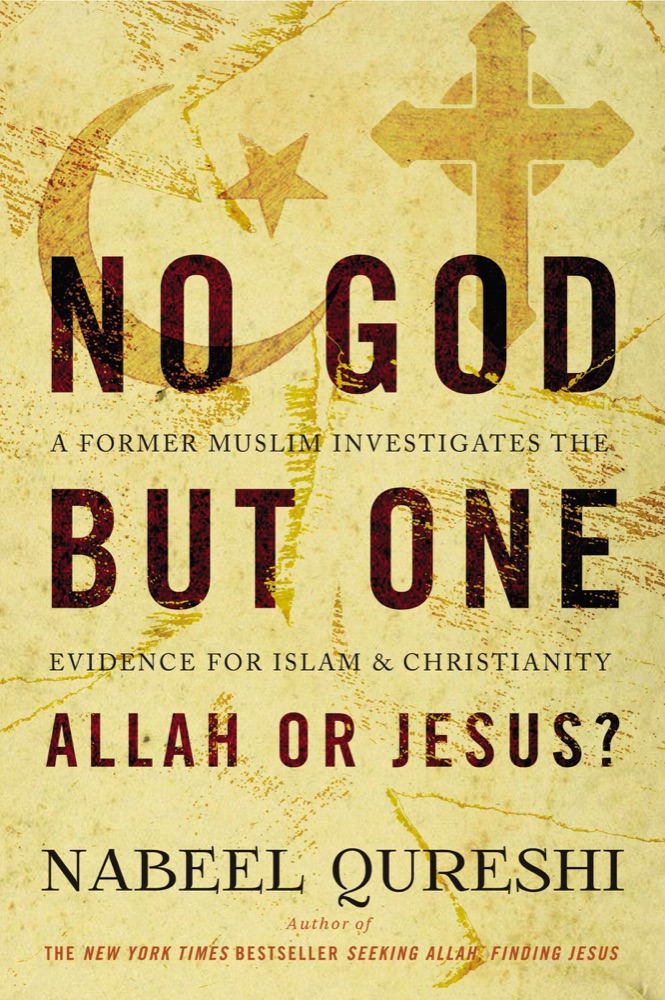 No God but One: Allah or Jesus?: A Former Muslim Investigates the Evidence for Islam and Christianity
 The Crucible of Doubt: Reflections On the Quest for Faith
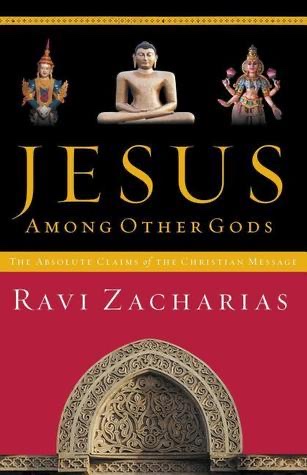 Jesus Among Other Gods: The Absolute Claims of the Christian Message
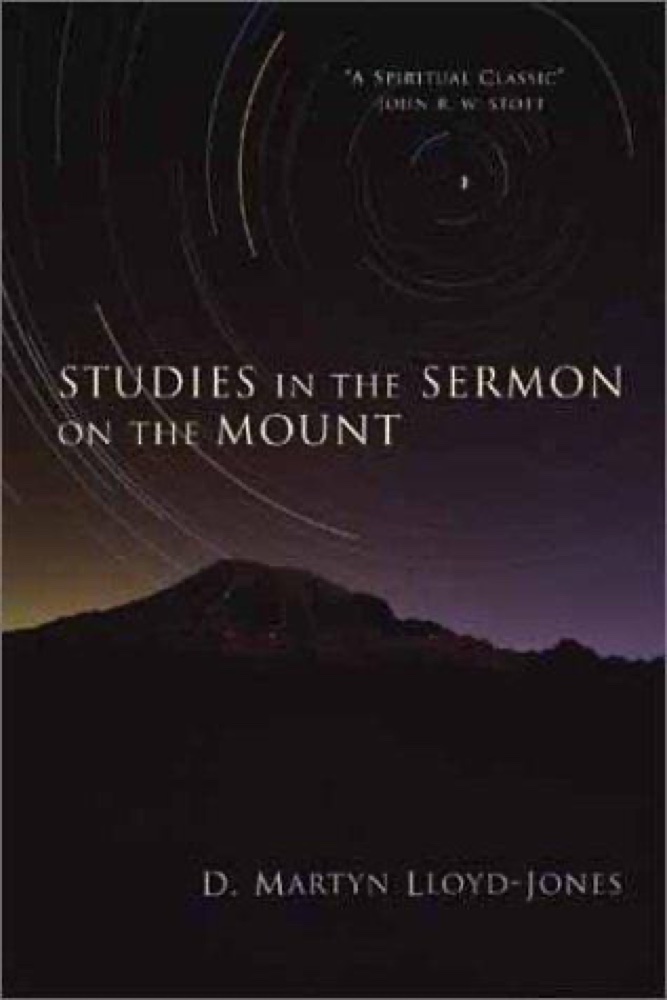 Studies in the Sermon on the Mount
 The Knowledge of the Holy
 Reclaim Your Heart: Personal Insights on Breaking Free from Life's Shackles
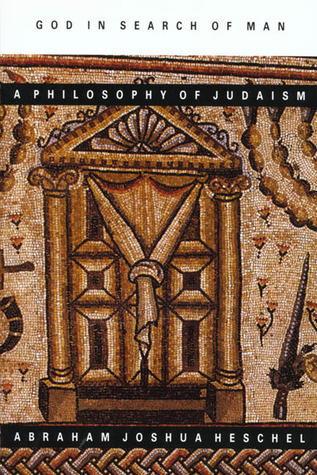 God in Search of Man: A Philosophy of Judaism
 Complete Works of Swami Vivekananda, 9 Vols.
 The Bible Jesus Read
 The Wounded Healer
 The Divine Conspiracy: Rediscovering Our Hidden Life in God
 The Prophets
 The Grand Weaver: How God Shapes Us through the Events in Our Lives
 Knowing God
 The Imitation of Christ
 The God Who Weeps: How Mormonism Makes Sense of Life
 Abandonment to Divine Providence: The Classic Text with a Spiritual Commentary
 Reflections on the Psalms
 Shadow of the Almighty: The Life and Testament of Jim Elliot
 Institutes of the Christian Religion, 2 Vols
 Wholehearted Faith
 Through Gates of Splendor
 The Way of Perfection
 In His Image: 10 Ways God Calls Us to Reflect His Character
 New Seeds of Contemplation
 We Who Wrestle with God: Perceptions of the Divine
 The Holy Longing: The Search for a Christian Spirituality
 The Orthodox Study Bible
 Joseph Anton: A Memoir
 The Intellectual Life: Its Spirit, Conditions, Methods
 The Wisdom Jesus: Transforming Heart and Mind
 The Case for God
 The Pursuit of God: The Human Thirst for the Divine
 No Man Is an Island
 A Little Book on the Christian Life
 On Christian Doctrine
 City of God
 The Story of My Experiments With Truth
 Jesus of Nazareth: The Infancy Narratives
 Letters and Papers from Prison
 The Pleasures of God: Meditations on God's Delight in Being God
 Time for God
 Life of Christ
 Searching for and Maintaining Peace: A Small Treatise on Peace of Heart
 The Perennial Philosophy
 Beautiful Outlaw: Experiencing the Playful, Disruptive, Extravagant Personality of Jesus
 Interior Castle