
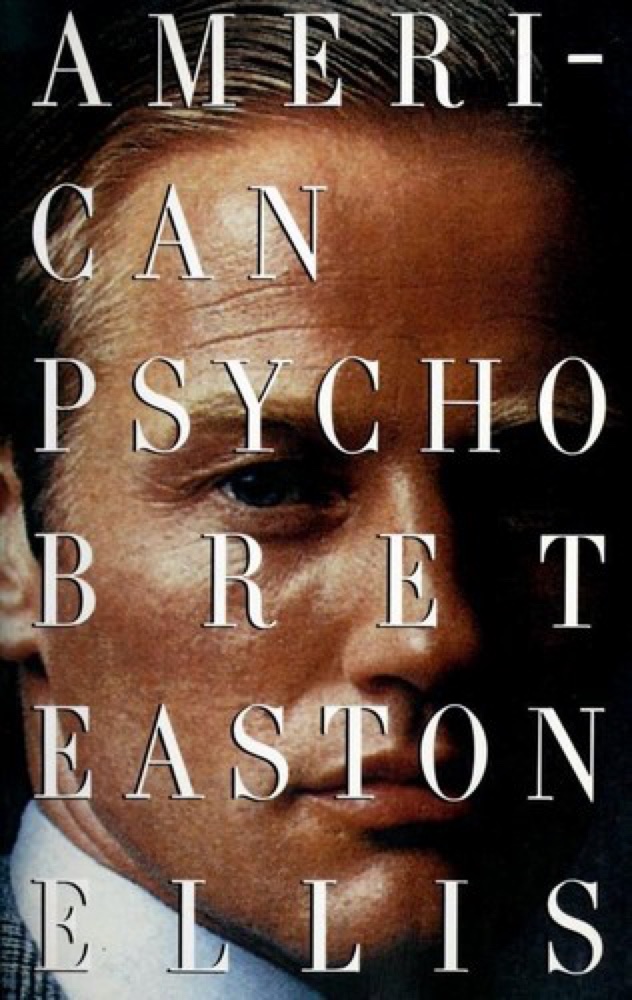
 American Psycho
Quotes from the Book
There are so many things Blair doesn’t get about me, so many things she ultimately overlooked, and things that she would never know, and there would always be a distance between us because there were too many shadows everywhere. Had she ever made promises to a faithless reflection in the mirror? Had she ever cried because she hated someone so much? Had she ever craved betrayal to the point where she pushed the crudest fantasies into reality, coming up with sequences that she and nobody else could read, moving the game as you play it? Could she locate the moment she went dead inside? Does she remember the year it took to become that way? The fades, the dissolves, the rewritten scenes, all the things you wipe away—I now want to explain all these things to her but I know I never will, the most important one being: I never liked anyone and I’m afraid of people.
68
That's how I became the damaged party boy who wandered through the wreckage, blood streaming from his nose, asking questions that never required answers. That's how I became the boy who never understood how anything worked. That's how I became the boy who wouldn't save a friend. That's how I became the boy who couldn't love the girl.
48
...if you're alone nothing bad can happen to you.
29
He was simply someone who floated through our lives and didn't seem to care how flatly he perceived everyone or that he'd shared our secret failures with the world, showcasing the youthful indifference, the gleaming nihilism, glamorizing the horror of it all.
28
What keeps me interested--and it always does--is how can she be a bad actress on film but a good one in reality?
28
A vast and abandoned world laid out in anonymous grids and quadrants, a view that confirmed you were much more alone than you thought you were, a view that inspired the flickering thoughts of suicide.
26
Her need is so immense that you become surrounded by it; this need is so enormous that you realize you can actually control it, and I know this because I've done it before.
23
This isn't a script," Julian says. "It's not going to add up. Not everything's going to come together in the third act.
21
How do I know you're not crazy?" she asks. "How do I know you're not the craziest dude I've ever met?" "You'll have to test me out." "You have my info," she says. "I'll think about it." "Rain," I say. "That's not your real name." "Does it matter?" "Well, it makes me wonder what else isn't real." "That's because you're a writer," she says. "That's because you make things up for a living." "And?" "And"-- she shrugs--"I've noticed that writers tend to worry about things like that.
19
I'm thinking about the beautiful boy on the treadmill wearing the I STILL HAVE A DREAM T-shirt and realize that it might not have been ironic.
18
In the movie I was played by an actor who actually looked more like me than the character the author portrayed in the book: I wasn't blond, I wasn't tan, and neither was the actor. I also suddenly became the movie's moral compass, spouting AA jargon, castigating everyone's drug use and trying to save Julian. (I'll sell my car," I warn the actor playing Julian's dealer. "Whatever it takes.") This was slightly less true of Blair's character, played by a girl who actually seemed like she belonged in our group-- jittery, sexually available, easily wounded. Julian became the sentimentalized version of himself, acted by a talented, sad-faced clown, who has an affair with Blair and then realizes he has to let her go because I was his best bud. "Be good to her," Julian tells Clay. "She really deserves it." The sheer hypocrisy of this scene must have made the author blanch. Smiling secretly to myself with perverse satisfaction when the actor delivered that line, I then glanced at Blair in the darkness of the screening room.
17
... Because the writer resented that she had turned to me I became the handsome and dazed narrator, incapable of love or kindness. That's how I became the damaged party boy who wandered through the wreckage, blood streaming from his nose, asking questions that never required answers. That's how I became the boy who never understood how anything worked. That's how I became the boy who wouldn't save a friend. That's how I became the boy who couldn't love the girl.
17
The movie was very different from the book in that there was nothing from the book in the movie. Despite everything — all the pain I felt, the betrayal — I couldn't help but recognize a truth while sitting in that screening room. In the book everything about me had happened. The book was something I simply couldn't disavow. The book was blunt and had an honesty about it, whereas the movie was just a beautiful lie.
15
Keep everything young and soft, keep everything on the surface, even with the knowledge that the surface fades and can't be held together forever - take advantage before the expiration date appears in the nearing distance.
14
He wasn't, I realized when I read those scenes concerning Blair and myself, close to any of us-- except of course to Blair, and really not even to her. He was simply someone who floated through our lives and didn't seem to care how flatly he perceived everyone or that he'd shared our secret failures with the world, showcasing the youthful indifference, the gleaming nihilism, glamorizing the horror of it all. But there was no point in being angry with him.
10
The director mentions the whispers about Clifton's sexual orientation, a supposed gig on a porn site years ago, a rumor about a very famous actor and a tryst in Santa Barbara and Clifton's denial in a Rolling Stone cover story about the very famous actor's new movie which Clifton had a small part in: 'We're so into girls it's ridiculous.
9
Some people at the party, she adds, are freaks, then mentions a drug I've never heard of, and tells me a story that involves ski masks, zombies, a van, chains, a secret community, and asks me about a Hispanic girl who disappeared in some desert.
7
Descansado," he tells me. "What does that mean?" "Descansado," Rip says. "It means 'take it easy,'" he whispers, clutching the child next to him. "Yeah?" "It means relax.
6
The book was blunt and had an honesty about it, whereas the movie was just a beautiful lie.
6
But the thing I remember most about the screening in October twenty years ago was the moment Julian grasped my hand that had gone numb on the armrest separating our seats. He did this because in the book Julian Wells lived but in the movie's new scenario he had to die. He had to be punished for all of his sins. That's what the movie demanded. (Later, as a screenwriter, I learned it's what all movies demanded.) When this scene occurred, in the last ten minutes, Julian looked at me in the darkness, stunned. "I died," he whispered. "They killed me off." I waited a bit before sighing, "But you're still here." Julian turned back to the screen and soon the movie ended, the credits rolling over the palm trees as I (improbably) take Blair back to my college while Roy Orbison wails a song about how life fades away.
6
She immediately moves into me and says she is sorry and then she's guiding me toward the bedroom and this is the way I always wanted the scene to play out and then it does and it has to because it doesnt really work for me unless it happens like this.
4
When Blair bites her lower lip she’s eighteen again.
4
I realize I have nothing to say to Trent Burroughs as I tell him, “I’ve been in New York the last four months.” New Age Christmas music fails to warm up the chilly vibe. I’m suddenly unsure about everything.
4
So many people died last year: the accidental overdose, the car wreck in East Hampton, the surprise illness. People just disappeared. I fall asleep to the music coming from the Abbey, a song from the past, “Hungry Like the Wolf,” rising faintly above the leaping chatter of the club, transporting me for one long moment into someone both young and old. Sadness: it’s everywhere.
4
She said that you--" "I don't care what she said." I stand up. "Everyone lies." "Hey," he says softly. "It's just a code." "No. Everyone lies." I stub the cigarette out. "It's just another language you have to learn." Then he delicately adds, "I think you need some coffee, dude." Pause. "Why are you so angry?
3
It's basically a joke." "I think it's cool," Julian says. "It's all about control, right?" He considers something. "It's not a joke. You should take it seriously. I mean, you're also one of the producers--" I cut him off. "Why have you been tracking this?" "It's a big deal and--" "Julian, it's a movie," I say. "Why have you been tracking this? It's just another movie." "Maybe for you." "What does that mean?" "Maybe for others it's something else," Julian says. "Something more meaningful." "I get where you're coming from, but there's a vampire in it.
3
The audience-- the book's actual cast-- quickly realized what had happened. The reason the movie dropped everything that made the novel real was because there was no way the parents who ran the studio would ever expose their children in the same black light the book did. The movie was begging for our sympathy whereas the book didn't give a shit. And attitudes about drugs and sex had shifted quickly from 1985 to 1987 (and a regime change at the studio didn't help) so the source material-- surprisingly conservative despite its surface immorality-- had to be reshaped.
3
The real Julian Wells didn't die in a cherry-red convertible, overdosing on a highway in Joshua Tree while a choir soared over the sound track.
3
Careless and not particularly biting, it was easier to shrug off than anything in the first book which depicted me as an inarticulate zombie confused by the irony of Randy Newman's "I Love L.A.
3
Watch on YouTube
About Bret Easton Ellis
We have collected 178 quotes from 8 books by Bret Easton Ellis on BookQuoters.
More about the author →More by Bret Easton Ellis
All books by Bret Easton Ellis →
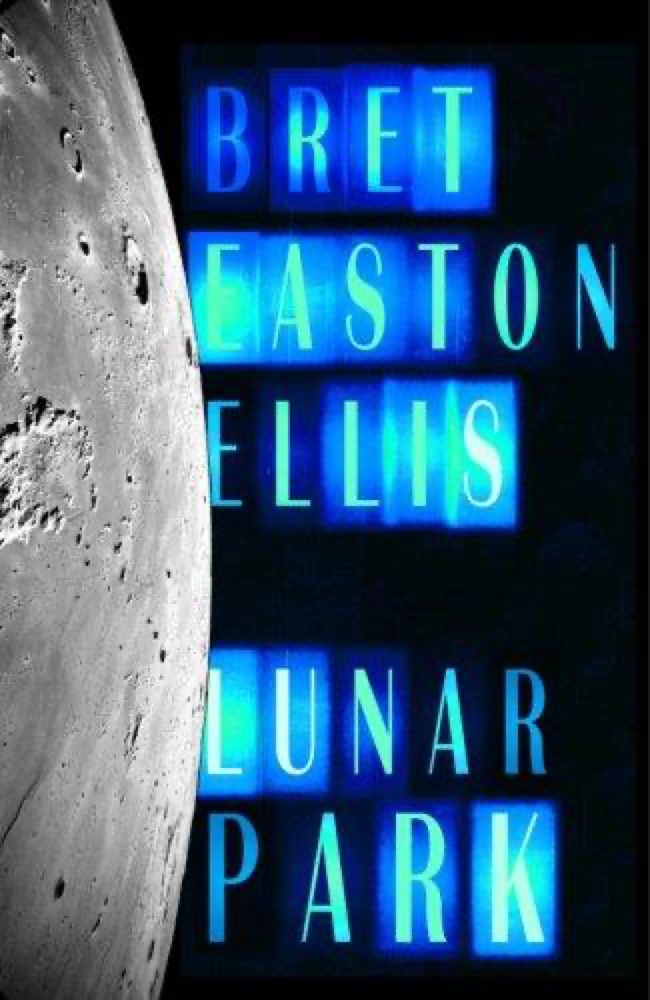
About the book
Twenty-five years on from "Less Than Zero", we pick up again with "Clay".
In 1985, Bret Easton Ellis shocked, stunned, and disturbed with "Less Than Zero", his 'extraordinarily accomplished first novel' ("New Yorker"), successfully chronicling the frightening consequences of unmitigated hedonism within the ranks of the ethically bereft youth of 80s Los Angeles. Now, twenty-five years later, Ellis returns to those same characters: to Clay and the band of infamous teenagers whose lives weave sporadically through his.
But now, some years on, they face an even greater period of disaffection: their own middle age. Clay seems to have moved on - he's become a successful screenwriter - but when he returns from New York to Los Angeles, to help cast his new movie, he's soon drifting through a long-familiar circle. Blair, his former girlfriend, is now married to Trent, and their Beverly Hil
Book details
- First published
- 2010
- Author
- Bret Easton Ellis
- Genre
- Fiction
- Goodreads rating
- 3.20 (21k ratings)
Keep reading
 I Have Some Questions for You
 The Miseducation of Cameron Post
 Honey
Honey
 20th Century Ghosts
 Tell No One
 The Basic Eight
 Memoirs of a Teenage Amnesiac
 Where Am I Now?
 The Likeness
 The Beginning of Everything
 The Rachel Incident
 Black Swans
 Juliet, Naked
 Lisey's Story
 Super Sad True Love Story
 The Girl Before
 Anita de Monte Laughs Last
 Underdog
 You Know You Want This: Cat Person and Other Stories
 Her Body and Other Parties
 In the Woods
 The Hazel Wood
 The Keep
 Veronica
 Scar Tissue
 Homesick for Another World
 Mr. Fox
 Glamorama
 Where Things Come Back
 Gone Girl
 A Small Indiscretion
 The Dud Avocado
 The Story of the Lost Child
 Too Much Happiness: Stories
 Severance
 Mystic River
 Let's Pretend This Never Happened: A Mostly True Memoir
 Skeleton Crew
 Swimming in the Dark
 London Fields
 The Book of Love
 Stray: Memoir of a Runaway
 Ohio
Ohio
 The Blindfold
 Inferno
 Lit
Lit
 The Ghostwriter
 Borderline
 Sonny Boy
 The Secret Place
 The Replacement
 In the Dream House
 Sign Here
 Speedboat
 I Hold a Wolf by the Ears: Stories
 Shutter Island
 Rainbow Black
 The Case for Jamie
 Hollywood
 Bang
Bang