
 Less Than Zero
Quotes from the Book
...there is an idea of a Patrick Bateman, some kind of abstraction, but there is no real me, only an entity, something illusory, and though I can hide my cold gaze and you can shake my hand and feel flesh gripping yours and maybe you can even sense our lifestyles are probably comparable: I simply am not there.
I had all the characteristics of a human being—flesh, blood, skin, hair—but my depersonalization was so intense, had gone so deep, that my normal ability to feel compassion had been eradicated, the victim of a slow, purposeful erasure. I was simply imitating reality, a rough resemblance of a human being, with only a dim corner of my mind functioning
All it comes down to is this: I feel like shit but look great.
…there is an idea of a Patrick Bateman, some kind of abstraction, but there is no real me, only an entity, something illusory, and though I can hide my cold gaze and you can shake my hand and feel flesh gripping yours and maybe you can even sense our lifestyles are probably comparable: I simply am not there. It is hard for me to make sense on any given level. Myself is fabricated, an aberration. I am a noncontingent human being. My personality is sketchy and unformed, my heartlessness goes deep and is persistent. My conscience, my pity, my hopes disappeared a long time ago (probably at Harvard) if they ever did exist. There are no more barriers to cross. All I have in common with the uncontrollable and the insane, the vicious and the evil, all the mayhem I have caused and my utter indifference toward it, I have now surpassed. I still, though, hold on to one single bleak truth: no one is safe, nothing is redeemed. Yet I am blameless. Each model of human behavior must be assumed to have some validity. Is evil something you are? Or is it something you do? My pain is constant and sharp and I do not hope for a better world for anyone. In fact, I want my pain to be inflicted on others. I want no one to escape. But even after admitting this—and I have countless times, in just about every act I’ve committed—and coming face-to-face with these truths, there is no catharsis. I gain no deeper knowledge about myself, no new understanding can be extracted from my telling. There has been no reason for me to tell you any of this. This confession has meant nothing….
I have to return some videotapes
Is evil something you are? Or is it something you do?
I'm into, oh murders and executions mostly. It depends.
There are no more barriers to cross. All I have in common with the uncontrollable and the insane, the vicious and the evil, all the mayhem I have caused and my utter indifference toward it I have now surpassed. My pain is constant and sharp and I do not hope for a better world for anyone, in fact I want my pain to be inflicted on others. I want no one to escape, but even after admitting this there is no catharsis, my punishment continues to elude me and I gain no deeper knowledge of myself; no new knowledge can be extracted from my telling. This confession has meant nothing.
I stare into a thin, web-like crack above the urinal's handle and think to myself that if I were to disappear into that crack, say somehow miniaturize and slip into it, the odds are good that no one would notice I was gone. No... one... would... care. In fact some, if they noticed my absence, might feel an odd, indefinable sense of relief. This is true: the world is better off with some people gone. Our lives are not all interconnected. That theory is crock. Some people truly do not need to be here.
Where there was nature and earth, life and water, I saw a desert landscape that was unending, resembling some sort of crater, so devoid of reason and light and spirit that the mind could not grasp it on any sort of conscious level and if you came close the mind would reel backward, unable to take it in. It was a vision so clear and real and vital to me that in its purity it was almost abstract. This was what I could understand, this was how I lived my life, what I constructed my movement around, how I dealt with the tangible. This was the geography around which my reality revolved: it did not occur to me, ever, that people were good or that a man was capable of change or that the world could be a better place through one’s own taking pleasure in a feeling or a look or a gesture, of receiving another person’s love or kindness. Nothing was affirmative, the term “generosity of spirit” applied to nothing, was a cliche, was some kind of bad joke. Sex is mathematics. Individuality no longer an issue. What does intelligence signify? Define reason. Desire- meaningless. Intellect is not a cure. Justice is dead. Fear, recrimination, innocence, sympathy, guilt, waste, failure, grief, were things, emotions, that no one really felt anymore. Reflection is useless, the world is senseless. Evil is its only permanence. God is not alive. Love cannot be trusted. Surface, surface, surface, was all that anyone found meaning in…this was civilization as I saw it, colossal and jagged…
I like to dissect girls. Did you know I'm utterly insane?
There’s no use in denying it: this has been a bad week. I’ve started drinking my own urine.
I laugh maniacally, then take a deep breath and touch my chest- expecting a heart to be thumping quickly, impatiently, but there's nothing there, not even a beat.
We buy balloons, we let them go.
Everything failed to subdue me. Soon everything seemed dull: another sunrise, the lives of heroes, falling in love, war, the discoveries people made about each other. The only thing that didn't bore me, obviously enough, was how much money Tim Price made, and yet in its obviousness it did. There wasn't a clear, identifiable emotion within me, except for greed and, possibly, total disgust. I had all the characteristics of a human being - flesh, blood, skin, hair - but my depersonalization was so intense, had gone so deep, that the normal ability to feel compassion had been eradicated, the victim of a slow, purposeful erasure. I was simply imitating reality, a rough resemblance of a human being, with only a dim corner of my mind functioning. Something horrible was happening and yet I couldn't figure out why - I couldn't put my finger on it.
My pain is constant and sharp...this confession has meant nothing
And though the coldness I have always felt leaves me, the numbness doesn't and probably never will. this relationship will probably lead to nothing... this didn't change anything. I imagine her smelling clean, like tea...
Why not? Give me one good reason why we shouldn't get married." Because trying to fuck you is like trying to french-kiss a very.... small and... lively gerbil? With braces?
But... what about us? What about the past?" she asks blankly. "The past isn't real. it's just a dream," I say. "Don't mention the past.
A curtain of stars, miles of them, are scattered, glowing, across the sky and their multitude humbles me, which I have a hard time tolerating. She shrugs and nods after I say something about forms of anxiety. It's as if her mind is having a hard time communicating with her mouth, as if she is searching for a rational analysis of who I am, which is, of course, an impossibility: there... is... no... key.
Do you know what Ed Gein said about women?" [...] "'When I see a pretty girl walking down the street I think two things. One part of me wants to take her out and talk to her and be real nice and sweet and treat her right.'" I stop finish my J&B in one swallow. "What does the other part of him think?" Hamlin asks tentatively. "What her head would look like on a stick
I feel I'm moving toward as well as away from something, and anything is possible.
I think a lot of snowflakes are alike...and I think a lot of people are alike too.
It strikes me profoundly that the world is more often than not a bad and cruel place.
I tried to make meat loaf out of the girl but it becomes too frustrating a task and instead I spend the afternoon smearing her meat all over the walls, chewing on strips of skin I ripped from her body
The seals stupidly dive off rocks into swirling black water, barking mindlessly. The zookeepers feed them dead fish. A crowd gathers around the tank, mostly adults, a few accompanied by children. On the seals' tank a plaque warns: COINS CAN KILL——IF SWALLOWED, COINS CAN LODGE IN AN ANIMAL'S STOMACH AND CAUSE ULCERS, INFECTIONS AND DEATH. DO NOT THROW COINS IN THE POOL. So what do I do? Toss a handful of change into the tank when none of the zookeepers are watching. It's not the seals I hate——it's the audience's enjoyment of them that bothers me.
I felt lethal, on the verge of frenzy. My nightly bloodlust overflowed into my days and I had to leave the city. My mask of sanity was a victim of impending slippage. This was the bone season for me and I needed a vacation.
I've forgotten who I had lunch with earlier, and even more important, where.
Did you know?
- The novel opens with the phrase 'ABANDON ALL HOPE YE WHO ENTER HERE,' a line drawn from Dante's Inferno.
- Ellis wrote it as his third novel, following Less Than Zero and The Rules of Attraction.
- The book was banned or restricted in countries including Germany, Australia, and New Zealand.
- The American Library Association ranked it among the most challenged books of the 1990s.
- Feminist activist Gloria Steinem publicly objected to its violent depictions of women.
About Bret Easton Ellis
Bret Easton Ellis (born 1964) is an American novelist and screenwriter who studied at Bennington College and became a literary sensation at 21 with his debut Less Than Zero (1985). American Psycho (1991) is his best-known and most successful novel.
More about the author →More by Bret Easton Ellis
All books by Bret Easton Ellis →
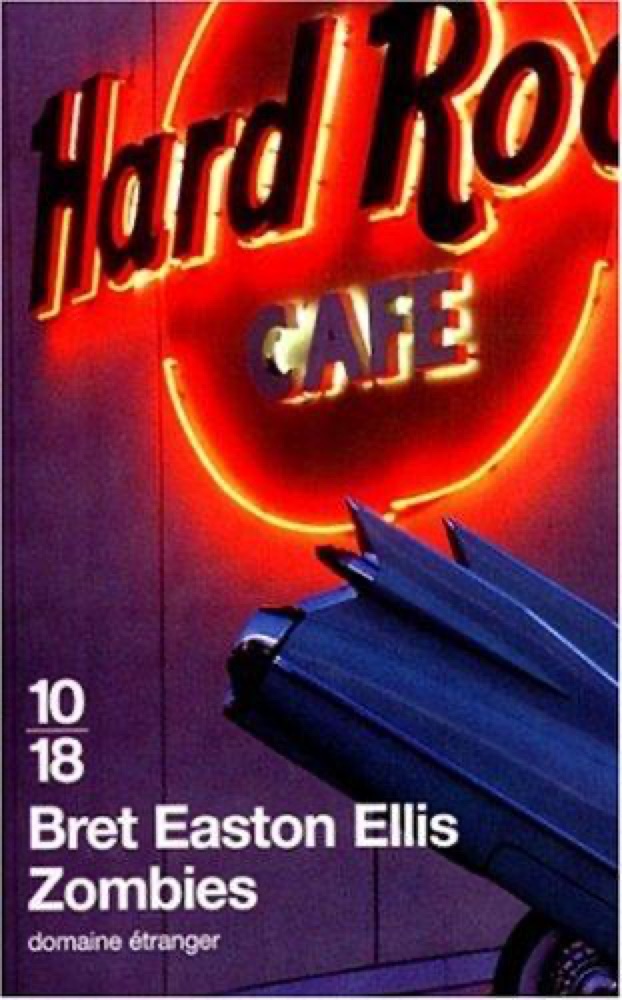
About the book
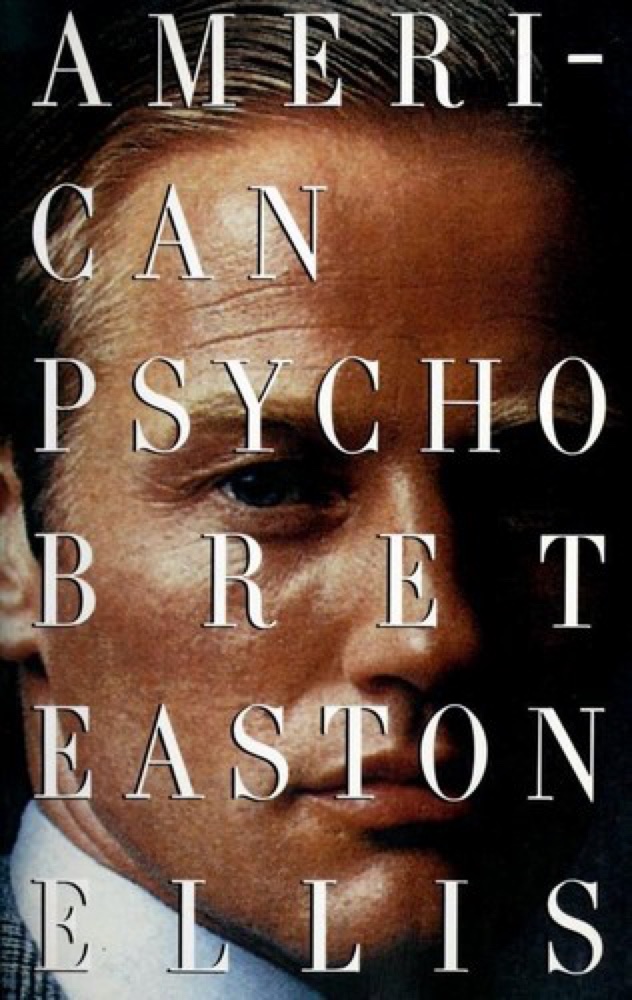
American Psycho is a satirical novel by Bret Easton Ellis, narrated in the first person by Patrick Bateman, a wealthy, impeccably groomed Manhattan investment banker in the Wall Street boom of the late 1980s. By day Bateman is obsessed with designer labels, restaurant reservations, business cards, and status; by night he claims to be a serial killer whose escalating violence is recounted in the same flat, brand-saturated voice. Ellis leaves the reality of the crimes deliberately ambiguous, filtering everything through a narrator whose grip on truth is unreliable.
The book is widely read as a critique of the shallow and vicious aspects of consumer capitalism, using Bateman's interchangeable colleagues, empty rituals, and fixation on surfaces to expose a culture that prizes appearance over substance and treats people as commodities. Its themes of consumerism, alienation, and postmodern superficiality are underscored from the opening, which borrows Dante's 'Abandon all hope ye who enter here' to align 1980s Wall Street with a vision of hell.
On publication American Psycho was intensely controversial for its graphic violence, especially against women, drawing objection from figures such as Gloria Steinem and facing bans or restrictions in several countries. Despite the outcry it became Ellis's most successful novel and a defining work of its era, later adapted into a well-known feature film, and it endures as a much-debated satire of excess and identity.
Key characters
- Patrick BatemanWealthy Manhattan investment banker and the novel's serial-killer narrator
- Evelyn RichardsBateman's fiancee
- Paul OwenColleague whom Bateman claims to murder
- JeanBateman's secretary
- Luis CarruthersA closeted coworker
Book details
- First published
- 1991
- Length
- 399 pages
- Reading time
- 24 hours
- Author
- Bret Easton Ellis
- Genre
- Classics
- Goodreads rating
- 3.80 (375k ratings) →
- First line
- “ABANDON ALL HOPE YE WHO ENTER HERE is scrawled in blood red lettering on the side of the Chemical Bank near the corner of Eleventh and First and is in print large enough to be seen from the backseat of the cab as it lurches forward in the traffic leaving Wall Street.”
Movie & TV adaptations
- IMDb
If you liked this, read…
- 1Fight ClubAnother 1990s satire of masculine identity and consumer emptiness with an unreliable narrator
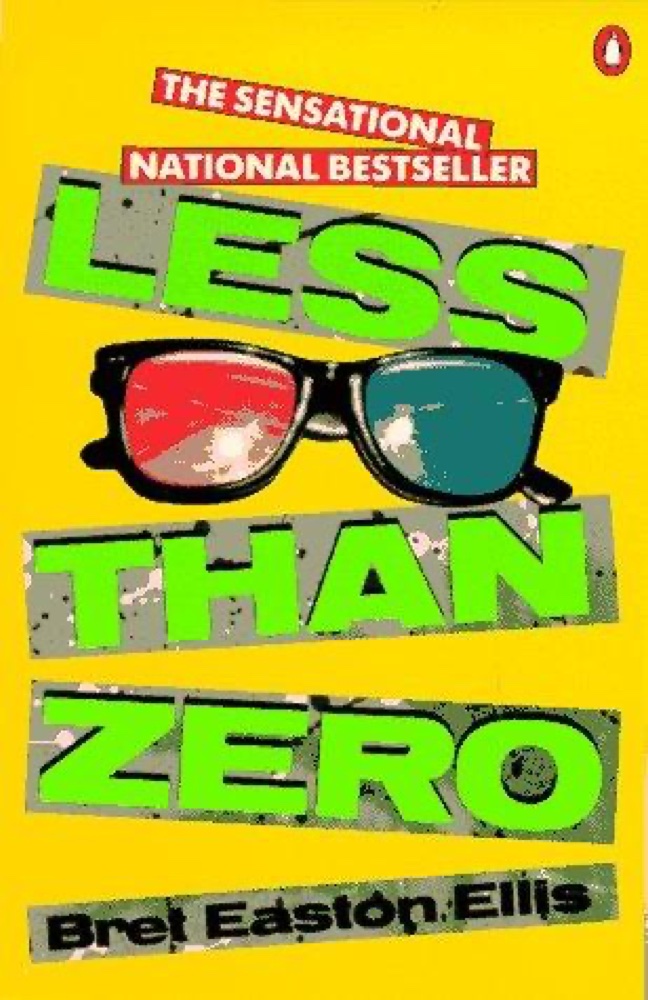
- 2Less Than ZeroEllis's own debut, sharing the cold, brand-obsessed portrait of affluent alienation
Keep reading
 Darkly Dreaming Dexter
 Dark Places
 Dry
Dry
 Tales of Ordinary Madness
 Destroy Me
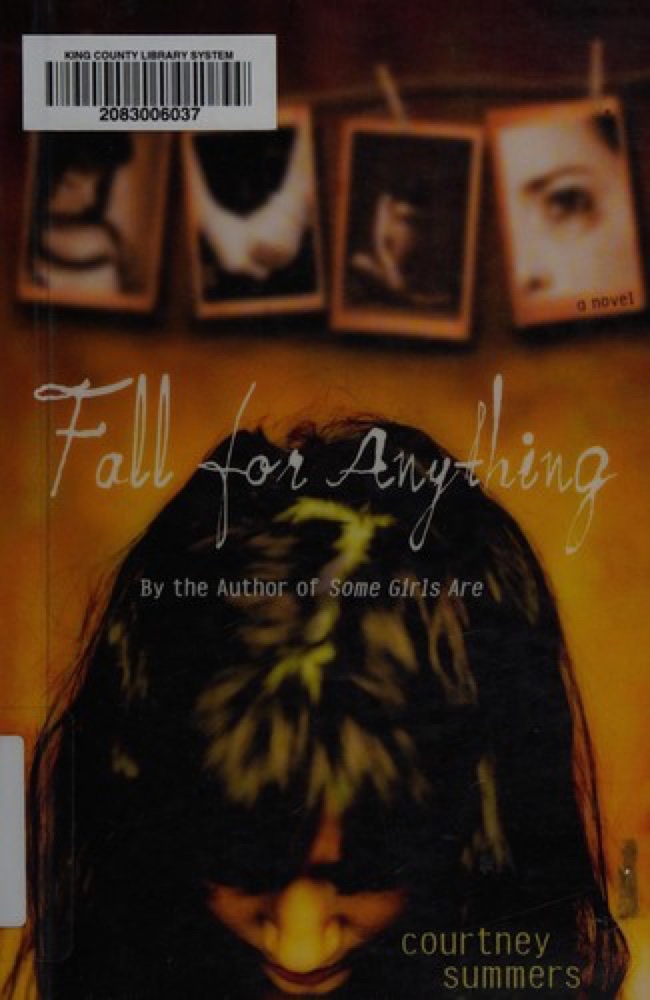 Fall for Anything
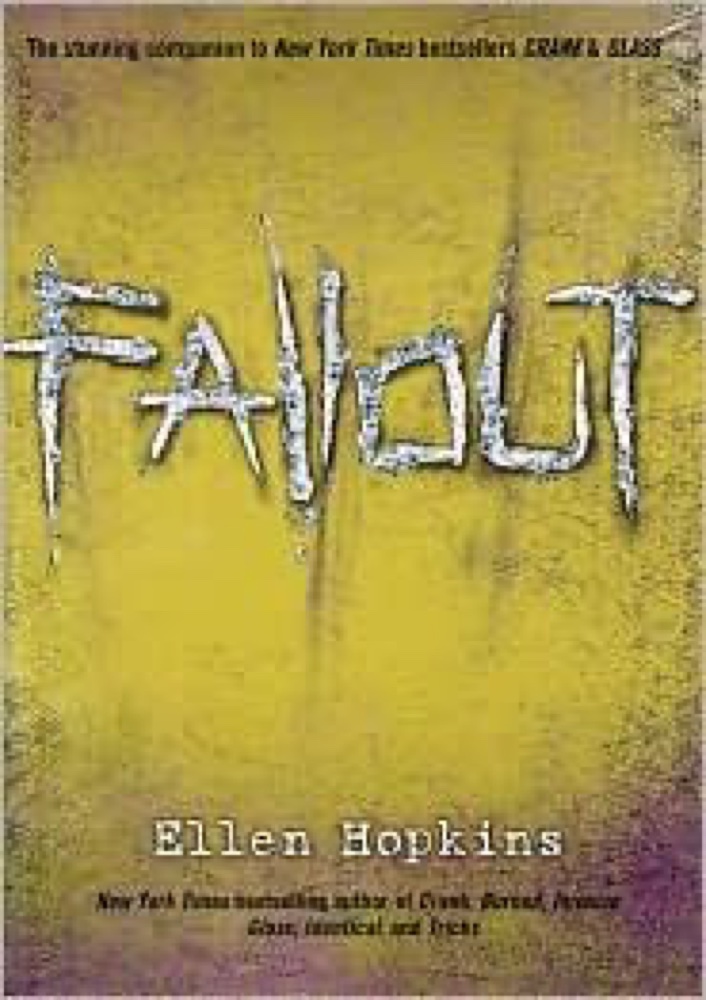 Fallout
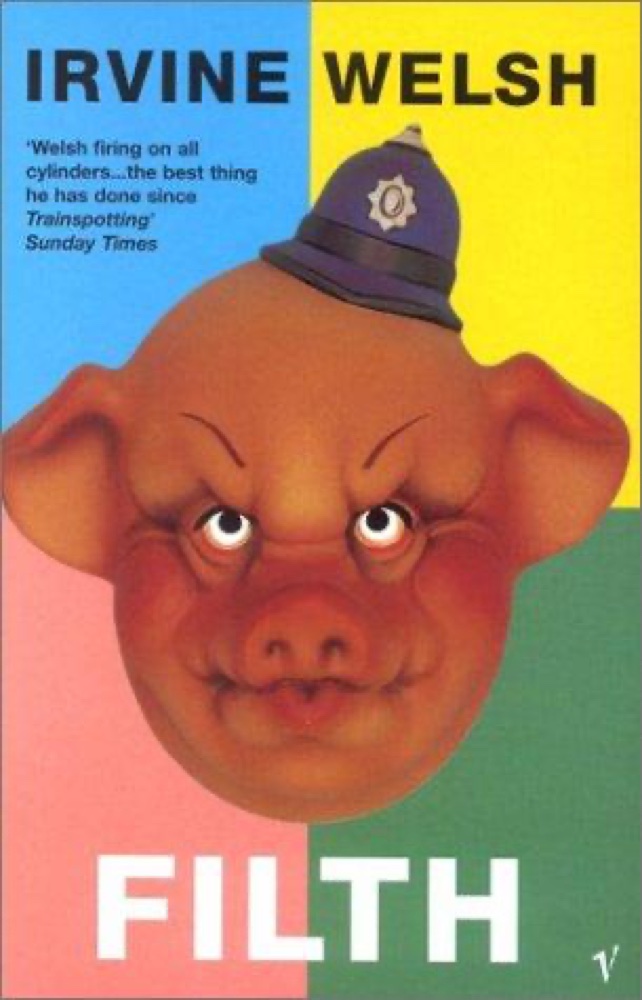 Filth
Filth
 Tweak: Growing Up On Methamphetamines
 Eye Scream
 Tropic of Cancer
 Antkind
 Cat's Eye
 Magical Thinking: True Stories
 Impulse
 Identical
 Terminal Boredom: Stories
 Her Body and Other Parties
 The Black Prince
 I Am Not Myself These Days
 Nausea
 My Booky Wook
 Tell No One
 The Asylum for Wayward Victorian Girls
 4.48 Psychosis
 Hollywood
 Watchmen
 The Bachman Books
 Everyone in This Room Will Someday Be Dead
 Zazen
Zazen
 Sloppy Firsts
 The Madness Underneath
 Volition
 The Golden Notebook
 Running with Scissors
 Wishful Drinking
 Shutter Island
 Shadowland
 The Return
 Flight
 If I Were You
 Gray
Gray
 Jesus' Son
 Before I Go to Sleep
 Let's Pretend This Never Happened: A Mostly True Memoir
 A Line Made By Walking
 This is Not a Test
 Suicide Notes
 More, Now, Again: A Memoir of Addiction
 Infinite Jest
 Masque of the Red Death
 Gone Girl
 I Don't Want To Be Crazy
 Black Coffee Blues
 Autobiography
 Black Iris
 A Great and Terrible Beauty
 Brain Droppings
 The Red Parts
 The Body Electric