
 The Mime Order
Quotes from the Book
For someone who loved words as much as I did, it was amazing how often they failed me.
1.9k
You can justify anything if you do it poetically enough.
1.9k
Were you in love with him?' 'Yes,' I say, simply. James and I put each other through the kind of reckless passions Gwendolyn once talked about, joy and anger and desire and despair. After all that, was it really so strange? I am no longer baffled or amazed or embarrassed by it. 'Yes, I was.' It's not the whole truth. The whole truth is, I'm in love with him still.
864
But that is how a tragedy like ours or King Lear breaks your heart—by making you believe that the ending might still be happy, until the very last minute.
846
How tremendous the agony of unmade decisions.
755
What is more important, that Caesar is assassinated or that he is assassinated by his intimate friends? … That,’ Frederick said, 'is where the tragedy is.
655
Per aspera ad astra. I’d heard a variety of translations, but the one I liked best was Through the thorns, to the stars.
642
One thing I'm sure Colborne will never understand is that I need language to live, like food—lexemes and morphemes and morsels of meaning nourish me with the knowledge that, yes, there is a word for this. Someone else has felt it before.
610
It’s not the whole truth. The whole truth is, I’m in love with him still.
396
Actors are by nature volatile—alchemic creatures composed of incendiary elements, emotion and ego and envy. Heat them up, stir them together, and sometimes you get gold. Sometimes disaster.
378
There is no comfort like complicity.
369
The things about Shakespeare is, he's so eloquent...he speaks the unspeakable. He turns grief and triumph and rapture and rage into words, into something we can understand. He renders the whole mystery of humanity comprehensible.
321
Which of us could say we were more sinned against than sinning? We were so easily manipulated - confusion made a masterpiece of us.
312
You were real to me. Sometimes I thought you were the only real thing.
309
I never asked where he went, worried he wouldn’t ask me to follow.
292
I don't know, it's like I look at you and suddenly the sonnets makes sense. The good ones, anyway.
249
Do you blame Shakespeare for any of it?” The question is so unlikely, so nonsensical coming from such a sensible man, that I can’t suppress a smile. “I blame him for all of it.
244
Hatred is the sincerest form of flattery.
230
For us, everything was a performance.” A small, private smile catches me off guard and I glance down, hoping he won’t see it. “Everything poetic.
230
James laughed brokenly, and I felt something deep between my lungs crack clean in two.
208
When did we become such terrible people?” “Maybe we’ve always been terrible.
205
The future is wide and wild and full of promise, but it is precarious, too. Seize on every opportunity that comes your way and cling to it, lest it be washed back out to sea.
183
Imagine having all your own thoughts and feelings tangled up with all the thoughts and feelings of a whole other person. It can be hard, sometimes, to sort out which is which.
169
We’re only ever playing fifty percent of a character. The rest is us, and we’re afraid to show people who we really are. We’re afraid of looking foolish if we reveal the full force of our emotions.
159
One sin, I know, another doth provoke; Murder’s as near to lust as flame to smoke.
156
How could we explain that standing on a stage and speaking someone else's words as if they are your own is less an act of bravery than a desperate lunge at mutual understanding?
151
But in Shakespeare's world, passion is irresistible, not embarrassing.
137
Make art, make mistakes, and have no regrets.
128
The real sky was enormous overhead, making our mirrors and twinkling stage lights seem ridiculous- Man’s futile attempt to imitate God
124
Did you know?
- The novel was M. L. Rio's debut.
- It is structured like a play, divided into acts and scenes with embedded Shakespearean dialogue.
- It is frequently compared to Donna Tartt's "The Secret History."
- The story unfolds across two timelines, a 1997 conservatory year and a 2008 framing narrative.
- A television adaptation was announced in September 2022 with Eleven Film and Blink49 Studios.
- It became a defining title of the dark academia genre with a large online following.
About M.L. Rio
M. L. Rio is an American author with a background in Shakespeare studies; "If We Were Villains" was her debut novel, drawing on her training in literature and theater.
More about the author →About the book
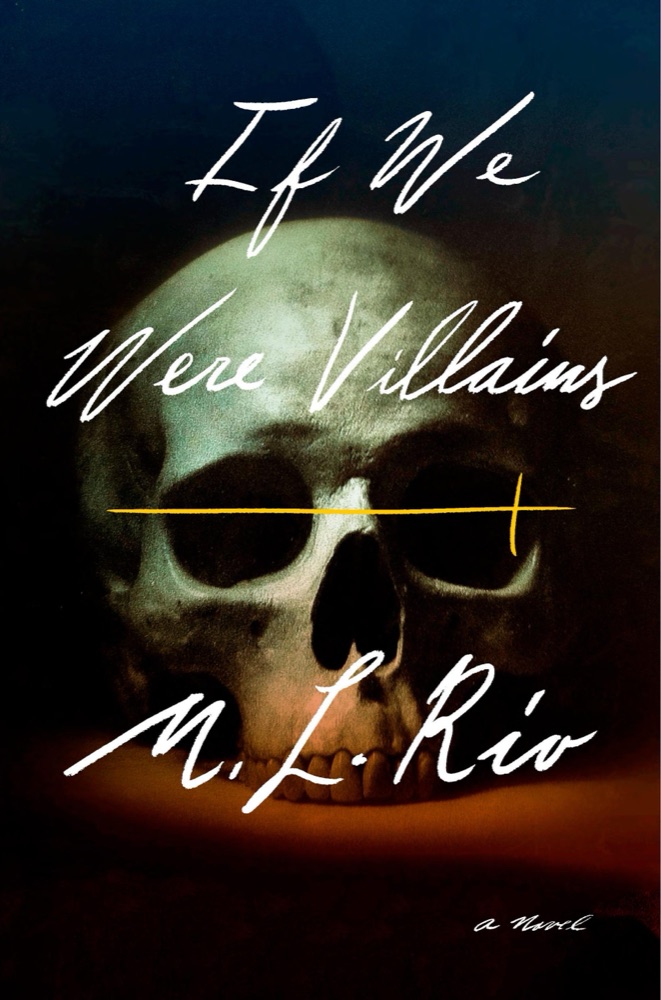
"If We Were Villains" is the 2017 debut novel of M. L. Rio, a dark academia mystery narrated by Oliver Marks. Newly released after a decade in prison, Oliver agrees to tell a retired detective the truth about the crime that put him there, recounting his fourth year at the elite Dellecher Classical Conservatory, where seven ambitious acting students immersed in Shakespeare see one of their tightly knit cohort, Richard, turn up dead by a lake. What was ruled an accident concealed something darker, and Oliver's confession unspools the jealousy and guilt that bound the group together.
Steeped in Shakespeare, the novel explores how the roles we play can bleed into who we become, examining loyalty, ambition, forbidden desire, and the moral ambiguity that festers within an insular artistic community. Rio structures the book in acts and scenes and threads passages of Elizabethan drama through the prose, blurring the line between performance and reality as the students' onstage rivalries spill into life and death.
The book drew frequent comparisons to Donna Tartt's "The Secret History" and became a cornerstone of the dark academia genre, finding an especially devoted readership online. Reviews were mixed to positive, with The New York Times offering a measured assessment, but the novel's popularity endured and grew over the years, and a television adaptation was announced in 2022.
Key characters
- Oliver MarksNarrator and protagonist, recently released from prison
- James FarrowOliver's closest friend among the acting students
- Richard StirlingThe domineering student whose death drives the plot
- Meredith DardenneOne of the seven fourth-year acting students
- Wren StirlingRichard's cousin and a member of the cohort
- Filippa KostaA reserved member of the acting cohort
- Joseph ColborneThe detective who investigates and later seeks the truth from Oliver
Book details
- First published
- 2017
- Length
- 354 pages
- Reading time
- 13 hours
- Author
- M.L. Rio
- Genre
- Mystery
- Goodreads rating
- 4.08 (433k ratings)
- First line
- “I sit with my wrists cuffed to the table and I think, But that I am forbid / To tell the secrets of my prison-house, / I could a tale unfold whose lightest word / Would harrow up thy soul.”
Critical reception
- Frequently compared to Donna Tartt's "The Secret History" and embraced as a touchstone of the dark academia genre.
- The New York Times gave it a mixed assessment, calling it "at once good and bad."
- Its popularity grew substantially over time, fueled by a strong online readership.
Movie & TV adaptations
- IMDb
If you liked this, read…
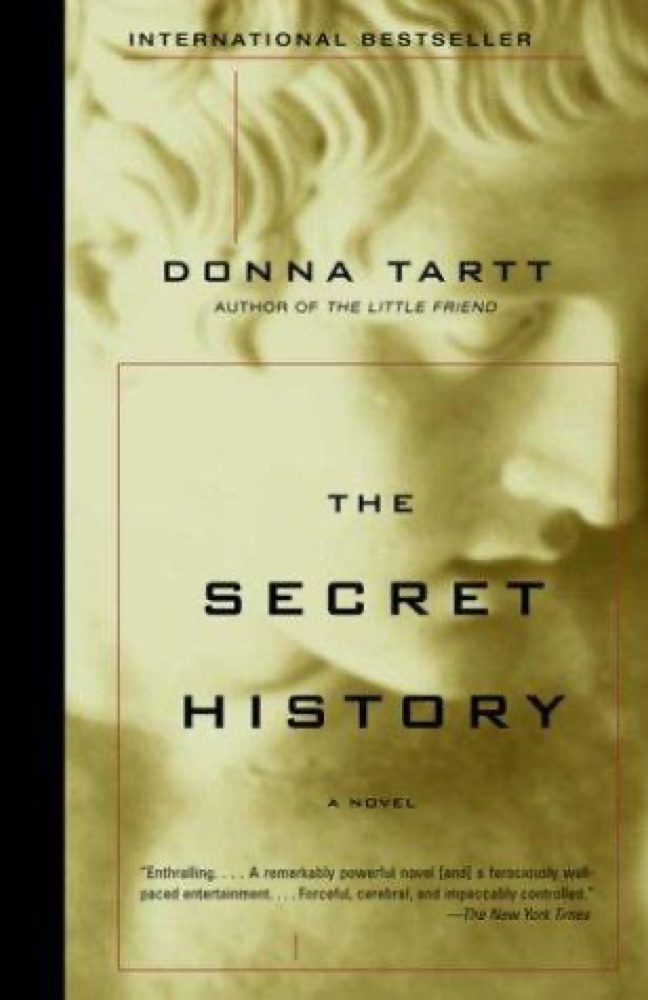
- 1The Secret HistoryA canonical dark academia novel about an insular group of classics students and a death they conceal.
- 2These Violent DelightsA dark academia story of an intense, destructive bond between two college students.
Keep reading
The Mime Order
 We Were Liars
 Ilustrado
 Juliet
 What I Loved
 Golden Fool
 A Bright Ray of Darkness
 The Secret History
 The Untouchable
 The Story of a New Name
 Bruiser
 Violet Made of Thorns
 Library of Souls
 Jane Steele
 Chances Are...
 Making Faces
 Requiem
 Doctor Zhivago
 Embers
 Brideshead Revisited: The Sacred and Profane Memories of Captain Charles Ryder
 Bridge of Sighs
 Seraphina
 Trust: Betrayed
 The Human Stain
 The Jewel in the Crown
 Tempted
 The Tsar of Love and Techno
 Chain of Thorns
 The Likeness
 Great Expectations
 The Swan Thieves
 Seven Types of Ambiguity
 The Sea, the Sea
 The Beautiful
 Enchanted
 The Name of the Wind
 Beautiful Redemption
 The Mandarins
 The Beginning of Everything
 Beauty and the Mustache
 Something Wicked This Way Comes
 The Year of the Flood
 Senlin Ascends
 King Lear
 The Recognitions
 The Weight of Words
 The Wolf Gift
 A Hero of Our Time
 The Magus
 By Nightfall
 First Love
 The Palace of Illusions
 A Small Indiscretion
 Sixty Stories
 The Handmaid's Tale
 His Dark Materials
 The Manticore
 When We Were Animals
 The Valley of Amazement