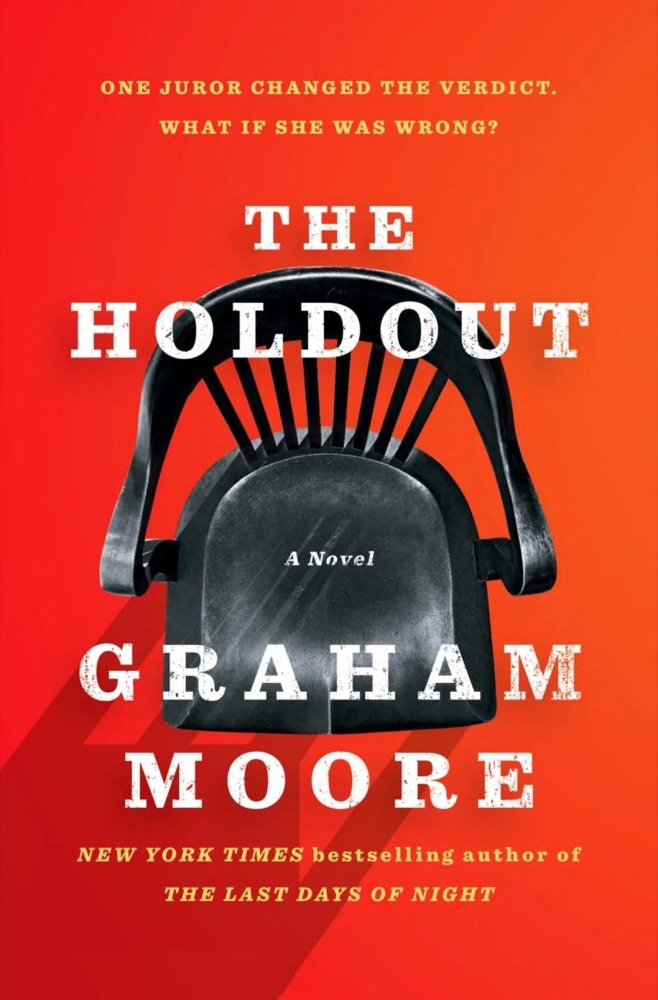

 Fool Me Once
Quotes from the Book
The adversarial system,” that’s what it was called. The attorneys on each side did their best to win, no-holds-barred—and whatever emerged from the mess of broken limbs was called justice.
4
In courtrooms all across this city, Maya had seen people get verdicts they’d wanted, and she’d seen just as many get ones they didn’t. But the verdicts had nothing to do with truth. No verdict ever changed a person’s opinion. Juries weren’t gods. The people who went into those courtrooms looking for divine revelation came out bearing the fruits of bureaucratic negotiation. Maya wanted to tell Lou that this need for vindication had become the mire of their whole petty country. Every day, they woke up fervently hoping for the headline that would prove, definitively, that their guys were the virtuous ones and the other guys were the absolute worst. But news of that certainty would forever elude them. Every new revelation that seemed to damn the people with whom they disagreed would be followed by a new rationalization. For every failed prediction, there would come a mitigating circumstance. They would double down on their most weakly held convictions because the alternative felt unbearable, and the bums across the aisle would follow suit. She wanted to say that the only thing worse than being wrong was having a bottomless need to prove that you never were. But she didn’t tell Lou any of that. Instead, Maya told Lou what he wanted to hear. She did it because she was the last person on earth who should be instructing Lou Silver on how to live out his days. And she did it because he’d asked her an honest question, and he deserved to hear from her an honest answer. “Mr. Silver,” she said, running her fingers through her hair, “I’m not sure of much of anything anymore.
3
What she missed the most about the person she'd been, Maya realized, was her hope for a coming world that turned out never to have been possible. She was nostalgic for an imaginary future.
2
In the stories, there's always an answer at the end. Resolution. The detective confronts the killer; the killer admits it. We know for sure. But out here - it's not like that. Out here, maybe somebody goes to jail. Maybe somebody doesn't. But we never know the truth. The real, whole, definite truth. It's impossible.
1
Every new revelation that seemed to damn the people with whom they disagreed would be followed by a new rationalization. For every failed prediction
Either she was who they wanted her to be, or she wasn’t, but either identity existed only in the shadow of their expectations.
Maya wanted to tell Lou that this need for vindication had become the mire of their whole petty country. Every day, they woke up fervently hoping for the headline that would prove, definitively, that their guys were the virtuous ones and the other guys were the absolute worst. But news of that certainty would forever elude them. Every new revelation that seemed to damn the people with whom they disagreed would be followed by a new rationalization. For every failed prediction, there would come a mitigating circumstance. They would double down on their most weakly held convictions because the alternative felt unbearable, and the bums across the aisle would follow suit. She wanted to say that the only thing worse than being wrong was having a bottomless need to prove that you never were.
Think of sexism. Fuck, think of sexual orientation. Think of the concept. Racism is about racial orientation. To say you made judgments about Bobby Nock because he’s black isn’t saying you’re some irredeemable redneck son of a bitch, dragging around a rope and a hood. We think of ‘racists’ as these other people—this subset of subhuman assholes. The villains in all those ridiculous movies with beatific white saviors. When the villains are so clear, we can tuck ourselves into bed at night knowing that we’re nothing like them. But what if it’s not so clear? What if it’s more complicated than here’s some heroic non-racist white people and here’s some villainous racist white people? What if, for me, the most pressing questions are not about how ‘racist’ you think you are or can prove that you aren’t. I don’t give a shit whether you think you’re a one or a ten on some kind of racism Kinsey scale. I care about what you’re going to do about it.
Wanting to know. Everybody wants to know. But maybe growing up means accepting that you're not always able to.
You think I have to identify with Bobby Nock in all this. That our blackness is the most defining feature about us. It’s okay, Maya. It doesn’t make you a racist. This is the craziest thing about good, well-intentioned white people, isn’t it? What lengths you’ll go to not to come off as in any way racist. Heavens! So instead of saying, ‘Bobby is a man and Trisha is a woman, so they don’t have much in common,’ you’re saying, ‘Bobby is black and Trisha is black, so that must be what they have in common.’ What’s the salient feature? The defining part of an object?
Maya repeated Wayne’s words back to him. “ ‘Because she looks honest.’ ” “That’s what
As always, they were most together when disobeying the rules.
Watch on YouTube
About Graham Moore
We have collected 12 quotes from 1 book by Graham Moore on BookQuoters.
More about the author →About the book
It's the most sensational case of the decade. Fifteen-year-old Jessica Silver, heiress to a billion-dollar real estate fortune, vanishes on her way home from school. Her teacher Bobby Nock is the prime suspect after illicit text messages are discovered between them--and Jessica's blood is found in his car. The subsequent trial taps straight into America's most pressing preoccupations: race, class, sex, law enforcement, and the lurid sins of the rich and famous. It's an open and shut case for the prosecution, and a quick conviction seems all but guaranteed. Until Maya Seale, a young woman on the jury, convinced of Nock's innocence, persuades the rest of the jurors to return the verdict of not guilty, a controversial decision that will change all of their lives forever.
Flash forward ten years. A true-crime docuseries reassembles the jurors, with particular focus on Maya, now a defense
Book details
- First published
- 2020
- Author
- Graham Moore
- Genre
- Mystery
- Goodreads rating
- 3.83 (36k ratings)
The buzz
- The Wall Street JournalReview in The Wall Street Journalprofessional review (via Book Marks)
- Kirkus ReviewsReview in Kirkus Reviewsprofessional review (via Book Marks)
- Publishers WeeklyReview in Publishers Weeklyprofessional review (via Book Marks)
- LibraryjournalReview in Libraryjournalprofessional review (via Book Marks)
- BooklistReview in Booklistprofessional review (via Book Marks)
Keep reading
Fool Me Once
 Confessions on the 7:45
 Tiamat's Wrath
 Birnam Wood
 Good Girl, Bad Blood
 The Children Act
 The Atlas Paradox
 Of Women and Salt
 Upright Women Wanted
 I Have Some Questions for You
 Turning Angel
 Natchez Burning
 The Office of Historical Corrections
 Fellside
 The Water Knife
 The Brass Verdict
 The Shape of Mercy
 The Good Daughter
 The Expats
 Conviction
 Bright Young Women
 The Little Drummer Girl
 Rot & Ruin
 The Human Stain
 The Testaments
 The Jewel in the Crown
 Caught
 Americanah
 Homecoming
 Tell No One
 The Bullet That Missed
 Gnomon
 The Atlas Complex
 Wicked: The Life and Times of the Wicked Witch of the West
 Saint X
 Creation Lake
 The Aosawa Murders
 Lakewood
 The Flight Attendant
 Hush
Hush
 World Gone By
 Visions in Death
 Alias Grace
 No One Is Talking About This
 The Madness of Crowds
 The Prophets
 Mary Toft; or, The Rabbit Queen
 Sorrowland
 Red Mars
 An Unsuitable Job for a Woman
 The Girl in the Spider's Web
 Anita de Monte Laughs Last
 Purity
 State of Wonder
 The Brutal Telling
 The Fall of Babel
 The Believers
 Varina
 Gerald's Game
 The Summer Children