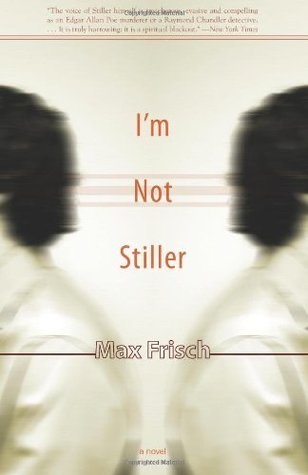
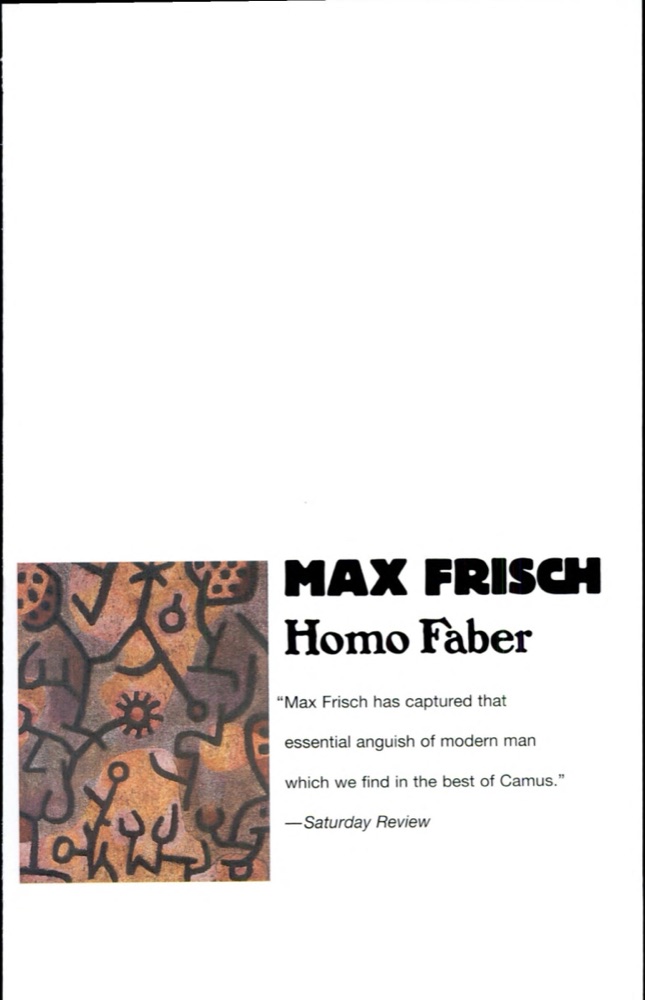
 Homo Faber
Quotes from the Book
We live in an age of reproduction. Most of what makes up our personal picture of the world we have never seen with our own eyes--or rather, we've seen it with our own eyes, but not on the spot: our knowledge comes to us from a distance, we are televiewers, telehearers, teleknowers.
The demand that we love our neighbor as ourselves contains as an axiom the demand that we shall love ourselves, shall accept ourselves as we were created.
Cause and effect are never divided between two people.
Oh, this yearning to be white, this yearning to have straight hair, this lifelong striving to be different from the way one is created this great difficulty in accepting oneself, I knew it and saw only my own longing from outside, saw the absurdity of our yearning to be different from what we are...
Wenn ich so allein bin, siehst du, und mich an alles erinnere, das ist das Schlimmste, daß man allein nicht darüber lachen kann, oder dann ist es nur so ein böses und bitteres Lachen, so daß man später über genau die gleichen Dinge doch wieder heult.
Nothing is harder than to accept oneself.
Stiller jo je debelo gledal. »Tako torej gledaš name!« je rekla Julika. »Si pač naredil podobo o meni, to pač vidim, dokončno podobo za vselej, in konec. Drugače kot takšne, saj to čutim, me zdaj kratko in malo več ne moreš videti. Kajne?« Stiller si je prižgal cigareto. »Jaz sem v zadnjem času tudi o mnogočem premišljevala,« je rekla Julika in pihala snežne kristale s svoje odeje tudi zdaj, ko je govorila sama, »- v zapovedih ne stoji kar tako: ne smeš si ustvariti podobo! Vsaka podoba je greh. Tole je ravno nasprotno kot ljubezen, vidiš, kar zdajle počneš s takim govorjenjem. Ne vem, če to razumeš. Če takega človeka ljubiš, mu vendar pustiš odprto možnost in si kljub vsem spominom kratko in malo pripravljen čuditi se, zmerom znova se čuditi, kako je drugačen, kako različen in ne takšenle, ne dokončna podoba, kakršno si delaš ti o svoji Juliki. Lahko ti rečem samo to: ni tako. Vselej se z govorjenjem v kaj zapičiš – ne smeš si delati podobe o meni! To je vse, kar ti na to lahko rečem.
Watch on YouTube
About Max Frisch
We have collected 30 quotes from 2 books by Max Frisch on BookQuoters.
More about the author →More by Max Frisch
Homo Faber
Book details
- Author
- Max Frisch
- Genre
- Classics
- Goodreads rating
- 4.02 (6k ratings) →
Keep reading
 Demian
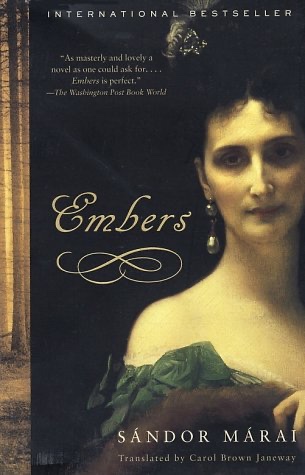 Embers
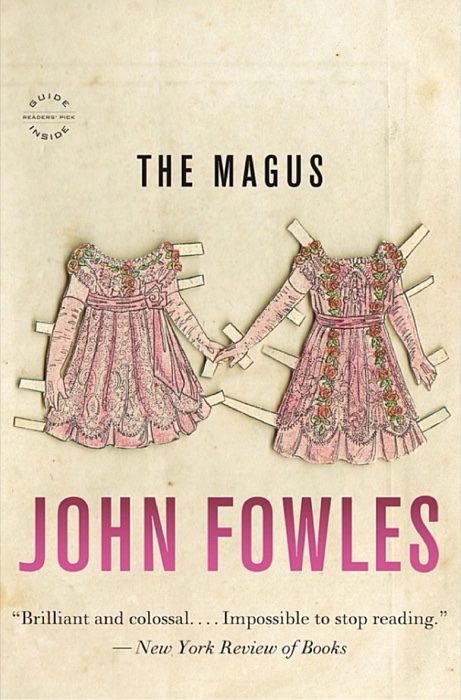 The Magus
 Zeno's Conscience
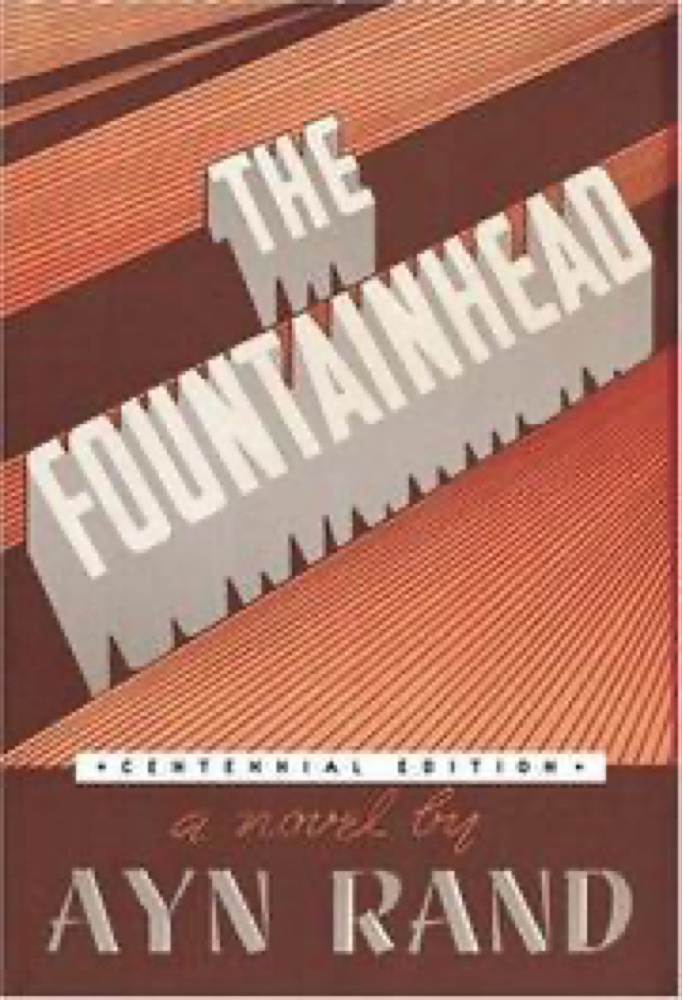 The Fountainhead
 Lilith
 When Nietzsche Wept
 Invisible Man
 Creatures of a Day: And Other Tales of Psychotherapy
 The Face of Another
 Immortality
 All That I Am
 The Hour of the Star
 The Joke
 The Art of Being
 Life Itself
 Memories, Dreams, Reflections
 Golden Fool
 De Profundis
 The Complete Essays
 Concrete
 1Q84
1Q84
 Open City
 Without Dogma
 Farewell Waltz
 Self-Reliance: An Excerpt from Collected Essays, First Series
 Stranger in a Strange Land
 Girl with Curious Hair
 Sexing the Cherry
 The Adolescent
 Beautiful Losers
 Elizabeth Finch
 We
We
 Possession
 Under Western Eyes
 Slow Gods
 Jane Eyre
 Lighthousekeeping
 On Beauty
 The Fall
 The Cocktail Party
 The Book: On the Taboo Against Knowing Who You Are
 The Ego and Its Own
 The Handmaid's Tale
 Middlesex
 Lord of the Butterflies
 Point Counter Point
 Everyone Burns
 Peter Camenzind
 A Single Man
 The Immoralist
 Children of the Mind
 Defending Jacob
 Island
 Self-Reliance and Other Essays
 Oranges Are Not the Only Fruit
 Anna Karenina
 Cuckold
 Autobiography
 Shadow of the Hegemon