 Think and Grow Rich
Quotes from the Book
Advice is one thing that is freely given away, but watch that you only take what is worth having.
Our acts can be no wiser than our thoughts.
It costs nothing to ask wise advice from a good friend.
If you desire to help thy friend, do so in a way that will not bring thy friend's burdens upon thyself.
Will power is but the unflinching purpose to carry the task you set for yourself to fulfillment.
Learning was of two kinds: the one being the things we learned and knew, and the other being the training that taught us how to find out what we did not know?
The hungrier one becomes, the clearer one's mind works— also the more sensitive one becomes to the odors of food.
As for time, all men have it in abundance.
The sun that shines today is the sun that shone when thy father was born, and will still be shining when thy last grandchild shall pass into the darkness.
The reason why we have never found measure of wealth. We never sought it.
Where the determination is, the way can be found.
In those things toward which we exerted our best endeavors we succeeded.
A part of all I earn is mine to keep.' Say it in the morning when you first arise. Say it at noon. Say it at night. Say it each hour of every day. Say it to yourself until the words stand out like letters of fire across the sky.
Proper preparation is the key to our success. Our acts can be no wiser than our thoughts. Our thinking can be no wiser than our understanding.
When no buyers were near, he talked to me earnestly to impress upon me how valuable work would be to me in the future: 'Some men hate it. They make it their enemy. Better to treat it like a friend, make thyself like it. Don't mind because it is hard. If thou thinkest about what a good house thou build, then who cares if the beams are heavy and it is far from the well to carry the water for the plaster. Promise me, boy, if thou get a master, work for him as hard as thou canst. If he does not appreciate all thou do, never mind. Remember, work, well-done, does good to the man who does it. It makes him a better man.
MEN OF ACTION ARE FAVORED BY THE GODDESS OF GOOD LUCK
A PART OF ALL YOU EARN IS YOURS TO KEEP.
The man who became of his understanding of the laws of wealth, acquireth a growing surplus, should give thought to those future days. He should plan certain investments or provisions that may endure safely for many years, yet will be available when the time arrives which he has so wisely anticipated.
Good luck can be enticed by accepting opportunity.
We found water. We passed into a more fertile country where were grass and fruit. We found the trail to Babylon because the soul of a free man looks at life as a series of problems to be solved and solves them, while the soul of a slave whines, 'What can I do who am but a slave?
Si aprende a fijarse un pequeño deseo bien definido, ello lo llevará a fijarse otro más grande.
Did you know?
- The book's financial advice is delivered through parables set in ancient Babylon.
- Its content began as a series of pamphlets that U.S. banks and insurance companies distributed to their customers in the early 1920s.
- The pamphlets were bound together and published as a book in 1926.
- The central character, Arkad, is described as a poor scribe who became the richest man in Babylon.
- George S. Clason is credited with popularizing the personal-finance maxim "pay yourself first."
- The book has remained in print for nearly a century and has sold millions of copies.
About George S. Clason
George Samuel Clason (1874-1957) was an American author and businessman who founded the Clason Map Company of Denver and the Clason Publishing Company. Beginning in the 1920s he wrote a series of financial-advice pamphlets set in ancient Babylon, the most famous of which were collected as The Richest Man in Babylon.
More about the author →About the book
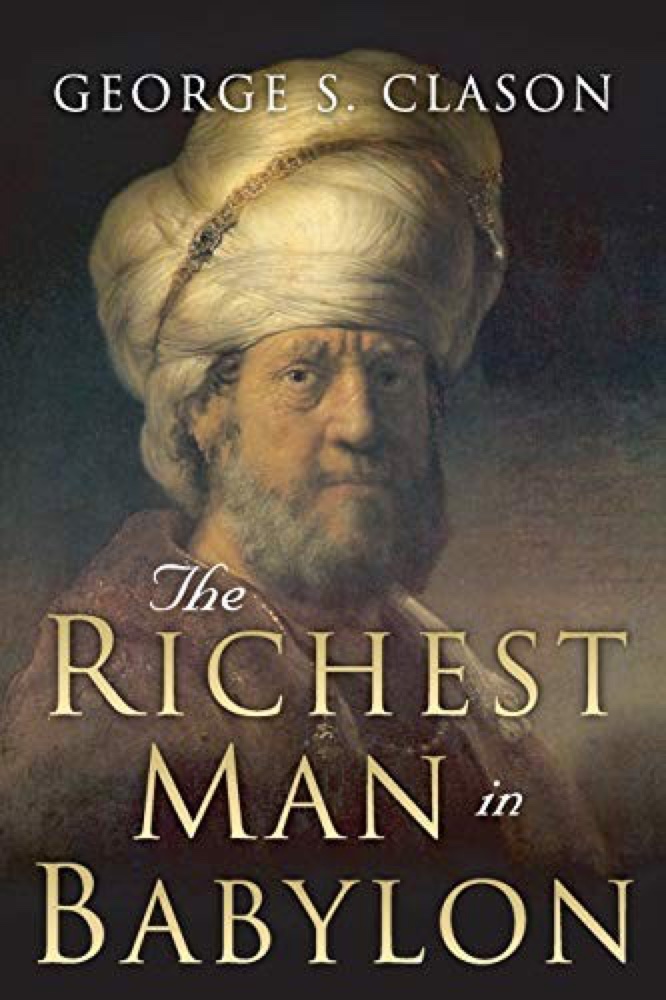
"The Richest Man in Babylon" is a classic of personal finance that dispenses money-management advice through a set of parables set in ancient Babylon. Its lessons are voiced chiefly by Arkad, a poor scribe who becomes the wealthiest man in the city, and who explains to his less-fortunate boyhood friends the simple habits that made his fortune grow year after year. The book gathers a series of financial pamphlets George S. Clason originally wrote in the early 1920s and distributed through U.S. banks and insurance companies; the pamphlets were bound together and issued as a book in 1926.
At its core the book distills a handful of durable principles, framed as "The Seven Cures for a Lean Purse" and "The Five Laws of Gold." Chief among them is the rule to "pay yourself first" by saving at least one-tenth of everything you earn, alongside living within your means, controlling expenditures, making savings work through prudent investment, guarding capital against loss, owning your own home, and continually improving your ability to earn. Clason is widely credited with popularizing the phrase "pay yourself first."
Nearly a century after its parables first appeared, the book remains continuously in print and is regarded as a foundational work of financial self-help, having sold millions of copies. By clothing plain saving-and-investing discipline in the storytelling of an ancient city, Clason made his advice memorable and approachable, and later generations of personal-finance writers have echoed its emphasis on thrift, steady saving, and compounding wealth over time.
Book details
- First published
- 1926
- Author
- George S. Clason
- Genre
- Nonfiction
- Goodreads rating
- 4.23 (250k ratings) →
- First line
- “In old Babylon there once lived a certain very rich man named Arkad.”
If you liked this, read…
- 1Think and Grow RichAnother early-20th-century classic of wealth-building principles and mindset.
- 2The Millionaire Next DoorReinforces thrift, living below your means, and steady saving.
- 3The Total Money MakeoverA modern, plain-spoken guide built on saving and avoiding debt.
Keep reading
Think and Grow Rich
 Acres of Diamonds
 The Game of Life and How to Play It
 Law of Success
 The Power of One
 The Journeys of Socrates
 The Science of Getting Rich
 Letters from a Stoic
 Sacred Hunger
 Success Through a Positive Mental Attitude
 Wings of Fire: An Autobiography
 Walden
 Cutting for Stone
 Walden & Civil Disobedience
 The Walking Drum
 The Autobiography of Benjamin Franklin
 Letters from a Self-Made Merchant to His Son
 The Nicomachean Ethics
 Essays
 A Message to Garcia
 The Monk Who Sold His Ferrari: A Fable About Fulfilling Your Dreams and Reaching Your Destiny
 Atlas Shrugged
 Secrets of the Millionaire Mind: Mastering the Inner Game of Wealth
 The Greatest Salesman in the World
 The Analects
 Shoe Dog: A Memoir by the Creator of NIKE
 The Way of All Flesh
 One
One
 Illusions: The Adventures of a Reluctant Messiah
 The Complete Essays
 Do Epic Shit
 The Winner Stands Alone
 You Learn by Living: Eleven Keys for a More Fulfilling Life
 The Dhammapada
 The First Circle
 The Pursuit of Happyness
 Scion of Ikshvaku
 The Oedipus Cycle: Oedipus Rex/Oedipus at Colonus/Antigone
 You Are a Badass at Making Money: Master the Mindset of Wealth
 Secrets of Jewish Wealth Revealed!
 The Intellectual Life: Its Spirit, Conditions, Methods
 Today Matters: 12 Daily Practices to Guarantee Tomorrow's Success
 Discourses and Selected Writings
 The I Ching or Book of Changes
 Jubal Sackett
 The Pilgrimage
 Up from Slavery
 Self-Reliance and Other Essays
 How to Stop Worrying and Start Living
 The Art of Public Speaking
 The Soul of a Butterfly: Reflections on Life's Journey
 The Downstairs Girl
 365 Tao: A Study of Taoist Wisdom for Daily Life
 The Leader Who Had No Title: A Modern Fable on Real Success in Business and in Life
 Origin
 The Algebra of Wealth: A Simple Formula for Financial Security
 See You at the Top
 How to Win Friends & Influence People
 The Traveler's Gift: Seven Decisions that Determine Personal Success