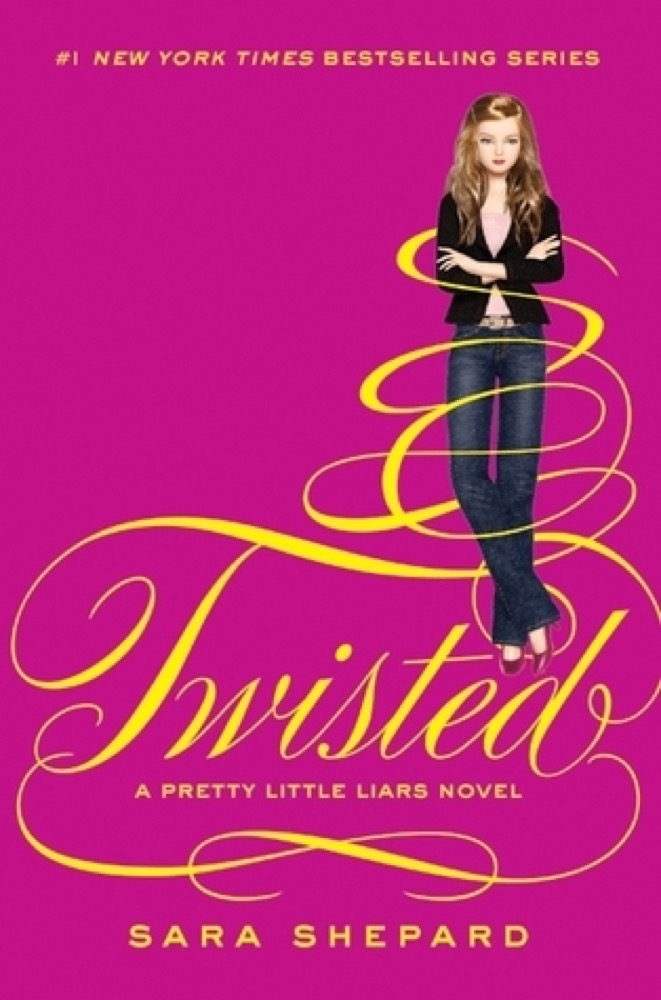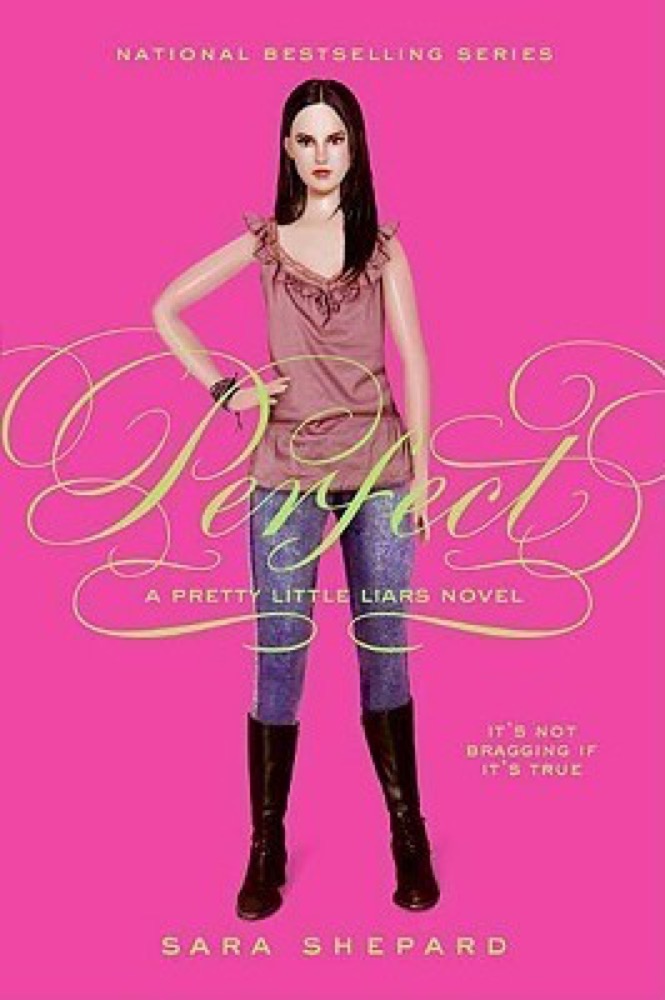


“Sometimes, a family is like an ear of summer corn: It might look perfect on the outside, but when you peel the husk away. every kernel is rotten.”
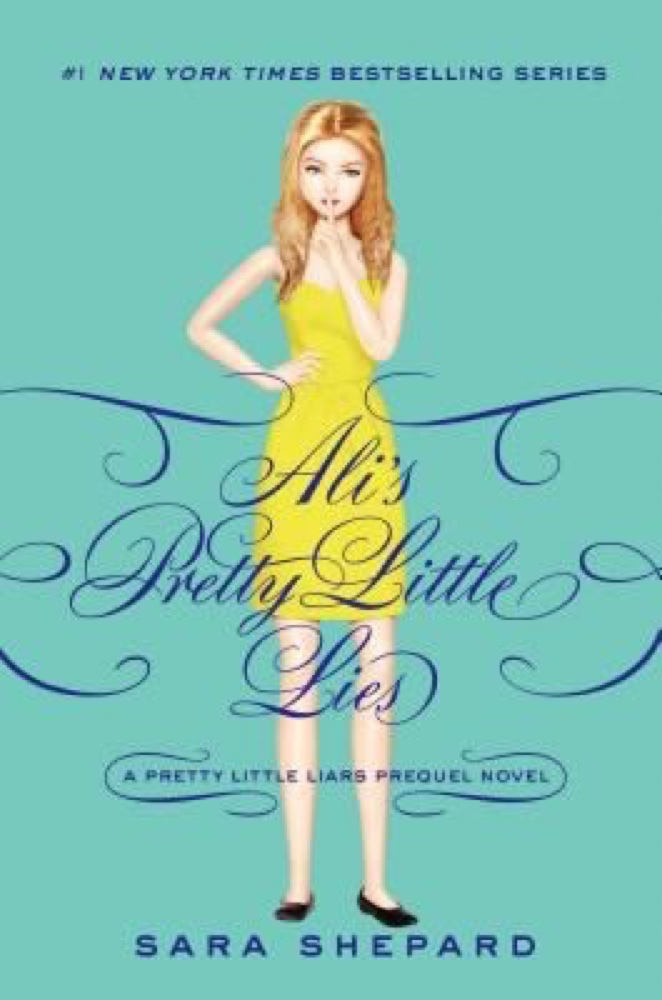
― Sara Shepard, quote from Ali's Pretty Little Lies
“The lie that started it all.”
― Sara Shepard, quote from Ali's Pretty Little Lies
“She'd make them wish they were never Alison DiLaurentis's friends in the first place. She didn't know how, and she didn't know when, but at least she had one person she could count on to help her carry it out. Together, they were going to make it happen.
Even if it killed her.”
― Sara Shepard, quote from Ali's Pretty Little Lies
“Every time she considered getting up and doing something, her limbs wouldn’t move.”
― Sara Shepard, quote from Ali's Pretty Little Lies
“Sometimes, a family is like an ear of summer corn: It might look perfect on the outside, but when you peel the husk away, every kernel is rotten.”
― Sara Shepard, quote from Ali's Pretty Little Lies
“So she shut her eyes and channeled her sister. A beautiful bitch. A manipulative queen bee. The girl who'd ruined her life.”
― Sara Shepard, quote from Ali's Pretty Little Lies
“Apparently being Cinderella isn't so bad after all.”
― Melissa Kantor, quote from If I Have a Wicked Stepmother, Where's My Prince?
“But from the Parthenon and the Timaeus a specious logic leads to the tyranny which, in the Republic, is held up as the ideal form of government. In the field of politics the equivalent of a theorem is a perfectly disciplined army; of a sonnet or picture, a police state under a dictatorship. The Marxist calls himself scientific and to this claim the Fascist adds another: he is the poet - the scientific poet - of a new mythology. Both are justified in their pretentions; for each applies to human situations the procedures which have proved effective in the laboratory and the ivory tower. They simplify, they abstract, they eliminate all that, for their purposes, is irrelevant and ignore whatever they choose to regard as inessential; they impose a style, they compel the facts to verify a favorite hypothesis, they consign to the waste paper basket all that, to their mind, falls short of perfection. And because they thus act like good artists, sound thinkers and tried experimenters, the prisons are full, political heretics are worked to death as slaves, the rights and preferences of mere individuals are ignored, the Gandhis are murdered and from morning till night a million schoolteachers and broadcasters proclaim the infallibility of the bosses who happen at the moment to be in power.”
― Aldous Huxley, quote from Ape and Essence
“I loved you before you took your first breath on this earth because that was my fate but you made me love you because you’re just… fucking… you.”
― Kristen Ashley, quote from With Everything I Am
“Kunst sollte für alle sichtbar sein', hatte er mir erklärt. 'Denn sie ist ein Seelengeschenk des Malers. Was vor den Blicken anderer verborgen werden muss, ist wertlos.”
― Lucinda Riley, quote from The Seven Sisters
“LABOR IS A RESOURCE and TIME IS A RESOURCE are by no means universal. They emerged naturally in our culture because of the way we view work, our passion for quantification, and our obsession with purposeful ends. These metaphors highlight those aspects of labor and time that are centrally important in our culture. In doing this, they also deemphasize or hide certain aspects of labor and time. We can see what both metaphors hide by examining what they focus on. In viewing labor as a kind of activity, the metaphor assumes that labor can be clearly identified and distinguished from things that are not labor. It makes the assumptions that we can tell work from play and productive activity from nonproductive activity. These assumptions obviously fail to fit reality much of the time, except perhaps on assembly lines, chain gangs, etc. The view of labor as merely a kind of activity, independent of who performs it, how he experiences it, and what it means in his life, hides the issues of whether the work is personally meaningful, satisfying, and humane. The quantification of labor in terms of time, together with the view of time as serving a purposeful end, induces a notion of LEISURE TIME, which is parallel to the concept LABOR TIME. In a society like ours, where inactivity is not considered a purposeful end, a whole industry devoted to leisure activity has evolved. As a result, LEISURE TIME becomes a RESOURCE too—to be spent productively, used wisely, saved up, budgeted, wasted, lost, etc. What is hidden by the RESOURCE metaphors for labor and time is the way our concepts of LABOR and TIME affect our concept of LEISURE, turning it into something remarkably like LABOR. The RESOURCE metaphors for labor and time hide all sorts of possible conceptions of labor and time that exist in other cultures and in some subcultures of our own society: the idea that work can be play, that inactivity can be productive, that much of what we classify as LABOR serves either no clear purpose or no worthwhile purpose.”
― George Lakoff, quote from Metaphors We Live By
BookQuoters is a community of passionate readers who enjoy sharing the most meaningful, memorable and interesting quotes from great books. As the world communicates more and more via texts, memes and sound bytes, short but profound quotes from books have become more relevant and important. For some of us a quote becomes a mantra, a goal or a philosophy by which we live. For all of us, quotes are a great way to remember a book and to carry with us the author’s best ideas.
We thoughtfully gather quotes from our favorite books, both classic and current, and choose the ones that are most thought-provoking. Each quote represents a book that is interesting, well written and has potential to enhance the reader’s life. We also accept submissions from our visitors and will select the quotes we feel are most appealing to the BookQuoters community.
Founded in 2023, BookQuoters has quickly become a large and vibrant community of people who share an affinity for books. Books are seen by some as a throwback to a previous world; conversely, gleaning the main ideas of a book via a quote or a quick summary is typical of the Information Age but is a habit disdained by some diehard readers. We feel that we have the best of both worlds at BookQuoters; we read books cover-to-cover but offer you some of the highlights. We hope you’ll join us.