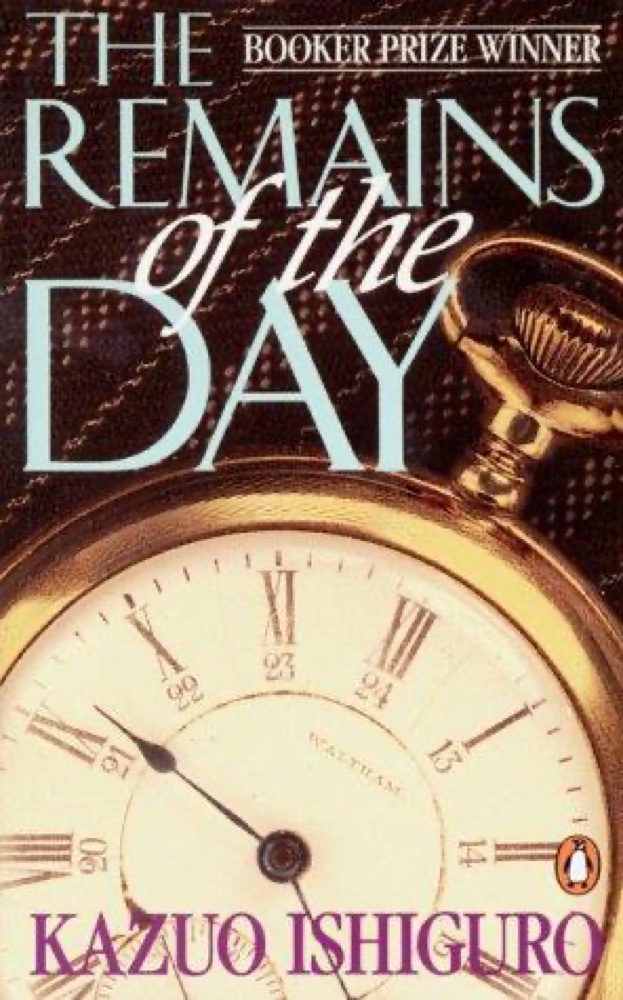

 The Unconsoled
Quotes from the Book
What is the point of worrying oneself too much about what one could or could not have done to control the course one's life took? Surely it is enough that the likes of you and I at least try to make our small contribution count for something true and worthy. And if some of us are prepared to sacrifice much in life in order to pursue such aspirations, surely that in itself, whatever the outcome, cause for pride and contentment.
Indeed — why should I not admit it? — in that moment, my heart was breaking.
The evening's the best part of the day. You've done your day's work. Now you can put your feet up and enjoy it.
If you are under the impression you have already perfected yourself, you will never rise to the heights you are no doubt capable of.
What can we ever gain in forever looking back and blaming ourselves if our lives have not turned out quite as we might have wished? The hard reality is, surely, that for the likes of you and I, there is little choice other than to leave our fate, ultimately, in the hands of those great gentlemen at the hub of this world who employ our services. What is the point in worrying oneself too much about what one could or could not have done to control the course one’s life took? Surely it is enough that the likes of you and I at least try to make our small contribution count for something true and worthy. And if some of us are prepared to sacrifice much in life in order to pursue such aspirations, surely that is in itself, whatever the outcome, cause for pride and contentment.
I do not think I responded immediately, for it took me a moment or two to fully digest these words of Miss Kenton. Moreover, as you might appreciate, their implications were such as to provoke a certain degree of sorrow within me. Indeed- why should I not admit it? - at that moment, my heart was breaking.
But what is the sense in forever speculating what might have happened had such and such a moment turned out differently? One could presumably drive oneself to distraction in this way. In any case, while it is all very well to talk of 'turning points', one can surely only recognize such moments in retrospect. Naturally, when one looks back to such instances today, they may indeed take the appearance of being crucial, precious moments in one's life; but of course, at the time, this was not the impression one had. Rather, it was as though one had available a never-ending number of days, months, years in which to sort out the vagaries of one's relationship with Miss Kenton; an infinite number of further opportunities in which to remedy the effect of this or that misunderstanding. There was surely nothing to indicate at the time that such evidently small incidents would render whole dreams forever irredeemable.
I can't even say I made my own mistakes. Really - one has to ask oneself - what dignity is there in that?
After all, what can we ever gain in forever looking back and blaming ourselves if our lives have not turned out quite as we might have wished?
Perhaps it is indeed time I began to look at this whole matter of bantering more enthusiastically. After all, when one thinks about it, it is not such a foolish thing to indulge in - particularly if it is the case that in bantering lies the key to human warmth.
What is pertinent is the calmness of that beauty, its sense of restraint.
What is pertinent is the calmness of beauty, its sense of restraint. It is as though the land knows of its own beauty, its own greatness, and feels no need to shout it.
What do you think dignity's all about?' The directness of the inquiry did, I admit, take me rather by surprise. 'It's rather a hard thing to explain in a few words, sir,' I said. 'But I suspect it comes down to not removing one's clothing in public.
But then, I suppose, when with the benefit of hindsight one begins to search one's past for such 'turning points', one is apt to start seeing them everywhere.
He chose a certain path in life, it proved to be a misguided one, but there, he chose it, he can say that at least. As for myself, I cannot even claim that. You see, I trusted. I trusted in his lorship's wisdom. All those years I served him, I trusted I was doing something worthwhile. I can't even say I made my own mistakes. Really - one has to ask oneself - what dignity is there in that?
One is not struck by the truth until prompted quite accidentally by some external event.
For a great many people, the evening is the most enjoyable part of the day. Perhaps, then, there is something to his advice that I should cease looking back so much, that I should adopt a more positive outlook and try to make the best of what remains of my day. After all, what can we ever gain in forever looking back and blaming ourselves if our lives have not turned out quite as we might have wished?
Why, Mr Stevens, why, why, why do you always have to pretend?
In any case, while it is all very well to talk of 'turning points', one can surely only recognise such moments in retrospect. Naturally, when one looks back to such instances today, they may indeed take the appearance of being crucial, precious moments in one's life; but of course, at the time, this was not the impression one had. Rather, it was as though one had available a never-ending number of days, months, years in which to sort out the vagaries of one's relationship with Miss Kenton; an infinite number of further opportunities in which to remedy the effect of this or that misunderstanding. There was surely nothing to indicate at the time that such evidently small incidents would render whole dreams forever irredeemable.
Its was one of those events which at a crucial stage in one's development arrive to challenge and stretch one to the limit of one's ability and beyond, so that thereafter one has a new standard by which to judge oneself.
But that doesn't mean to say, of course, there aren't occasions now and then - extremely desolate occasions - when you think to yourself: 'What a terrible mistake I've made with my life.' And you get to thinking about a different life, a better life you might have had. For instance, I get to thinking about a life I may have had with you, Mr. Stevens. And I suppose that's when I get angry about some trivial little thing and leave. But each time I do, I realize before long - my rightful place is with my husband. After all, there's no turning back the clock now. One can't be forever dwelling on what might have been. One should realize one has as good as most, perhaps better, and be grateful.
It is sometimes said that butlers only truly exist in England. Other countries, whatever title is actually used, have only manservants. I tend to believe this is true. Continentals are unable to be butlers because they are as a breed incapable of the emotional restraint which only the English race are capable of. Continentals - and by and large the Celts, as you will no doubt agree - are as a rule unable to control themselves in moments of a strong emotion, and are thus unable to maintain a professional demeanour other than in the least challenging of situations. If I may return to my earlier metaphor - you will excuse my putting it so coarsely - they are like a man who will, at the slightest provocation, tear off his suit and his shirt and run about screaming. In a word, "dignity" is beyond such persons. We English have an important advantage over foreigners in this respect and it is for this reason that when you think of a great butler, he is bound, almost by definition, to be an Englishman.
But this small episode is as good an illustration as any of the hazards of uttering witticisms. By the very nature of a witticism, one is given very little time to assess its various possible repercussions before one is called to give voice to it, and one gravely risks uttering all manner of unsuitable things if one has not first acquired the necessary skill and experience.
The rest of my life stretches out as an emptiness before me.
As I say, I have never in all these years thought of the matter in quite this way; but then it is perhaps in the nature of coming away on a trip such as this that one is prompted towards such surprising new perspectives on topics one imagined one had long ago thought throughly.
What is more, sir," his lordship went on, "I believe I have a good idea of what you mean by 'professionalism.' It appears to mean getting one's way by cheating and manipulating. It appears to mean serving the dictates of greed and advantage rather than those of goodness and the desire to see justice prevail in the world. If that is the 'professionalism' you refer to, sir, I don't care much for it and have no wish to acquire it.
Why should one not enjoy in a light-hearted sort of way stories of ladies and gentlemen who fall in love and express their feelings for each other, often in most elegant phrases?
Naturally—and why should I not admit this—I have occasionally wondered to myself how things might have turned out in the long run.... I only speculate this now because in the light of subsequent events, it could well be argued that in making my decision...I was perhaps not entirely aware of the full implications of what I was doing. Indeed, it might even be said that this small decision of mine constituted something of a key turning point; that that decision set things on an inevitable course towards what eventually happened. But then, I suppose, when with the benefit of hindsight one begins to search one's past for such 'turning points', one is apt to start seeing them everywhere.... What would have transpired, one may ask, had one responded slightly differently...? And perhaps—occurring as it did around the same time as these events?
You’ve got to enjoy yourself. The evening’s the best part of the day. You’ve done your day’s work. Now you can put your feet up and enjoy it. That’s how I look at it. Ask anybody, they’ll all tell you. The evening’s the best part of the day.
It is all very well, in these changing times, to adapt one's work to take in duties not traditionally within one's realm; but bantering is of another dimension altogether. For one thing, how would one know for sure that at any given moment a response of the bantering sort is truly what is expected? One need hardly dwell on the catastrophic possibility of uttering a bantering remark only to discover it wholly inappropriate.
Did you know?
- The novel won the 1989 Booker Prize for Fiction.
- It is narrated in the first person by Stevens, a butler at the fictional Darlington Hall.
- Much of the story unfolds during a 1956 motoring trip across the West Country of England.
- It was adapted into a 1993 film directed by James Ivory, starring Anthony Hopkins and Emma Thompson, which received eight Academy Award nominations.
- Author Kazuo Ishiguro later won the 2017 Nobel Prize in Literature.
About Kazuo Ishiguro
Sir Kazuo Ishiguro was born on 8 November 1954 in Nagasaki, Japan, and is a Japanese-British novelist whose works include The Remains of the Day, Never Let Me Go, and Klara and the Sun. He won the Booker Prize in 1989 and the Nobel Prize in Literature in 2017.
More about the author →More by Kazuo Ishiguro
All books by Kazuo Ishiguro →


About the book
The Remains of the Day is Kazuo Ishiguro's 1989 novel narrated by Stevens, an aging English butler who has devoted his life to service at Darlington Hall. In the summer of 1956 he sets out on a motoring trip across the West Country, ostensibly to visit Miss Kenton, the estate's former housekeeper, and along the way he recalls the decades he spent running the great house under its previous master, Lord Darlington.
As Stevens reflects, the reader comes to see what his careful, formal narration keeps at a distance: Lord Darlington's misguided sympathies for Nazi Germany in the 1930s, and Stevens's own unspoken feelings for Miss Kenton. The novel turns on questions of dignity, loyalty, and the emotional restraint that both defines Stevens and quietly costs him the possibilities of his own life.
Written in a restrained, elegiac first-person voice, the book won the 1989 Booker Prize and is widely regarded as one of Ishiguro's finest works. Its exploration of memory, self-deception, and Englishness helped cement his reputation as a major novelist, later recognized with the 2017 Nobel Prize in Literature, and it was adapted into an acclaimed 1993 film.
Key characters
- StevensAging English butler of Darlington Hall and the novel's narrator
- Miss Kenton (Mrs. Benn)Former housekeeper of Darlington Hall whom Stevens travels to see
- Lord DarlingtonStevens's late former employer, a Nazi sympathizer in the 1930s
- Mr. FarradayStevens's new American employer at Darlington Hall
Book details
- First published
- 1989
- Length
- 258 pages
- Reading time
- 3 hours
- Author
- Kazuo Ishiguro
- Genre
- Classics
- Goodreads rating
- 4.14 (377k ratings) →
- First line
- “It seems increasingly likely that I really will undertake the expedition that has been preoccupying my imagination now for some days.”
Movie & TV adaptations
- IMDb
If you liked this, read…
- 1Never Let Me GoIshiguro's later novel with the same quietly devastating restraint and unreliable memory
- 2AtonementIan McEwan's meditation on class, regret, and love set against 20th-century England
- 3Mrs. DallowayVirginia Woolf's inward, memory-driven portrait of an English life shaped by things left unsaid
Keep reading
 The Reader
 The Sense of an Ending
 A Sudden Light
 The Post-Birthday World
 Rules of Civility
 Agnes Grey
 The Stone Diaries
 The Secret History
 The Adventures of Augie March
 The Hour I First Believed
 Testament of Youth
 A Room with a View
 Dream Count
 So Long, See You Tomorrow
 Angle of Repose
 The Mysterious Mr. Quin
 A Fraction of the Whole
 Slouching Towards Bethlehem
 The Sportswriter
 The Go-Between
![What Was She Thinking? [Notes on a Scandal]](/i/book/g/08/what-was-she-thinking-notes-on-a-scandal.jpg) What Was She Thinking? [Notes on a Scandal]
What Was She Thinking? [Notes on a Scandal]
 West with the Night
 Fool's Errand
 The Moonstone
 The Razor's Edge
 Embers
 By Nightfall
 Liberation Day
 Q & A
Q & A
 The Long Dark Tea-Time of the Soul
 As Chimney Sweepers Come to Dust
 Out Stealing Horses
 David Copperfield
 The Memoirs of Cleopatra
 The Manticore
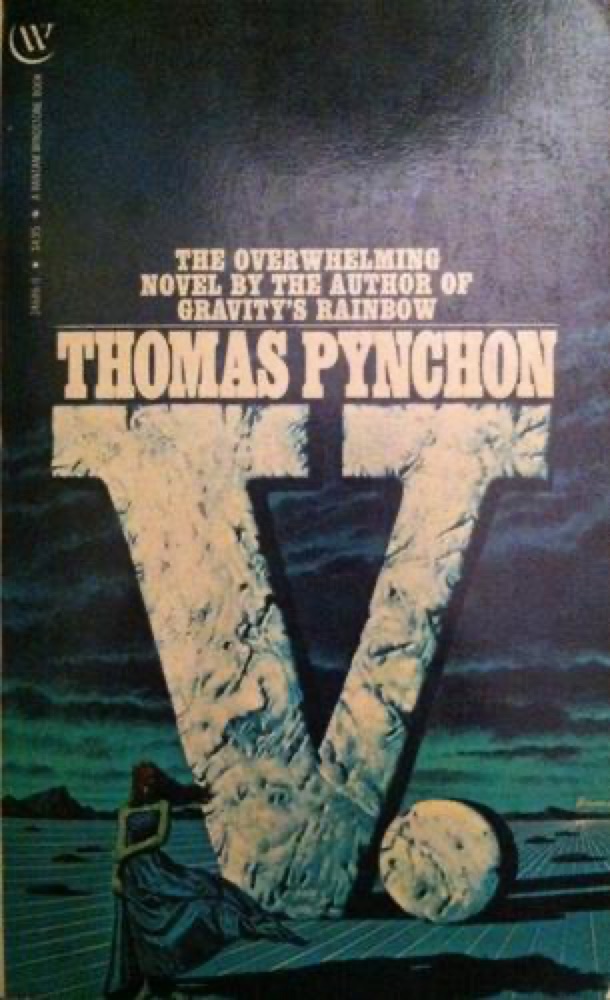 V.
V.
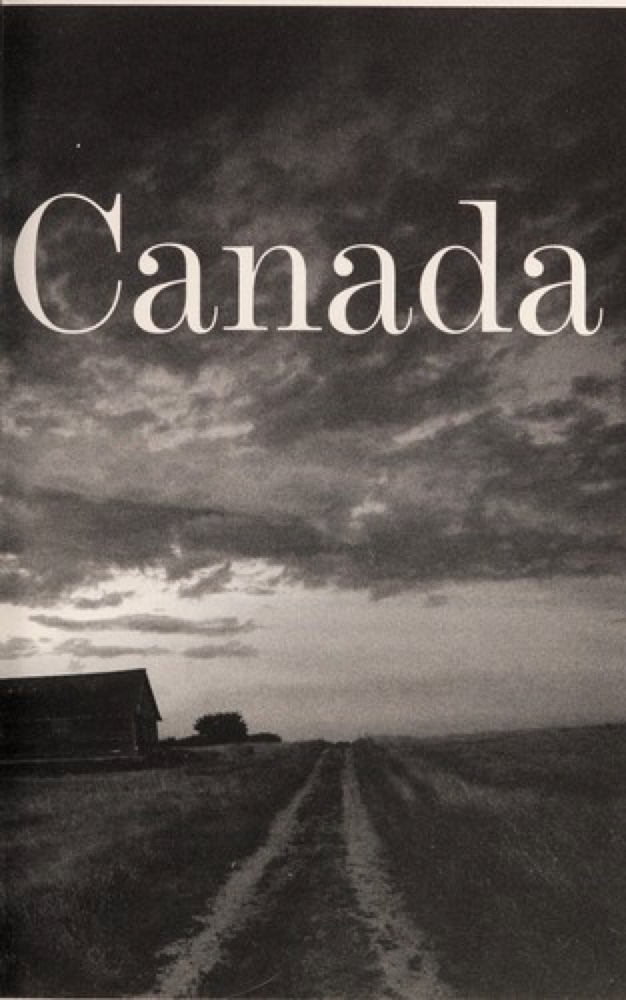 Canada
 Old Babes in the Wood: Stories
 My Friends
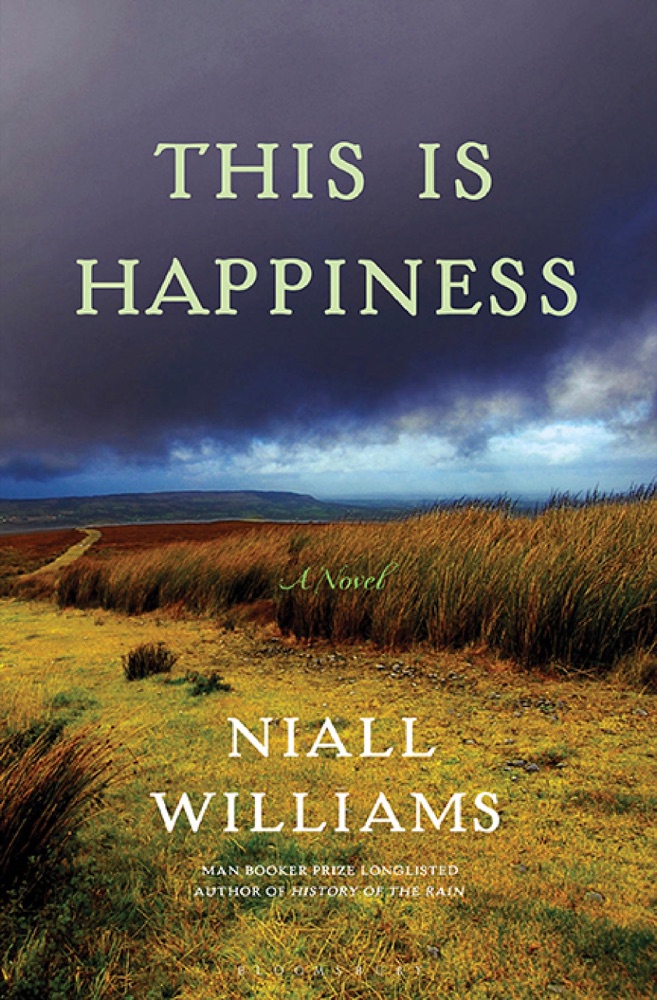 This Is Happiness
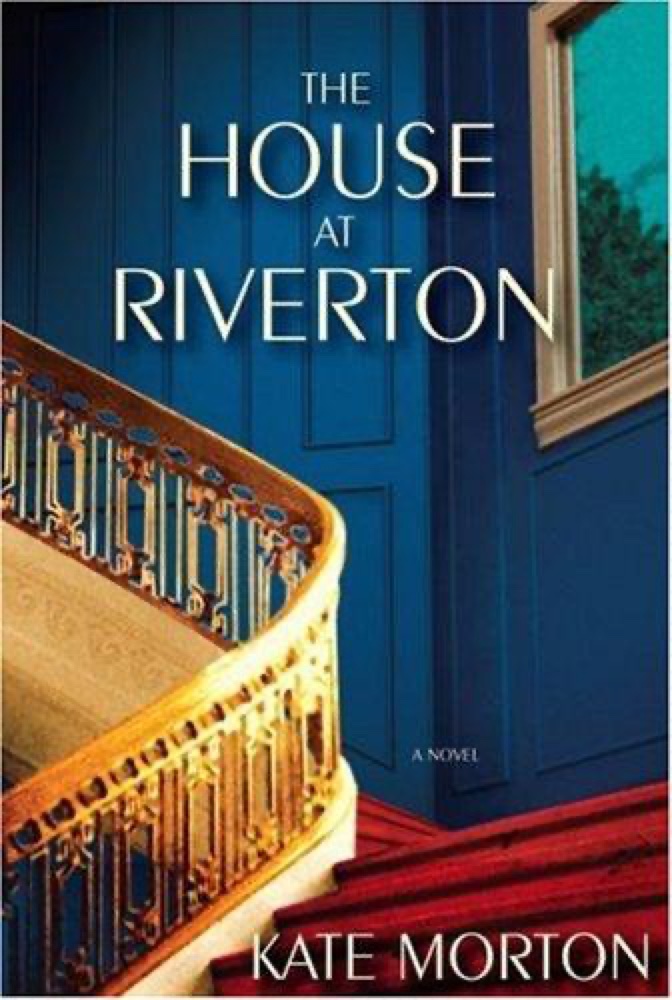 The House at Riverton
 Men Without Women
 Dhalgren
 The Complete Stories
 Crossing to Safety
 Watermelon
 Independence Day
 An Artist of the Floating World
 The Jewel in the Crown
 S.
S.
 Sometimes a Great Notion
 Gaudy Night
 The Great Mistake
 Schoolgirl
 The Girl Before
 The Mandarins
 The Proposal
 Selected Stories
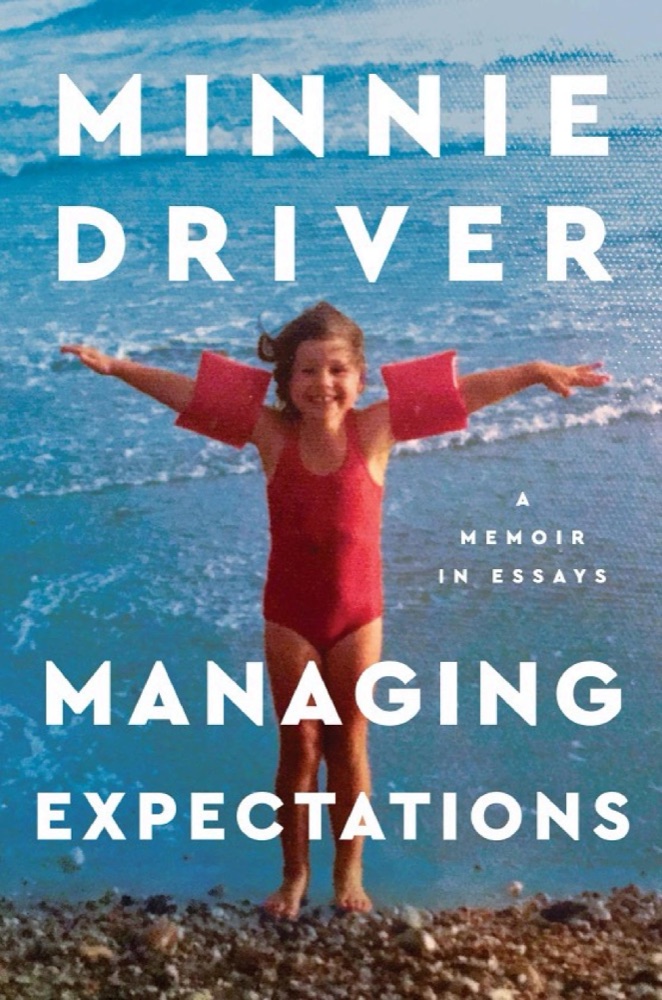 Managing Expectations: A Memoir in Essays – A Poignant Collection of Personal Stories on Acting, Failure, and Motherhood's Joy
 The Collected Stories of Lydia Davis