
 From Here to Eternity: Traveling the World to Find the Good Death
Quotes from the Book
Sifting through an urn of cremated remains you cannot tell if a person had successes, failures, grandchildren, felonies. “For you are dust, and to dust you shall return.
Death might appear to destroy the meaning in our lives, but in fact it is the very source of our creativity. As Kafka said, “The meaning of life is that it ends.” Death is the engine that keeps us running, giving us the motivation to achieve, learn, love, and create.
Exposing a young child to the realities of love and death is far less dangerous than exposing them to the lie of the happy ending.
In many ways, women are death's natural companions. Every time a woman gives birth, she is creating not only a life, but a death. Samuel Beckett wrote that women "give birth astride of a grave." Mother Nature is indeed a real mother, creating and destroying in a constant loop.
If my decomposing carcass helps nourish the roots of a juniper tree or the wings of a vulture—that is immortality enough for me. And as much as anyone deserves,
No matter how many heavy-metal album covers you’ve seen, how many Hieronymus Bosch prints of the tortures of Hell, or even the scene in Indiana Jones where the Nazi’s face melts off, you cannot be prepared to view a body being cremated. Seeing a flaming human skull is intense beyond your wildest flights of imagination.
The silence of death, of the cemetery, was no punishment, but a reward for a life well lived.
It is no surprise that the people trying so frantically to extend our lifespans are almost entirely rich, white men. Men who have lived lives of systematic privilege, and believe that privilege should extend indefinitely.
A corpse doesn't need you to remember it. In fact, it doesn't need anything anymore-it's more than happy to lie there and rot away. It is you who needs the corpse. Looking at the body you understand the person is gone, no longer an active player in the game of life. Looking at the body you see yourself, and you know that you, too, will die. The visual is a call to self-awareness. It is the beginning of wisdom.
There are many words a woman in love longs to hear. “I’ll love you forever, darling,” and “Will it be a diamond this year?” are two fine examples. But young lovers take note: above all else, the phrase every girl truly wants to hear is “Hi, this is Amy from Science Support; I’m dropping off some heads.
As Kafka said, “The meaning of life is that it ends.
In many ways, women are death's natural companions. Every time a woman gives birth, she is creating not only a life, but also a death. Samuel Beckett wrote that women "give birth astride of a grave." Mother Nature is indeed a real mother, creating and destroying in a constant loop.
Looking mortality straight in the eyeis n easy feat. To avoid the exercise, we choose to stay blindfolded, in the dark as to the realities of death and dying. But ignorance is not bliss, only a deeper kind of terror.
Mythologist Joseph Campbell wisely tells us to scorn the happy ending, “for the world as we know it, as we have seen it, yields but one ending: death, disintegration, dismemberment, and the crucifixion of our heart with the passing of the forms that we have loved.
Buddhist say that thoughts are like drops of water on the brain; when you reinforce the same thought, it will etch a new stream into your consciousness, like water eroding the side of a mountain. Scientist confirm this bit of folk wisdom: our neurons break connections and form new pathways all the time. Even if you've been programmed to fear death, that particular pathway isn't set in stone. Each of us is responsible for seeking out new knowledge and creating mental circuits.
French existentialist Albert Camus said it best: “Ah, mon cher, for anyone who is alone, without God and without a master, the weight of days is dreadful.
Death is the engine that keeps us running, giving us the motivation to achieve, learn, love, and create. Philosophers have proclaimed this for thousands of years just as vehemently as we insist upon ignoring it generation after generation.
Mother Nature, as Tennyson said, is “red in tooth and claw,” demolishing every beautiful thing she has ever created.
There is not much to enjoy in a layer of inorganic human bone dusted behind one’s ear or gathered underneath a fingernail,
It was the beginning of a Jane Austen novel, if Mr. Darcy was a grieving son/HBO enthusiast from Perth and Elizabeth an entry-level cremationist.
When the feelings would come, the emotions, the grief, I would push them down deeper, furious at myself for allowing them to peek through. My inner dialogue could be ruthless: You're fine. You're not starving, no one beats you. Your parents are still alive. There is real sadness in the world and yours is pathetic, you whiny, insignificant cow.
I wanted to quiet my brain, to stop its incessant ruminations on the whys and hows of mortality.
Rather than let author and environmentalist Edward Abbey be buried in a traditional cemetery, his friends stole his body, wrapped it in a sleeping bag, and hauled it in the back of his pickup truck to the Cabeza Prieta Desert in Arizona. They drove down a long dirt road and dug a hole when they reached the end of it, marking Abbey’s name on a nearby stone and pouring whiskey onto the grave. Fitting tribute for Abbey, who spent his career warning humanity of the harm in separating ourselves from nature. “If my decomposing carcass helps nourish the roots of a juniper tree or the wings of a vulture—that is immortality enough for me. And as much as anyone deserves,” he once said. Left
Watch on YouTube
About Caitlin Doughty
We have collected 83 quotes from 3 books by Caitlin Doughty on BookQuoters.
More about the author →More by Caitlin Doughty
From Here to Eternity: Traveling the World to Find the Good Death
 Will My Cat Eat My Eyeballs? And Other Questions About Dead Bodies
Book details
- Author
- Caitlin Doughty
- Genre
- Nonfiction
- Goodreads rating
- 4.21 (112k ratings) →
Keep reading
 Nothing to Be Frightened Of
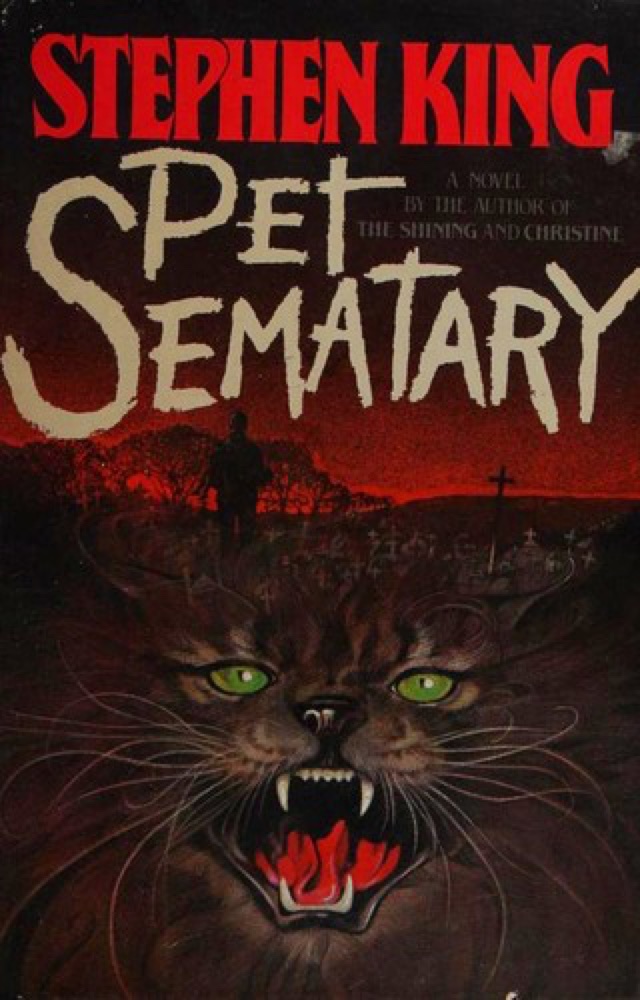 Pet Sematary
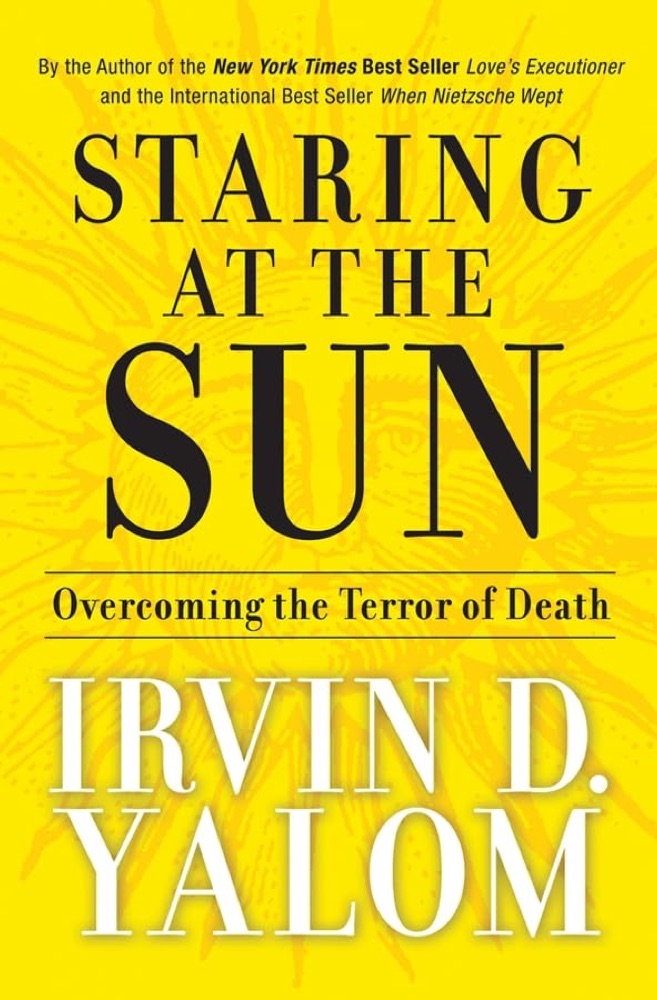 Staring at the Sun: Overcoming the Terror of Death
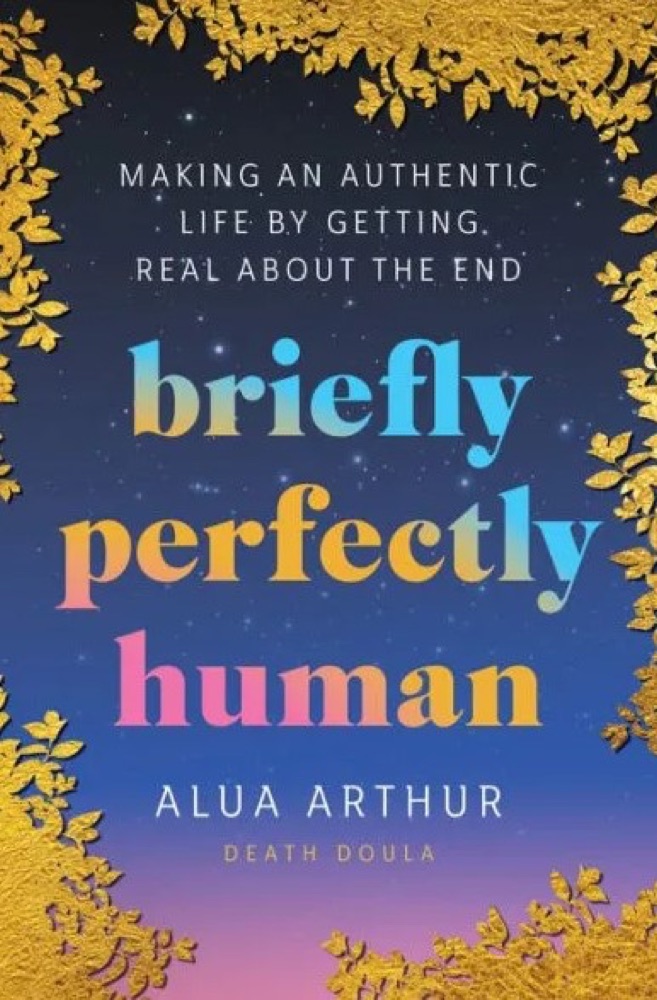 Briefly Perfectly Human: Making an Authentic Life by Getting Real About the End
From Here to Eternity: Traveling the World to Find the Good Death
Briefly Perfectly Human: Making an Authentic Life by Getting Real About the End
From Here to Eternity: Traveling the World to Find the Good Death
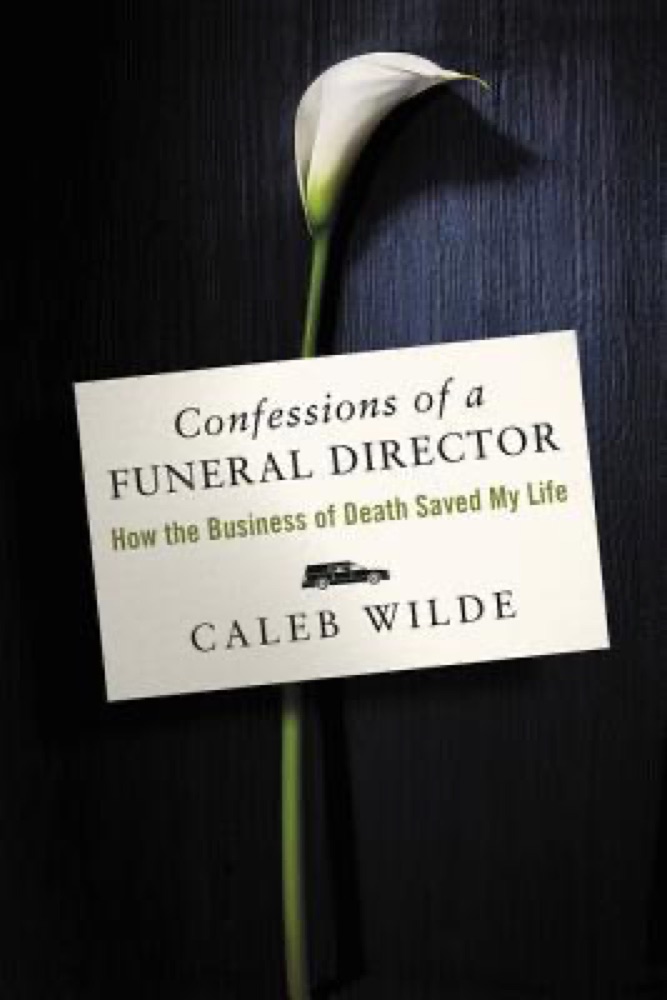 Confessions of a Funeral Director: How the Business of Death Saved My Life
 The Seven Moons of Maali Almeida
 Split Tooth
 Doomed
 The New Hunger
 Damned
 The Burning World
 Drive Your Plow Over the Bones of the Dead
 The Beauty of What Remains: How Our Greatest Fear Becomes Our Greatest Gift
 A Matter of Death and Life
 When Breath Becomes Air
 Mortality
 Memento Mori
 The Last Werewolf
 Things in Nature Merely Grow
 Good Bones and Simple Murders
 Nutshell
 The Signature of All Things
 The Fifth Science
 Nod
Nod
 The Conspiracy Against the Human Race
 The Fall of Hyperion
 Natural Causes: An Epidemic of Wellness, the Certainty of Dying, and Killing Ourselves to Live Longer
 Stella Maris
 Creatures of a Day: And Other Tales of Psychotherapy
 Scythe
 Grief Is for People
 The Dead in Their Vaulted Arches
 The Bone Clocks
 The Setting Sun
 Odd Apocalypse
 Speaking Bones
 Humboldt's Gift
 A Widow's Story
 The Empusium
 A Very Easy Death
 A Rule Against Murder
 Day
Day
 The Snowman
Will My Cat Eat My Eyeballs? And Other Questions About Dead Bodies
The Snowman
Will My Cat Eat My Eyeballs? And Other Questions About Dead Bodies
 Dead Astronauts
 On Grief and Grieving: Finding the Meaning of Grief Through the Five Stages of Loss
 The Gone-Away World
 We Are All the Same in the Dark
 Death Comes as the End
 Absalom, Absalom!
 Beautyland
 Gretel and the Dark
 The Resurrectionist: The Lost Work of Dr. Spencer Black
 10 Minutes 38 Seconds in This Strange World
 Kafka on the Shore
 The Abundance
 Venom
Venom
 The Book That Broke the World
 The Scarlet Gospels