
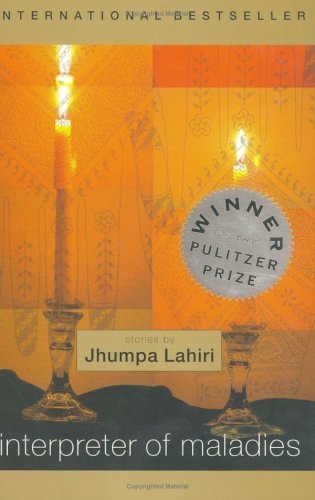
 Interpreter of Maladies
Quotes from the Book
That's the thing about books. They let you travel without moving your feet.
You are still young, free.. Do yourself a favor. Before it's too late, without thinking too much about it first, pack a pillow and a blanket and see as much of the world as you can. You will not regret it. One day it will be too late.
They were things for which it was impossible to prepare but which one spent a lifetime looking back at, trying to accept, interpret, comprehend. Things that should never have happened, that seemed out of place and wrong, these were what prevailed, what endured, in the end.
Try to remember it always," he said once Gogol had reached him, leading him slowly back across the breakwater, to where his mother and Sonia stood waiting. "Remember that you and I made this journey together to a place where there was nowhere left to go.
Pet names are a persistant remnant of childhood, a reminder that life is not always so serious, so formal, so complicated. They are a reminder, too, that one is not all things to all people.
Pack a pillow and blanket and see as much of the world as you can.You will not regret it.
She has the gift of accepting her life.
Though no longer pregnant, she continues, at times, to mix Rice Krispies and peanuts and onions in a bowl. For being a foreigner Ashima is beginning to realize, is a sort of lifelong pregnancy -- a perpetual wait, a constant burden, a continuous feeling out of sorts. It is an ongoing responsibility, a parenthesis in what had once been an ordinary life, only to discover that previous life has vanished, replaced by something more complicated and demanding. Like pregnancy, being a foreigner, Ashima believes, is something that elicits the same curiosity of from strangers, the same combination of pity and respect.
My grandfather says that's what books are for," Ashoke said, using the opportunity to open the volume in his hands. "To travel without moving an inch.
Remember that you and I made this journey together to a place where there was nowhere left to go.
One hand, five homes. A lifetime in a fist.
Somehow, bad news, however ridden with static, however filled with echoes, always manages to be conveyed.
You remind me of everything that followed.
Do what I will never do.
But she has gathered that Americans, in spite of their public declarations of affection, in spite of their miniskirts and bikinis, in spite of their hand-holding on the street and lying on top of each other on the Cambridge Common, prefer their privacy.
In so many ways, his family's life feels like a string of accidents, unforeseen, unintended, one incident begetting another...They were things for which it was impossible to prepare but which one spent a lifetime looking back at, trying to accept, interpret, comprehend. Things that should never have happened, that seemed out of place and wrong, these were what prevailed, what endured, in the end.
Will you remember this day, Gogol?" his father had asked, turning back to look at him, his hands pressed like earmuffs to either side of his head. "How long do I have to remember it?" Over the rise and fall of the wind, he could hear his father's laughter. He was standing there, waiting for Gogol to catch up, putting out a hand as Gogol drew near. "Try to remember it always," he said once Gogol reached him, leading him slowly back across the breakwater, to where his mother and Sonia stood waiting. "Remember that you and I made this journey, that we went together to a place where there was nowhere left to go.
On a sticky August evening two weeks before her due date, Ashima Ganguli stands in the kitchen of a Central Square apartment, combining Rice Krispies and Planters peanuts and chopped red onion in bowl.
Pet names are a persistent remnant of childhood, a reminder that life is not always so serious, so formal, so complicated.
Is that what you think of when you think of me?" Gogol asks him. "Do I remind you of that night"? "Not at all", his father says eventually, one hand going to his ribs, a habitual gesture that has baffled Gogol until now. "You remind me of everything that followed.
Gogol remembers having to do the same thing when he was younger, when his grandparents died...He remembers, back then, being bored by it, annoyed at having to observe a ritual no one else he knew followed, in honor of people he had seen only a few times in his life...Now, sitting together at the kitchen table at six-thirty every evening, his father's chair empty, this meatless meal is the only thing that seems to make sense.
He tries to peel the image from the sticky yellow backing, to show her the next time he sees her, but it clings stubbornly, refusing to detach cleanly from the past.
She has given birth to vagabonds. She is the keeper of all these names and numbers now, numbers she once knew by heart, numbers and addresses her children no longer remember.
She had listened to him, partly sympathetic, partly horrified. For it was one thing for her to reject her background, to be critical of her family's heritage, another to hear it from him.
...that in spite of living in a mansion an American is not above wearing a pair of secondhand pants, bought for fifty cents.
My grandfather always says that's what books are for. To travel without moving an inch.
Gogol is unaccustomed to this sort of talk at mealtimes, to the indulgent ritual of the lingering meal, and the pleasant aftermath of bottles and crumbs and empty glasses that clutter the table.
In the days that follow, he begins to remember things about Moushumi, images that come to him without warning while he is sitting at his desk at work, or during a meeting, or drifting off to sleep, or standing in the mornings under the shower. They are scenes he has carried within him, buried but intact, scenes he has never thought about or had reason to conjure up until now.
Without a single grandparent or parent or uncle or aunt at her side, the baby’s birth, like most everything else in America, feels somehow haphazard, only half true. As she strokes and suckles and studies her son, she can’t help but pity him. She has never known of a person entering the world so alone, so deprived.
She is stunned that in this town there are no sidewalks to speak of, no streetlights, no public transportation, no stores for miles at at a time.
Did you know?
- The name Gogol honors the Russian writer Nikolai Gogol, whose short story collection Ashoke was reading when he survived a train derailment.
- Bengali culture traditionally gives a child two names: a private pet name used by family and a public good name used elsewhere.
- Like her character Gogol, Lahiri experienced confusion over her name when starting school, where a teacher adopted her pet name.
- The novel was adapted into a 2006 film directed by Mira Nair, with a screenplay by Sooni Taraporevala.
- The Namesake was Lahiri's debut novel, following her Pulitzer Prize-winning story collection Interpreter of Maladies.
About Jhumpa Lahiri
Jhumpa Lahiri is an American author born in London in 1967 to Bengali immigrant parents and raised in Rhode Island. Her debut story collection, Interpreter of Maladies (1999), won the 2000 Pulitzer Prize for Fiction, and The Namesake (2003) was her first novel.
More about the author →More by Jhumpa Lahiri
All books by Jhumpa Lahiri →
About the book
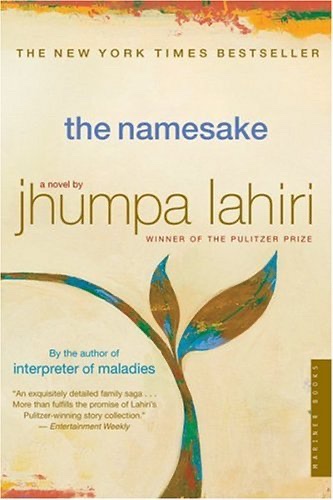
The Namesake is Jhumpa Lahiri's first novel, following Ashoke and Ashima Ganguli, a Bengali couple who emigrate from Calcutta to Cambridge, Massachusetts. When their son is born in Boston, Bengali custom calls for both a private pet name and a public good name, but a delayed letter from India forces Ashoke to record a pet name on the birth certificate: Gogol, after the Russian writer Nikolai Gogol, whose book Ashoke was clutching when he survived a train derailment years earlier. The novel traces Gogol's life across decades as he grows to resent his peculiar name, legally becomes Nikhil before college, and moves through relationships that pull him toward and away from his family's heritage.
At its heart the book explores the immigrant experience and the friction between assimilation and cultural preservation across two generations. Naming becomes the central metaphor for identity: Gogol's discomfort with his name mirrors his uncertainty about belonging to neither India nor America fully. Themes of family duty, dislocation, love, and inheritance run throughout, culminating after Ashoke's sudden death, when Gogol finally understands the meaning his father attached to the name he had spent his life trying to shed.
Published by Houghton Mifflin in 2003, The Namesake followed Lahiri's Pulitzer Prize-winning story collection Interpreter of Maladies and confirmed her as a major voice in contemporary American fiction. The novel was widely read and taught, and was adapted into a 2006 feature film directed by Mira Nair. Its quiet, precise portrait of a Bengali-American family gave the book lasting resonance as one of the defining novels of the second-generation immigrant experience.
Key characters
- Gogol "Nikhil" GanguliThe protagonist, a Bengali-American who struggles with his unusual name and dual cultural identity.
- Ashoke GanguliGogol's father, an engineer whose life was shaped by surviving a train accident while reading Gogol.
- Ashima GanguliGogol's mother, who slowly adapts to American life while holding onto Bengali traditions.
- Moushumi MazoomdarA cosmopolitan Bengali-American woman whom Gogol marries; their marriage ends in divorce.
- MaxineAn affluent American woman Gogol dates and lives with, drawing him away from his family.
- Sonia GanguliGogol's younger sister, who navigates the same bicultural upbringing.
Book details
- First published
- 2003
- Length
- 291 pages
- Reading time
- 5 hours
- Author
- Jhumpa Lahiri
- Genre
- Literature
- Goodreads rating
- 4.02 (288k ratings) →
- First line
- “On a sticky August evening two weeks before her due date, Ashima Ganguli stands in the kitchen of a Central Square apartment, combining Rice Krispies and Planters peanuts and chopped red onion in a bowl.”
Movie & TV adaptations
- IMDb
If you liked this, read…
- 1Interpreter of MaladiesLahiri's Pulitzer-winning stories on the same Indian-American immigrant themes.
- 2The Inheritance of LossKiran Desai's novel on identity and belonging across India and the West.
- 3MiddlesexJeffrey Eugenides's multigenerational immigrant-family saga centered on identity.
Keep reading
 The Clockmaker's Daughter
 The Lowland
 A Sport and a Pastime
 The Stone Diaries
 Out of Oz
 The Promise
 A Constellation of Vital Phenomena
Interpreter of Maladies
A Constellation of Vital Phenomena
Interpreter of Maladies
 Too Much Happiness: Stories
 The Cat's Table
 Housekeeping
 Instructions for a Heatwave
 The Bonesetter's Daughter
 Stay Awake
 The Midnight Train
 The Memory Keeper's Daughter
 Unaccustomed Earth
 Warlight
 The Complete Saki
 The Glass Hotel
 A Thousand Acres
 Dinner at the Homesick Restaurant
 Messenger
 The Ministry of Utmost Happiness
 Ada, or Ardor: A Family Chronicle
 This Strange Eventful History
 The Accidental Tourist
 Canada
 Divisadero
 Fugitive Pieces
 The Twelve
 Death Watch
 A Death in the Family
 Palimpsest
 The Real Life of Sebastian Knight
 My Friends
 The Passage
 The Light Between Oceans
 Angle of Repose
 Living to Tell the Tale
 Another Country
 The Brutal Telling
 The Shell Seekers
 The Orphan Master's Son
 S.
S.
 Station Eleven
 TransAtlantic
 A Lion Among Men
 The Long Way Home
 The Illustrated Man
 Foster
 The Names
 The Covenant of Water
 The Distant Hours
 The Girl You Left Behind
 Dream Count
 So Long, See You Tomorrow
 Iris & Ruby
 Salt Houses