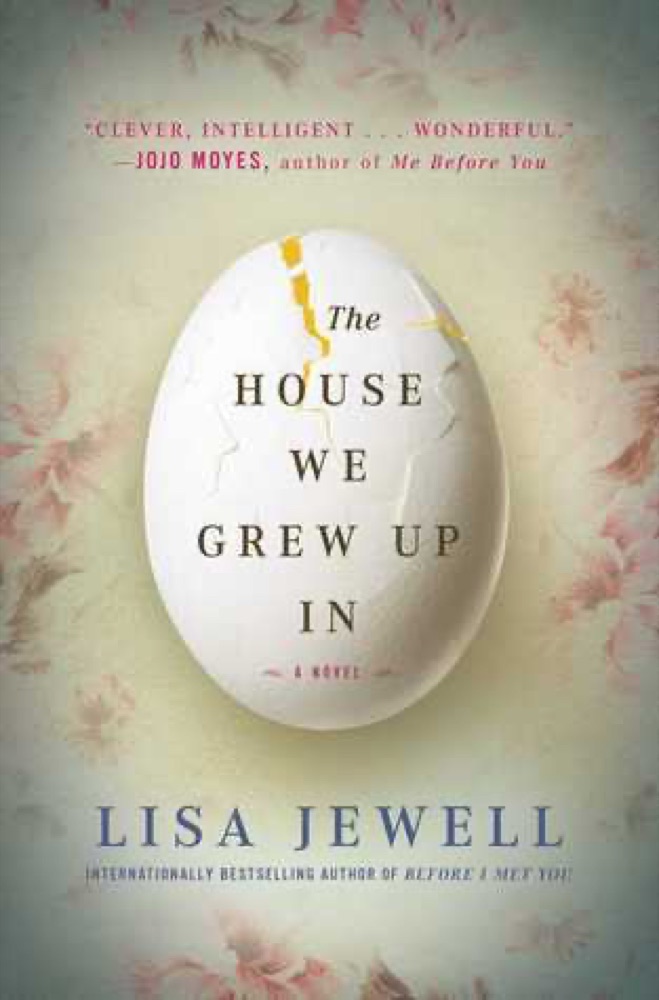

 The Truth About Melody Browne
Quotes from the Book
I know as well as you do that only the individual has the key to change themselves. It’s buried deep inside each and every one of us and although someone else can help us to find the key, we’re the only ones who can use it.
28
The human memory is such a cruel, frustrating thing, the way it just discards things without asking permission, precious things.
15
she was only here because she didn’t have the guts to be anywhere else. Because she felt like the last guest at an unsuccessful party, too guilt-ridden to leave.
10
Like any challenge in life, once the mind was focused on the job in question, it became a simple matter of getting on with it, inch by inch, step by step.
7
Imagine,” she said, her face turning serious for a moment, “imagine if something happened to one of us and there was no Easter egg hunt next year, imagine if everything stopped being perfect—you would wish so hard that you’d taken part today . . .
4
Why is Nana's house so messy?', she asked after an incongruous moment. Vicky smiled. Ah, well you see, your Nana is a very special lady. She's really quite magical, you know. And when she looks at the world, she sees it in a very special way, like it's a party bag or a toy shop, and she likes to keep bits of it, and she feels sad when she throws things away.
4
The hardest thing to accept is that some things happen for absolutely no reason at all.
3
This is the real world. We are real people. This is real life. And things sometimes happen that don’t fit in with how we think the story should go, but we just have to take a deep breath and get on with it, not sit there in the corner sulking because it’s not what we were hoping for.
3
Her mother existed entirely in the moment. And she made every moment sparkle.
3
the individual has the key to change themselves. It’s buried deep inside each and every one of us and although someone else can help us to find the key, we’re the only ones who can use it. And there,
3
softly, “with the little ones. Make it fair.” Meg was about to complain but then she took
3
But maybe I’ll end up doing something else unconventional. Who knows. And I really hope that if I do, and as long as I’m not hurting anyone or doing anything, like, illegal, that everyone would accept it, you know, just carry on loving me anyway.” Meg
2
room. She stood for a while in the middle, imagining herself not in it anymore, imagining herself instead in her sister’s
2
The concept of a troubled, lonely, middle-class, gay fifty-eight-year-old living alone in dusty squalor in a chocolate-box cottage in the heart of the Cotswolds was a hard one to grasp in the context of his sweaty, noisy, hectic, foreign, red-light existence.
2
And so, in the end, it had been no one’s fault. No one’s fault at all. It wasn’t Lorelei’s parents’ fault, or the fault of the man who’d raped her mother, or of God above for taking away their baby daughter before she’d drawn her first breath. It wasn’t Rory’s fault, it wasn’t Bethan’s fault, it wasn’t Colin’s fault. It certainly wasn’t Lorelei’s fault. (“Poor, poor Mum, all those years, carrying that burden alone.”) It was life. One of those things. Somewhere along the line a seed had been sown in Rhys’s little heart, maybe even in the womb, and that seed had grown into something completely unconnected to any
1
The human memory is such a cruel, frustrating thing. The way it just discards things without asking permission. Precious things.
1
Someone once said to Megan that sisters always feel more beautiful when they’re together and, ever since, Megan had found it to be true. Without Beth, Meg felt reasonable; with her she felt exceptional.
1
You are a grown woman! You're not a teenager. This is the real world. We are real people. This is real life. And things sometimes happen that don't fit in with how we think the story should go, but we just have to take a deep breath and get on with it, not sit there in the corner sulking because it's not what we were hoping for. Come on!
1
The journey back through the house, like all return journeys, felt shorter and less convoluted; the sense of knowing how long the tunnels were and where they ended up was reassuring
1
Memories fluttered about her mind, of days that had passed and died and were never to return.
1
I always thought that every day should be Valentine’s. Well, POTENTIALLY Valentine’s at least, if you see what I mean. You know, why wait for a certain day if you want to buy flowers now? Unimaginative really, isn’t it, buying overpriced roses on the same day as everybody else. You know, you see a woman walking home with a bouquet of flowers, you think, Wow, someone really loves her! You see the same woman with the same bouquet on Valentine’s and you just get the feeling that someone was going through the motions.
Cream sofas, cream carpet, framed photographs, marble fire surround, glass coffee table, everything just skirting the edges of modern, but not quite getting there. As though Meg was too scared to make any kind of statement in case she got it wrong.
Her girls were eight and nearly six. She was in the gentle stage of the parenting journey known as “middle childhood.” Her children were solid, predictable, safe. They didn’t scare her anymore as they had when they were small, when there had been the ever-present fear of a public tantrum, a broken night, a dash off a curb, an unannounced bowel movement in a public pool. And neither were there the fears to come: the failed exams, the bad friends, the late nights and the journeys home in unlicensed taxis. Here she could exhale for a while, pause to admire the view, think fondly of her babies but know that she would never have to go back there again.
Vicky herself was dressed in one of her stretchy dresses in a bold tribal print that she bought from a catalog that seemed to sell nothing but clothes in bold tribal prints for extroverted ladies who were a bit overweight and shouldn’t really wear bold tribal prints but didn’t care and wore them anyway.
Did reading this book make you reconsider your relationship with your family?
So I leapt on the first undamaged man to cross my path and made him fill me up with babies so that I could do it my way. And hey, whaddya know, my way has ended up full of secrets and silence too!! Different silence. Different secrets. But still, it’s all there.
I love other people’s families,” he said. “They always make me feel better about my own.
Remember, Megan, that wherever you find yourselves, you are all pebbles from the same beach. Look after each other.
the bittersweet fusion of pride and hopelessness
Did you know?
- The novel was a Sunday Times bestseller.
- The story is structured around a series of Easter Sundays spanning roughly thirty years.
- Part of the narrative is told through emails the mother, Lorelei, writes to an online friend.
- Hoarding disorder is a central element of the plot.
- It is set in a village in the Cotswolds region of England.
About Lisa Jewell
Lisa Jewell is a British author born in London in 1968. She debuted with the bestseller "Ralph's Party" (1999) and has since written numerous novels, later becoming known for psychological thrillers such as "Then She Was Gone."
More about the author →More by Lisa Jewell
All books by Lisa Jewell →
About the book
"The House We Grew Up In" is a family drama by British author Lisa Jewell, following the Bird family across roughly three decades of Easter gatherings at their honey-colored cottage in a picturesque Cotswolds village. Free-spirited, sentimental mother Lorelei and her gentle, passive husband Colin raise four children there in what seems an idyllic childhood, until one Easter weekend a tragedy strikes that quietly fractures the family. Told through alternating timelines and Lorelei's emails to an online friend, the novel moves between the family's past and the present day, when the now-grown siblings return to clear out the house and confront what happened.
Jewell uses the family's home, which Lorelei has filled to bursting as a compulsive hoarder, as a central metaphor for grief, memory, and the things people cannot let go of. The novel explores family dysfunction, estrangement, hoarding and mental illness, secrets, and the long aftermath of loss, examining how a single event can reshape relationships over a lifetime and how each member of a family carries the same history differently.
A Sunday Times bestseller, the book marked part of Lisa Jewell's shift toward more emotionally complex, darker domestic fiction. Reviewers praised its layered characters and emotional depth, while some found the accumulation of family misfortune melodramatic. It remains one of the better-known titles among Jewell's pre-thriller novels.
Key characters
- Lorelei BirdFree-spirited, sentimental mother who becomes a compulsive hoarder
- Colin BirdLorelei's gentle, passive husband and father of the children
- MegThe pragmatic eldest daughter
- BethThe beautiful, more fragile middle daughter
- RoryOne of the twin sons
- RhysRory's twin brother
Book details
- First published
- 2013
- Length
- 437 pages
- Reading time
- 8 hours
- Author
- Lisa Jewell
- Genre
- Fiction
- Goodreads rating
- 3.77 (129k ratings)
Critical reception
- A Sunday Times bestseller.
- Reviewers praised the novel's character development and emotional depth.
- Some critics found the volume of family tragedy and dysfunction melodramatic.
Keep reading
 A Spool of Blue Thread
 House of Glass
 Homecoming
 Then She Was Gone
 One True Thing
 Summer Island
 A Slow Fire Burning
 Forever in Blue: The Fourth Summer of the Sisterhood
 Belong to Me
 Banyan Moon
 Lisey's Story
 What Alice Forgot
 The Bookshop at Water's End
 The Book Charmer
 The Girl Before
 Dreams of Falling
 Malibu Rising
 The Smell of Other People's Houses
 The Likeness
 We Are Okay
 They Call Her Dirty Sally
 Little Fires Everywhere
 NW
NW
 The Story of Us
 The Book of Love
 The Summer Children
 Sisterhood Everlasting
 Some Assembly Required: A Journal of My Son's First Son
 Mr. Fox
 Saint X
 Good as Gone
 Every Heart a Doorway
 The Lake
 Rebecca
 Every Last One
 The Trauma Cleaner: One Woman's Extraordinary Life in the Business of Death, Decay, and Disaster
 Kala
Kala
 10 Minutes 38 Seconds in This Strange World
 Blue Sisters
 Paperweight
 All Fours
 Instructions for a Heatwave
 Em and The Big Hoom
 The Round House
 The Book Club Hotel
 Love from A to Z
 The Wedding People
 The Color Master: Stories
 The Sisterhood of the Traveling Pants
 Dinner at the Homesick Restaurant
 Ink Blood Sister Scribe
 Too Much Happiness: Stories
 The Peach Keeper
 The Provence Cure for the Brokenhearted
 Say Goodbye for Now
 One Plus One
 The Guest List
 Orphan Train