 Baltasar and Blimunda
Quotes from the Book
If I'm sincere today, what does it matter if I regret it tomorrow?
Inside us there is something that has no name, that something is what we are.
I don't think we did go blind, I think we are blind, Blind but seeing, Blind people who can see, but do not see.
The difficult thing isn't living with other people, it's understanding them.
Perhaps only in a world of the blind will things be what they truly are.
You never know beforehand what people are capable of, you have to wait, give it time, it's time that rules, time is our gambling partner on the other side of the table and it holds all the cards of the deck in its hand, we have to guess the winning cards of life, our lives.
Words are like that, they deceive, they pile up, it seems they do not know where to go, and, suddenly, because of two or three or four that suddenly come out, simple in themselves, a personal pronoun, an adverb, an adjective, we have the excitement of seeing them coming irresistibly to the surface through the skin and the eyes and upsetting the composure of our feelings, sometimes the nerves that can not bear it any longer, they put up with a great deal, they put up with everything, it was as if they were wearing armor, we might say.
If we cannot live entirely like human beings, at least let us do everything in our power not to live entirely like animals.
When all is said and done, what is clear is that all lives end before their time.
Se antes de cada acto nosso nos puséssemos a prever todas as consequências dele, a pensar nelas a sério, primeiro as imediatas, depois as prováveis, depois as possíveis, depois as imagináveis, não chegaríamos sequer a mover-nos de onde o primeiro pensamento nos tivesse feito parar.
If, before every action, we were to begin by weighing up the consequences, thinking about them in earnest, first the immediate consequences, then the probable, then the possible, then the imaginable ones, we should never move beyond the point where our first thought brought us to a halt. The good and evil resulting from our words and deeds go on apportioning themselves, one assumes in a reasonably uniform and balanced way, throughout all the days to follow, including those endless days, when we shall not be here to find out, to congratulate ourselves or ask for pardon, indeed there are those who claim that this is the much talked of immortality.
Just as the habit does not make the monk, the sceptre does not make the king.
blindness is a private matter between a person and the eyes with which he or she was born.
...the habit of falling hardens the body, reaching the ground, to in itself, is a relief.
Did you know?
- The original Portuguese title, "Ensaio sobre a cegueira," literally means "Essay on Blindness."
- No character in the novel is given a proper name; they are identified only by descriptions such as "the doctor's wife" or "the girl with dark glasses."
- Saramago writes without conventional punctuation, using commas in place of periods and quotation marks and running dialogue together.
- The epidemic is a "white blindness" in which sufferers see a milky whiteness rather than darkness.
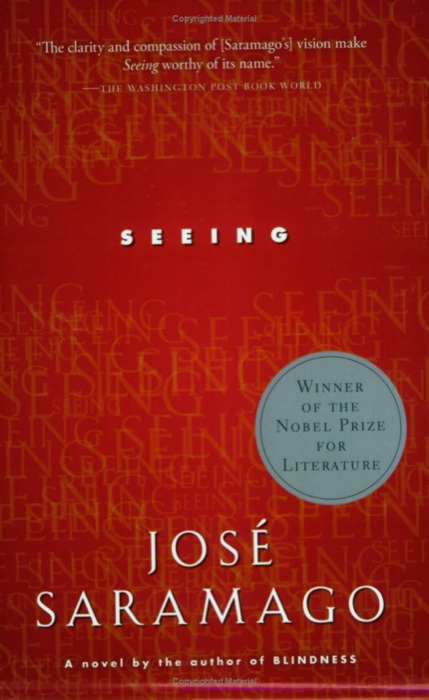
- Saramago wrote a 2004 sequel, "Seeing" ("Ensaio sobre a Lucidez"), set in the same city.
- The 2008 film adaptation directed by Fernando Meirelles opened the Cannes Film Festival.
About José Saramago
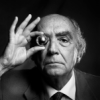
Jose Saramago (1922-2010) was a Portuguese novelist, poet, and journalist known for his allegorical fiction and distinctive unpunctuated prose. In 1998 he became the first Portuguese-language writer to win the Nobel Prize in Literature.
More about the author →More by José Saramago
All books by José Saramago →
About the book
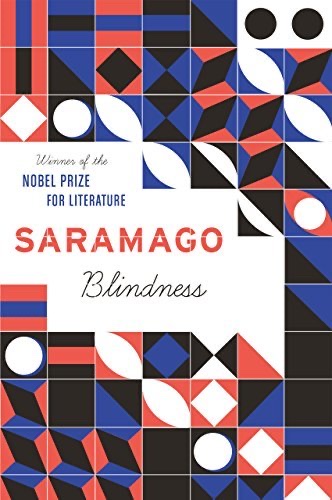
"Blindness" (originally "Ensaio sobre a cegueira," or "Essay on Blindness") is a 1995 novel by the Portuguese writer Jose Saramago. It opens when a man waiting at a traffic light suddenly goes blind, struck by an inexplicable "white blindness." The affliction spreads like a contagion through an unnamed city, and the authorities respond by herding the newly blind into a disused mental asylum under armed quarantine. Among the internees is a doctor's wife who, alone and secretly, remains able to see, and who becomes the guide and moral center of a small group struggling to survive as the asylum and then the wider society collapse.
At its heart the book is a parable about how thin the veneer of civilization can be. As institutions fail and basic order dissolves, Saramago examines cruelty, solidarity, dignity, and the instinct for survival, using the epidemic of blindness as a lens on human nature under extreme conditions. The novel is written in Saramago's distinctive style, with long unpunctuated sentences, sparse capitalization, and dialogue run together without quotation marks or clear attribution, a technique that mirrors the disorientation of the characters and leaves the figures deliberately nameless, identified only by descriptive tags.
"Blindness" is among Saramago's most celebrated works and helped secure his reputation internationally; he was awarded the Nobel Prize in Literature in 1998, with the citation praising the parables "sustained by imagination, compassion and irony" through which he renders reality anew. The novel was followed by a 2004 sequel, "Seeing," set in the same city four years later, and was adapted into a 2008 feature film directed by Fernando Meirelles that opened the Cannes Film Festival.
Key characters
- The doctor's wifeThe only person who remains able to see; guide and protector of the group
- The doctorAn ophthalmologist who goes blind after examining an early patient
- The first blind manThe driver whose sudden blindness at a traffic light begins the epidemic
- The girl with dark glassesA young woman who joins the doctor's wife's group
- The old man with the black eye patchAn elderly patient who becomes part of the surviving group
- The boy with the squintA child separated from his mother during the quarantine
Book details
- First published
- 1995
- Length
- 288 pages
- Reading time
- 8 hours
- Author
- José Saramago
- Genre
- Science Fiction
- Goodreads rating
- 4.18 (352k ratings) →
Series & reading order
- 1 Blindness
- 2 Seeing
Movie & TV adaptations
- IMDb
If you liked this, read…
- 1The PlagueAlbert Camus's allegory of an epidemic testing a community's morality
- 2The RoadCormac McCarthy's bleak story of survival and dignity amid societal collapse
- 3Station ElevenEmily St. John Mandel's novel following survivors after a civilization-ending pandemic
Keep reading
 All the Light We Cannot See
 A Wrinkle in Time
 Acceptance
 The Double
 The Winter of Our Discontent
 Middlemarch
 Invisibility
 The Handmaid's Tale
 Anthills of the Savannah
 Death Comes as the End
 One
One
 Ordinary People
 Night Train to Lisbon
 Angle of Repose
 We Are All Completely Beside Ourselves
 Blue Octavo Notebooks
 Daniel Deronda
 The Republic
 1Q84
1Q84
 Embers
 The Darkness That Comes Before
 The Children of Men
 The Screwtape Letters
 The Art of Hearing Heartbeats
 The Count of Monte Cristo
 Colorless Tsukuru Tazaki and His Years of Pilgrimage
 A Lion Among Men
 The Face of Another
 The Tenth Insight: Holding the Vision
 The Shadow of the Wind
 The Fall
 The Idiot
 Zeno's Conscience
 A Darkness At Sethanon
 The Death of the Heart
 The Complete Essays
 The Recognitions
 The Art of Being
 The Gift of Rain
 The Cave
 The Resistance
 The Rebel Angels
 Golden Fool
 The Man in the High Castle
 The Jewel in the Crown
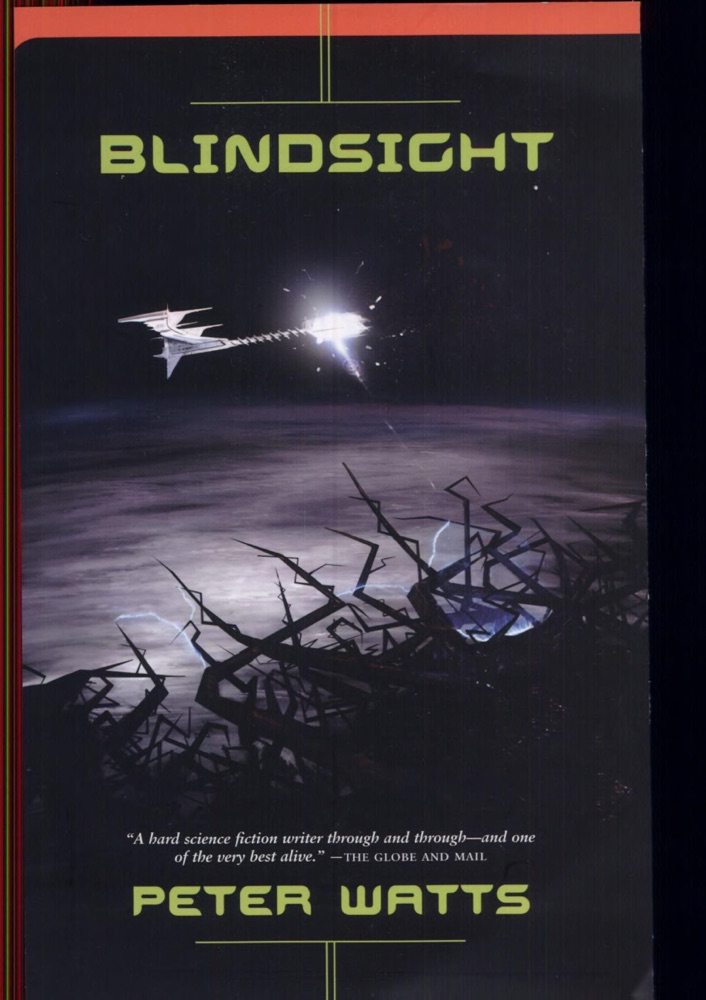 Blindsight
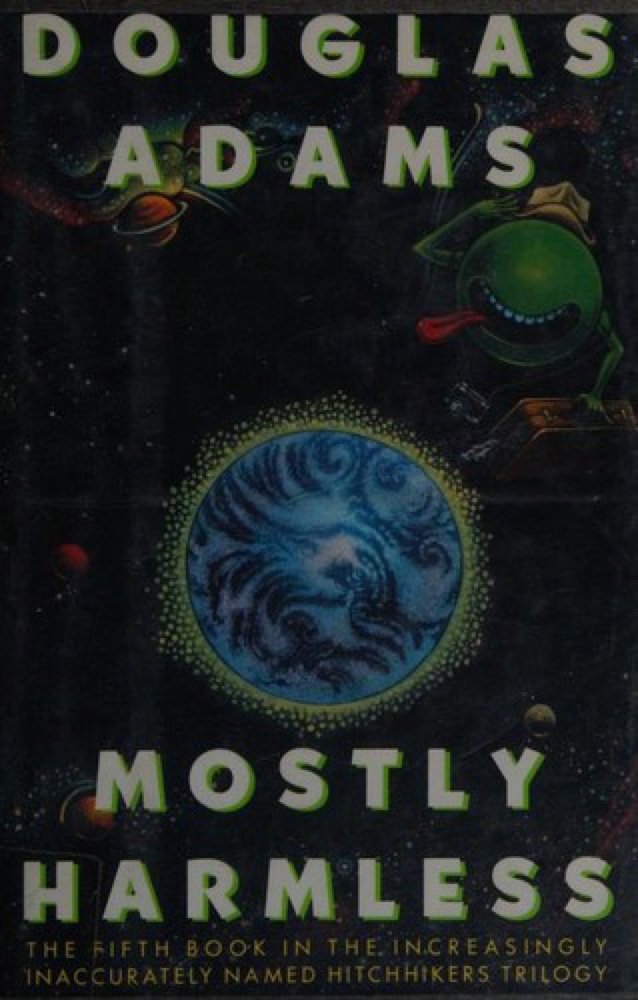 Mostly Harmless
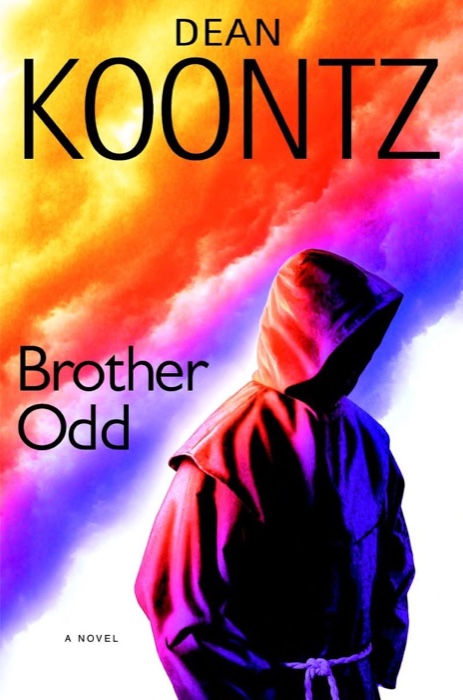 Brother Odd
 The Quiet Game
 Everyone Burns
 Genesis
 Q & A
Q & A
 House Harkonnen
 Crime and Punishment
 The Fall of Babel
 Saturday
 Out of Oz
 The First Fifteen Lives of Harry August
 Beyond Good and Evil
 Island