

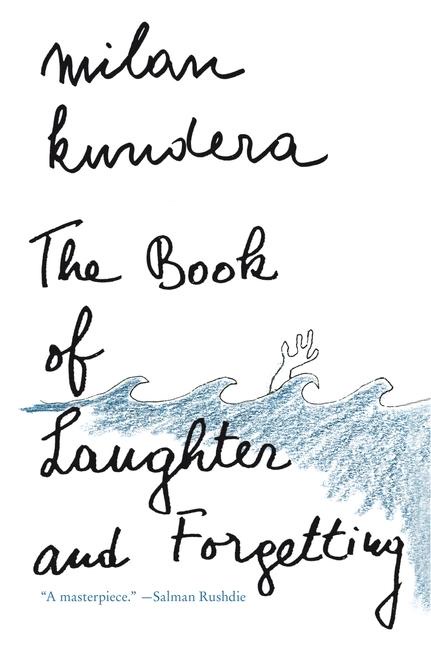
 The Book of Laughter and Forgetting
Quotes from the Book
...people don't respect the morning. An alarm clock violently wakes them up, shatters their sleep like the blow of an ax, and they immediately surrender themselves to deadly haste. Can you tell me what kind of day can follow a beginning of such violence? What happens to people whose alarm clock daily gives them a small electric shock? Each day they become more used to violence and less used to pleasure.
The longing for order is at the same time a longing for death, because life is an incessant disruption of order.
Having a child is to show an absolute accord with mankind. If I have a child, it's as though I'm saying: I was born and have tasted life and declare it so good that is merits being duplicated.
Forgive me," he went on. "For a long time I have had the peculiar habit of not arriving but appearing.
Jealousy has the amazing power to illuminate a single person in an intense beam of light, keeping the multitude of others in total darkness.
I am not in favor of imposing happiness on people. Everyone has a right to his bad wine, to his stupidity, and to his dirty fingernails.
In this country people don't respect the morning. An alarm clock violently wakes them up, shatters their sleep like the blow of an ax, and they immediately surrender themselves to deadly haste. Can you tell me what kind of day can follow a beginning of such violence? What happens to people whose alarm clock daily gives them a small electric shock? Each day they become more used to violence and less used to pleasure. Believe me, it is the mornings that determine a man's character.
Long ago one of the Cynic philosophers strutted through the streets of Athens in a torn mantle to make himself admired by everyone by displaying his contempt for convention. One day Socrates met him and said: 'I see your vanity through the hole in your mantle.' Your dirt too, sir, is vanity, and your vanity is dirty.
Even painful memories are ties that bind.
Jealousy is like a raging toothache. One cannot do anything when one is jealous, not even sit down. Once can only come and go. Back and forth.
Blonde hair and black hair are the two poles of human nature. Black hair signifies virility, courage, frankness, activity, whereas blonde hair symbolises femininity, tenderness, weakness, and passivity. Therefore a blonde is in fact doubly a woman. A princess can only be blonde. That's also why, to be as feminine as possible, women dye their hair yellow- but never black" "I'm curious about how pigments exercise their influence over the human soul", said Bertlef doubtfully. "it's not a matter of pigments. A blonde unconsciously adapts herself to her hair. Especially if the blonde is a brunette who dyes her hair yellow. She tries to be faithful to her hair colour and behaves like a fragile creature, a shallow doll, she demands tenderness and service, courtesy and alimony, she's incapable of doing anything for herself, all refinement on the outside and coarseness on the inside. If black hair became a universal fashion, life on this world would clearly be better. It would be the most useful social reform ever achieved.
Even a life of suffering has a mysterious value. Even a life on the threshold of death is a thing of splendor. Anyone who has not looked death in the face does not know this, but I know it ...
But I can cite ten other reasons for not being a father." "First of all, I don't like motherhood," said Jakub, and he broke off pensively. "Our century has already unmasked all myths. Childhood has long ceased to be an age of innocence. Freud discovered infant sexuality and told us all about Oedipus. Only Jocasta remains untouchable; no one dares tear off her veil. Motherhood is the last and greatest taboo, the one that harbors the most grievous curse. There is no stronger bond than the one that shackles mother to child. This bond cripples the child's soul forever and prepares for the mother, when her son has grown up, the most cruel of all the griefs of love. I say that motherhood is a curse, and I refuse to contribute to it." "Another reason I don't want to add to the number of mothers," said Jakub with some embarrassment, "is that I love the female body, and I am disgusted by the thought of my beloved's breast becoming a milk-bag." "The doctor here will certainly confirm that physicians and nurses treat women hospitalized after an aborted pregnancy more harshly than those who have given birth, and show some contempt toward them even though they themselves will, at least once in their lives, need a similar operation. But for them it's a reflex stronger than any kind of thought, because the cult of procreation is an imperative of nature. That's why it's useless to look for the slightest rational argument in natalist propaganda. Do you perhaps think it's the voice of Jesus you're hearing in the natalist morality of the church? Do you think it's the voice of Marx you're hearing in the natalist propaganda of the Communist state? Impelled merely by the desire to perpetuate the species, mankind will end up smothering itself on its small planet. But the natalist propaganda mill grinds on, and the public is moved to tears by pictures of nursing mothers and infants making faces. It disgusts me. It chills me to think that, along with millions of other enthusiasts, I could be bending over a cradle with a silly smile." "And of course I also have to ask myself what sort of world I'd be sending my child into. School soon takes him away to stuff his head with the falsehoods I've fought in vain against all my life. Should I see my son become a conformist fool? Or should I instill my own ideas into him and see him suffer because he'll be dragged into the same conflicts I was?" "And of course I also have to think of myself. In this country children pay for their parents' disobedience, and parents for their children's disobedience. How many young people have been denied education because their parents fell into disgrace? And how many parents have chosen permanent cowardice for the sole purpose of preventing harm to their children? Anyone who wants to preserve at least some freedom here shouldn't have children," Jakub said, and fell into silence. "The last reason carries so much weight that it counts for five," said Jakub. "Having a child is to show an absolute accord with mankind. If I have a child, it's as though I'm saying: I was born and have tasted life and declare it so good that it merits being duplicated." "And you have not found life to be good?" asked Bertlef. Jakub tried to be precise, and said cautiously: "All I know is that I could never say with complete conviction: Man is a wonderful being and I want to reproduce him.
And Jakub realized that this child had done no harm, that he was not guilty of anything, and yet had been born with bad eyes and would have them forever. And he reflected further that what he had held against others was something given, something they came into the world with and carried with them like a heavy wire fence. He reflected that he had no privileged right to high-mindedness and that the highest degree of high-mindedness is to love people even though they are murderers.
Svijetla kosa i tamna kosa, to su dva pola ljudskog karaktera. Tamna kosa znači muževnost, odvažnost, otvorenost i poduzetnost, dok je svijetla kosa simbol ženstvenosti, nježnosti, bespomoćnosti i pasivnosti. Plavuša je, prema tome, dvostruka žena. Princeza mora biti plavokosa. Zato žene, da bi bile ženstvenije, boje kosu u žuto, a nikad u crno.
The only thing that makes me somewhat sceptical regarding human procreation is the unintelligent selection of parents. Some of the most unattractive individuals in the world feel they must multiply at all costs. They are apparently under the illusion that the burden of ugliness becomes lighter if it is shared with descendants.
Pravda, u stvari, i ne treba da nas previše zanima. Pravda nije ljudska stvar. Postoji pravda slijepih i krutih zakona, a osim nje možda i neka viša pravda, ali tu ja ne razumijem. Uvijek mi se činilo da na ovom svijetu živim izvan pravde. Pravda me se ne tiče. Pravda je nešto izvan mene i iznad mene. Kako god se uzme, nešto neljudsko. Nikad neću surađivati s tom odvratnom silom.
What drove such people to their sinister occupations? Spite? Certainly, but also the desire for order. Because the desire for order tries to transform the human world into an inorganic reign in which everything goes well, everything functions as a subject of an impersonal will. The desire for order is at the same time a desire for death, because life is a perpetual violation of order. Or, inversely, the desire for order is a virtuous pretext by which man's hatred for man justifies its crimes.
... he realized that the path of love, which Bertlef had suggested, was closed to him; it was the path of saints, not of ordinary men.
Watch on YouTube
About Milan Kundera
We have collected 272 quotes from 13 books by Milan Kundera on BookQuoters.
More about the author →More by Milan Kundera
All books by Milan Kundera →
Book details
- Author
- Milan Kundera
- Genre
- Literature
- Goodreads rating
- 3.87 (21k ratings) →
Keep reading
 Selected Stories
 Point Counter Point
 Selected Stories of Anton Chekhov
 Embers
 The Fall
 The Magus
 The Setting Sun
 Night Watch
 Identity
 Demian
 Christmas Holiday
 Zeno's Conscience
 V.
V.
 Giovanni's Room
 White Teeth
 Cocaine
 Either/Or: A Fragment of Life
 Henderson the Rain King
 The Memoirs of Cleopatra
 Pnin
Pnin
 The Schopenhauer Cure
 The Death of the Heart
 Doctor Zhivago
 Arch of Triumph
 Creatures of a Day: And Other Tales of Psychotherapy
 Nutshell
 The Children of Men
 The Joke
 Spring Snow
 Day
Day
 The Signature of All Things
 Disgrace
 Oblomov
 When Nietzsche Wept
 Sexus
Sexus
 Hell
Hell
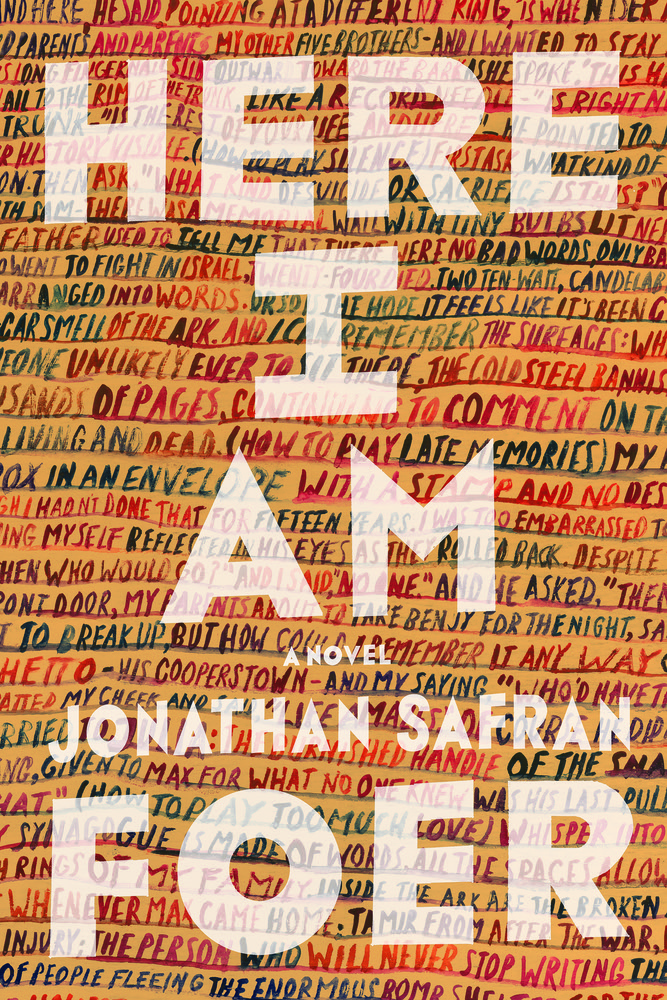 Here I Am
 Narcissus and Goldmund
 Steppenwolf
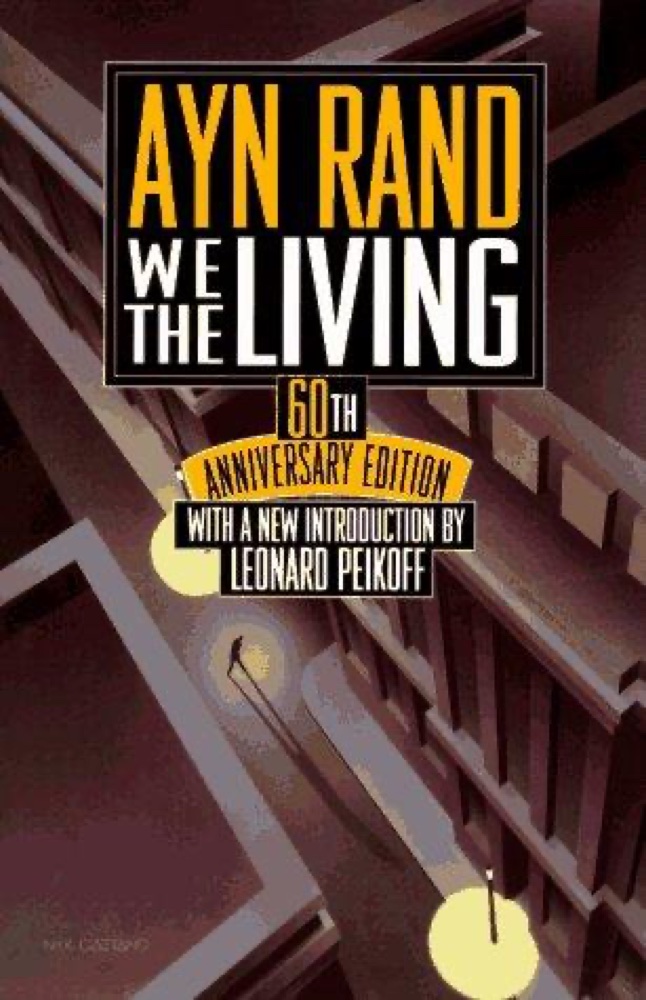 We the Living
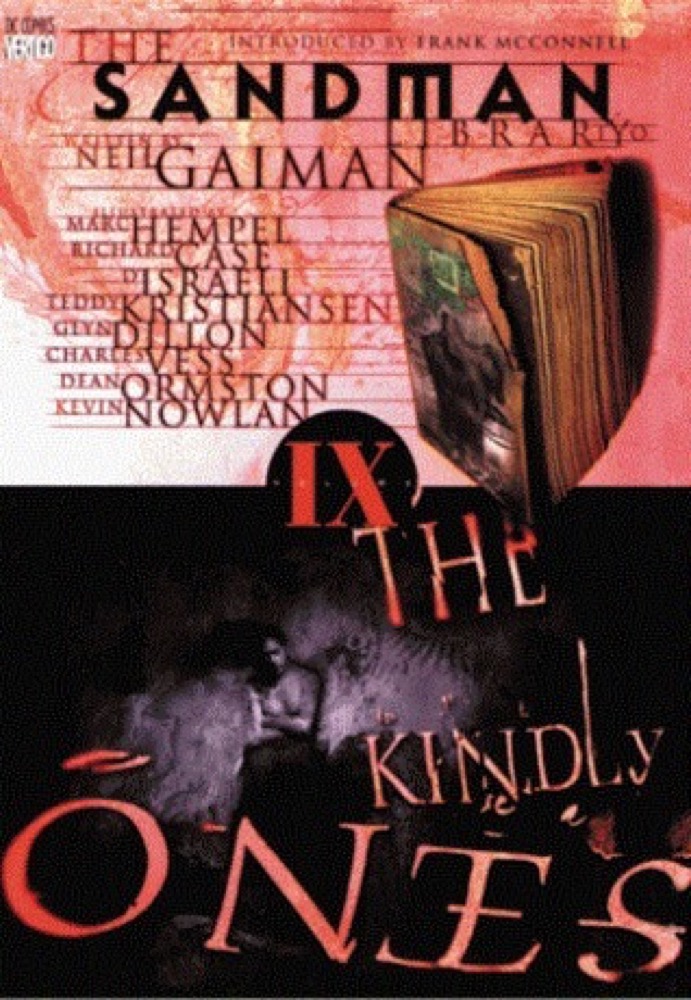 The Kindly Ones
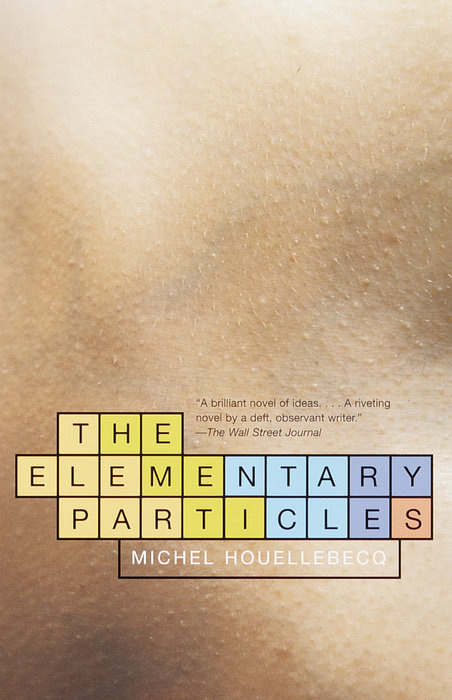 The Elementary Particles
 A Soldier of the Great War
 The Fountainhead
 The Human Stain
 Just Above My Head
 The Adolescent
 Of Human Bondage
 Sexing the Cherry
 Eyeless in Gaza
 Angle of Repose
 Concrete
 The Last Don
 The Gay Science
 Trust: Betrayed
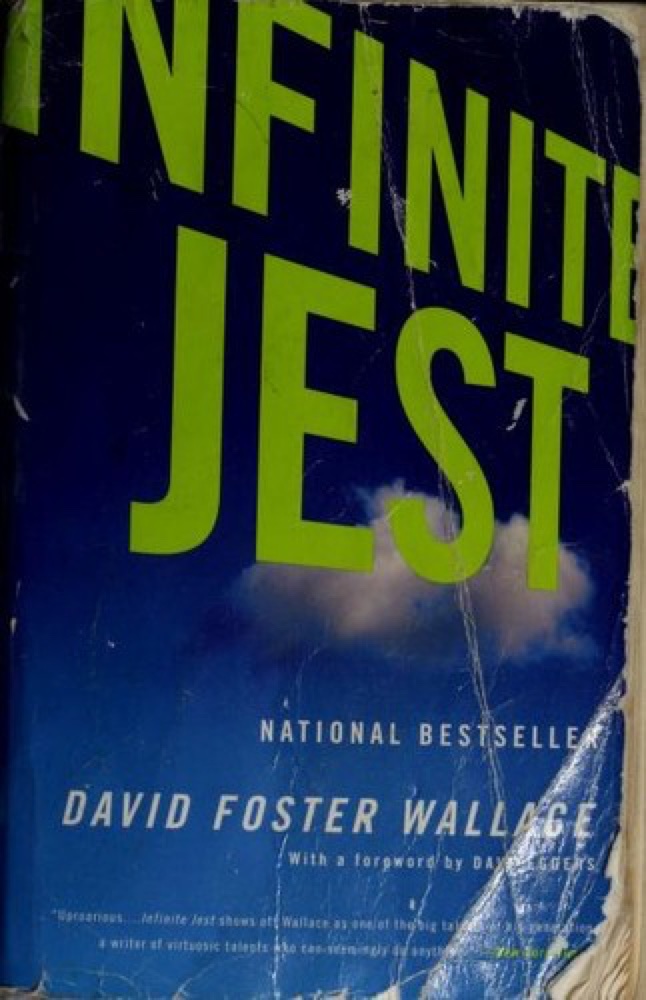 Infinite Jest
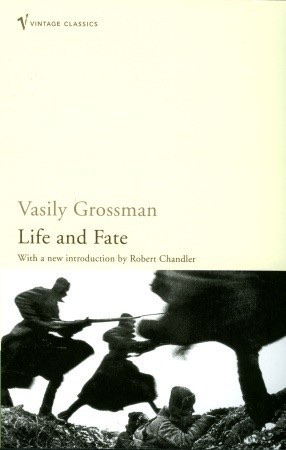 Life and Fate
 De Profundis
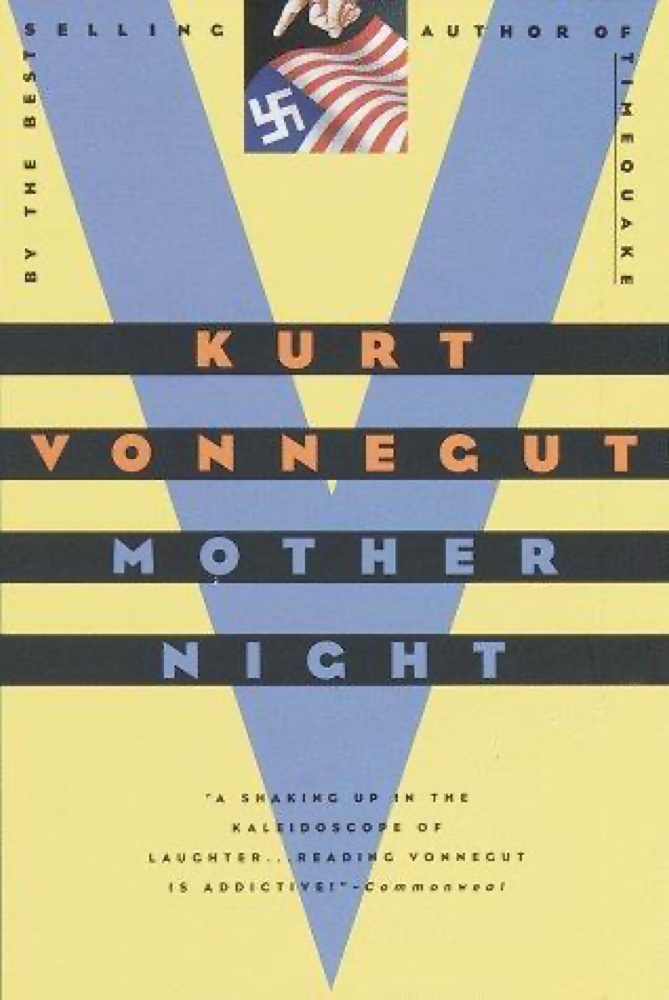 Mother Night
 East of Eden