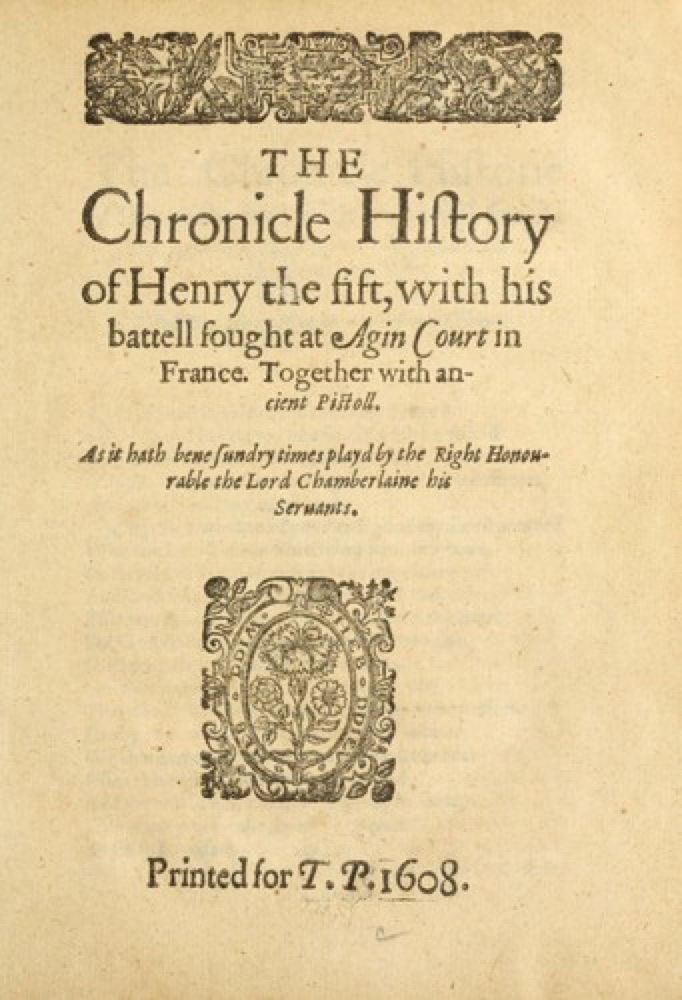

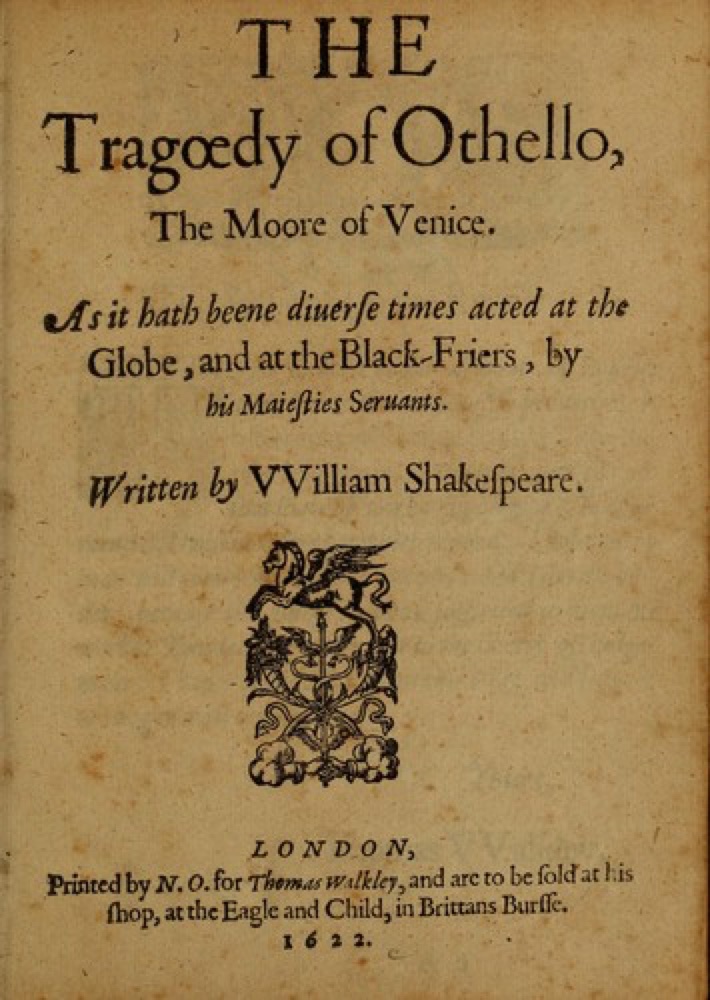
 Othello
Quotes from the Book
From this day to the ending of the world, But we in it shall be remembered- We few, we happy few, we band of brothers; For he to-day that sheds his blood with me Shall be my brother; be he ne’er so vile, This day shall gentle his condition; And gentlemen in England now-a-bed Shall think themselves accurs’d they were not here, And hold their manhoods cheap whiles any speaks That fought with us upon Saint Crispin’s day.
[Thine] face is not worth sunburning.
All things are ready, if our mind be so.
Once more unto the breach, dear friends, once more; Or close the wall up with our English dead! In peace there's nothing so becomes a man As modest stillness and humility: But when the blast of war blows in our ears, Then imitate the action of the tiger.
When I bestride him, I soar, I am a hawk: he trots the air; the earth sings when he touches it; the basest horn of his hoof is more musical than the pipe of Hermes.
Self-love, my liege, is not so vile a sin, as self-neglecting.
Men of few words are the best men." (3.2.41)
WESTMORELAND. O that we now had here But one ten thousand of those men in England That do no work to-day! KING. What's he that wishes so? My cousin Westmoreland? No, my fair cousin; If we are mark'd to die, we are enow To do our country loss; and if to live, The fewer men, the greater share of honour. God's will! I pray thee, wish not one man more. By Jove, I am not covetous for gold, Nor care I who doth feed upon my cost; It yearns me not if men my garments wear; Such outward things dwell not in my desires. But if it be a sin to covet honour, I am the most offending soul alive. No, faith, my coz, wish not a man from England. God's peace! I would not lose so great an honour As one man more methinks would share from me For the best hope I have. O, do not wish one more! Rather proclaim it, Westmoreland, through my host, That he which hath no stomach to this fight, Let him depart; his passport shall be made, And crowns for convoy put into his purse; We would not die in that man's company That fears his fellowship to die with us. This day is call'd the feast of Crispian. He that outlives this day, and comes safe home, Will stand a tip-toe when this day is nam'd, And rouse him at the name of Crispian. He that shall live this day, and see old age, Will yearly on the vigil feast his neighbours, And say 'To-morrow is Saint Crispian.' Then will he strip his sleeve and show his scars, And say 'These wounds I had on Crispian's day.' Old men forget; yet all shall be forgot, But he'll remember, with advantages, What feats he did that day. Then shall our names, Familiar in his mouth as household words- Harry the King, Bedford and Exeter, Warwick and Talbot, Salisbury and Gloucester- Be in their flowing cups freshly rememb'red. This story shall the good man teach his son; And Crispin Crispian shall ne'er go by, From this day to the ending of the world, But we in it shall be remembered- We few, we happy few, we band of brothers; For he to-day that sheds his blood with me Shall be my brother; be he ne'er so vile, This day shall gentle his condition; And gentlemen in England now-a-bed Shall think themselves accurs'd they were not here, And hold their manhoods cheap whiles any speaks That fought with us upon Saint Crispin's day.
You have witchcraft in your lips, there is more eloquence in a sugar touch of them than in the tongues of the French council; and they should sooner persuade Harry of England than a general petition of monarchs.
He's of the colour of the nutmeg. And of the heat of the ginger.... he is pure air and fire; and the dull elements of earth and water never appear in him, but only in patient stillness while his rider mounts him; he is indeed a horse, and all other jades you may call beasts.
I am afeard there are few die well that die in battle, for how can they charitably dispose of anything when blood is their argument?
God shall be my hope, my stay, my guide and lantern to my feet.
We few. We happy few. We band of brothers, for he today That sheds his blood with me Shall be my brother.
Once more unto the breach, dear friends, once more; Or close the wall with our English dead.
O for a Muse of fire, that would ascend The brightest heaven of invention!
I see you stand like greyhounds in the slips, Straining upon the start. The game's afoot; Follow your spirit: and upon this charge, Cry — God for Harry! England and Saint George!
There is some soul of goodness in things evil, Would men observingly distill it out.
He is as full of valor as of kindness. Princely in both.
But Kate, dost thou understand thus much English? Canst thou love me?" Catherine: "I cannot tell." Henry: "Can any of your neighbours tell, Kate? I'll ask them.
In peace there's nothing so becomes a man as modest stillness and humility; but when the blast of war blows in our ears, then imitate the action of the tiger; stiffen the sinews, summon up the blood, disguise fair nature with hard-favor'd rage.
His jest shall savour but a shallow wit, when thousands more weep than did laugh it.
Let life be short, else shame will be too long.
O for a Muse of fire, that would ascend The brightest heaven of invention, A kingdom for a stage, princes to act And monarchs to behold the swelling scene! Then should the warlike Harry, like himself, Assume the port of Mars; and at his heels, Leash'd in like hounds, should famine, sword and fire Crouch for employment. But pardon, and gentles all, The flat unraised spirits that have dared On this unworthy scaffold to bring forth So great an object: can this cockpit hold The vasty fields of France? or may we cram Within this wooden O the very casques That did affright the air at Agincourt? O, pardon! since a crooked figure may Attest in little place a million; And let us, ciphers to this great accompt, On your imaginary forces work. Suppose within the girdle of these walls Are now confined two mighty monarchies, Whose high upreared and abutting fronts The perilous narrow ocean parts asunder: Piece out our imperfections with your thoughts; Into a thousand parts divide on man, And make imaginary puissance; Think when we talk of horses, that you see them Printing their proud hoofs i' the receiving earth; For 'tis your thoughts that now must deck our kings, Carry them here and there; jumping o'er times, Turning the accomplishment of many years Into an hour-glass: for the which supply, Admit me Chorus to this history; Who prologue-like your humble patience pray, Gently to hear, kindly to judge, our play.
But if it be a sin to covet honour, I am the most offending soul alive.
And Crispin Crispian shall ne'er go by, From this day to the ending of the world, But we in it shall be remembered- We few, we happy few, we band of brothers; For he to-day that sheds his blood with me Shall be my brother
When lenity and cruelty play for a kingdom, the gentler gamester is the soonest winner
How yet resolves the governor of the town? This is the latest parle we will admit; Therefore to our best mercy give yourselves; Or like to men proud of destruction Defy us to our worst: for, as I am a soldier, A name that in my thoughts becomes me best, If I begin the battery once again, I will not leave the half-achieved Harfleur Till in her ashes she lie buried. The gates of mercy shall be all shut up, And the flesh'd soldier, rough and hard of heart, In liberty of bloody hand shall range With conscience wide as hell, mowing like grass Your fresh-fair virgins and your flowering infants. What is it then to me, if impious war, Array'd in flames like to the prince of fiends, Do, with his smirch'd complexion, all fell feats Enlink'd to waste and desolation? What is't to me, when you yourselves are cause, If your pure maidens fall into the hand Of hot and forcing violation? What rein can hold licentious wickedness When down the hill he holds his fierce career? We may as bootless spend our vain command Upon the enraged soldiers in their spoil As send precepts to the leviathan To come ashore. Therefore, you men of Harfleur, Take pity of your town and of your people, Whiles yet my soldiers are in my command; Whiles yet the cool and temperate wind of grace O'erblows the filthy and contagious clouds Of heady murder, spoil and villany. If not, why, in a moment look to see The blind and bloody soldier with foul hand Defile the locks of your shrill-shrieking daughters; Your fathers taken by the silver beards, And their most reverend heads dash'd to the walls, Your naked infants spitted upon pikes, Whiles the mad mothers with their howls confused Do break the clouds, as did the wives of Jewry At Herod's bloody-hunting slaughtermen. What say you? will you yield, and this avoid, Or, guilty in defence, be thus destroy'd?
Watch on YouTube
About William Shakespeare
We have collected 956 quotes from 39 books by William Shakespeare on BookQuoters.
More about the author →More by William Shakespeare
All books by William Shakespeare →

Book details
- Author
- William Shakespeare
- Genre
- Classics
- Goodreads rating
- 3.84 (54k ratings) →
Keep reading
 King Henry IV, Part 1
 Coriolanus
 King Henry VI, Part 3
 Ivanhoe
 The Spanish Tragedy
 The Duchess of Malfi
 Don Juan
 The Canterbury Tales
 Twenty Years After
 Faust
Faust
 The Last of the Mohicans
 Bring Up the Bodies
 The Once and Future King
 The Fires of Heaven
 Abraham Lincoln: Vampire Hunter
 Our Mutual Friend
 The Pale Horseman
 Checkmate
 The Persian Boy
 The Virginian
 The Odyssey
 Edward II
 Uncle Tom's Cabin
 King Solomon's Mines
 The Man Who Was Thursday
 The Great Hunt
 When Christ and His Saints Slept
 Lord of Chaos
 Nicholas Nickleby
 Poems and Songs
 Lord Jim
 The Mirror & the Light
 The Satyricon
 Complete Poems
 The Faerie Queene
 March
March
 The Letters of Abélard and Héloïse
 Don Quixote
 Empire of the Vampire
 The Sunne in Splendour
 The History of Tom Jones, a Foundling
 Sword & Citadel
 Ben-Hur: A Tale of the Christ
 The Lion in Winter
 Kidnapped
 Shōgun
 Half a War
 The Virtues of War
 The Man in the Iron Mask
 Purgatorio
 A Soldier of the Great War
 The Isle of Blood
 Toll the Hounds
 Hard Times
 The Prince and the Pauper
 The Gadfly
 Paladin of Souls
 Dark Age
 Devil's Brood
 Ulysses