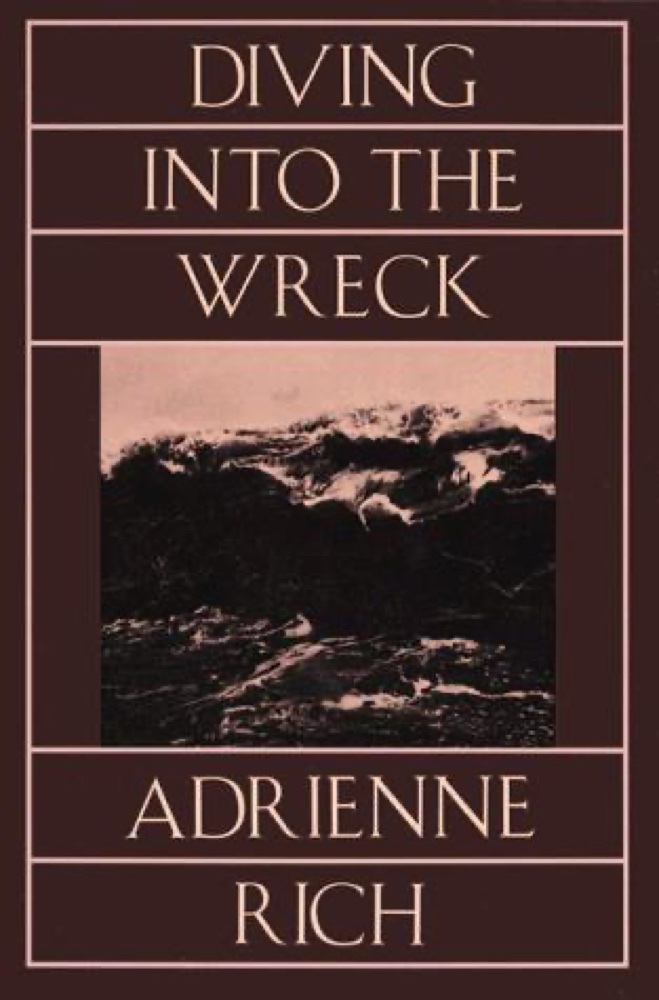

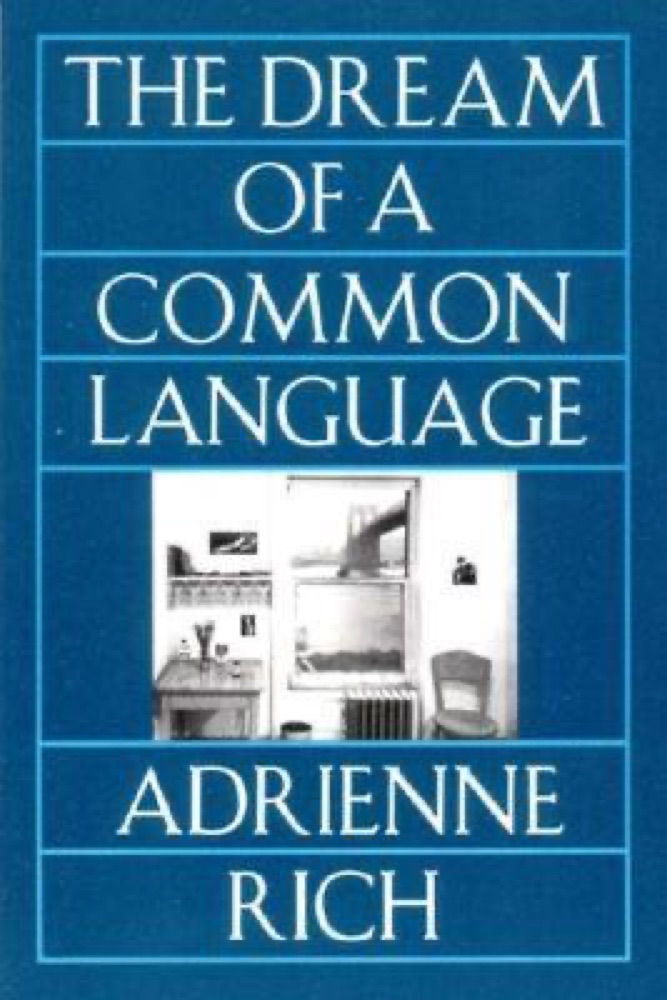
 The Dream of a Common Language
Quotes from the Book
I don't trust them but I'm learning to use them.
...you look at me like an emergency
First having read the book of myths, and loaded the camera, and checked the edge of the knife-blade, I put on the body-armor of black rubber the absurd flippers the grave and awkward mask. I am having to do this not like Cousteau with his assiduous team aboard the sun-flooded schooner but here alone. There is a ladder. The ladder is always there hanging innocently close to the side of the schooner. We know what it is for, we who have used it. Otherwise it is a piece of maritime floss some sundry equipment. I go down. Rung after rung and still the oxygen immerses me the blue light the clear atoms of our human air. I go down. My flippers cripple me, I crawl like an insect down the ladder and there is no one to tell me when the ocean will begin. First the air is blue and then it is bluer and then green and then black I am blacking out and yet my mask is powerful it pumps my blood with power the sea is another story the sea is not a question of power I have to learn alone to turn my body without force in the deep element. And now: it is easy to forget what I came for among so many who have always lived here swaying their crenellated fans between the reefs and besides you breathe differently down here. I came to explore the wreck. The words are purposes. The words are maps. I came to see the damage that was done and the treasures that prevail. I stroke the beam of my lamp slowly along the flank of something more permanent than fish or weed the thing I came for: the wreck and not the story of the wreck the thing itself and not the myth the drowned face always staring toward the sun the evidence of damage worn by salt and sway into this threadbare beauty the ribs of the disaster curving their assertion among the tentative haunters. This is the place. And I am here, the mermaid whose dark hair streams black, the merman in his armored body. We circle silently about the wreck we dive into the hold. I am she: I am he whose drowned face sleeps with open eyes whose breasts still bear the stress whose silver, copper, vermeil cargo lies obscurely inside barrels half-wedged and left to rot we are the half-destroyed instruments that once held to a course the water-eaten log the fouled compass We are, I am, you are by cowardice or courage the one who find our way back to this scene carrying a knife, a camera a book of myths in which our names do not appear.
These scars bear witness but whether to repair or to destruction I no longer know.
I am the androgyne, I am the living mind you fail to describe in your dead language the lost noun, the verb surviving only in the infinitive the letters of my name are written under the lids of the newborn child
Nothing can be done but by inches. I write out my life hour by hour, word by word . . . imagining the existence of something uncreated this poem our lives.
I came to explore the wreck. The words are purposes...are maps...I came to see the damage that was done and the treasures that prevail
[[diving into the wreck]] First having read the book of myths, and loaded the camera, and checked the edge of the knife-blade [...] And now: it is easy to forget what I came for among so many who have always lived here... [...] the thing I came for: the wreck and not the story of the wreck the thing itself and not the myth the drowned face always staring toward the sun the evidence of damage worn by salt and away into this threadbare beauty the ribs of the disaster curving their assertion among the tentative haunters. [...] We are, I am, you are by cowardice or courage the one who find our way back to this scene carrying a knife, a camera a book of myths in which our names do not appear.
We are, I am, you are by cowardice or courage the one who find our way back to this scene carrying a knife, a camera a book of myths in which our names do not appear.
When I try to speak my throat is cut and, it seems, by his hand The sounds I make are prehuman, radical the telephone is always ripped-out and he sleeps on Yet always the tissue grows over, white as silk hardly a blemish maybe a hieroglyph for scream Child, no wonder you never wholly trusted your keepers
There is a cop who is both prowler and father: he comes from your block, grew up with your brothers, had certain ideals. You hardly know him in his boots and silver badge, on horseback, one hand touching his gun. You hardly know him but you have to get to know him: he has access to machinery that could kill you. He and his stallion clop like warlords among the trash, his ideals stand in the air, a frozen cloud from between his unsmiling lips. And so, when the time comes, you have to turn to him, the maniac’s sperm still greasing your thighs, your mind whirling like crazy. You have to confess to him, you are guilty of the crime of having been forced. And you see his blue eyes, the blue eyes of all the family whom you used to know, grow narrow and glisten, his hand types out the details and he wants them all but the hysteria in your voice pleases him best. You hardly know him but now he thinks he knows you: he has taken down you worst moment on a machine and filed it in a file. He knows, or thinks he knows, how much you imagined; he knows, or thinks he knows, what you secretly wanted. He has access to machinery that could get you put away; and if, in the sickening light of the precinct, and if, in the sickening light of the precinct, your details sound like a portrait of your confessor, will you swallow, will you deny them, will you lie your way home?
I suddenly see the world as no longer viable: you are out there burning the crops with some new sublimate This morning you left the bed we still share and went out to spread impotence upon the world I hate you. I hate the mask you wear, your eyes assuming a depth they do not possess, drawing me into the grotto of your skull the landscape of bone I hate your words they make you think of fake revolutionary bills crisp imitation parchment they sell at battlefields. Last night, in this room, weeping I asked you: what are you feeling? do you feel anything? Now in the torsion of your body as you defoliate the fields we lived from I have your answer.
in every room, the furniture reflects you larger than life, or dwindling
And you see his blue eyes, the blue eyes of all the family whom you used to know, grow narrow and glisten, his hand types out the details and he wants them all but the hysteria in your voice pleases him best.
the thing I came for: [...] the thing itself and not the myth
I came to explore the wreck. The words are purposes. The words are maps. I came to see the damage that was done and the treasures that prevail.
I came to explore the wreck. / The words are purposes. / The words are maps. / I came to see the damage that was done / and the treasures that prevail.
3. The lovely landscape of southern Ohio betrayed by strip mining, the thick gold band on the adulterer’s finger the blurred programs of the offshore pirate station are causes for hesitation. Here in the matrix of need and anger, the disproof of what we thought possible failures of medication doubts of another’s existence —tell it over and over, the words get thick with unmeaning— yet never have we been closer to the truth of the lies we were living, listen to me: the faithfulness I can imagine would be a weed flowering in tar, a blue energy piercing the massed atoms of a bedrock disbelief. 1971
The Stranger Looking as I’ve looked before, straight down the heart of the street to the river walking the rivers of the avenues feeling the shudder of the caves beneath the asphalt watching the lights turn on in the towers walking as I’ve walked before like a man, like a woman, in the city my visionary anger cleansing my sight and the detailed perceptions of mercy flowering from that anger if I come into a room out of the sharp misty light and hear them talking a dead language if they ask me my identity what can I say but I am the androgyne I am the living mind you fail to describe in your dead language the lost noun, the verb surviving only in the infinitive the letters of my name are written under the lids of the newborn child
Every act of becoming conscious (it says here in this book) is an unnatural act
Watch on YouTube
About Adrienne Rich
We have collected 63 quotes from 4 books by Adrienne Rich on BookQuoters.
More about the author →More by Adrienne Rich
The Dream of a Common Language
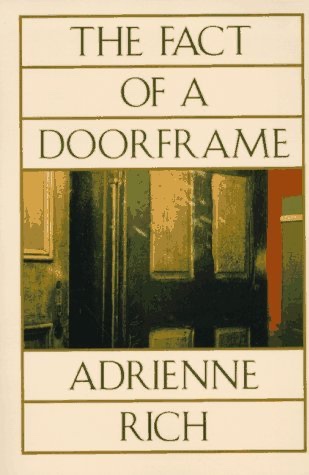 The Fact of a Doorframe: Poems Selected and New, 1950-1984
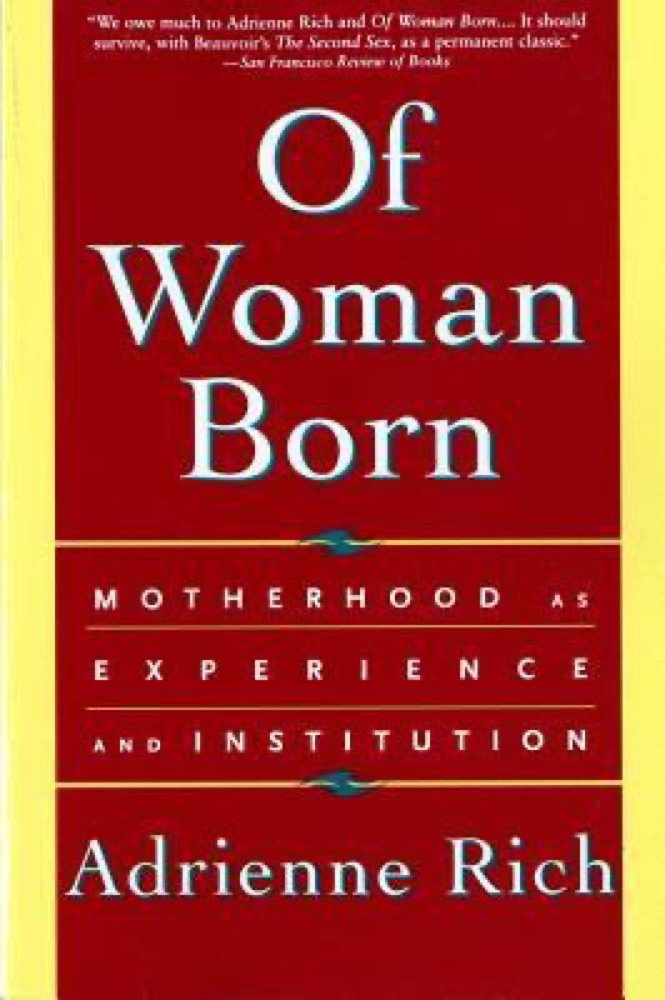 Of Woman Born: Motherhood as Experience and Institution
Book details
- Author
- Adrienne Rich
- Genre
- Fiction
- Goodreads rating
- 4.23 (10k ratings) →
Keep reading
 The Scar
 Brute: Poems
 Art and Lies
 The Hour I First Believed
 The Names
 Annihilation
 Plainwater: Essays and Poetry
 Underworld
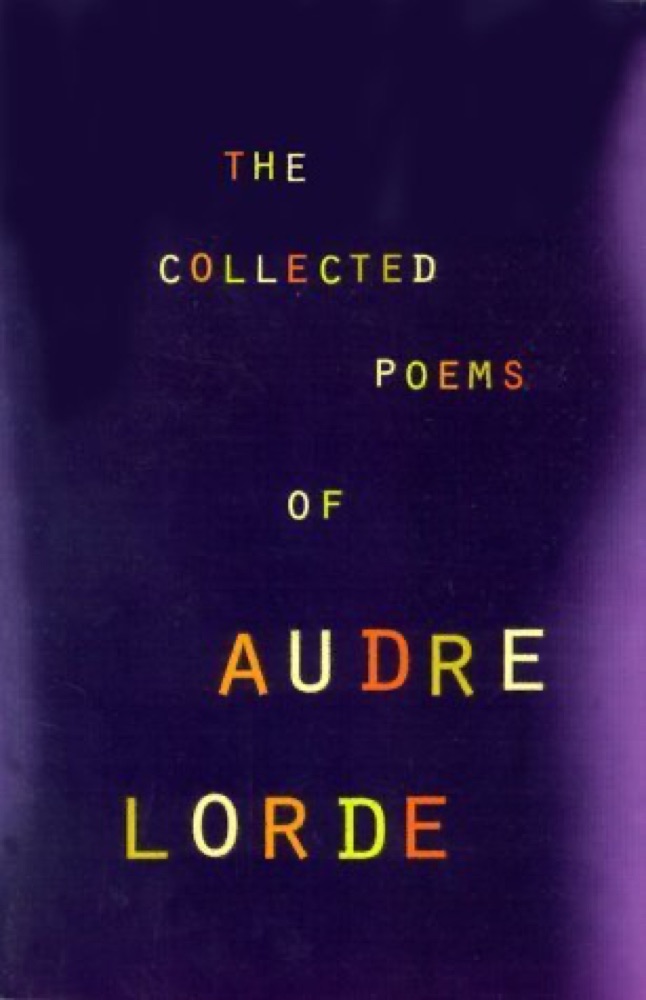 The Collected Poems of Audre Lorde
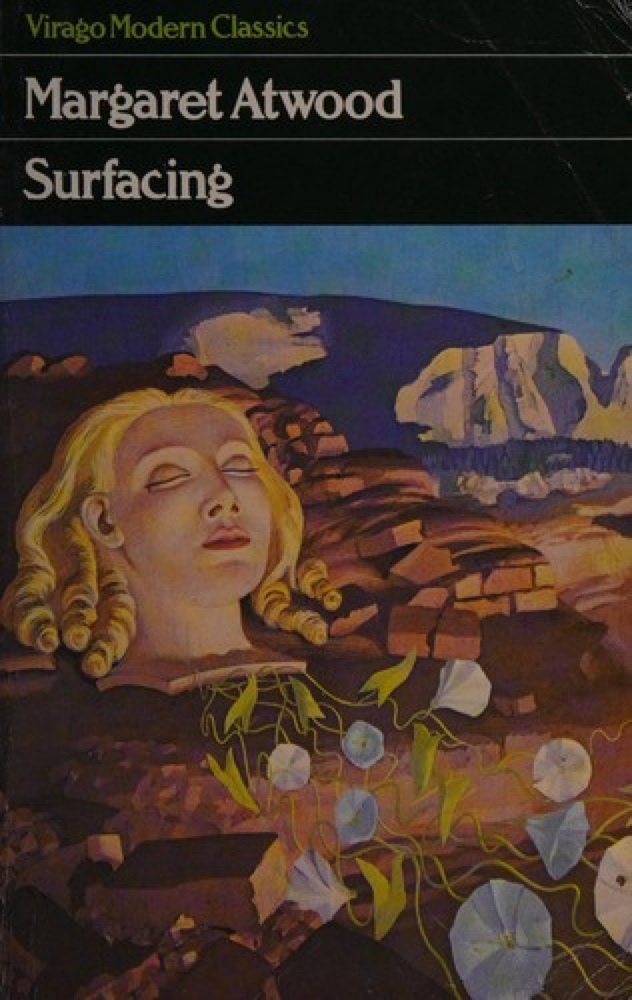 Surfacing
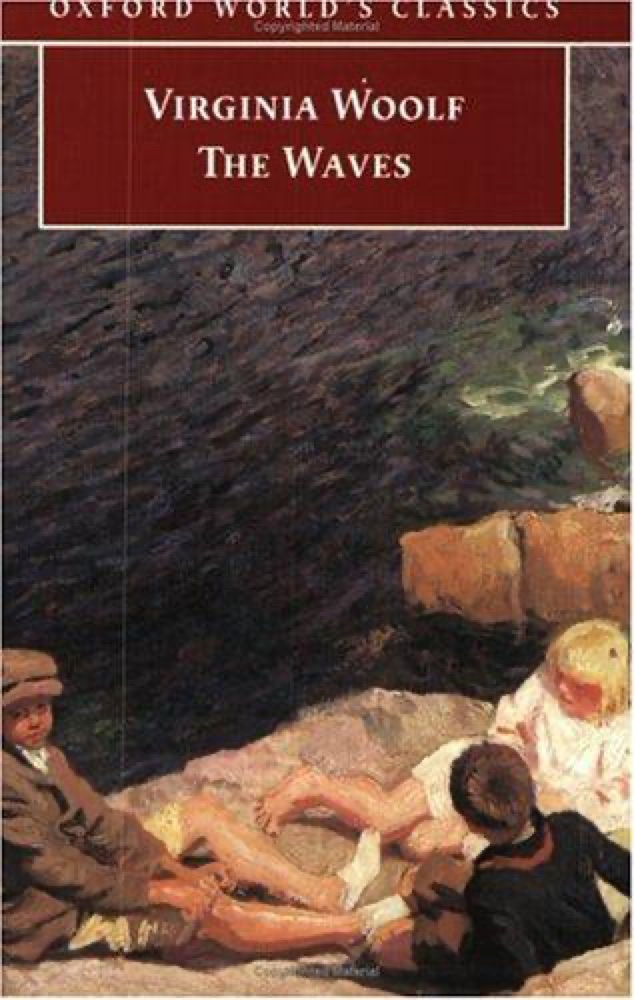 The Waves
 The Complete Poems
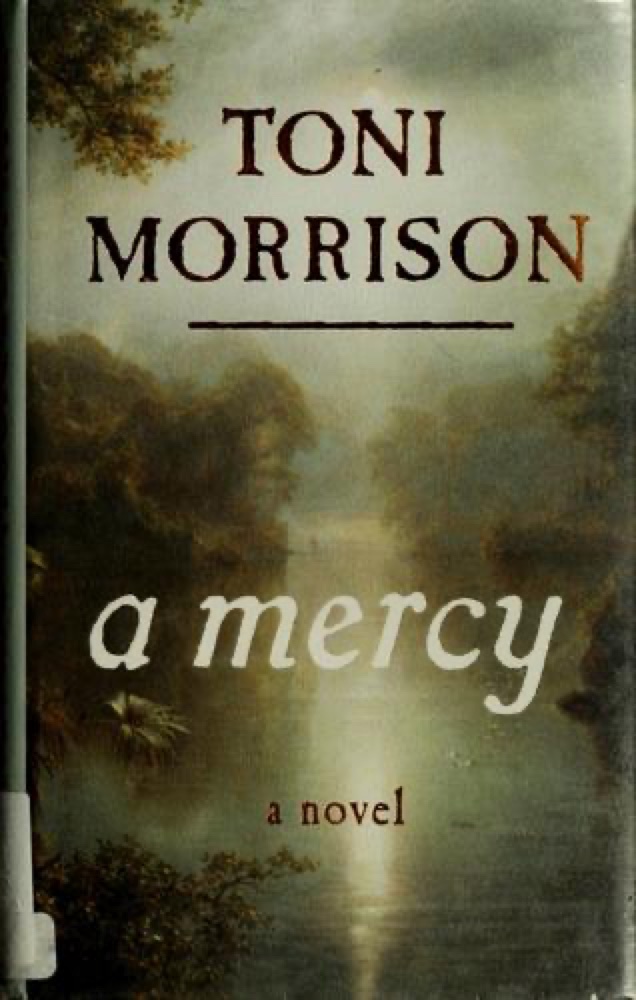 A Mercy
 The Blind Assassin
 Gut Symmetries
 The Book of Evidence
 The Stream of Life
 A Ghost in the Throat
 Her Body and Other Parties
 In the Heart of the Heart of the Country and Other Stories
 The Diving Bell and the Butterfly
 A Breath of Life
 The Untouchable
 By Grand Central Station I Sat Down and Wept
 The Carrying
 A History of My Brief Body
 Invitation to a Beheading
 All of Us: The Collected Poems
 The Raw Shark Texts
 The Hidden Girl and Other Stories
 The Pox Party
 The Ground Beneath Her Feet
 Possession
 The Blood Mirror
 Les Fleurs du Mal
 Sexus
Sexus
 The Story of a New Name
 Cat's Eye
 Sword & Citadel
 What Matters Most is How Well You Walk Through the Fire
 The Body Electric
 Life Knocks
 Winter Trees
 Hot Milk
 Sixty Stories
 The Tunnel
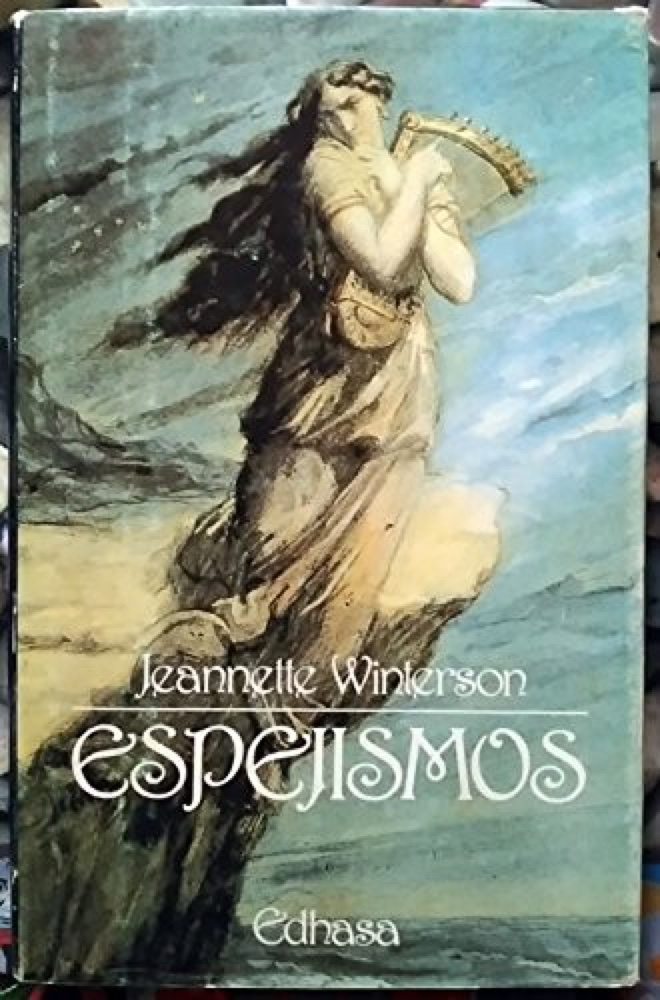 Sexing the Cherry
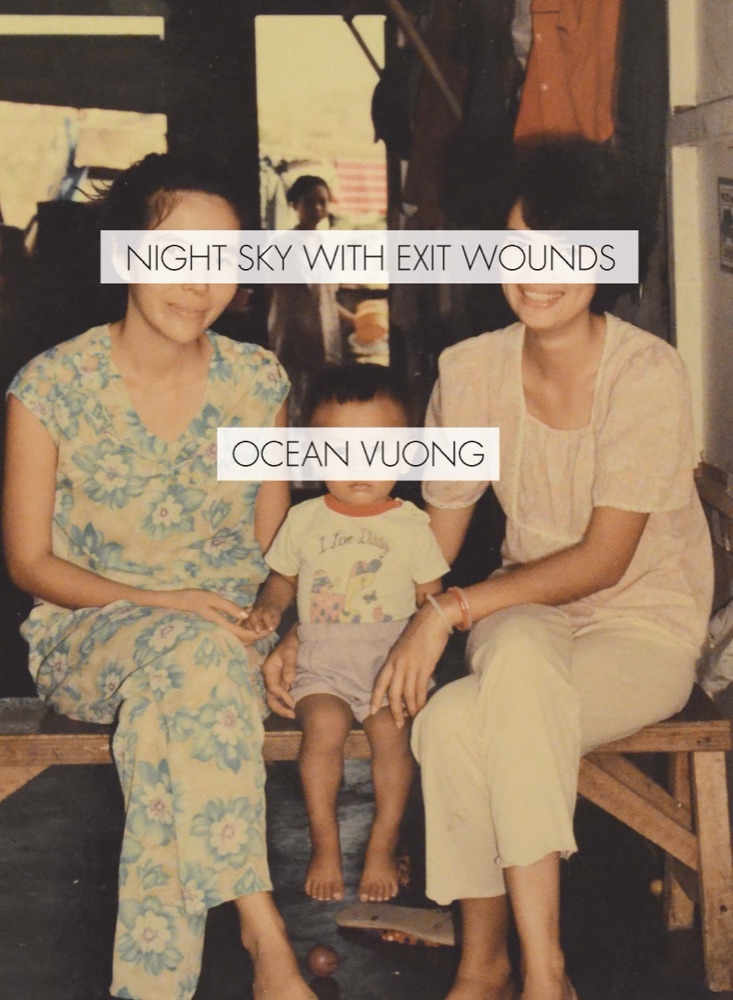 Night Sky with Exit Wounds
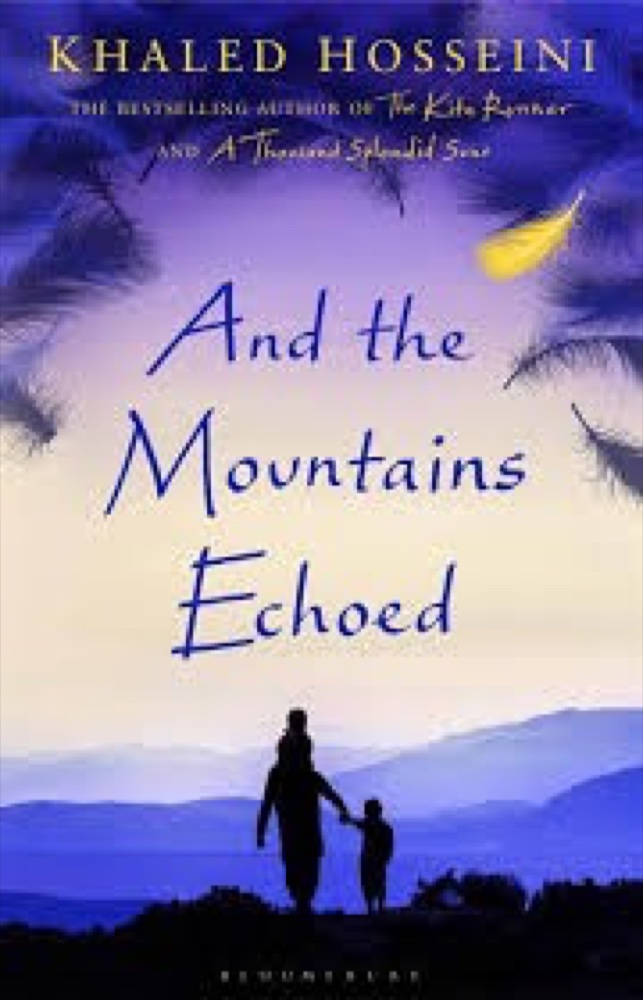 And the Mountains Echoed
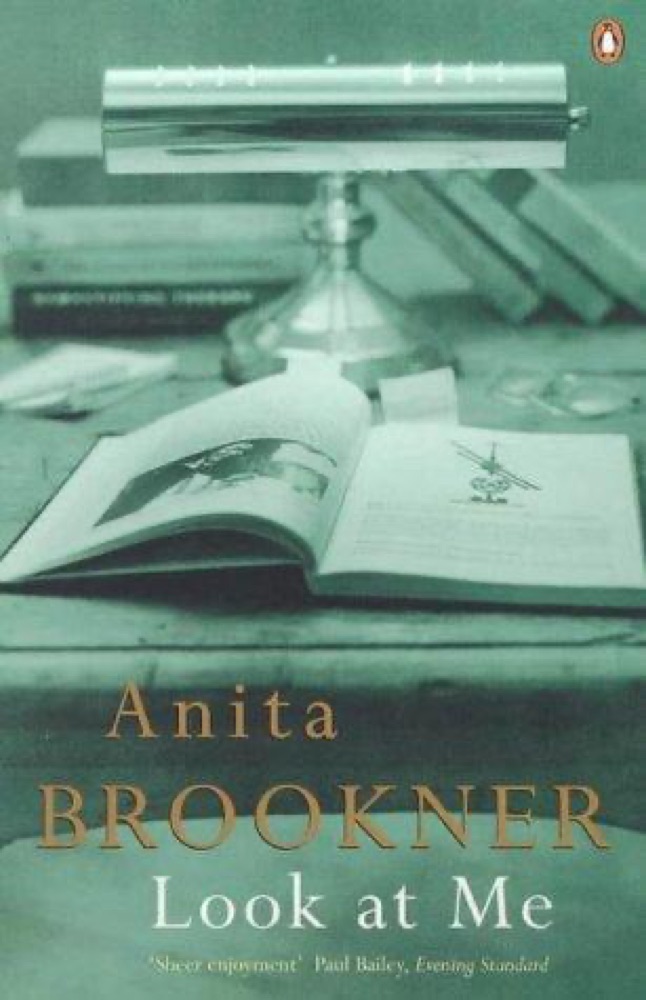 Look at Me
 Everything Under
 Crank
Crank
 The Passion According to G.H.
 March
March
 Life on Mars: Poems
 The Chronology of Water
 When You Ask Me Where I'm Going: Young Adult Prose Poetry on Trauma, Feminism, and Empowerment
 Into the Forest
 Warlight
 The Waste Land