
 The Palace of Dreams
Quotes from the Book
It was only a phrase that went from mouth to mouth and was never quite swallowed.
And everything would be different, different.
To tell the truth, this was one of the few cases in which she had not told him just what she was thinking. Usually, she let him know whatever thoughts happened to come to her, and indeed he never took it amiss if she let slip a word that might pain him, because when all was said and done that was the price one paid for sincerity.
His suspicion that he was not going in the right direction tortmented him more and more. At last he had the conviction that he would never go anywhere but in the wrong direction, to the very end of the handful of days that was left to him, unhappy moonstruck pilgrim, whose April was to be cut off short.
An Albanian’s house is the dwelling of God and the guest.’ Of God and the guest, you see. So before it is the house of its master, it is the house of one’s guest. The guest, in an Albanian’s life, represents the supreme ethical category, more important than blood relations. One may pardon the man who spills the blood of one’s father or of one’s son, but never the blood of a guest.
Having left, for various reasons, the homeland of epic, they were uprooted like trees overthrown, they had lost their heroic character and deep-seated virtue.
A mountaineer’s house, before being his home and the home of his family, is the home of God and of guests.
Two or three times it occurred to Gjorg that all these men had killed, and that each had his story. But those stories were locked deep within them. It was not just chance that in the glow of the fire their mouths, and even more their jaws, looked as if they had the shape of certain antique locks.
Why the Albanians had created the institution of the guest, exalting it above all other human relations, even those of kinship. “Perhaps the answer lies in the democratic character of this institution,” he said, setting himself to think his way through the matter. “Any ordinary man, on any day, can be raised to the lofty station of a guest. The path to that temporary deification is open to anybody at any time.[...] Given that anyone at all can grasp the sceptre of the guest,” he went on, “and since that sceptre, for every Albanian, surpasses even the king’s sceptre, may we not assume that in the Albanian’s life of danger and want, that to be a guest if only for four hours or twenty-four hours, is a kind of respite, a moment of oblivion, a truce, a reprieve, and—why not?—an escape from everyday life into some divine reality?
Watch on YouTube
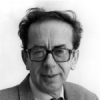
About Ismail Kadare
We have collected 32 quotes from 3 books by Ismail Kadare on BookQuoters.
More about the author →More by Ismail Kadare
The Palace of Dreams
 Chronicle in Stone
Book details
- Author
- Ismail Kadare
- Genre
- Fiction
- Goodreads rating
- 4.00 (9k ratings) →
Keep reading
 The Prophets
 The Brutal Telling
 The Enchantress of Florence
 So Long, See You Tomorrow
 The God of Small Things
 The Sweetness of Water
 New Spring
 The Pillars of the Earth
 The Inheritance of Loss
 The Soulkeepers
 Weaveworld
 Old God's Time
 The Pearl
 The Complete Stories
 The Whisper Man
 The Hallowed Hunt
 House Made of Dawn
 Cold Mountain
 The Daughter of Doctor Moreau
 The Round House
 Mohawk
 A Guardian and a Thief
 The Wolf in Winter
 The Warrior Prophet
 The Pearl That Broke Its Shell
 Little Dorrit
 Ship of Fools
 Black Sun
 Redemption in Indigo
 A Time of Torment
 No Name
 The Twelve
 World Without End
 Hard Times
 The Shipping News
 A Rule Against Murder
 Home Fire
 The Last Report on the Miracles at Little No Horse
 The Measure of the Magic
 Joseph Anton: A Memoir
 Independent People
 Uncle Tom's Cabin
 This Strange Eventful History
 The Jewel in the Crown
 Time of the Child
 Another Country
 Strangers on a Train
 The Given Day
 What Strange Paradise
 The Spear Cuts Through Water
 One of Ours
 The Luminaries
 The Grace of Kings
 The Scapegoat
 When Christ and His Saints Slept
 The Beast in the Jungle
 The Hymn to Dionysus
 A Passage to India
 The Thousandfold Thought
 Paladin of Souls