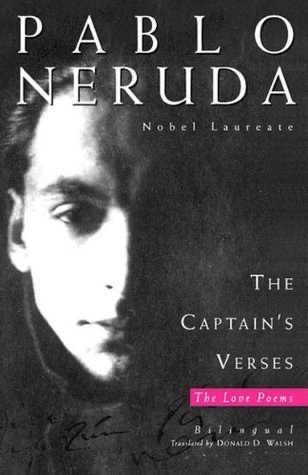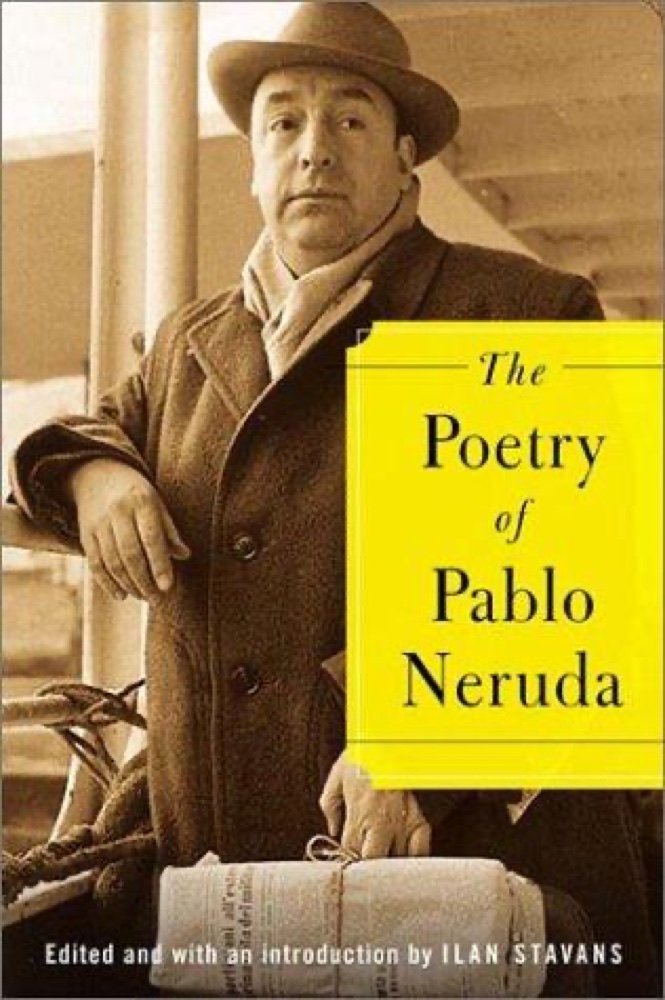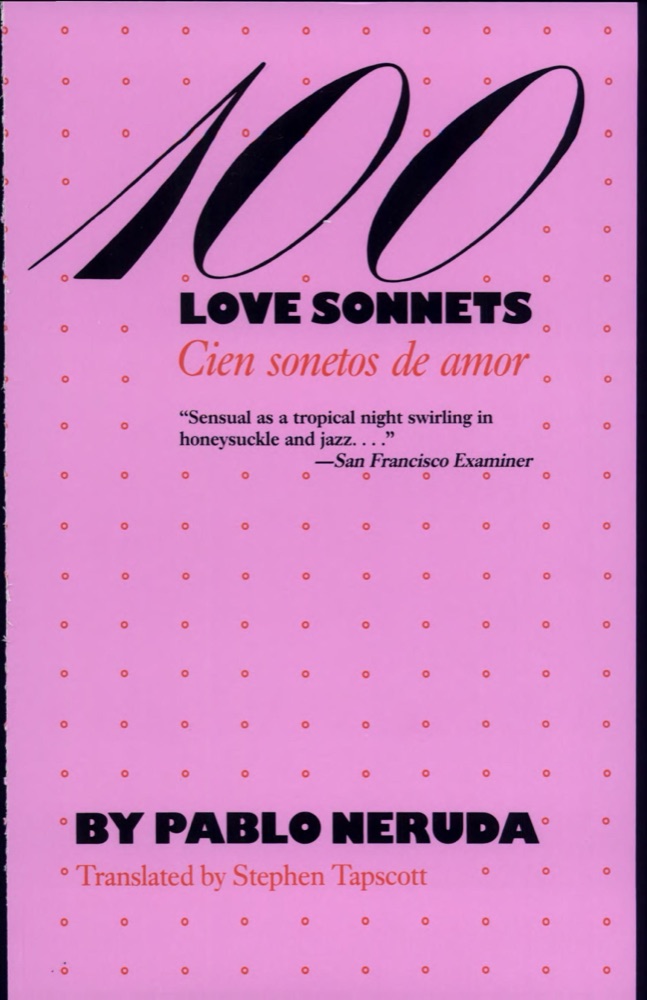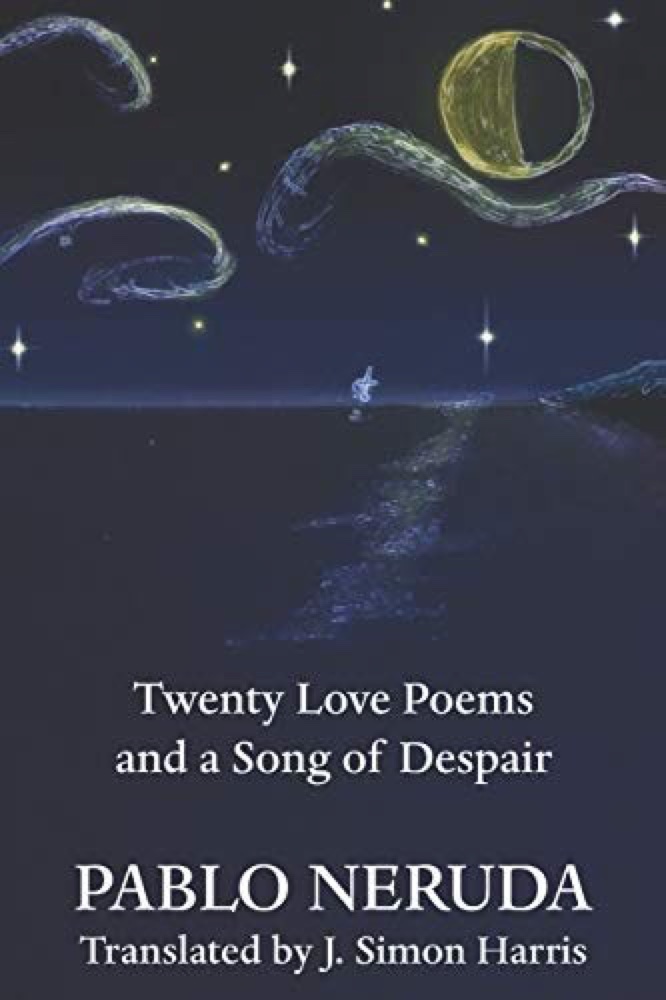

Pablo Neruda · 70 pages
Rating: (39.7K votes)
“I want
To do with you what spring does with the cherry trees.”
― Pablo Neruda, quote from Twenty Love Poems and a Song of Despair
“Tonight I can write the saddest lines
I loved her, and sometimes she loved me too.”
― Pablo Neruda, quote from Twenty Love Poems and a Song of Despair
“Then love knew it was called love.
And when I lifted my eyes to your name,
suddenly your heart showed me my way”
― Pablo Neruda, quote from Twenty Love Poems and a Song of Despair
“I am no longer in love with her, that's certain, but maybe I love her. Love is so short, forgetting is so long.”
― Pablo Neruda, quote from Twenty Love Poems and a Song of Despair
“It was at that age
that poetry came in search of me.”
― Pablo Neruda, quote from Twenty Love Poems and a Song of Despair
“Who writes your name in letters of smoke among the stars of the south?
Oh let me remember you as you were before you existed.”
― Pablo Neruda, quote from Twenty Love Poems and a Song of Despair
“And I watch my words from a long way off.
They are more yours than mine.
They climb on my old suffering like ivy.”
― Pablo Neruda, quote from Twenty Love Poems and a Song of Despair
“وفي عينيك الحزينتين يبدأ وطن الحلم.”
― Pablo Neruda, quote from Twenty Love Poems and a Song of Despair
“There were thirst and hunger, and you were the fruit.
There were grief and the ruins, and you were the miracle.”
― Pablo Neruda, quote from Twenty Love Poems and a Song of Despair
“مثل البحر، مثل الزمن. فيكِ غَرِقَ كل شيء!”
― Pablo Neruda, quote from Twenty Love Poems and a Song of Despair
“Every day you play with the light of the universe.”
― Pablo Neruda, quote from Twenty Love Poems and a Song of Despair
“Here I love you and the horizon hides you in vain.
I love you still among these cold things.
Sometimes my kisses go on those heavy vessels
that cross the sea towards no arrival.
I see myself forgotten like those old anchors.
The piers sadden when the afternoon moors there.
My life grows tired, hungry to no purpose.
I love what I do not have. You are so far.
My loathing wrestles with the slow twilights.
But night comes and starts to sing to me.”
― Pablo Neruda, quote from Twenty Love Poems and a Song of Despair
“sometimes i get up at dawn, and even my soul is wet.”
― Pablo Neruda, quote from Twenty Love Poems and a Song of Despair
“How you must have suffered getting accustomed to me,
my savage, solitary soul, my name that sends them all running.
So many times we have seen the morning star burn, kissing our eyes,
and over our heads the grey light unwinds in turning fans.”
― Pablo Neruda, quote from Twenty Love Poems and a Song of Despair
“كم هو قصيرٌ الحب، وكم هو طويلٌ النسيان”
― Pablo Neruda, quote from Twenty Love Poems and a Song of Despair
“كنتُ أتذكّرك وروحي تضيق
بهذا الحزن الذي تعرفين.
أين كنتِ آنئذٍ؟
بين أيّ أناس؟
أيّة كلمات كنتِ تقولين؟
لماذا يداهمُني كل هذا الحب
عندما أشعر بالحزن، وأَشعرُ بكِ بعيدة؟”
― Pablo Neruda, quote from Twenty Love Poems and a Song of Despair
“Ya no la quiero, es cierto, pero tal vez la quiero.
Es tan corto el amor, y es tan largo el olvido.”
― Pablo Neruda, quote from Twenty Love Poems and a Song of Despair
“تعجبينني حين تصمتين وأنت كالبعيدة.
وأنتِ كأنك تئنّين، فراشة ترفّّ.
وتَسمعينني من بعيد، وصوتي لا يصل إليكِ.
دعيني أصمت مع صمتك.”
― Pablo Neruda, quote from Twenty Love Poems and a Song of Despair
“Entre los labios y la voz, algo se va muriendo.
Algo con alas de pájaro, algo de angustia y de olvido”
― Pablo Neruda, quote from Twenty Love Poems and a Song of Despair
“نحن، اللذَيْن كنّا آنذاك، لم نعد كما كُنّا”
― Pablo Neruda, quote from Twenty Love Poems and a Song of Despair
“The morning is full of storm
in the heart of summer.
The clouds travel like white handkerchiefs of goodbye,
the wind, travelling, waving them in its hands.
The numberless heart of the wind
beating above our loving silence.
Orchestral and divine, resounding among the trees
like a language full of wars and songs.”
― Pablo Neruda, quote from Twenty Love Poems and a Song of Despair
“أُحِبُّ ما ليس عندي. كم أنتِ بعيدة.”
― Pablo Neruda, quote from Twenty Love Poems and a Song of Despair
“أنا اليائسُ، الكلمةُ بلا أصداء،
الذي فقد كل شيء، وكان لديه كل شيء.”
― Pablo Neruda, quote from Twenty Love Poems and a Song of Despair
“لأنّي في ليالٍ مثل هذه أخذتها بين ذراعيّ،
روحي ليست راضيةً بأنّي أضعتُها.”
― Pablo Neruda, quote from Twenty Love Poems and a Song of Despair
“Tonight I Can Write
Tonight I can write the saddest lines.
Write, for example, 'The night is starry and the stars are blue and shiver in the distance.'
The night wind revolves in the sky and sings.
Tonight I can write the saddest lines.
I loved her, and sometimes she loved me too.
Through nights like this one I held her in my arms.
I kissed her again and again under the endless sky.
She loved me, sometimes I loved her too.
How could one not have loved her great still eyes.
Tonight I can write the saddest lines.
To think that I do not have her. To feel that I have lost her.
To hear the immense night, still more immense without her.
And the verse falls to the soul like dew to the pasture.
What does it matter that my love could not keep her.
The night is starry and she is not with me.
This is all. In the distance someone is singing. In the distance.
My soul is not satisfied that it has lost her.
My sight tries to find her as though to bring her closer.
My heart looks for her, and she is not with me.
The same night whitening the same trees.
We, of that time, are no longer the same.
I no longer love her, that's certain, but how I loved her.
My voice tried to find the wind to touch her hearing.
Another's. She will be another's. As she was before my kisses.
Her voice, her bright body. Her infinite eyes.
I no longer love her, that's certain, but maybe I love her.
Love is so short, forgetting is so long.
Because through nights like this one I held her in my arms
my soul is not satisfied that it has lost her.
Though this be the last pain that she makes me suffer
and these the last verses that I write for her.”
― Pablo Neruda, quote from Twenty Love Poems and a Song of Despair
“وعصافيرُ كانت تنامُ في روحِك
أيقظتُها، وكم فرّتْ وهاجرتْ.”
― Pablo Neruda, quote from Twenty Love Poems and a Song of Despair
“The birds of night peck at the first stars
that flash like my soul when I love you.”
― Pablo Neruda, quote from Twenty Love Poems and a Song of Despair
“أستطيع أن أكتب الأشعار الأكثر حزناً هذه الليلة.”
― Pablo Neruda, quote from Twenty Love Poems and a Song of Despair
“(3) Insight Surpasses All [The Buddha said to Anāthapiṇḍika:] “In the past, householder, there was a brahmin named Velāma. He gave such a great alms offering as this: eighty-four thousand bowls of gold filled with silver; eighty-four thousand bowls of silver filled with gold; eighty-four thousand bronze bowls filled with bullion; eighty-four thousand elephants, chariots, milch cows, maidens, and couches, many millions of fine cloths, and indescribable amounts of food, drink, ointment, and bedding. “As great as was the alms offering that the brahmin Velāma gave, it would be even more fruitful if one would feed a single person possessed of right view.22 As great as the brahmin Velāma’s alms offering was, and though one would feed a hundred persons possessed of right view, it would be even more fruitful if one would feed a single once-returner. As great as the brahmin Velāma’s alms offering was, and though one would feed a hundred once-returners, it would be even more fruitful if one would feed a single nonreturner. As great as the brahmin Velāma’s alms offering was, and though one would feed a hundred nonreturners, it would be even more fruitful if one would feed a single arahant. As great as the brahmin Velāma’s alms offering was, and though one would feed a hundred arahants, it would be even more fruitful if one would feed a single paccekabuddha.23 As great as the brahmin Velāma’s alms offering was, and though one would feed a hundred paccekabuddhas, it would be even more fruitful if one would feed a single Perfectly Enlightened Buddha ... it would be even more fruitful if one would feed the Saṅgha of monks headed by the Buddha and build a monastery for the sake of the Saṅgha of the four quarters … it would be even more fruitful if, with a trusting mind, one would go for refuge to the Buddha, the Dhamma, and the Saṅgha, and would undertake the five precepts: abstaining from the destruction of life, from taking what is not given, from sexual misconduct, from false speech, and from the use of intoxicants. As great as all this might be, it would be even more fruitful if one would develop a mind of loving-kindness even for the time it takes to pull a cow’s udder. And as great as all this might be, it would be even more fruitful still if one would develop the perception of impermanence just for the time it takes to snap one’s fingers.” (AN 9:20, abridged; IV 393–96) VI.”
― Bhikkhu Bodhi, quote from In the Buddha's Words: An Anthology of Discourses from the Pali Canon
“Fortunately, getting hold of people’s garbage was a cinch. Indian detectives were much luckier than their counterparts in, say, America, who were forever rooting around in people’s dustbins down dark, seedy alleyways. In India, one could simply purchase an individual’s trash on the open market. All you had to do was befriend the right rag picker. Tens of thousands of untouchables of all ages still worked as unofficial dustmen and women across the country. Every morning, they came pushing their barrows, calling, “Kooray Wallah!” and took away all the household rubbish. In the colony’s open rubbish dump, surrounded by cows, goats, dogs and crows, they would sift through piles of stinking muck by hand, separating biodegradable waste from the plastic wrappers, aluminium foil, tin cans and glass bottles.”
― Tarquin Hall, quote from The Case of the Missing Servant
“When we look back, it becomes clear that the acts and accomplishments of human beings are the signatures of history. Human signatures have created an enormous chasm between the joyeous light of the age of the Renaissance to the dark shadow of September 11, 2001. Those of us living on that fateful day experienced the lower depths of mankind. As an author, avid reader, world traveler, and person of enormous curiosity, my life experiences have taught me that discord often erupts from a lack of knowledge and education. To discourage future dark moments, I believe we must nourish the minds of our young with learning that creates understanding between ethnic and religious groups. Perhaps understanding will lead to a marvelous day when we take a last fleeting look at violence so harmful to so many. I sincerely believe that nothing will further the cause of peace more than the education of our young. I would like for readers to know that a percentage of the profits from the sale of this book will be devoted to the cause of education.
May all roads lead to peace.”
― Jean Sasson, quote from Growing Up Bin Laden: Osama's Wife and Son Take Us Inside Their Secret World
“Ignorance has never been the problem. The problem was and continues to be unexamined confidence in western civilization and the unwarranted certainty of Christianity. And arrogance. Perhaps it is unfair to judge the past by the present, but it is also necessary.
If nothing else, an examination of the past—and of the present, for that matter—can be instructive. It shows us that there is little shelter and little gain for Native peoples in doing nothing. So long as we possess one element of sovereignty, so long as we possess one parcel of land, North America will come for us, and the question we have to face is how badly we wish to continue to pursue the concepts of sovereignty and self-determination. How important is it for us to maintain protected communal homelands? Are our traditions and languages worth the cost of carrying on the fight? Certainly the easier and more expedient option is simply to step away from who we are and who we wish to be, sell what we have for cash, and sink into the stewpot of North America.
With the rest of the bones.
No matter how you frame Native history, the one inescapable constant is that Native people in North America have lost much. We’ve given away a great deal, we’ve had a great deal taken from us, and, if we are not careful, we will continue to lose parts of ourselves—as Indians, as Cree, as Blackfoot, as Navajo, as Inuit—with each generation. But this need not happen. Native cultures aren’t static. They’re dynamic, adaptive, and flexible, and for many of us, the modern variations of older tribal traditions continue to provide order, satisfaction, identity, and value in our lives. More than that, in the five hundred years of European occupation, Native cultures have already proven themselves to be remarkably tenacious and resilient.
Okay.
That was heroic and uncomfortably inspirational, wasn’t it? Poignant, even. You can almost hear the trumpets and the violins. And that kind of romance is not what we need. It serves no one, and the cost to maintain it is too high.
So, let’s agree that Indians are not special. We’re not … mystical. I’m fine with that. Yes, a great many Native people have a long-standing relationship with the natural world. But that relationship is equally available to non-Natives, should they choose to embrace it. The fact of Native existence is that we live modern lives informed by traditional values and contemporary realities and that we wish to live those lives on our terms.”
― Thomas King, quote from The Inconvenient Indian: A Curious Account of Native People in North America
“I don't want to regret anything with you.”
― Adriane Leigh, quote from The Mourning After
BookQuoters is a community of passionate readers who enjoy sharing the most meaningful, memorable and interesting quotes from great books. As the world communicates more and more via texts, memes and sound bytes, short but profound quotes from books have become more relevant and important. For some of us a quote becomes a mantra, a goal or a philosophy by which we live. For all of us, quotes are a great way to remember a book and to carry with us the author’s best ideas.
We thoughtfully gather quotes from our favorite books, both classic and current, and choose the ones that are most thought-provoking. Each quote represents a book that is interesting, well written and has potential to enhance the reader’s life. We also accept submissions from our visitors and will select the quotes we feel are most appealing to the BookQuoters community.
Founded in 2023, BookQuoters has quickly become a large and vibrant community of people who share an affinity for books. Books are seen by some as a throwback to a previous world; conversely, gleaning the main ideas of a book via a quote or a quick summary is typical of the Information Age but is a habit disdained by some diehard readers. We feel that we have the best of both worlds at BookQuoters; we read books cover-to-cover but offer you some of the highlights. We hope you’ll join us.