

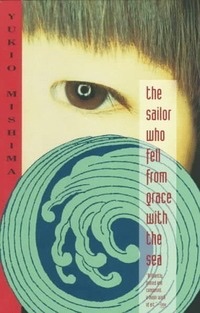
 The Sailor Who Fell from Grace with the Sea
Quotes from the Book
Better to be caught in sudden, complete catastrophe than to be gnawed by the cancer of imagination.
On reflection, falling in love for him was not only extraordinary, but rather comical. By having closely observed Kiyoaki Matsugae, he knew full well what sort of man should fall in love. Falling in love was a special privilege given to someone whose external, sensuous charm and internal ignorance, disorganization, and lack of cognizance permitted him to form a kind of fantasy about others. It was a rude privilege. Honda was quite aware that since his childhood, he had been the opposite of such a man.
Life strove mightily to exile orthodoxy, hospitalize heresy, and trap humanity into stupidity. It was an accumulation of used bandages soiled with layers of blood and pus. Life was the daily changing of the bandages of the heart that made the incurably sick, young and old alike, cry out in pain.
However, whatever frightening mask it might assume, the national spirit in its original state was of pristine whiteness. Traveling through a country like Thailand, Honda realized more clearly than ever the simplicity and purity of things Japanese, like transparent stream water through which one could glimpse pebbles below, or the probity of Shinto rites. Honda’s life was not imbued with such spirit. Like the majority of Japanese he ignored it, behaving as though it did not exist and surviving by escaping from it. All his life he had dodged things fundamental and artless: white silk, clear cold water, the zigzag white paper of the exorciser’s staff fluttering in the breeze, the sacred precinct marked by a torii, the gods’ dwelling in the sea, the mountains, the vast ocean, the Japanese sword with its glistening blade so pure and sharp. Not only Honda, but the vast majority of Westernized Japanese, could no longer stand such intensely native elements.
Watch on YouTube
About Yukio Mishima
We have collected 198 quotes from 11 books by Yukio Mishima on BookQuoters.
More about the author →More by Yukio Mishima
The Sailor Who Fell from Grace with the Sea
 Spring Snow
 The Temple of the Golden Pavilion
 The Sound of Waves
Book details
- Author
- Yukio Mishima
- Genre
- Literature
- Goodreads rating
- 3.80 (6k ratings) →
Keep reading
 Runaway Horses
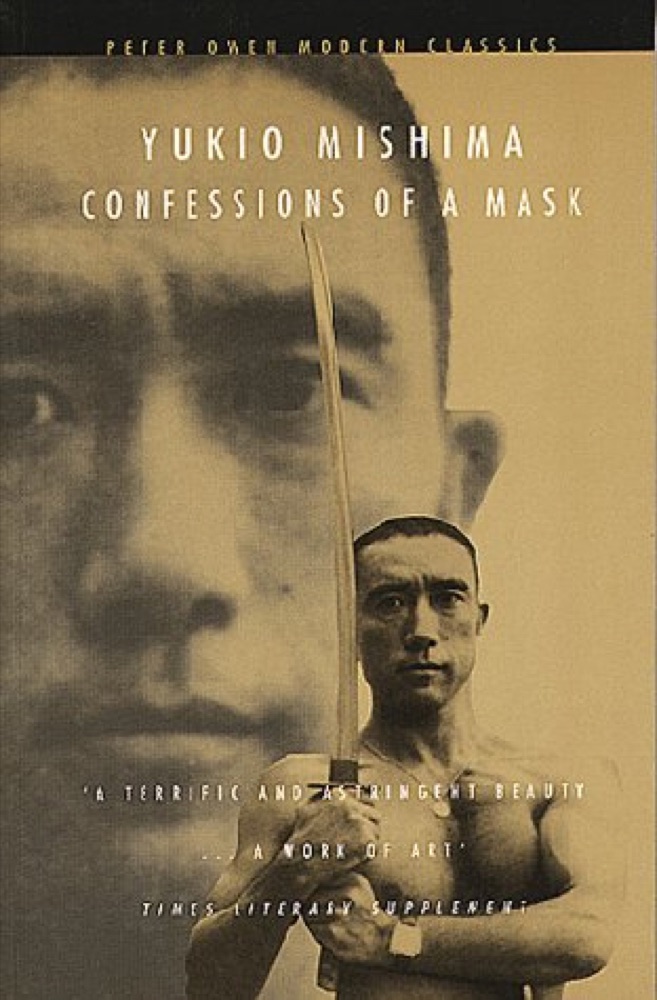 Confessions of a Mask
Spring Snow
Confessions of a Mask
Spring Snow
 The Enchantress of Florence
 Arch of Triumph
 Forge of Darkness
 The Dean's Watch
 Ninety-Three
 The Emperor's Soul
 And Then
 Fury
Fury
 Two Years Eight Months and Twenty-Eight Nights
 The Devil in the Flesh
 Oblomov
 Villa Incognito
 Doctor Zhivago
 The Magic Mountain
 The Everlasting Man
 Victory
 Twilight of the Idols/The Anti-Christ
 V.
V.
 The Noise of Time
 The Empusium
 Shōgun
 Miss Lonelyhearts
 Orthodoxy
 Melmoth the Wanderer
 In Search of Lost Time
 A Short History of Decay
 Pachinko
 The Ministry of Fear
 The God of Small Things
 The Lady and the Monk: Four Seasons in Kyoto
 The Fall of Hyperion
 Colorless Tsukuru Tazaki and His Years of Pilgrimage
 Eyeless in Gaza
 The Naked and the Dead
 A Fatal Inversion
 Life and Fate
 The Damnation Game
 Fall of Light
 The Power and the Glory
 The Three-Cornered World
 The Fairy Tales of Hermann Hesse
 Mythology
 Humboldt's Gift
 The Great Mistake
 Underworld
 The Schopenhauer Cure
 This Is Happiness
 Primeval and Other Times
 The Volcano Lover: A Romance
 The Joke
 The Birth of Tragedy
 The Tunnel
 The Book of Laughter and Forgetting
 The Man Without Qualities
 Black Lamb and Grey Falcon
 Green Dolphin Street
 The Magus