
Arthur C. Clarke · 256 pages
Rating: (10.9K votes)
“Now I can rejoice that I knew you, rather than mourn because I lost you.”
― Arthur C. Clarke, quote from The Songs Of Distant Earth
“...if one had to think about every footstep one took, ordinary walking would be impossible.”
― Arthur C. Clarke, quote from The Songs Of Distant Earth
“Problems seldom go away if they’re ignored.”
― Arthur C. Clarke, quote from The Songs Of Distant Earth
“He felt like a young student again, confronted with all the art and knowledge of mankind. The experience was both exhilarating and depressing; a whole universe lay at his fingertips, but the fraction of it he could explore in an entire lifetime was so negligible that he was sometimes overwhelmed with despair.”
― Arthur C. Clarke, quote from The Songs Of Distant Earth
“Don’t believe anything I’ve told you—merely because I said it.”
― Arthur C. Clarke, quote from The Songs Of Distant Earth

“So the problem of Evil never really existed. To expect the universe to be benevolent was like imagining one could always win at a game of pure chance.”
― Arthur C. Clarke, quote from The Songs Of Distant Earth
“There’s an ancient philosophical joke that’s much subtler than it seems. Question: Why is the Universe here? Answer: Where else would it be?”
― Arthur C. Clarke, quote from The Songs Of Distant Earth
“The Lassans were insatiably inquisitive, and the concept of privacy was almost unknown to them. A Please Do Not Disturb sign was often regarded as a personal challenge, which led to interesting complications...”
― Arthur C. Clarke, quote from The Songs Of Distant Earth
“Here the trees surrounded them with an invisible, anechoic blanket, so that every word seemed sucked into silence the moment it was uttered.”
― Arthur C. Clarke, quote from The Songs Of Distant Earth
“He’s a creature of today—not haunted by the past or fearful of the future!”
― Arthur C. Clarke, quote from The Songs Of Distant Earth
“Death focuses the mind on the things that really matter: why are we here, and what should we do?”
― Arthur C. Clarke, quote from The Songs Of Distant Earth
“Sometimes a decision has to be made by a single individual, who has the authority to enforce it. That’s why you need a captain. You can’t run a ship by a committee—at least not all the time.”
― Arthur C. Clarke, quote from The Songs Of Distant Earth
“Soon after her beloved young brother was killed, she asked me, “What is the purpose of grief? Does it serve any biological function?”
― Arthur C. Clarke, quote from The Songs Of Distant Earth
“harsh verdict of the great philosopher Lucretius: all religions were fundamentally immoral, because the superstitions they peddled wrought more evil than good.”
― Arthur C. Clarke, quote from The Songs Of Distant Earth
“The sign of its passing was written there upon the sky as if a giant hand had drawn a piece of chalk across the blue dome of heaven. Even as they watched, the gleaming vapor trail began to fray at the edges, breaking up into wisps of cloud, until it seemed that a bridge of snow had been thrown from horizon to horizon.”
― Arthur C. Clarke, quote from The Songs Of Distant Earth
“This was the fundamental problem with rockets—and no one had ever discovered any alternative for deep-space propulsion. It was just as difficult to lose speed as to acquire it, and carrying the necessary propellant for deceleration did not merely double the difficulty of a mission; it squared it.”
― Arthur C. Clarke, quote from The Songs Of Distant Earth
“Ya sé, desde luego, que la Atlántida de Platón nunca existió en realidad. Por esta misma razón, nunca podrá morir. Siempre será un ideal, un sueño de perfección , una meta que inspirará a los hombres en la posteridad.”
― Arthur C. Clarke, quote from The Songs Of Distant Earth
“Apart from this common Lassan tendency to procrastinate, Kumar’s chief defects were an adventurous nature and a fondness for sometimes risky practical jokes. This,”
― Arthur C. Clarke, quote from The Songs Of Distant Earth

Arthur C. Clarke
Born place: in Minehead, Somerset, England, The United Kingdom
Born date December 16, 1917
See more on GoodReads
“Life doesn't happen to you. You can't just sit on a park bench and expect amazing things to whizz by on a conveyor belt. Life is what you put into it.”
― Holly Bourne, quote from The Manifesto on How to be Interesting
“I designed this and had it made especially for you. The trefoil is the symbol of immortality: a beginning without an end, like our life together. The hearts represent my love for you. Forever love. Unending like the knot they form. I chose opals instead of diamonds, because opals are warm living stones, each color a birth stone, yours being the center of this ring just like you are the center of our family. “I know the inscription isn’t original, but the meaning behind the words is. I wrote those words for the wife I dreamed of. And here you are. With My Last Breath.”
― Julieanne Reeves, quote from Razing Kayne
“Mick reached backwards without breaking eye contact and ran his hand across the door behind him, “See this?” he said. “This is my door. And no-one is touching my door today.” He shook his head slowly as if the issue wasn’t even up for debate.
Surle said nothing, just stared.
Mick swung his sword lazily, pointing towards the floor between himself and the infamous Marshal, “See this floor here? This floor is my porch,” he said. “And no-one is welcome on my porch today, especially you.”
Still nothing from Surle, just silence.
“So why don’t you just sod off like a good little lackey?”
― Aaron D'Este, quote from Weapon of Choice
“Everything is so fast and awful, isn't it, Noah?"
"The world has become like that.”
― Lee Matthew Goldberg, quote from Slow Down
“Friendship isn't measured in days, months or years, it's measured in the way someone makes you feel. I knew you'd be a friend right from the start.”
― Alexa Land, quote from Against the Wall
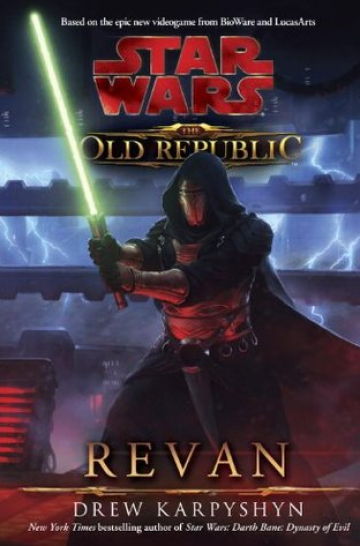
 Revan
Revan
 Too Consumed
 Something Real
 Outer Dark
 The Girl Who Came Ho...
 Mockingbird
BookQuoters is a community of passionate readers who enjoy sharing the most meaningful, memorable and interesting quotes from great books. As the world communicates more and more via texts, memes and sound bytes, short but profound quotes from books have become more relevant and important. For some of us a quote becomes a mantra, a goal or a philosophy by which we live. For all of us, quotes are a great way to remember a book and to carry with us the author’s best ideas.
We thoughtfully gather quotes from our favorite books, both classic and current, and choose the ones that are most thought-provoking. Each quote represents a book that is interesting, well written and has potential to enhance the reader’s life. We also accept submissions from our visitors and will select the quotes we feel are most appealing to the BookQuoters community.
Founded in 2023, BookQuoters has quickly become a large and vibrant community of people who share an affinity for books. Books are seen by some as a throwback to a previous world; conversely, gleaning the main ideas of a book via a quote or a quick summary is typical of the Information Age but is a habit disdained by some diehard readers. We feel that we have the best of both worlds at BookQuoters; we read books cover-to-cover but offer you some of the highlights. We hope you’ll join us.
