
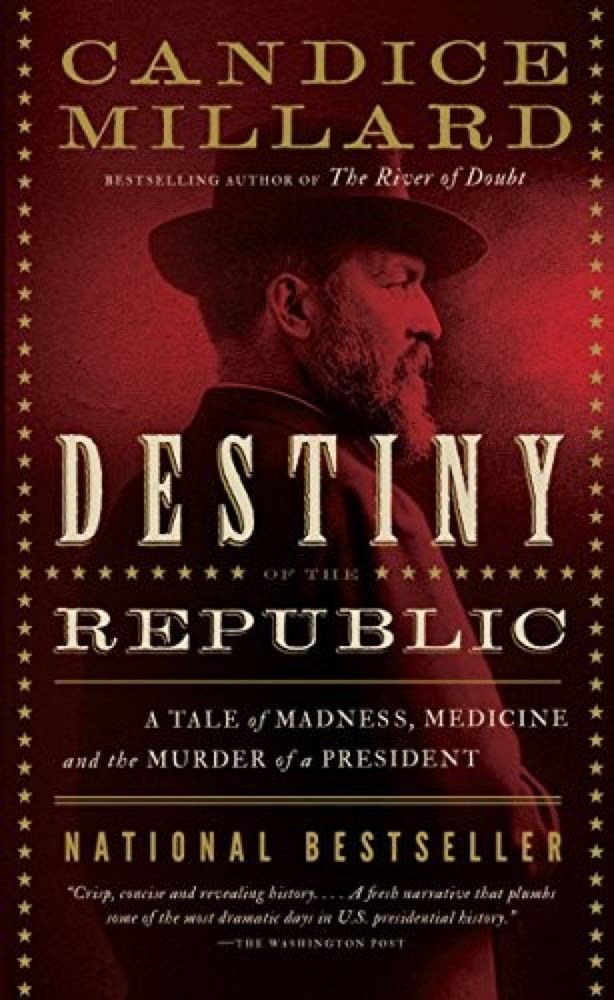
 Destiny of the Republic: A Tale of Madness, Medicine and the Murder of a President
Quotes from the Book
The ordinary traveler, who never goes off the beaten route and who on this beaten route is carried by others, without himself doing anything or risking anything, does not need to show much more initiative and intelligence than an express package," Roosevelt sneered.
When he arrived, he found that the two most important women in his life—his mother and his young wife—were dying. At 3:00 a.m. on February 14, Valentine’s Day, Martha Roosevelt, still a vibrant, dark-haired Southern belle at forty-six, died of typhoid fever. Eleven hours later, her daughter-in-law, Alice Lee Roosevelt, who had given birth to Theodore’s first child just two days before, succumbed to Bright’s disease, a kidney disorder. That night, in his diary, Roosevelt marked the date with a large black “X” and a single anguished entry: “The light has gone out of my life.
Of course a man has to take advantage of his opportunities, but the opportunities have to come,” he told an audience in Cambridge, England, in the spring of 1910. “If there is not the war, you don’t get the great general; if there is not the great occasion, you don’t get the great statesman; if Lincoln had lived in times of peace, no one would know his name now.
Even more complex and dangerous than the river itself were the fishes, mammals, and reptiles that inhabited it. Like the rain forest that surrounds and depends upon it, the Amazon river system is a prodigy of speciation and diversity, serving as home to more than three thousand species of freshwater fishes—more than any other river system on earth. Its waters are crowded with creatures of nearly every size, shape, and evolutionary adaptation, from tiny neon tetras to thousand-pound manatees to pink freshwater boto dolphins to stingrays to armor-plated catfishes to bullsharks. By comparison, the entire Missouri and Mississippi river system that drains much of North America has only about 375 fish
Theodore you have the mind but you have not the body, and without the help of the body the mind cannot go as far as it should. I am giving you the tools, but it is up to you to make your body.
I love peace, but it is because I love justice and not because I am afraid of war,” Roosevelt told the spellbound crowd. “I took the action I did in Panama because to have acted otherwise would have been both weak and wicked. I would have taken that action no matter what power had stood in the way. What I did was in the interest of all the world, and was particularly in the interests of Chile and of certain other South American countries. I was in accordance with the highest and strictest dictates of justice. If it were a matter to do over again, I would act precisely and exactly as I in very fact did act.” As these words rang through the hall, the audience leapt to its feet, cheering and applauding the Yankee imperialist.
Let us weep,” Rondon would tell them, “for I loved this man who has perished for my sake. But I command you to do as he did. Never shoot.” Rondon believed that his mission in protecting and pacifying the Indians was larger than his own life, larger than any of their lives. He would rather die than surrender his ideals, and he obliged his men to follow suit.
Launching and landing the boats, often chest-deep in water amid the heavy underbrush that lined the riverbank, the men were constantly vulnerable to the predatory fish, waterborne snakes, and other creatures they were disturbing. Even
We do not set greed against greed or hatred against hatred,” he thundered. “Our creed is one that bids us to be just to all, to feel sympathy for all, and to strive for an understanding of the needs of all. Our purpose is to smite down wrong.
When he wasn't too sick to sit up, Roosevelt sought comfort and distraction in the world that he knew best: his library. For his trip to Africa, he had spent months choosing the books that he would take with him, ordering special volumes that had been beautifully bound in pigskin, with type reduced to the smallest legible size, so that the books would be as light as possible. Roosevelt, Kermit wrote, "read so rapidly that he had to plan very carefully in order to have enough books to last him through a trip.
Far from its outward appearance, the rain forest was not a garden of easy abundance, but precisely the opposite. Its quiet, shaded halls of leafy opulence were not a sanctuary but, rather, the greatest natural battlefield anywhere on the planet, hosting an unremitting and remorseless fight for survival that occupied every single one of its inhabitants, every minute of every day. Though
Roosevelt, still wearing his heavy, hobnailed boots, watched as the snake’s short fangs plunged into the tough leather and spilled its venom down the side of his boot. He had been spared an agonizing, certain death by a quarter-inch of leather.
One of Roosevelt's most entrenched beliefs, as a cowboy, a hunter, a soldier, and an explorer, was that the health of one man should never endanger the lives of the rest of the men in his expedition. Roosevelt had unflinchingly cast off even good friends like Father Zahm when it became clear that they could no longer pull their own weight or were simply not healthy enough to endure the physical demands of the journey. "No man has any business to go on such a trip as ours unless he will refuse to jeopardize the welfare of his associates by any delay caused by a weakness or ailment of his," he wrote. "It is his duty to go forward, if necessary on all fours, until he drops."... Roosevelt had even held himself to these unyielding standards after Schrank, the would-be assassin, shot him in Milwaukee. Few men would have even considered giving a speech with a bullet in their chest. Roosevelt had insisted on it. This was an approach to life, and death, that he had developed many years earlier, when living with cowboys and soldiers. "Both the men of my regiment and the friends I had made in the old days in the West were themselves a little puzzled at the interest shown in my making my speech after being shot," he wrote. "This was what they expected, what they accepted as the right thing for a man to do under the circumstances, a thing the nonperformance of which would have been discreditable rather than the performance being creditable.
Roosevelt wrote, “Tell Osborn I have already lived and enjoyed as much of life as any nine other men I know; I have had my full share, and if it is necessary for me to leave my bones in South America, I am quite ready to do so.
Watch on YouTube
About Candice Millard
We have collected 44 quotes from 2 books by Candice Millard on BookQuoters.
More about the author →More by Candice Millard
Destiny of the Republic: A Tale of Madness, Medicine and the Murder of a President
Book details
- Author
- Candice Millard
- Genre
- History
- Goodreads rating
- 4.22 (81k ratings) →
Keep reading
 The Rise of Theodore Roosevelt
 The Path Between the Seas: The Creation of the Panama Canal, 1870-1914
 The Bully Pulpit: Theodore Roosevelt, William Howard Taft, and the Golden Age of Journalism
Destiny of the Republic: A Tale of Madness, Medicine and the Murder of a President
The Bully Pulpit: Theodore Roosevelt, William Howard Taft, and the Golden Age of Journalism
Destiny of the Republic: A Tale of Madness, Medicine and the Murder of a President
 The Autobiography of Eleanor Roosevelt
 The Splendid and the Vile: A Saga of Churchill, Family, and Defiance During the Blitz
 American Colossus: The Triumph of Capitalism, 1865-1900
 Memoirs of General W.T. Sherman
 Truman
 Mornings on Horseback
 A Full Life: Reflections at Ninety
 The Monuments Men: Allied Heroes, Nazi Thieves, and the Greatest Treasure Hunt in History
 Undaunted Courage: The Pioneering First Mission to Explore America's Wild Frontier
 The Proud Tower: A Portrait of the World Before the War, 1890-1914
 Team of Rivals: The Political Genius of Abraham Lincoln
 The Civil War, Vol. 3: Red River to Appomattox
 Sackett's Land
 Into the Silence: The Great War, Mallory and the Conquest of Everest
 The Log from the Sea of Cortez
 The Path to Power
 The Winds of War
 The Last Lion: Winston Spencer Churchill: Alone, 1932-40
 The Naked and the Dead
 One of Ours
 Hawaii
 The Golden House
 The Last Stand: Custer, Sitting Bull, and the Battle of the Little Bighorn
 Alas, Babylon
 The Last Lion 3: Winston Spencer Churchill: Defender of the Realm, 1940-1965
 Closing the Ring
 Shaman
 The Honourable Schoolboy
 King Solomon's Mines
 The Devil in the White City: Murder, Magic, and Madness at the Fair That Changed America
 Fall of Giants
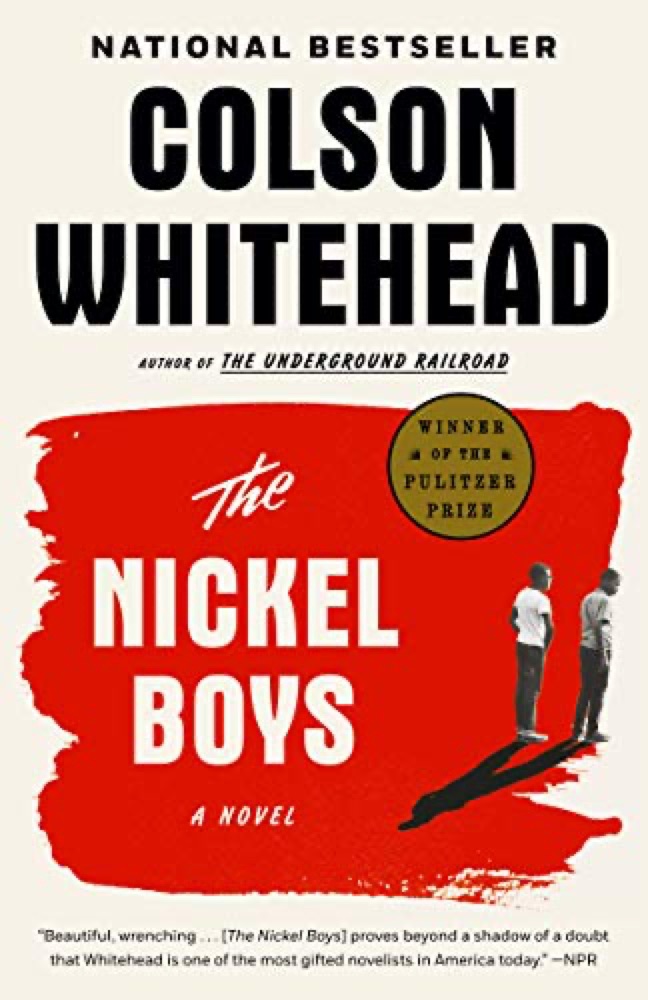 The Nickel Boys
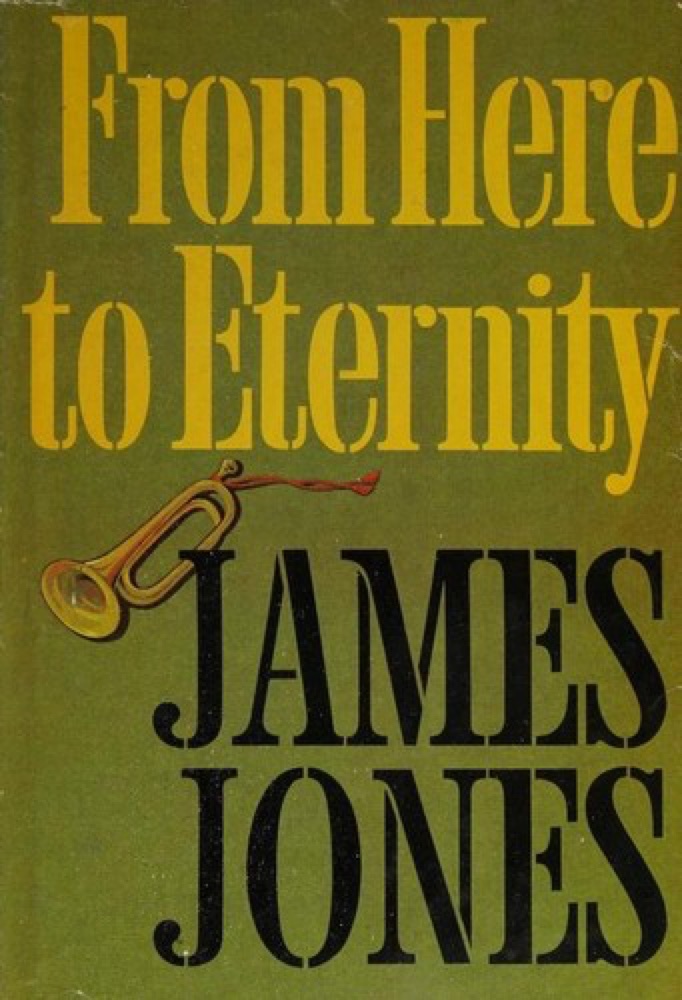 From Here to Eternity
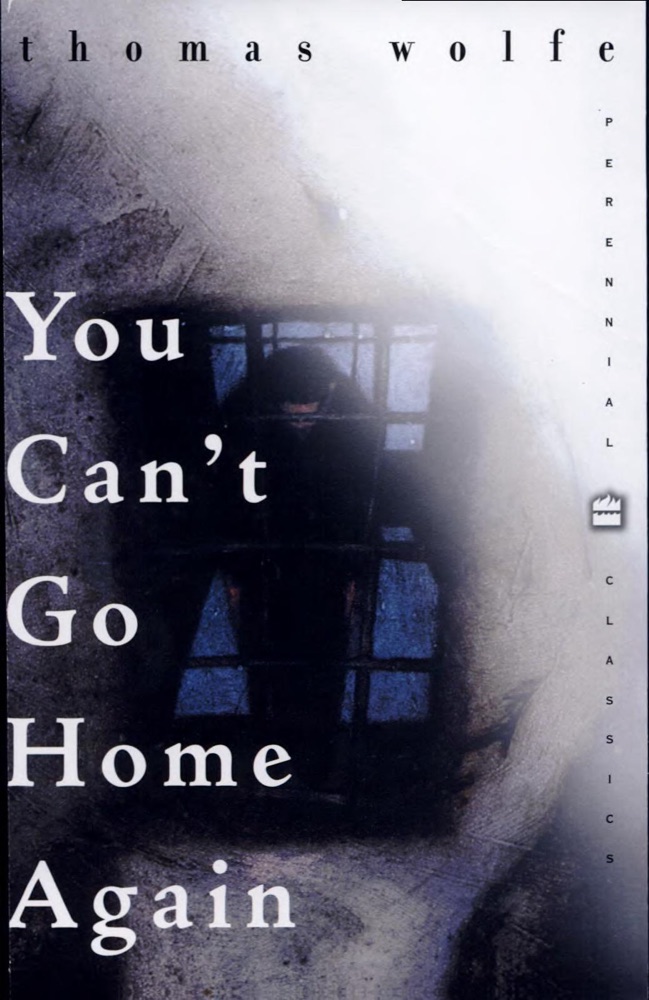 You Can't Go Home Again
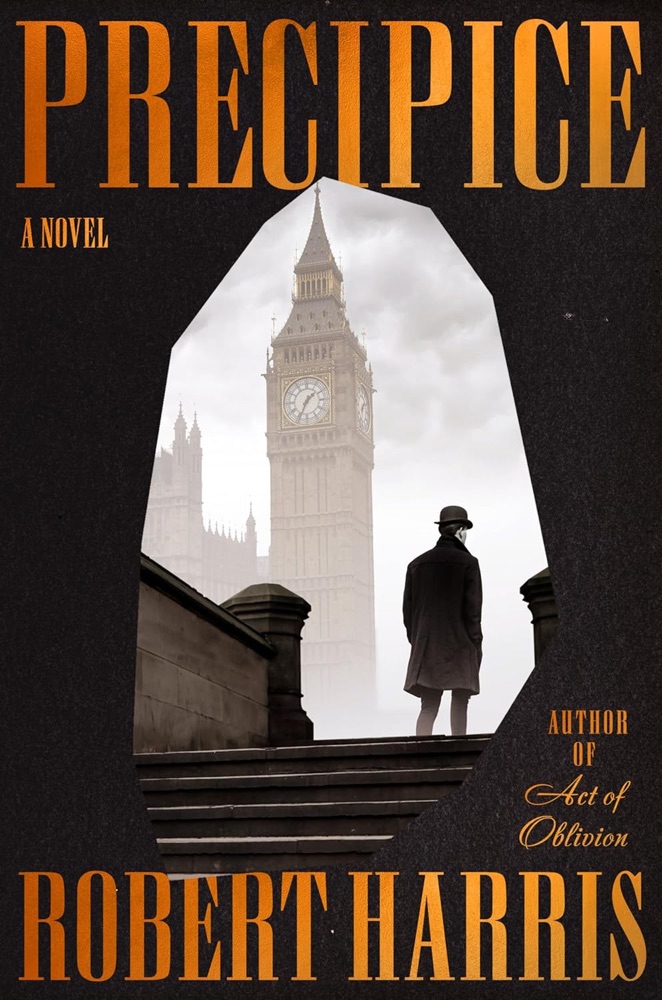 Precipice
 Once An Eagle
 Matterhorn
 The Jungle
 The Wager: A Tale of Shipwreck, Mutiny and Murder
 The Known World
 Radio Free Albemuth
 The Soul of America: The Battle for Our Better Angels
 The Great Mistake
 The Unvanquished
 Centennial
 Killing Kennedy: The End of Camelot
 Lovecraft Country
 Ride the Dark Trail
 The Will to Battle
 The Heart of a Woman
 Khan: Empire of Silver
 Earth Abides
 Mr. Lincoln's Army
 Ghost Soldiers: The Epic Account of World War II's Greatest Rescue Mission