Quotes from Pilgrim

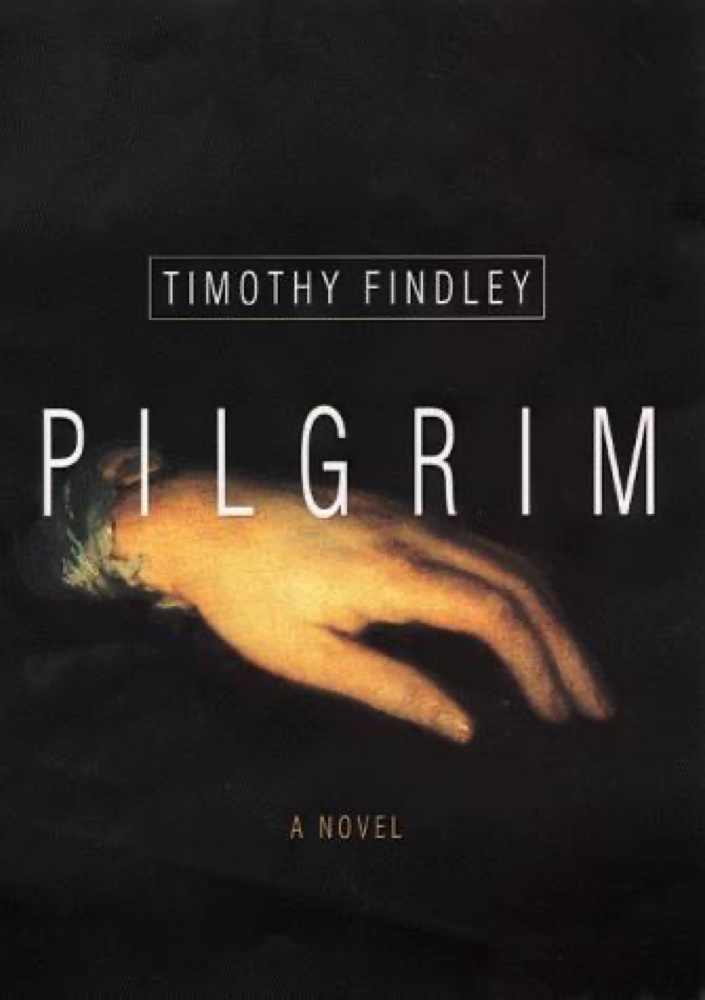
Timothy Findley ·  538 pages

Rating: (2.9K votes)


“I have dreamt of a life you will never know; the life of a loving and caring companion. I simply thought you should know. I see that you are in trouble. I watch and listen to you. I want to help, but you won't let me. So be it. I love you still. Do what you will, I shall watch over you.”
― Timothy Findley, quote from Pilgrim


“Има хора, чието преживяване на живота е толкова различно от нашето собствено, че ги наричаме луди. За чисто удобство. Наричаме ги така, за да се освободим от поемането на отговорност за тяхното място в човешката общност. И затова ги изпращаме в приюти, затваряме ги, за да не се виждат и чуват, зад заключени врати. Но за тях няма разлика между това, което ние смятаме за сънища и кошмари, и света, в който протича всекидневният им живот... Според тях може да има святост в дървета и жаби, живи богове в огъня и водата и глас във вихрушката, към който, ако само се вслушаме, те ще насочат вниманието ни... Те не живеят в “други светове”, а в едно измерение на този свят, което ние от страх отказваме да приемем.”
― Timothy Findley, quote from Pilgrim


“Има степени на лудост, разбира се. Аз открих следи в самия себе си, признавам. – Той махна с ръка. – Но лудостта е силен звяр и не може да бъде уловена в теории. С времето се научих не само да не вярвам на теории, но и активно да им се противопоставям. Фактите са важни. И ние разполагаме само с фактите за всяка индивидуална лудост. Общите теории за лудостта се разкриват като се разкрива истинската ѝ природа във всеки пациент, един по един по един. Моята собствена лудост се измерва в скоби – както всяка лудост. И поради това, аз се научих не само да се справям с нея, но и да живея с нея. И което е най-важно, да функционирам въпреки нейното наличие.”
― Timothy Findley, quote from Pilgrim


“music is the worst of them - roiling and boiling - overly emotionalized on the one hand, overly intellectuallized on the other. Bach and Mozart indeed! Bach inevitably makes me think of fish in a barrel! round and round and round they go and nothing ever happens. Nothing ! Tum -de-dum-dum. Tum -de-dum-dum and that's all! Tum -de-dum-de-bloody-dum-dum! As for Mozart, his emotions did not mature beyond the age of twelve. never achieved adolescence, let alone puberty. his music merely combines a popular talent for slapstick and a commercial talent for tears. No - not tears. For sobs. Beethoven, pompous. Chopin - sickly sweet and given to tantrums - Tum -de-dum-dum- Bang! and Wagner - a self -centred bore. and Stravinsky - discordant, rude and blows his music through his nose”
― Timothy Findley, quote from Pilgrim


“Happiness is not our goal. The achievement of happiness deflects us from our true destiny which is the utter realization of self.”
― Timothy Findley, quote from Pilgrim


“Светът, каза той, свършва всеки ден – и започва на следващия”
― Timothy Findley, quote from Pilgrim


“Животът изисква да го живеем до непоносимост.”
― Timothy Findley, quote from Pilgrim


“Ако оцеляването ѝ зависи от вярата ѝ, че живее на Луната, тогава ние трябва да приемем нейната реалност, а не тя нашата.”
― Timothy Findley, quote from Pilgrim


“...only one deaf God, who cannot see, remains—claiming all of creation as His own. If people would invest one hundredth of their devotion to this God in the living brothers and sisters amongst whom they stand, we might have a chance of surviving one another. As it is...”
― Timothy Findley, quote from Pilgrim


“The art of presenting oneself, he had once told Sybil, lies in creating an immediate shock which is countered by a slow retreat into custom. People never quite recover from my cravats, but they will never find the equal of my tailor. To be memorable is all, when it comes to dress.”
― Timothy Findley, quote from Pilgrim


About the author

Timothy Findley
Born place: in Toronto, Ontario, Canada
Born date October 30, 1930
See more on GoodReads

Popular quotes

“On the existence and threat of modern-day secret societies: We are opposed around the world by a monolithic and ruthless conspiracy that relies primarily on covert means for expanding its sphere of influence . . . building a tightly knit, highly efficient machine that combines military, diplomatic, intelligence, economic, scientific and political operations. —JOHN F. KENNEDY, FROM A SPEECH GIVEN AT THE WALDORF-ASTORIA HOTEL ON APRIL 27, 1961”
― James Rollins, quote from Bloodline


“I smashed all the windows in my ex-boyfriend’s truck.” “You did what?” I couldn’t have heard her correctly. That did not happen in real life. Country songs, yes. Real life, no way.”
― Abbi Glines, quote from Misbehaving


“Clearly, Valdez was an apologist for the industrialists and polluters, the big American companies that dominated Costa Rica and other Latin American countries. Not surprising to find such a person here, since the CIA had controlled Costa Rica for decades. This wasn’t a country; it was a subsidiary of American business interests. And American businesses did not give a damn for the environment.”
― Michael Crichton, quote from Next


“fear of death.” Our study of psychoneurotic disturbances points to a more comprehensive explanation, which includes that of Westermarck. When a wife loses her husband, or a daughter her mother, it not infrequently happens that the survivor is afflicted with tormenting scruples, called ‘obsessive reproaches’ which raises the question whether she herself has not been guilty through carelessness or neglect, of the death of the beloved person. No recalling of the care with which she nursed the invalid, or direct refutation of the asserted guilt can put an end to the torture, which is the pathological expression of mourning and which in time slowly subsides. Psychoanalytic investigation of such cases has made us acquainted with the secret mainsprings of this affliction. We have ascertained that these obsessive reproaches are in a certain sense justified and therefore are immune to refutation or objections. Not that the mourner has really been guilty of the death or that she has really been careless, as the obsessive reproach asserts; but still there was something in her, a wish of which she herself was unaware, which was not displeased with the fact that death came, and which would have brought it about sooner had it been strong enough. The reproach now reacts against this unconscious wish after the death of the beloved person. Such hostility, hidden in the unconscious behind tender love, exists in almost all cases of intensive emotional allegiance to a particular person, indeed it represents the classic case, the prototype of the ambivalence of human emotions. There is always more or less of this ambivalence in everybody’s disposition; normally it is not strong enough to give rise to the obsessive reproaches we have described. But where there is abundant predisposition for it, it manifests itself in the relation to those we love most, precisely where you would least expect it. The disposition to compulsion neurosis which we have so often taken for comparison with taboo problems, is distinguished by a particularly high degree of this original ambivalence of emotions.”
― Sigmund Freud, quote from Totem and Taboo


“Lada looked up into her father's eyes, deep-set and etched with years of cunning and cruelty. She nodded, then held out her hand. "The daughter of Wallachia wants her knife back."
Vlad smiled and gave it to her.”
― Kiersten White, quote from And I Darken


Interesting books

Hold Me Closer: The Tiny Cooper Story
(4.7K)
Hold Me Closer: The...
by David Levithan
Frost Like Night
(7.4K)
Frost Like Night
by Sara Raasch
Cruel Crown
(15.4K)
Cruel Crown
by Victoria Aveyard
Take the Key and Lock Her Up
(4.9K)
Take the Key and Loc...
by Ally Carter
Regarding the Pain of Others
(7.9K)
Regarding the Pain o...
by Susan Sontag
The Mismeasure of Man
(6.9K)
The Mismeasure of Ma...
by Stephen Jay Gould

About BookQuoters

BookQuoters is a community of passionate readers who enjoy sharing the most meaningful, memorable and interesting quotes from great books. As the world communicates more and more via texts, memes and sound bytes, short but profound quotes from books have become more relevant and important. For some of us a quote becomes a mantra, a goal or a philosophy by which we live. For all of us, quotes are a great way to remember a book and to carry with us the author’s best ideas.

We thoughtfully gather quotes from our favorite books, both classic and current, and choose the ones that are most thought-provoking. Each quote represents a book that is interesting, well written and has potential to enhance the reader’s life. We also accept submissions from our visitors and will select the quotes we feel are most appealing to the BookQuoters community.

Founded in 2023, BookQuoters has quickly become a large and vibrant community of people who share an affinity for books. Books are seen by some as a throwback to a previous world; conversely, gleaning the main ideas of a book via a quote or a quick summary is typical of the Information Age but is a habit disdained by some diehard readers. We feel that we have the best of both worlds at BookQuoters; we read books cover-to-cover but offer you some of the highlights. We hope you’ll join us.