
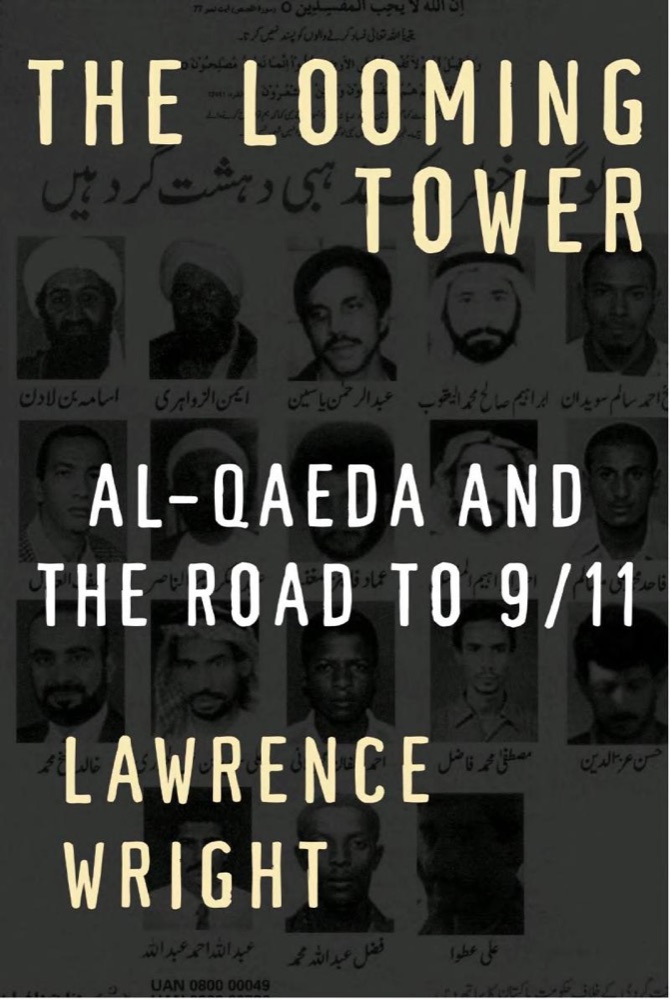
 The Looming Tower: Al-Qaeda and the Road to 9/11
Quotes from the Book
If you see a poor man come into your majlis, try to speak to him before you speak to the other people,” the king told his son. “Never make a decision on the spot. Say you will give your decision later. Never sign a paper sending someone to prison unless you are 100 percent convinced. And once you’ve signed, don’t change your mind. Be solid. You will find that people try to test you.” Fahd was delivering his basic course in local leadership—Saudi Governance 101. “If you don’t know anything about a subject, be quiet until you do. Recruit some older people who can give you advice. And if a citizen comes with a case against the government, take the citizen’s side to start with and give the officials a hard time the government will have no shortage of people to speak for them.
If an election were held here tomorrow,” Fahd once confided to a colleague, “Bin Baz would beat us without even leaving his house.
There was no law that explicitly banned women from driving in Saudi Arabia. There is none today—the Kingdom’s notorious female driving ban is a matter of social convention, fortified by some ferocious religious pressures. So some Saudi women started looking thoughtfully at their Kuwaiti sisters.
Better that anger should be directed into jihad abroad than into Iran-style revolution at home.
America certainly did its part. But doing the sums, it is now clear that through the eight years of Ronald Reagan’s presidency, 1981-89, Saudi Arabia actually provided more material assistance to the world’s varied assortment of anti Communist “freedom fighters” than did the United States, thus hastening the end of the Cold War and helping accomplish the downfall of the “Evil Empire.
MODERN SAUDI HISTORY IN FIVE EASY LESSONS If you did not go hungry in the reign of King Abdul Aziz, you would never go hungry. If you did not have fun in the reign of King Saud, you would never have fun. If you did not go to prison in the reign of King Faisal, you would never go to prison. If you did not make money in the reign of King Khaled, you would never make money. If you did not go bankrupt in the reign of King Fahd . . .
We were not willing to be the tool of a foreign government,” remembers Sheikh Hassan today. “There were a number of people in authority in Iran who wanted to recruit us against the Saudi government. They came to us—they made quite a few approaches to us. But we told them that we wished to remain independent.” His aide Jaffar Shayeb did the political talking on the sheikh’s behalf. “We listened to what they said,” says Shayeb of the Iranians. “But we were never willing to be part of their games.
That woman,” Bandar liked to say of the British prime minister, “was a hell of a man.
on December 7, 2001, Osama announced that he was leaving. “He deserted us,” remembers Al-Hubayshi bitterly. “After five weeks his people came round telling us to make our way to Pakistan as best we could and surrender to our embassies there. We had been ready to lay down our lives for him, and he couldn’t make the effort to speak to us personally. Today I think that I was made use of by Bin Laden—exploited, just like all the young kids who went to jihad. What did he care when he sent us over the horizon to die? He was as bad as the religious sheikhs back in Saudi who preached jihad in their sermons every Friday. How many of them ever sent their own sons to Afghanistan?
When Ali was killed by a Kharijite wielding a poisoned sword during Ramadan in A.H. 40 (A.D. 661), he became one of the earliest victims of Islamic terrorism.
The House of Saud had executed Juhayman. Now they were making his program government policy.
We try to transform each detainee from a young man who wants to die to a young man who wants to live. Prince Mohammed bin Nayef
In fighting its war, the Ministry of the Interior has resorted to a novel tactic– marriage. No Saudi official will admit on the record that the Kingdom’s terrorist problem might boil down to sexual frustration, but if a social system bans hot-blooded young men from contact with the opposite sex in their most hot-blooded years, perhaps it is hardly surprising that some of them channel this frustration into violence. One cornerstone of the extremist rehab program is to get the “beneficiaries,” as they are called, settled down with a wife as soon as possible. The Ministry of the Interior pays each unmarried beneficiary 60,000 riyals (some $18,000), the going rate for a dowry, or bride price. The family arranges a marriage, and whenever he can, Prince Mohammed turns up for the wedding. When Khaled Al-Hubayshi was released from Al-Haier prison early in 2007, he wasted no time finding himself a bride at government expense.
Watch on YouTube
About Robert Lacey
We have collected 13 quotes from 1 book by Robert Lacey on BookQuoters.
More about the author →Book details
- Author
- Robert Lacey
- Genre
- History
- Goodreads rating
- 4.03 (3k ratings) →
Keep reading
The Looming Tower: Al-Qaeda and the Road to 9/11
 The Yacoubian Building
 The Secret Servant
 After the Prophet: The Epic Story of the Shia-Sunni Split
 The Haj
 Princess: A True Story of Life Behind the Veil in Saudi Arabia
 Son of Hamas
 Nine Parts of Desire: The Hidden World of Islamic Women
 Infidel
 The Bad-Ass Librarians of Timbuktu and Their Race to Save the World’s Most Precious Manuscripts
 The Ayatollah Begs to Differ: The Paradox of Modern Iran
 In the Shadow of the Sword: The Birth of Islam and the Rise of the Global Arab Empire
 Revolution for Dummies: Laughing through the Arab Spring
 A Case of Exploding Mangoes
 Princess Sultana's Daughters
 The Last Girl: My Story of Captivity, and My Fight Against the Islamic State
 Imperial Ambitions: Conversations on the Post-9/11 World
 Consent to Kill
 The First Muslim: The Story of Muhammad
 The Complete Persepolis
 Dongri To Dubai : Six Decades of The Mumbai Mafia
 Desert Queen: The Extraordinary Life of Gertrude Bell: Adventurer, Adviser to Kings, Ally of Lawrence of Arabia
 Joseph Anton: A Memoir
 The Everlasting Hatred: The Roots of Jihad
 Destiny Disrupted: A History of the World Through Islamic Eyes
 The Teeth of the Tiger
 Three Cups of Tea: One Man's Mission to Promote Peace ... One School at a Time
 Empire
 Then They Came for Me: A Family's Story of Love, Captivity, and Survival
 The City of Brass
 The Black Wolf
 From Beirut to Jerusalem
 Heretic: Why Islam Needs a Reformation Now
 The Girl Who Saved the King of Sweden
 Hostage: An NYT Bestselling War Memoir of Survival and the Human Spirit in Gaza
 I Was Told to Come Alone: My Journey Behind the Lines of Jihad
 The Stardust Thief
 Promise of Blood
 On Democracies and Death Cults: Israel and the Future of Civilization
 The Empire of Gold
 Return of a King: The Battle for Afghanistan
 The Emperor
 No Easy Day: The Firsthand Account of the Mission That Killed Osama Bin Laden
 The War on Women
 A Full Life: Reflections at Ninety
 Emergency Sex (And Other Desperate Measures): True Stories from a War Zone
 Traitor to the Throne
 The Muqaddimah: An Introduction to History
 Killing Kennedy: The End of Camelot
 No god but God: The Origins, Evolution and Future of Islam
 The Little Drummer Girl
 One Year After
 Reamde
 Closing the Ring
 Executive Orders
 Red Notice: A True Story of High Finance, Murder, and One Man's Fight for Justice
 Raven Stratagem
 Exodus
 The Prize: The Epic Quest for Oil, Money, and Power
 The Winds of War