
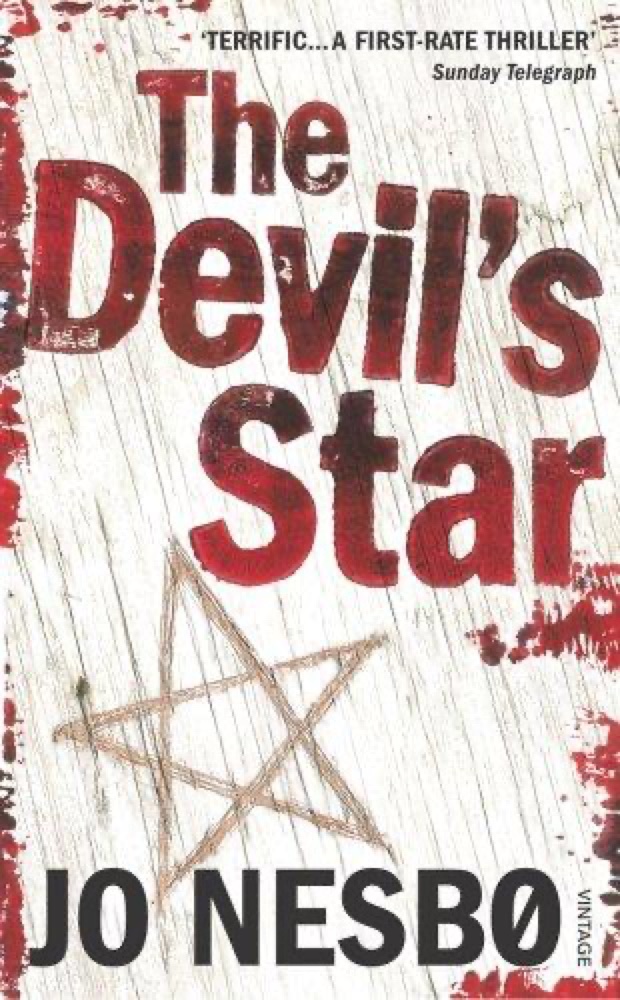
 The Devil's Star
Quotes from the Book
When I propose a candidate for a job I don't do it because the person in question is the best but because he is the one the client will employ. I provide them with a head that is good enough, placed on a body they want. [...] The world is full of people who pay serious money for bad pictures by good artists. And mediocre heads on tall bodies.
An artist who maintains that he has been misunderstood is almost always a bad artist who, I’m afraid to say, has been understood.
They had studied law, information technology and art history as part of their beauty treatment, they had let Norwegian taxpayers finance years at university just so that they could end up as overqualified, stay-at-home playthings and sit here exchanging confidences about how to keep their sugar daddies suitably happy, suitably jealous and suitably on their toes.
most likely because the majority of the receptionists have gone home, to a sick partner according to statistics, in the country with the shortest working hours in the world, the biggest health budget and the highest proportion of sick leave.
that it was impossible to get rid of it without
We all drink according to how thirsty we are’.
Watch on YouTube
About Jo Nesbø
We have collected 228 quotes from 11 books by Jo Nesbø on BookQuoters.
More about the author →

Book details
- Author
- Jo Nesbø
- Genre
- Fiction
- Goodreads rating
- 3.79 (41k ratings) →
Keep reading
 Coinman: An Untold Conspiracy
 The Imperfectionists
 2 States: The Story of My Marriage
 Cocaine
 The Alienist
 Stranger in a Strange Land
 The Way We Live Now
 The Jewel in the Crown
 Gaudy Night
 The Trouble with Peace
 White Teeth
 The Game: Penetrating the Secret Society of Pickup Artists
 Needful Things
 The Rebel Angels
 Practical Demonkeeping
 Past Imperfect
 One Hundred Names
 Queen of Babble
 The Sympathizer
 Snuff
Snuff
 We Are Water
 The Hexologists
 Everything's Eventual
 A Pair of Blue Eyes
 One of Our Thursdays Is Missing
 A Drink Before the War
 One Fifth Avenue
 The Winter of Our Discontent
 Big Machine
 Counterfeit
 What the Dog Saw and Other Adventures
 Vanity Fair
 Monsters: A Fan's Dilemma
 Blue Bamboo: Japanese Tales of Fantasy
 Tricks for Free
 Concrete
 Elective Affinities
 The Tsar of Love and Techno
 The Silkworm
 Wall and Piece
 The Girl in the Spider's Web
 number9dream
 The Black Prism
 The Thirst
 Going Postal
 Everything's Eventual
 The Limpopo Academy of Private Detection
 Making Money
 The Nix
 We Are All Completely Beside Ourselves
 The Prisoner of Heaven
 Broken Monsters
 The Man in the Brown Suit
 A Drop of Corruption
 Everyone Burns
 The Devils
 Middlemarch
 Oblivion
 The Escape Room