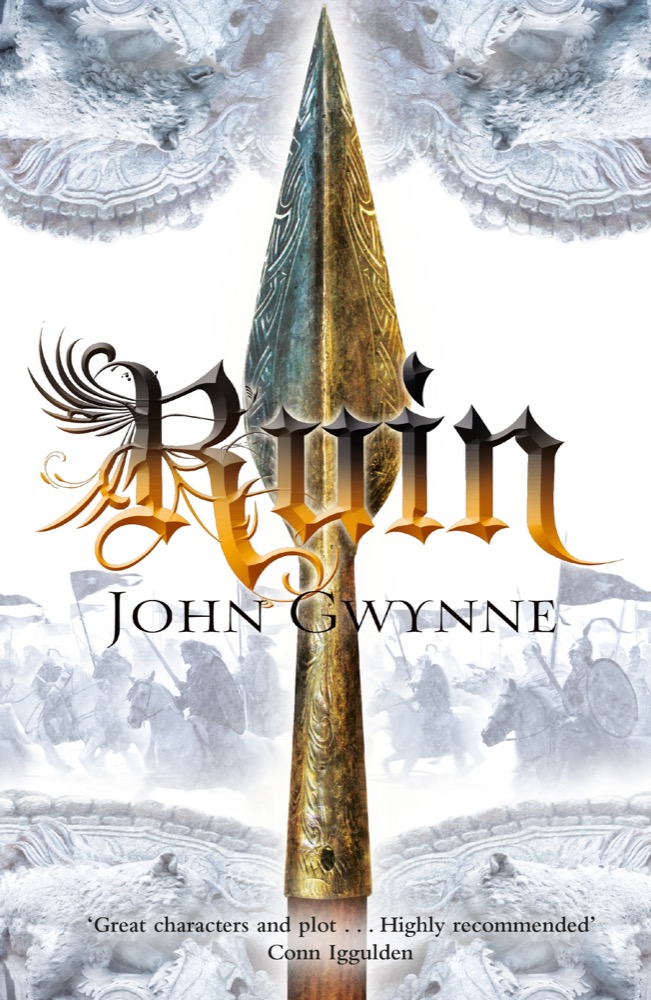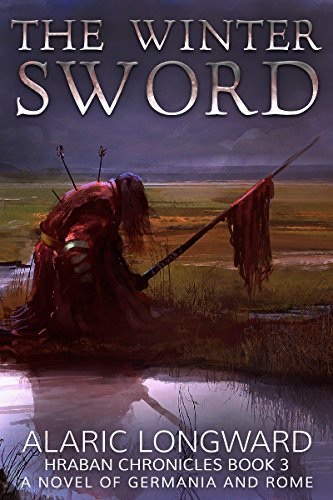

“As a soldier, I would hang him. As a politician, knowing him my enemy, I need him near me.”
― Alaric Longward, quote from The Winter Sword
“For a young lord to become the leader of such a nation as this one, he has to become its oldest Lord.”
― Alaric Longward, quote from The Winter Sword
“Children care nothing for the glory of centuries past when they laugh and run free over the hills.”
― Alaric Longward, quote from The Winter Sword
“And I had a makings of a plan. It had no form nor details, and it would be, when finished, a perilous, hopeless plan, for it depended on a woman.”
― Alaric Longward, quote from The Winter Sword
“gods and luck are fickle friends at best.”
― Alaric Longward, quote from The Winter Sword
“This was why trusting boys was just like drinking and driving. Sure, some people too the risk. One or two beers never feels dangerous at the time. And now everyone who drives and drinks gets into an accident.”
― Siobhan Vivian, quote from Not That Kind of Girl
“Monks, there are these two kinds of search: the noble search and the ignoble search. And what is the ignoble search? Here someone being himself subject to birth seeks what is also subject to birth; being himself subject to aging, he seeks what is also subject to aging; being himself subject to sickness, he seeks what is also subject to sickness; being himself subject to death, he seeks what is also subject to death; being himself subject to sorrow, he seeks what is also subject to sorrow; being himself subject to defilement, he seeks what is also subject to defilement. 6–11. “And what may be said to be subject to birth, aging, sickness, and death; to sorrow and defilement? Wife and children, men and women slaves, goats and sheep, fowl and pigs, elephants, cattle, horses, and mares, gold and silver: these acquisitions are subject to birth, aging, sickness, and death; to sorrow and defilement; and one who is tied to these things, infatuated with them, and utterly absorbed in them, being himself subject to birth ... to sorrow and defilement, seeks what it also subject to birth ... to sorrow and defilement.10 12. “And what is the noble search? Here someone being himself subject to birth, having understood the danger in what is subject to birth, seeks the unborn supreme security from bondage, Nibbāna; being himself subject to aging, having understood the danger in what is subject to aging, he seeks the unaging supreme security from bondage, Nibbāna; being himself subject to sickness, having understood the danger in what is subject to sickness, he seeks the unailing supreme security from bondage, Nibbāna; being himself subject to death, having understood the danger in what is subject to death, he seeks the deathless supreme security from bondage, Nibbāna; being himself subject to sorrow, having understood the danger in what is subject to sorrow, he seeks the sorrowless supreme security from bondage, Nibbāna; being himself subject to defilement, having understood the danger in what is subject to defilement, he seeks the undefiled supreme security from bondage, Nibbāna. This is the noble search.”
― Bhikkhu Bodhi, quote from In the Buddha's Words: An Anthology of Discourses from the Pali Canon
“agents shall be recruited from orphans. They shall be trained in the following techniques: interpretation of signs and marks, palmistry and similar techniques of interpreting body marks, magic and illusions, the duties of the ashramas, the stages of life, and the science of omens and augury. Alternatively, they can be trained in physiology and sociology, the art of men and society.”
― Tarquin Hall, quote from The Case of the Missing Servant
“I admit to a feeling of pride that my father had saved the day yet again, although I also thought that nothing would have been better for me personally than for the mullah to force my father's departure within the hour. Either way, I know now that nothing would have stopped my father from his Jihad. If he could not remain in Afghanistan, he would go to Pakistan. If Pakistan pulled the welcome mat, he would go to Yemen. If Yemen threw him out, he would journey to the middle of the most hostile desert where he would plot against the West. Violent Jihad was my father's life; nothing else really mattered. Nothing.”
― Jean Sasson, quote from Growing Up Bin Laden: Osama's Wife and Son Take Us Inside Their Secret World
“In the U.S. Articles of Confederation, the federal government gave itself the exclusive right to regulate “the trade and managing all affairs with the Indians.” This power was repeated in the 1790 Trade and Intercourse Act, which further refined “trade” and “affairs” to include the purchase and sale of Indian land.
The intent of these two pieces of legislation was clear. Whatever powers states were to have, those powers did not extend to Native peoples.
Beginning in 1823, there would be three U.S. Supreme Court decisions—Johnson v. McIntosh, Cherokee v. Georgia, Worcester v. Georgia—that would confirm the powers that the U.S. government had unilaterally taken upon itself and spell out the legal arrangement that tribes were to be allowed.
1823. Johnson v. McIntosh. The court decided that private citizens could not purchase land directly from Indians. Since all land in the boundaries of America belonged to the federal government by right of discovery, Native people could sell their land only to the U.S. government. Indians had the right of occupancy, but they did not hold legal title to their lands.
1831. Cherokee v. Georgia. The State of Georgia attempted to extend state laws to the Cherokee nation. The Cherokee argued that they were a foreign nation and therefore not subject to the laws of Georgia. The court held that Indian tribes were not sovereign, independent nations but domestic, dependent nations.
1832. Worcester v. Georgia. This case was a follow-up to Cherokee v. Georgia. Having determined that the Cherokee were a domestic, dependent nation, the court settled the matter of jurisdiction, ruling that the responsibility to regulate relations with Native nations was the exclusive prerogative of Congress and the federal government.
These three cases unilaterally redefined relationships between Whites and Indians in America. Native nations were no longer sovereign nations. Indians were reduced to the status of children and declared wards of the state. And with these decisions, all Indian land within America now belonged to the federal government. While these rulings had legal standing only in the United States, Canada would formalize an identical relationship with Native people a little later in 1876 with the passage of the Indian Act. Now it was official. Indians in all of North America were property.”
― Thomas King, quote from The Inconvenient Indian: A Curious Account of Native People in North America
BookQuoters is a community of passionate readers who enjoy sharing the most meaningful, memorable and interesting quotes from great books. As the world communicates more and more via texts, memes and sound bytes, short but profound quotes from books have become more relevant and important. For some of us a quote becomes a mantra, a goal or a philosophy by which we live. For all of us, quotes are a great way to remember a book and to carry with us the author’s best ideas.
We thoughtfully gather quotes from our favorite books, both classic and current, and choose the ones that are most thought-provoking. Each quote represents a book that is interesting, well written and has potential to enhance the reader’s life. We also accept submissions from our visitors and will select the quotes we feel are most appealing to the BookQuoters community.
Founded in 2023, BookQuoters has quickly become a large and vibrant community of people who share an affinity for books. Books are seen by some as a throwback to a previous world; conversely, gleaning the main ideas of a book via a quote or a quick summary is typical of the Information Age but is a habit disdained by some diehard readers. We feel that we have the best of both worlds at BookQuoters; we read books cover-to-cover but offer you some of the highlights. We hope you’ll join us.