 Murder at the Vicarage
Quotes from the Book
Instinct is a marvelous thing. It can neither be explained nor ignored.
You gave too much rein to your imagination. Imagination is a good servant, and a bad master. The simplest explanation is always the most likely.
Everything must be taken into account. If the fact will not fit the theory---let the theory go.
When you find that people are not telling you the truth---look out!
Sometimes I feel sure he is as mad as a hatter and then, just as he is at his maddest, I find there is a method in his madness.
They tried to be too clever---and that was their undoing.
I did not deceive you, mon ami. At most, I permitted you to deceive yourself.
... one may live in a big house and yet have no comfort.
You know, Emily was a selfish old woman in her way. She was very generous, but she always wanted a return. She never let people forget what she had done for them - and, that way she missed love.
Real evidence is usually vague and unsatisfactory. It has to be examined---sifted. But here the whole thing is cut and dried. No, my friend, this evidence has been very cleverly manufactured---so cleverly that it has defeated its own ends.
Mrs. Cavendish: I am charming to my friends one day, and forget all about them the next.
Imagination is a good servant, and a bad master.
Poirot was an extraordinary looking little man. He was hardly more than five feet, four inches, but carried himself with great dignity. His head was exactly the shape of an egg, and he always perched it a little on one side. His moustache was very stiff and military. The neatness of his attire was almost incredible. I believe a speck of dust would have caused him more pain than a bullet wound. Yet this quaint dandyfied little man who, I was sorry to see, now limped badly, had been in his time one of the most celebrated members of the Belgian police. As a detective, his flair had been extraordinary, and he had achieved triumphs by unravelling some of the most baffling cases of the day.
Hasting - There are times when it is one's duty to assert oneself.
If the fact will not fit the theory - let the theory go
So you think that the coco- mark well what I say, Hastings, the coco- contained strychnine?" "Of course! That salt on the tray, what else could it have been?" "It might have been salt." replied Poirot placidly.
Miss Howard: Like a good detective story myself. Lots of nonsense written, though. Criminal discovered in last Chapter. Everyone dumbfounded. Real crime - you'd know at once.
My dear Poirot, it's not for me to dictate to you. You have a right to your own opinion, just as I have mine.
Oh, my friend, have I not said to you all along that I have no proofs. It is one thing to know that a man is guilty, it is quite another matter to prove him so. And, in this case, there is terribly little evidence. That is the whole trouble.
Every murderer is probably somebody’s old friend,” observed Poirot philosophically. “You cannot mix up sentiment and reason.
I shall never forget my first sight of Mary Cavendish. Her tall, slender form, outlined against the bright light; the vivid sense of slumbering fire that seemed to find expression only in those wonderful tawny eyes of hers, remarkable eyes, different from any other woman's that I have ever known; the intense power of stillness she possessed, which nevertheless conveyed the impression of a wild untamed spirit in an exquisitely civilised body—all these things are burnt into my memory. I shall never forget them.
I came across a man in Belgium once, a very famous detective, and he quite inflamed me. He was a marvellous little fellow. He used to say that all good detective work was a mere matter of method. My system is based on his—though of course I have progressed rather further. He was a funny little man, a great dandy, but wonderfully clever.
The mind is confused? Is it not so? Take time, mon ami. You are agitated; you are excited—it is but natural. Presently, when we are calmer, we will arrange the facts, neatly, each in his proper place. We will examine—and reject. Those of importance we will put on one side; those of no importance, pouf! blow them away!
Yes, he is intelligent. But we must be more intelligent. We must be so intelligent that he does not suspect us of being intelligent at all." I acquiesced. "There, mon ami, you will be of great assistance to me." I was pleased with the compliment. There had been times when I hardly thought that Poirot appreciated me at my true worth. "Yes" he continued staring at me thoughtfully, "you will be invaluable
Emily was a selfish old woman in her way. She was very generous, but she always wanted a return. She never let people forget what she had done for them—and, that way she missed love.
The mind is confused? Is it not so? Take time, mon ami. You are agitated; you are excited—it is but natural. Presently, when we are calmer, we will arrange the facts, neatly, each in his proper place. We will examine—and reject. Those of importance we will put on one side; those of no importance, pouf!”—he screwed up his cherub-like face, and puffed comically enough—“blow them away!” “That’s
The mind is confused? Is it not so? Take time, mon ami. You are agitated; you are excited—it is but natural. Presently, when we are calmer, we will arrange the facts, neatly, each in his proper place. We will examine—and reject. Those of importance we will put on one side; those of no importance, pouf!”—he screwed up his cherub-like face, and puffed comically enough—“blow them
Did you know?
- It was Agatha Christie's first published novel and introduced the detective Hercule Poirot.
- Christie wrote the novel in 1916, during the First World War.
- It also introduced the recurring characters Captain Arthur Hastings and Inspector Japp of Scotland Yard.
- The manuscript was rejected by several publishers before being accepted by The Bodley Head.
- It was among the first ten titles published by Penguin Books in 1935.
- Poirot's final case, Curtain, is also set at Styles Court.
About Agatha Christie
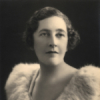
Agatha Christie (1890-1976) was an English writer best known for her detective novels featuring Hercule Poirot and Miss Marple. She became one of the best-selling novelists of all time and also wrote the long-running stage play The Mousetrap.
More about the author →More by Agatha Christie
All books by Agatha Christie →
About the book
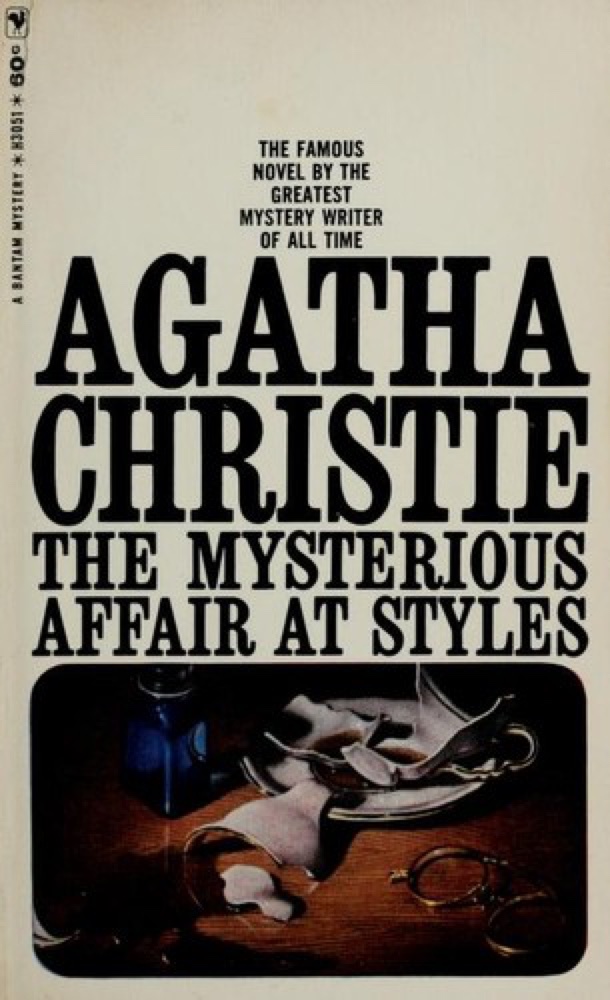
The Mysterious Affair at Styles is Agatha Christie's debut mystery novel and the book that introduced her Belgian detective Hercule Poirot. Set at a country manor in wartime Essex, it opens when the wealthy Emily Inglethorp dies of strychnine poisoning. Her house guest, Captain Arthur Hastings, home on sick leave from the Western Front, calls upon his old acquaintance Poirot, a Belgian refugee living nearby, to untangle a household full of suspects and motives.
At its heart the novel is a classic puzzle of poison, timing, and misdirection, working through alibis, physical clues, and the small inconsistencies that betray a carefully planned crime. Christie threads themes of appearance versus reality and the deceptiveness of the obvious through a genteel domestic setting, letting Poirot's insistence on order and 'the little grey cells' contrast with Hastings' more impulsive guesswork.
Written in 1916 during the First World War and finally published in 1920, the book launched one of the most famous partnerships in detective fiction and established many conventions of the golden-age whodunit. It began Christie's decades-long career and Poirot's long life on the page, a life that would eventually end at the very same Styles Court in her final Poirot novel.
Key characters
- Hercule PoirotBelgian private detective and wartime refugee who investigates the case
- Arthur HastingsPoirot's friend and the novel's narrator, a guest at Styles
- Emily InglethorpWealthy mistress of Styles Court who is poisoned
- Alfred InglethorpEmily's much-younger second husband
- Evelyn HowardEmily's companion at Styles Court
- Inspector JappScotland Yard detective working the investigation
- John CavendishEmily's stepson and heir to the estate
Book details
- First published
- 1920
- Length
- 296 pages
- Reading time
- 4 hours
- Author
- Agatha Christie
- Genre
- Classics
- Goodreads rating
- 4.00 (527k ratings) →
- First line
- “The intense interest aroused in the public by what was known at the time as "The Styles Case" has now somewhat subsided.”
Series & reading order
- 1 The Mysterious Affair at Styles
- 2 The Murder on the Links
Movie & TV adaptations
- IMDb
If you liked this, read…
- 1The Murder on the LinksThe next Poirot novel, continuing the Poirot-and-Hastings partnership
- 2The Murder of Roger AckroydA landmark Christie whodunit built on ingenious misdirection
- 3Whose Body?Dorothy L. Sayers' golden-age debut introducing amateur sleuth Lord Peter Wimsey
Keep reading
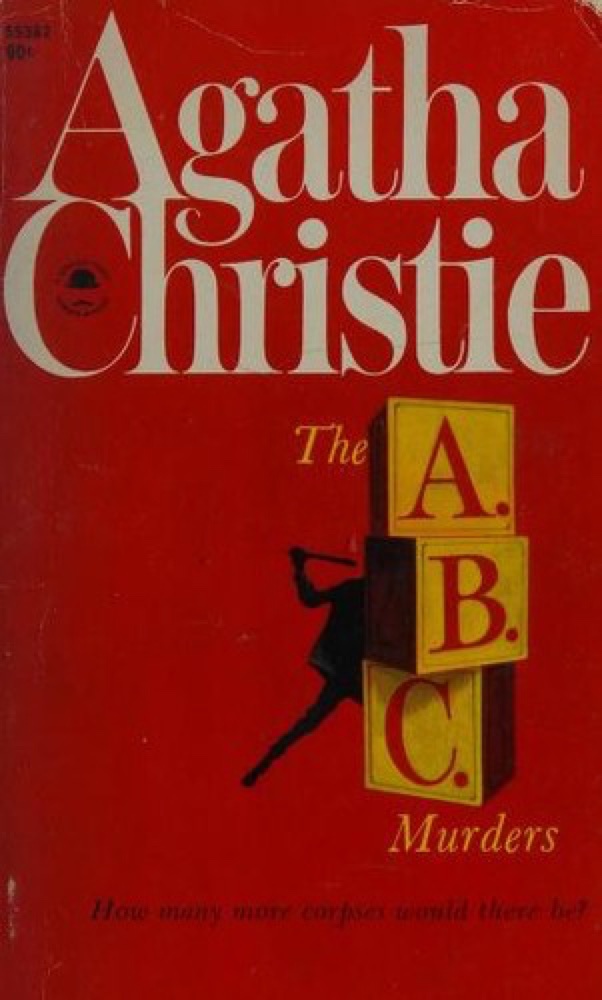 The A.B.C. Murders
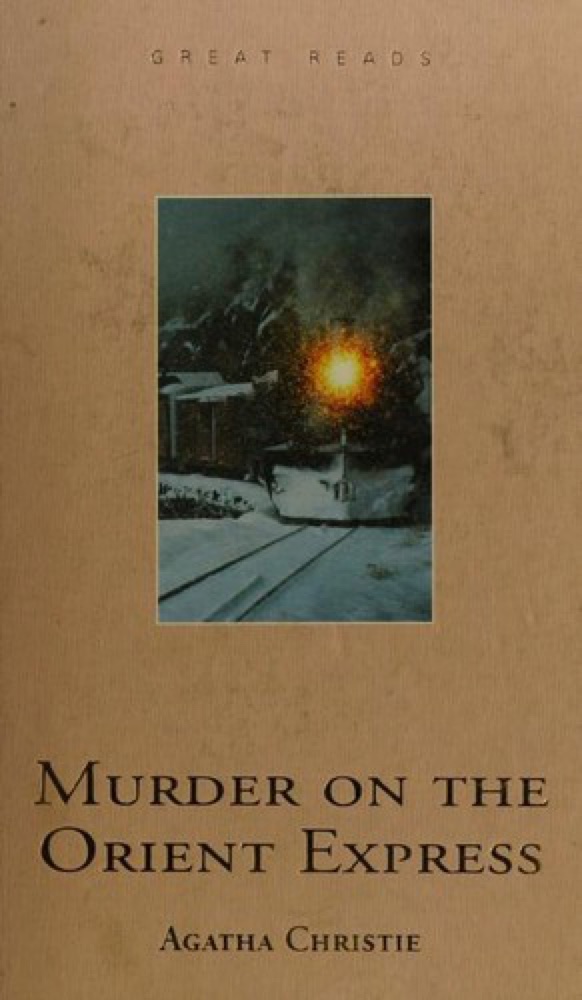 Murder on the Orient Express
 The Complete Sherlock Holmes
 Hercule Poirot: The Complete Short Stories
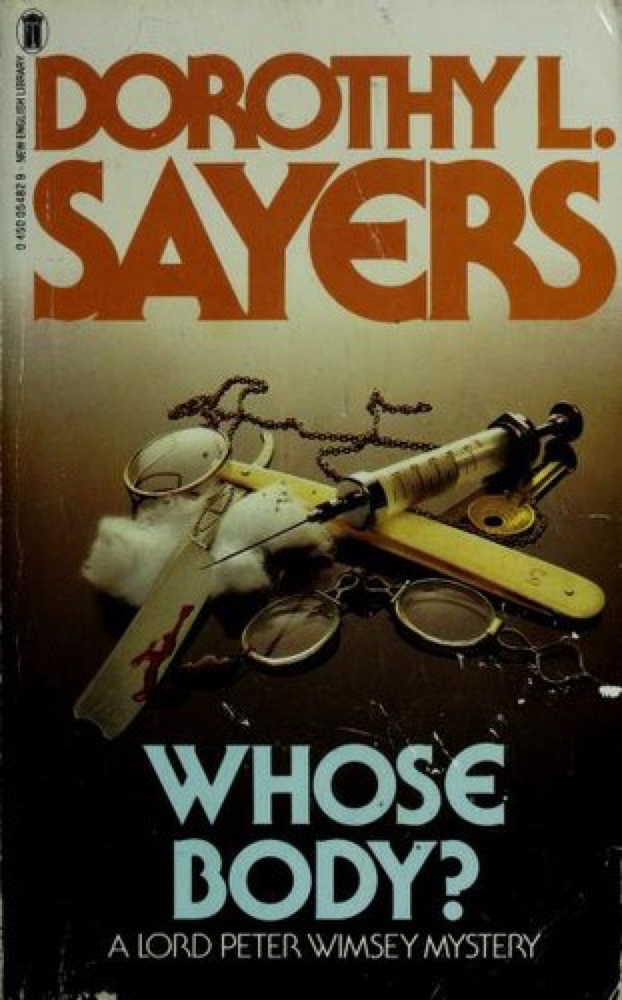 Whose Body?
 Sherlock Holmes
 A Study in Scarlet
 Truly, Devious
 The Moonstone
 The Long Dark Tea-Time of the Soul
 The Manticore
 The Eyre Affair
 Dirk Gently's Holistic Detective Agency
 Gaudy Night
 The Mystery of Three Quarters
 Sixty Stories
 Unseen Academicals
 Sometimes a Great Notion
 The Bourne Identity
 What Time the Sexton's Spade Doth Rust
 That Hideous Strength
 The Wise Man's Fear
 Bring Up the Bodies
 Speaking from Among the Bones
 The Secret History
 Mysteries
 Shades of Grey
 Infinite Jest
 Authority
 The Truth: Stage Adaptation
 The Liar
 The Jewel in the Crown
 The Golden Tresses of the Dead
 Stranger in a Strange Land
 Hemlock & Silver
 Angelmaker
 The Subtle Knife
 A Perilous Undertaking
 Defending Jacob
 The Importance of Being Earnest
 An Instance of the Fingerpost
 Silent in the Grave
 Suspect
 The Liar's Key
 The Beekeeper's Apprentice
 Hannibal
 The Man in the High Castle
 Dexter By Design
 Senlin Ascends
![What Was She Thinking? [Notes on a Scandal]](/i/book/g/08/what-was-she-thinking-notes-on-a-scandal.jpg) What Was She Thinking? [Notes on a Scandal]
What Was She Thinking? [Notes on a Scandal]
 Tinker Tailor Soldier Spy
 Inversions
 Look Closer
 Fifth Business
 Hogfather
 Under the Net
 The Christie Affair
 False Memory
 The Remains of the Day