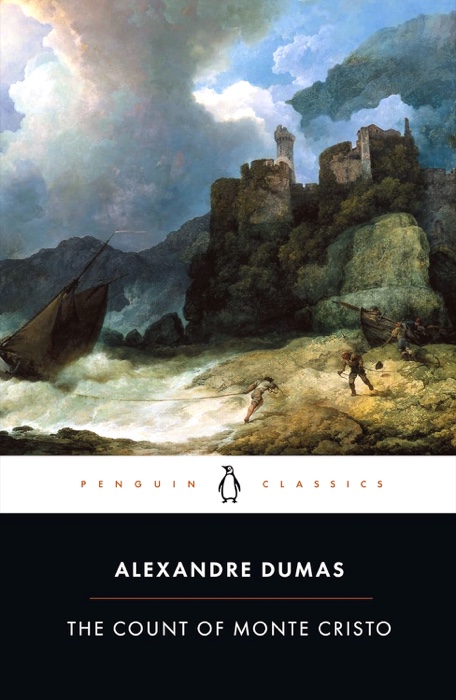

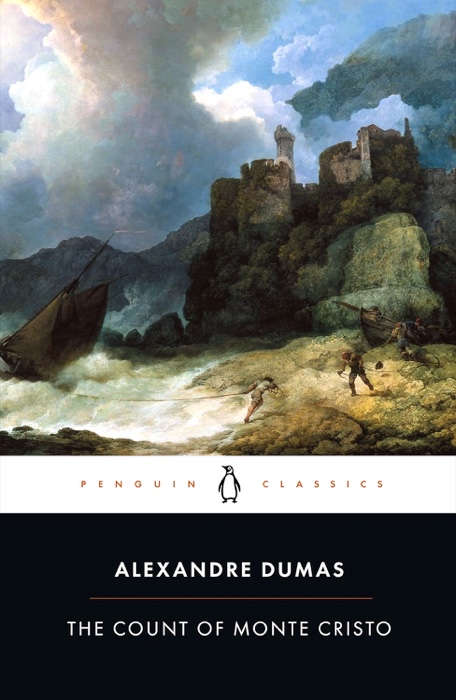
 The Count of Monte Cristo
Quotes from the Book
Abbe Faria: Here is your final lesson - do not commit the crime for which you now serve the sentence. God said, Vengeance is mine. Edmond Dantes: I don't believe in God. Abbe Faria: It doesn't matter. He believes in you.
Celui-la seul qui a eprouve l'extreme infortune est apte a ressentir l'extreme felicite. Il faut avoir voulu mourir pour savoir combien el est bon de vivre.
... il n'y a ni bonheur ne malheur en ce monde, il y a la comparaison d'un etat a un autre, voila tout.
Ho l'impressione che l'uomo non possa essere felice così facilmente! La felicità è come quei palazzi delle isole incantate alle cui porte stanno a difesa i draghi: bisogna combattere per conquistarli.
Did you know?
- The novel was serialized in the Paris newspaper Journal des Debats in eighteen parts from 28 August 1844 to 15 January 1846.
- Dumas developed the story with his collaborator Auguste Maquet, who handled research and initial plot outlines but never received official co-author credit.
- The plot was inspired by an anecdote in Jacques Peuchet's Memoirs from the Archives of the Paris Police, associated with a shoemaker named Pierre Picaud who was falsely imprisoned and later sought revenge.
- Dumas visited the real island of Monte Cristo, off the coast of Tuscany, during an 1841 voyage and adopted its name for his novel.
- The Chateau d'If, where Dantes is imprisoned, is a real 16th-century island fortress off Marseilles that served as a state prison for about 300 years.
About Alexandre Dumas
Alexandre Dumas (1802-1870) was a French novelist and playwright, one of the most widely read French authors, best known for historical adventure novels including The Three Musketeers and The Count of Monte Cristo. He was the son of Thomas-Alexandre Dumas, a general of mixed French and Afro-Caribbean descent.
More about the author →More by Alexandre Dumas
All books by Alexandre Dumas →


About the book
The Count of Monte Cristo is an adventure novel by the French writer Alexandre Dumas, developed with his collaborator Auguste Maquet and serialized in the Journal des Debats between 1844 and 1846. It follows Edmond Dantes, a young Marseilles sailor on the verge of marriage and promotion, who is falsely denounced as a Bonapartist traitor and imprisoned without trial in the island fortress of the Chateau d'If. There he befriends the learned Abbe Faria, who reveals the location of a vast hidden treasure on the island of Monte Cristo; after fourteen years Dantes escapes, claims the fortune, and reinvents himself as the mysterious and immensely wealthy Count of Monte Cristo.
Reborn under his new identity, the Count moves through Parisian high society to methodically expose and ruin the three men who conspired against him: Danglars, Fernand Mondego, and the magistrate Villefort. The novel is driven by themes of justice and vengeance, but also of hope, providence, and the ambiguous cost of retribution, as Dantes gradually confronts the innocent lives entangled in his elaborate schemes and the question of whether he has overstepped the role of divine instrument he believes himself to be.
One of the most enduringly popular works of the nineteenth century, the book grew out of an anecdote Dumas found in Jacques Peuchet's memoirs from the Paris police archives, later associated with the shoemaker Pierre Picaud. It has been translated into scores of languages and adapted repeatedly for film, television, and the stage, cementing the Count as an archetype of the wronged man who returns transformed to settle his accounts. This edition is the first volume of the novel, covering Dantes's betrayal, imprisonment, and the beginnings of his transformation.
Key characters
- Edmond DantesWronged young sailor who becomes the Count of Monte Cristo
- Abbe FariaLearned fellow prisoner who educates Dantes and reveals the treasure
- MercedesDantes's fiancee, who later marries Fernand
- Fernand MondegoRival for Mercedes who helps frame Dantes
- DanglarsEnvious shipmate who instigates the false accusation
- Gerard de VillefortAmbitious magistrate who imprisons Dantes to protect himself
- CaderousseGreedy tailor and neighbor complicit in Dantes's downfall
Book details
- First published
- 1844
- Length
- 1276 pages
- Reading time
- 77 hours
- Author
- Alexandre Dumas
- Genre
- Classics
- Goodreads rating
- 4.33 (1.1M ratings) →
- First line
- “On the 24th of February, 1815, the look-out at Notre-Dame de la Garde signalled the three-master, the Pharaon from Smyrna, Trieste, and Naples.”
Movie & TV adaptations
- IMDb
- IMDb
If you liked this, read…
- 1The Three MusketeersDumas's other great adventure novel of intrigue and honor
- 2Les MiserablesSweeping 19th-century French epic of injustice, redemption, and fate
Keep reading
 The Children of Freedom
 Brodeck
 Eugénie Grandet
 The First Day
 Promise at Dawn
 At the Wolf's Table
 Foam of the Daze: L'Ecume Des Jours
 If Only It Were True
 Paris Spleen
 Dora Bruder
 Heartsnatcher
 Kaputt
 Grey Souls
 Dear Theo
 Gomorrah
 The Late Mattia Pascal
 Returning to Reims
 Socrates In Love
 Native Realm: A Search for Self-Definition
 Margherita Dolce Vita
 Brodie's Report
 The Wild Ass's Skin
 Lost Illusions
 Without Feathers
 Forsaken
 The Ingredients of Love
 Nobody's Boy
 Dom Casmurro
 Aunt Julia and the Scriptwriter
 Penguin Island
 Stories
 Phaedo
 The Forty Days of Musa Dagh
 Tonio Kröger
 Monsieur Ibrahim and the Flowers of the Qur'an
 On Heroes and Tombs
 The Words: The Autobiography of Jean-Paul Sartre
 The Last of the Wine
 The Last Day of a Condemned Man
 Stranger Than Fanfiction
 Everything You and I Could Have Been If We Weren't You and I
 Distant Star
 Follow Your Heart
 Lady of Avalon
 The Golem
 The Yellow Eyes of Crocodiles
 The Betrothed
 Nadja
Nadja
 So Much for That
 God and the State
 The Yellow World
 Travels with Herodotus
 Hopscotch
 The Grammar of Fantasy: An Introduction to the Art of Inventing Stories
 Upside Down: A Primer for the Looking-Glass World
 Doctor Glas
 The Seducer’s Diary
 The Mystery of Edwin Drood
 Q
Q
 How I Became Stupid