Quotes from The Chill

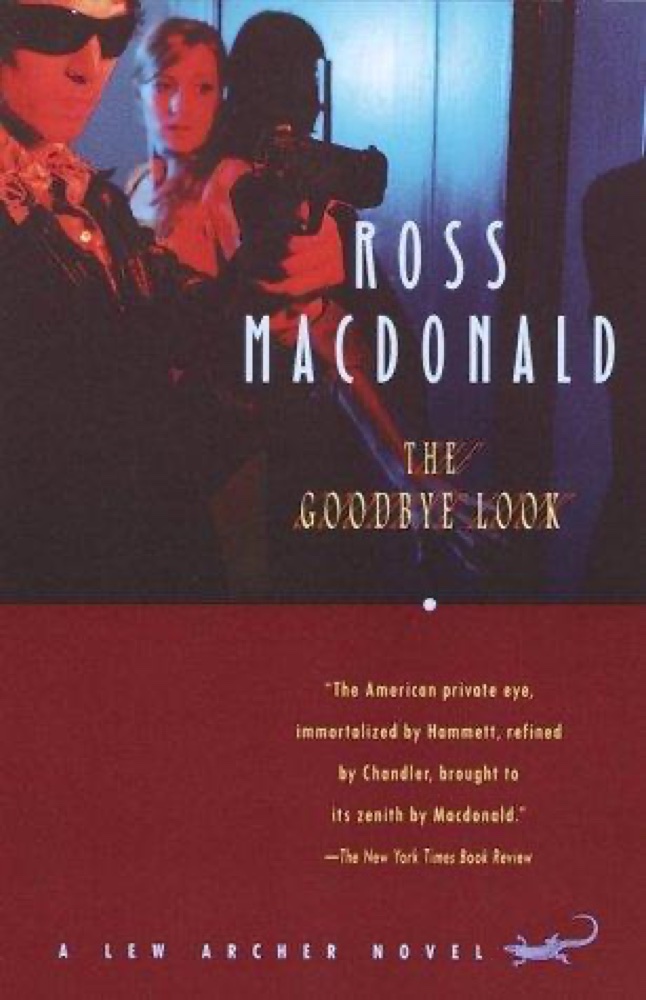
Ross Macdonald ·  288 pages

Rating: (2.8K votes)


“Some men spend their lives looking for ways to punish themselves for having been born.”
― Ross Macdonald, quote from The Chill


“Pour alcohol on a bundle of nerves and it generally turns into a can of worms.”
― Ross Macdonald, quote from The Chill


“In wine was truth, perhaps, but in whisky, the way Hoffman sluiced it down, was an army of imaginary rats climbing your legs.”
― Ross Macdonald, quote from The Chill


“He was half a politician, and like most of his kind he was an insecure man.”
― Ross Macdonald, quote from The Chill


“The sea was surging among the pilings like the blithe mindless forces of dissolution.”
― Ross Macdonald, quote from The Chill


“A moon like a fallen fruit reversing gravity was hoisting itself above the rooftops.”
― Ross Macdonald, quote from The Chill


“Ugliness is in the eye of the beholder. I learned that at my mother’s knee and other low joints,”
― Ross Macdonald, quote from The Chill


“his manner had the heavy ease of a politician, poised between bullying and flattery.”
― Ross Macdonald, quote from The Chill


“A young man with an untrimmed beard and rebellious eyes looked like a conscientious objector to everything.”
― Ross Macdonald, quote from The Chill


“I could smell fog even at this level now. It was rolling down from the mountains, flooding out the moon, as well as rising from the sea. The”
― Ross Macdonald, quote from The Chill


About the author

Ross Macdonald
Born place: in Los Gatos, California,, The United States
Born date December 13, 1915
See more on GoodReads

Popular quotes

“THIS TORTURE

Why should we tell you our love stories
when you spill them together like blood in the dirt?

Love is a pearl lost on the ocean floor,
or a fire we can’t see,

but how does saying that
push us through the top of the head into
the light above the head?

Love is not
an iron pot, so this boiling energy
won’t help.

Soul, heart, self.
Beyond and within those
is one saying,

How long before I’m free of this torture!”
― Rumi, quote from The Book of Love: Poems of Ecstasy and Longing


“The Gospels were written in such temporal and geographical proximity to the events they record that it would have been almost impossible to fabricate events. Anyone who cared to could have checked out the accuracy of what they reported. The fact that the disciples were able to proclaim the resurrection in Jerusalem in the face of their enemies a few weeks after the crucifixion shows that what they proclaimed was true, for they could never have proclaimed the resurrection under such circumstances had it not occurred.

The Gospels could not have been corrupted without a great outcry on the part of orthodox Christians. Against the idea that there could have been a deliberate falsifying of the text, no one could have corrupted all the manuscripts. Moreover, there is no precise time when the falsification could have occurred, since, as we have seen, the New Testament books are cited by the church fathers in regular and close succession. The text could not have been falsified before all external testimony, since then the apostles were still alive and could repudiate any such tampering with the Gospels.

The miracles of Jesus were witnessed by hundreds of people, friends and enemies alike; that the apostles had the ability to testify accurately to what they saw; that the apostles were of such doubtless honesty and sincerity as to place them above suspicion of fraud; that the apostles, though of low estate, nevertheless had comfort and life itself to lose in proclaiming the gospel; and that the events to which they testified took place in the civilized part of the world under the Roman Empire, in Jerusalem, the capital city of the Jewish nation. Thus, there is no reason to doubt the apostles’ testimony concerning the miracles and resurrection of Jesus. It would have been impossible for so many to conspire together to perpetrate such a hoax. And what was there to gain by lying? They could expect neither honor, nor wealth, nor worldly profit, nor fame, nor even the successful propagation of their doctrine. Moreover, they had been raised in a religion that was vastly different from the one they preached. Especially foreign to them was the idea of the death and resurrection of the Jewish Messiah. This militates against their concocting this idea. The Jewish laws against deceit and false testimony were very severe, which fact would act as a deterrent to fraud.

Suppose that no resurrection or miracles occurred: how then could a dozen men, poor, coarse, and apprehensive, turn the world upside down? If Jesus did not rise from the dead, declares Ditton, then either we must believe that a small, unlearned band of deceivers overcame the powers of the world and preached an incredible doctrine over the face of the whole earth, which in turn received this fiction as the sacred truth of God; or else, if they were not deceivers, but enthusiasts, we must believe that these extremists, carried along by the impetus of extravagant fancy, managed to spread a falsity that not only common folk, but statesmen and philosophers as well, embraced as the sober truth. Because such a scenario is simply unbelievable, the message of the apostles, which gave birth to Christianity, must be true.

Belief in Jesus’ resurrection flourished in the very city where Jesus had been publicly crucified. If the people of Jerusalem thought that Jesus’ body was in the tomb, few would have been prepared to believe such nonsense as that Jesus had been raised from the dead. And, even if they had so believed, the Jewish authorities would have exposed the whole affair simply by pointing to Jesus’ tomb or perhaps even exhuming the body as decisive proof that Jesus had not been raised.

Three great, independently established facts—the empty tomb, the resurrection appearances, and the origin of the Christian faith—all point to the same marvelous conclusion: that God raised Jesus from the dead.”
― William Lane Craig, quote from Reasonable Faith


“Câţiva centimetri, câţiva ani, câteva mii de lei in plus, câteva cărţi citite în plus, mă rog, lucruri de felul ăsta despart oamenii...”
― Mircea Cărtărescu, quote from Nostalgia


“Wolves eat cats for dinner. By God, I wanna be a wolf.

~Kane Tyler~”
― Lora Leigh, quote from Elizabeth's Wolf


“At my worst, I even resented Nic because an addict, at least when high, has a momentary respite from his suffering. There is no similar relief for parents or children or husbands or wives or others who love them.   Nic”
― David Sheff, quote from Beautiful Boy: A Father's Journey Through His Son's Addiction


Interesting books

A Need So Beautiful
(5.1K)
A Need So Beautiful
by Suzanne Young
Silent to the Bone
(5.9K)
Silent to the Bone
by E.L. Konigsburg
The Disappearing Spoon: And Other True Tales of Madness, Love, and the History of the World from the Periodic Table of the Elements
(32K)
The Disappearing Spo...
by Sam Kean
My Inventions
(3.5K)
My Inventions
by Nikola Tesla
The Man Who Loved Children
(3.5K)
The Man Who Loved Ch...
by Christina Stead
The Decay of the Angel
(2.3K)
The Decay of the Ang...
by Yukio Mishima

About BookQuoters

BookQuoters is a community of passionate readers who enjoy sharing the most meaningful, memorable and interesting quotes from great books. As the world communicates more and more via texts, memes and sound bytes, short but profound quotes from books have become more relevant and important. For some of us a quote becomes a mantra, a goal or a philosophy by which we live. For all of us, quotes are a great way to remember a book and to carry with us the author’s best ideas.

We thoughtfully gather quotes from our favorite books, both classic and current, and choose the ones that are most thought-provoking. Each quote represents a book that is interesting, well written and has potential to enhance the reader’s life. We also accept submissions from our visitors and will select the quotes we feel are most appealing to the BookQuoters community.

Founded in 2023, BookQuoters has quickly become a large and vibrant community of people who share an affinity for books. Books are seen by some as a throwback to a previous world; conversely, gleaning the main ideas of a book via a quote or a quick summary is typical of the Information Age but is a habit disdained by some diehard readers. We feel that we have the best of both worlds at BookQuoters; we read books cover-to-cover but offer you some of the highlights. We hope you’ll join us.