
 Middlemarch
Quotes from the Book
You know I have duties──we both have duties──before which feeling must be sacrificed.
No man can begin to mould himself on a faith or an idea without rising to a higher order of experience.
We are poor plants buoyed up by the air-vessels of our own conceit: alas for us, if we get a few pinches that empty us of that windy self-subsistence.
We read, indeed, that the walls of Jericho fell down before the sound of trumpets,39 but we nowhere hear that those trumpets were hoarse and feeble. Doubtless they were trumpets that gave forth clear ringing tones, and sent a mighty vibration through brick and mortar. But the oratory of the Rev. Amos resembled rather a Belgian railway-horn, which shows praiseworthy intentions inadequately fulfilled.
A tallow dip, of the long-eight description,40 is an excellent thing in the kitchen candlestick, and Betty’s nose and eye are not sensitive to the difference between it and the finest wax; it is only when you stick it in the silver candlestick, and introduce it into the drawing-room, that it seems plebeian, dim, and ineffectual. Alas for the worthy man who, like that candle, gets himself into the wrong place! It is only the very largest souls who will be able to appreciate and pity him – who will discern and love sincerity of purpose amid all the bungling feebleness of achievement.
Mr. Bates was sober, with that manly, British, churchman-like sobriety which can carry a few glasses of grog without any perceptible clarification of ideas.
Thank heaven, then, that a little illusion is left to us, to enable us to be useful and agreeable – that we don’t know exactly what our friends think of us – that the world is not made of looking-glass, to show us just the figure we are making, and just what is going on behind our backs! By the help of dear friendly illusion, we are able to dream that we are charming – and our faces wear a becoming air of self-possession; we are able to dream that other men admire our talents – and our benignity is undisturbed; we are able to dream that we are doing much good – and we do a little.
hatred is like fire—it makes even light rubbish deadly.
History, we know, is apt to repeat herself, and to foist very old incidents upon us with only a slight change of costume.
events are apt to be in disgusting discrepancy with the anticipations of the most ingenious tacticians; the difficulties of the expedition are ridiculously at variance with able calculations; the enemy has the impudence not to fall into confusion as had been reasonably expected of him; the mind of the gallant general begins to be distracted by news of intrigues against him at home, and, notwithstanding the handsome compliments he paid to Providence as his undoubted patron before setting out, there seems every probability that the Te Deums will be all on the other side. So
It is probable that no speculative or theological hatred would be ultimately strong enough to resist the persuasive power of convenience:
The daylight changes the aspect of misery to us, as of everything else. In the night it presses on our imagination—the forms it takes are false, fitful, exaggerated; in broad day it sickens our sense with the dreary persistence of definite measurable reality. The man who looks with ghastly horror on all his property aflame in the dead of night, has not half the sense of destitution he will have in the morning, when he walks over the ruins lying blackened in the pitiless sunshine.
It is so with emotional natures whose thoughts are no more than the fleeting shadows cast by feeling: to them words are facts, and even when known to be false, have a mastery over their smiles and tears.
the involuntary loss of any familiar object almost always brings a chill as from an evil omen; it seems to be the first finger-shadow of advancing death. From
Persecution and revenge, like courtship and toadyism, will not prosper without a considerable expenditure of time and ingenuity,
The first condition of human goodness is something to love; the second, something to reverence.
surely the only true knowledge of our fellow-man is that which enables us to feel with him—which gives us a fine ear for the heart-pulses that are beating under the mere clothes of circumstance and opinion.
In the love of a brave and faithful man there is always a strain of maternal tenderness; he gives out again those beams of protecting fondness which were shed on him as he lay on his mother's knee.
sympathy is but a living again through our own past in a new form,
Blessed influence of one true loving human soul on another! Not calculable by algebra, not deducible by logic, but mysterious, effectual, mighty as the hidden process by which the tiny seed is quickened, and bursts forth into tall stem and broad leaf, and glowing tasseled flower.
There is a power in the direct glance of a sincere and loving human soul, which will do more to dissipate prejudice and kindle charity than the most elaborate arguments.
goodness tries to get the upper hand in us whenever it seems to have the slightest chance—on Sunday mornings, perhaps, when we are set free from the grinding hurry of the week, and take the little three-year old on our knee at breakfast to share our egg and muffin; in moments of trouble, when death visits our roof or illness makes us dependent on the tending hand of a slighted wife; in quiet talks with an aged mother, of the days when we stood at her knee with our first picture-book, or wrote her loving letters from school.
it is a curious fact that the more sophisticated we become the simpler grows our speech.
Watch on YouTube
About George Eliot
We have collected 256 quotes from 9 books by George Eliot on BookQuoters.
More about the author →More by George Eliot
All books by George Eliot →
Book details
- Author
- George Eliot
- Genre
- Classics
- Goodreads rating
- 3.80 (3k ratings) →
Keep reading
 Adam Bede
Middlemarch
Adam Bede
Middlemarch
 The House of the Seven Gables
 Daniel Deronda
 Nicholas Nickleby
 Lord Jim
 The Old Curiosity Shop
 Uncle Tom's Cabin
 The Jewel in the Crown
 Ben-Hur: A Tale of the Christ
 The Screwtape Letters
 The Secret Scripture
 Desperate Remedies
 The Vicar of Wakefield
 Human, All Too Human
 A Room with a View
 The Guermantes Way
 The Deerslayer
 The Magic Mountain
 The Blithedale Romance
 The Scarlet Letter
 A Lion Among Men
 Aphorisms on Love and Hate
 Beyond Good and Evil
 A Morbid Taste for Bones
 Purgatorio
 In the Shadow of Young Girls in Flower
 The Fall of Babel
 Melmoth the Wanderer
 The Rebel Angels
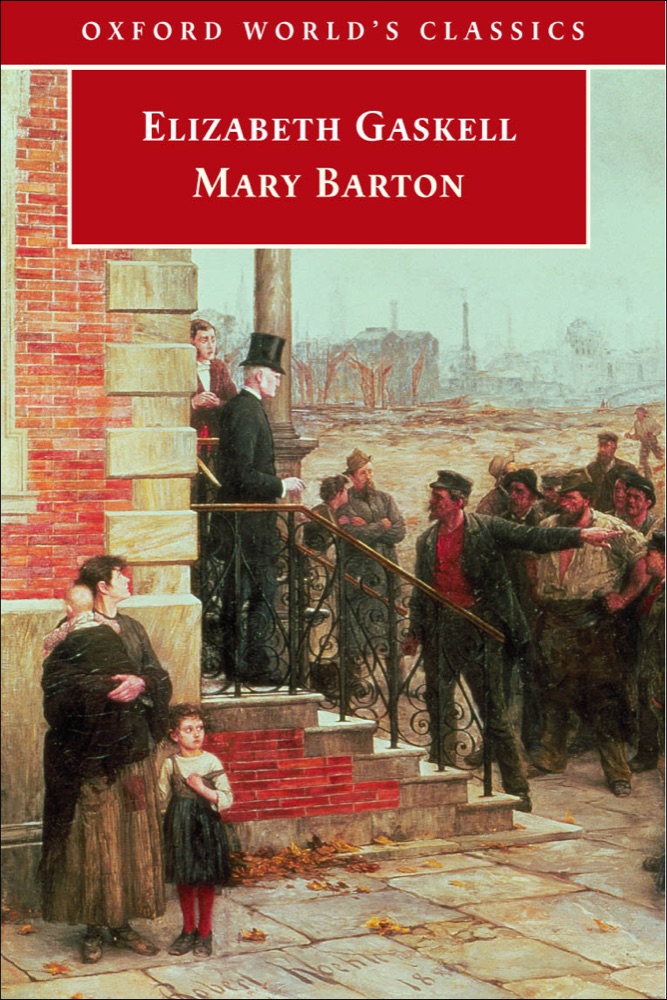 Mary Barton
 Père Goriot
 Blue Bamboo: Japanese Tales of Fantasy
 The Death of the Heart
 Gaudy Night
 Saturday
 The Varieties of Religious Experience
 Foundation and Empire
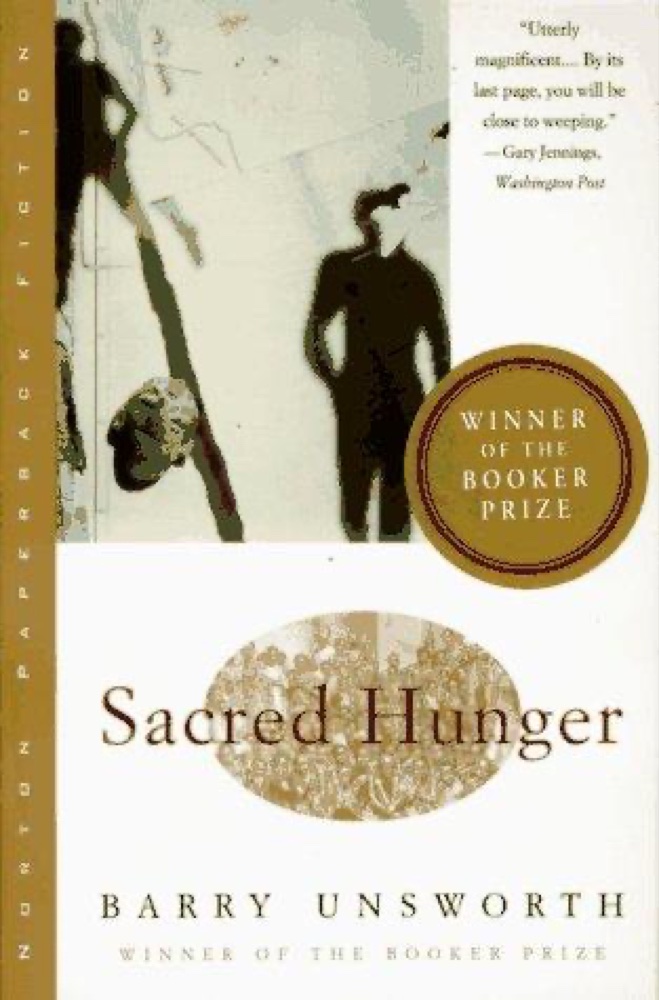 Sacred Hunger
 She
She
 The Luminaries
 The Autobiography of Benjamin Franklin
 In Search of Lost Time
 The Grace of Kings
 The Blight of Muirwood
 A Dance to the Music of Time: 1st Movement
 The Memoirs of Sherlock Holmes
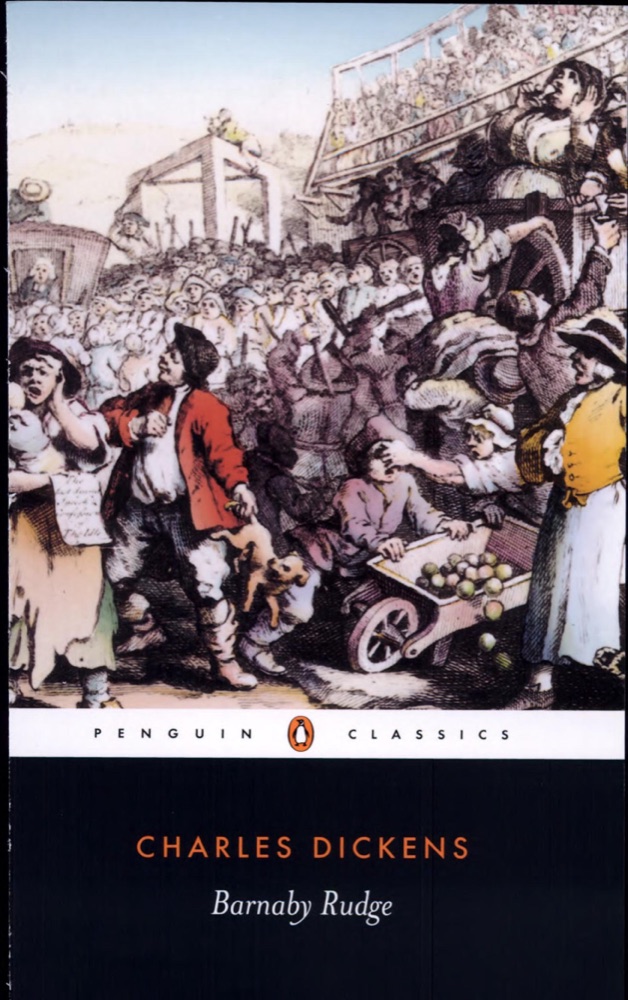 Barnaby Rudge
 Birds Without Wings
 Barchester Towers
 Allan Quatermain
 Small Wonder
 The Power and the Glory
 The Way of All Flesh
 The Golden Tresses of the Dead
 Ethics
 Far from the Madding Crowd
 A Passage to India
 The History of Tom Jones, a Foundling
 Agnes Grey