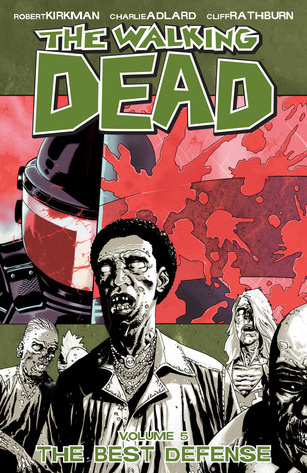
Robert Kirkman · 136 pages
Rating: (21.2K votes)
“The second we put a bullet in the head of one of those undead monsters -- the moment one of us drove a hammer into one of their faces -- or cut a head off. We became what we are! And that's just it. THAT's what it comes down to. You people don't know what we are.
We're surrounded by the DEAD. We're among them -- and when we finally give up we become them! We're living on borrowed time here. Every minute of our life is a minute we steal from them! You see them out there. You KNOW that when we die -- we become them. You think we hide behind walls to protect us from the walking dead?
Don't you get it? We ARE the walking dead! WE are the walking dead.”
― Robert Kirkman, quote from The Walking Dead, Vol. 5: The Best Defense
“Don't you get it? We are The Walking Dead!”
― Robert Kirkman, quote from The Walking Dead, Vol. 5: The Best Defense
“You kill -- You die."
That was probably the most naive thing I've ever said. The fact is -- in most cases, NOW, the way things are -- you kill -- you LIVE.”
― Robert Kirkman, quote from The Walking Dead, Vol. 5: The Best Defense
“You think I've been around these fuckers long enough to get comfortable enough to SLEEP ten feet away from them? Not fucking likely. (Axel)”
― Robert Kirkman, quote from The Walking Dead, Vol. 5: The Best Defense
“Okay, I'll move the lawn chairs. (Axel)”
― Robert Kirkman, quote from The Walking Dead, Vol. 5: The Best Defense


Robert Kirkman
Born place: in Richmond, Kentucky, The United States
Born date November 30, 1978
See more on GoodReads
“It’s all right,’ said Julian, putting his arm round Anne.”
― Enid Blyton, quote from Five on a Treasure Island
“We walk onto the makeshift plywood dance floor together, weaving ourselves, our bodies, into the mayhem.
Teague is flawless. A pro.
I’m stiff as a board, and I think too much.
But my Boy Wonder is a patron saint.
He leans in close. “You’re doing great!” he says, his lips brushing against my ear, thank you very much.
He twirls me.
He holds me up.
He looks into my eyes.
Yes, I think I could quite possibly just lie down and die.”
― Megan Shull, quote from Amazing Grace
“You are not an observer, you are a participant.”
― Thich Nhat Hanh, quote from Being Peace
“Доброе утро! — сказал я. — Я одинокий беглец, родившийся под совершенно особенным расположением звёзд.”
― Tove Jansson, quote from Moominpappa's Memoirs
“Sciences are differentiated according to the various means through which knowledge is obtained. For the astronomer and the physicist both may prove the same conclusion: that the earth, for instance, is round: the astronomer by means of mathematics (i.e. abstracting from matter), but the physicist by means of matter itself. Hence there is no reason why those things which may be learned from philosophical science, so far as they can be known by natural reason, may not also be taught us by another science so far as they fall within revelation. Hence theology included in sacred doctrine differs in kind from that theology which is part of philosophy. SECOND ARTICLE [I, Q.”
― Thomas Aquinas, quote from Summa Theologica, 5 Vols

 Reign
Reign
 The Education of Hen...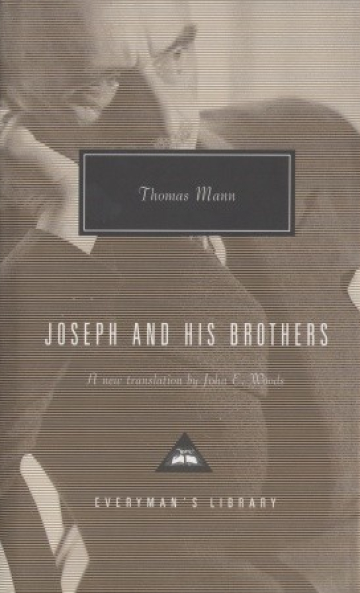
 Joseph and His Broth...
 Kitty and the Dead M...
 The Ringed Castle
 Autobiography of a F...
BookQuoters is a community of passionate readers who enjoy sharing the most meaningful, memorable and interesting quotes from great books. As the world communicates more and more via texts, memes and sound bytes, short but profound quotes from books have become more relevant and important. For some of us a quote becomes a mantra, a goal or a philosophy by which we live. For all of us, quotes are a great way to remember a book and to carry with us the author’s best ideas.
We thoughtfully gather quotes from our favorite books, both classic and current, and choose the ones that are most thought-provoking. Each quote represents a book that is interesting, well written and has potential to enhance the reader’s life. We also accept submissions from our visitors and will select the quotes we feel are most appealing to the BookQuoters community.
Founded in 2023, BookQuoters has quickly become a large and vibrant community of people who share an affinity for books. Books are seen by some as a throwback to a previous world; conversely, gleaning the main ideas of a book via a quote or a quick summary is typical of the Information Age but is a habit disdained by some diehard readers. We feel that we have the best of both worlds at BookQuoters; we read books cover-to-cover but offer you some of the highlights. We hope you’ll join us.
