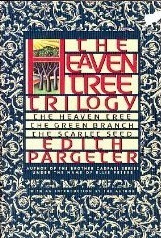
“Learn humility, while there's yet time--': those were the last of the abbot's words he had waited to hear. All very well, he thought, to be humble in accepting one's own pain and deprivation, perhaps, but what right have I, what right has he, to make a virtue of meekness when it will be Adam who suffers? I call that cheap humility.”
― Edith Pargeter, quote from The Heaven Tree Trilogy
“Should I come to you, Father, with anything that made me ashamed? What do I matter? What's honour to me? My honour is to keep her from harm and from grief. I have no other; I want none.”
― Edith Pargeter, quote from The Heaven Tree Trilogy
“Love with her would be a field of action, not a need. She was complete whether she won or lost the world. She was her own fortress and her own sanctuary.”
― Edith Pargeter, quote from The Heaven Tree Trilogy
“The dispensations of God are always just,' he said. 'We get the sons we deserve.”
― Edith Pargeter, quote from The Heaven Tree Trilogy
“Have you no errand I can do for you in hell?' he said. 'There's cleaner company there.”
― Edith Pargeter, quote from The Heaven Tree Trilogy

“He could not be a breaker, it was against his bent.”
― Edith Pargeter, quote from The Heaven Tree Trilogy
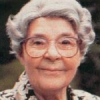
Edith Pargeter
Born place: in Horsehay, Shropshire, The United Kingdom
Born date September 29, 1913
See more on GoodReads
“Zia looked appalled. “Setne? As in the Setne? Does Carter realize—?” “Yep.” “And Thoth suggested this?” “Yep.” “And you’re actually going along with it?” “Yep.”
― Rick Riordan, quote from The Kane Chronicles
“Kissing you, wanting you, just being here with you while I’m legally bound to another woman…that’s not what I should be doing. I won’t want to belong to her in any way when my heart is yours.”
― Linda Kage, quote from Be My Hero
“A great private collection is a material concentrate that continually stimulates, that overexcites. Not only because it can always be added to, but because it is already too much. The collector’s need is precisely for excess, for surfeit, for profusion. It’s too much—and it’s just enough for me. … A collection is always more than is necessary.”
― Susan Sontag, quote from The Volcano Lover: A Romance
“They say in the east you love the person you marry and in the west you marry the person you love. But maybe it's a lot simpler than that. Maybe you just love the person you love.”
― Tanuja Desai Hidier, quote from Born Confused
“I feel old and finished. I’m nearly thirty now.”
― Rosamunde Pilcher, quote from Winter Solstice
 Remember When
 Dinner at the Homesi...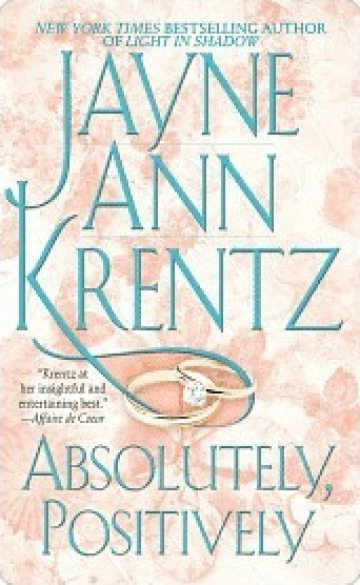
 Absolutely, Positive...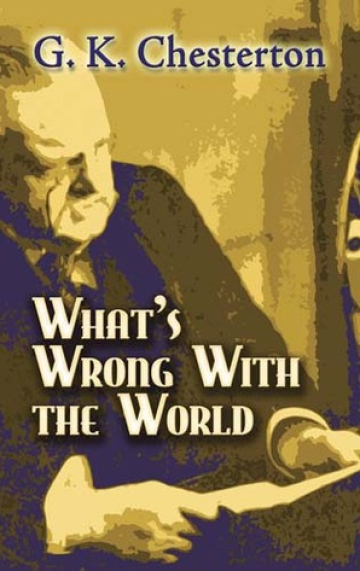
 What's Wrong with th...
 The Faerie Queene
 A Rose for Emily and...
BookQuoters is a community of passionate readers who enjoy sharing the most meaningful, memorable and interesting quotes from great books. As the world communicates more and more via texts, memes and sound bytes, short but profound quotes from books have become more relevant and important. For some of us a quote becomes a mantra, a goal or a philosophy by which we live. For all of us, quotes are a great way to remember a book and to carry with us the author’s best ideas.
We thoughtfully gather quotes from our favorite books, both classic and current, and choose the ones that are most thought-provoking. Each quote represents a book that is interesting, well written and has potential to enhance the reader’s life. We also accept submissions from our visitors and will select the quotes we feel are most appealing to the BookQuoters community.
Founded in 2023, BookQuoters has quickly become a large and vibrant community of people who share an affinity for books. Books are seen by some as a throwback to a previous world; conversely, gleaning the main ideas of a book via a quote or a quick summary is typical of the Information Age but is a habit disdained by some diehard readers. We feel that we have the best of both worlds at BookQuoters; we read books cover-to-cover but offer you some of the highlights. We hope you’ll join us.
