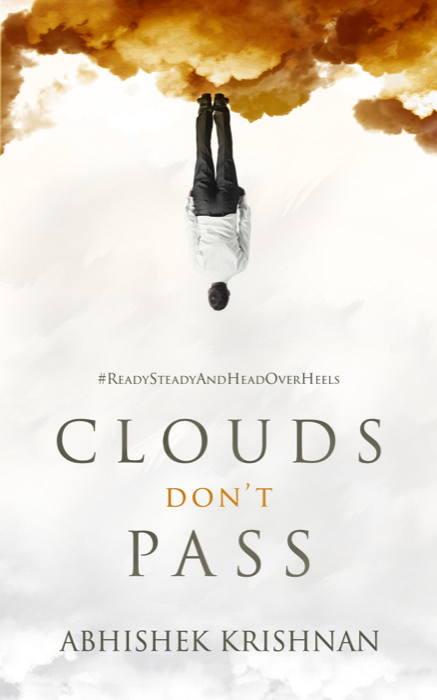

 The Winter of Our Discontent
Quotes from the Book
If we don't learn the art of patience and trust, we will end up assuming that we are a failure.
When I go back to God after my life, I want to make sure I go back with absolutely no talent and tell him, "I used up everything you gave me.
There is never a problem without a solution. It's just that you don't see it because fear, insecurity and lack of passion make you blind.
May be that is how life is. Clouds, whether bright or dark, they just keep passing. The duration they stay with us depends on whether the circumstance around us is breezy, windy or stormy.
There is only one 'best'. The others are just 'good' & 'better'. But 'the best' changes with time & hence, 'the best' is always yet to come.
The people who are scared of ghosts are the ones who discuss most about them.
If we don't do what we are passionate about, work would be more like a mere wait for the subsequent month's salary.
About Abhishek Krishnan
We have collected 7 quotes from 1 book by Abhishek Krishnan on BookQuoters.
More about the author →Book details
- Author
- Abhishek Krishnan
- Genre
- Children's
- Goodreads rating
- 3.62 (29 ratings) →
Keep reading
The Winter of Our Discontent
 Hear the Wind Sing
 We Are All Completely Beside Ourselves
 The Last Lecture
 Hard-Boiled Wonderland and the End of the World
 The Winner Stands Alone
 Holding Up the Universe
 All the Light We Cannot See
 Choke
Choke
 Do Over: Rescue Monday, Reinvent Your Work, and Never Get Stuck
 Survivor
 Do Epic Shit
 One
One
 Different Seasons
 Beautiful Ugly
 Flight Behavior
 The Shadow of the Wind
 The Lacuna
 Challenger Deep
 The Promise
 Everyone Burns
 Last Argument of Kings
 If There Be Thorns
 Shouldn't You Be in School?
 The Sun Is Also a Star
 Rich Dad Poor Dad
 Brother Odd
 In Time
 The Trouble with Peace
 Invisible Monsters
 The Handmaid's Tale
 Love May Fail
 Awaken
 The Testing
 The Stand
 We Are All the Same in the Dark
 Invisibility
 Deepsix
 At the Edge of the Universe
 Wind/Pinball: Two Novels
 The Light Between Oceans
 The Leader Who Had No Title: A Modern Fable on Real Success in Business and in Life
 One Hundred Names
 Counting by 7s
 The Secrets She Keeps
 The Lamplighters
 Moonwalk
 The Devil Takes You Home
 300 Arguments: Essays
 The Toll
 Rot & Ruin
 Journey to the End of the Night
 The Reality Dysfunction
 Duma Key
 Waiting For You
 Who Will Cry When You Die?
 The Razor's Edge
 The Chalk Man
 Like the Flowing River
 Look to Windward