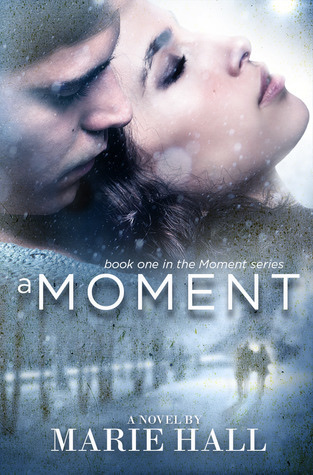

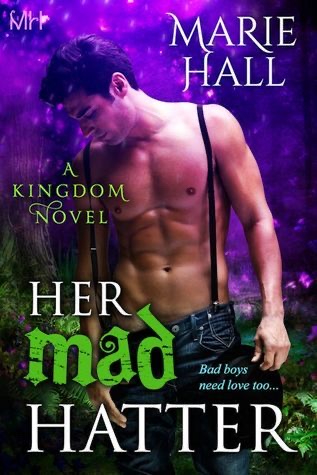
Quotes from A Moment

Marie Hall ·  320 pages

Rating: (6.3K votes)


“Life is never going to be smooth sailing, but I've learned to roll with the punches.”
― Marie Hall, quote from A Moment


“As I look back on the time I've spent with him, loving him, learning him, I'm grateful for the moments. Because in the end, it's the moments that make life worth living...”
― Marie Hall, quote from A Moment


“some battles aren’t fought with fists, some are fought by just standing up and facing it, facing the truth, learning that what others have done to you doesn’t have to make you who are you. Only you can do that—you have the power to say “enough” and walk away, truly walk away.”
― Marie Hall, quote from A Moment


“So in the end, what is a moment? One action? A single deed? Or is it more? Is a moment like a school of silver fish? The sum of many singular parts forming one cohesive unit? I tend to think so. Because the moment I met Ryan, that was just one of the sum parts.”
― Marie Hall, quote from A Moment


“I’m grateful for the moments. Because in the end, it’s the moments that make life worth living…”
― Marie Hall, quote from A Moment


“Baby, I'm Latina. We make you guys look good. All you have to do is stand there and look pretty.”
― Marie Hall, quote from A Moment


About the author

Marie Hall
Born place: in Panama City, Panama
See more on GoodReads

Popular quotes

“She swallowed hard. “I want to try skinny-dipping.” He was so still, she wasn’t sure he was even breathing.”
― Anne Bishop, quote from Marked in Flesh


[A Chinese Restaurant.] Roma is seated alone at the booth.Lingk is at the booth next to him.Roma is talking to him.
* * *

Roma: . . . Eh? What I’m saying, what is our life? (Pause.) It’s looking forward or it’s looking back. And that’s our life. That’s it. Where is the moment? (Pause.) And what is it that we’re afraid of? Loss. What else? (Pause.) The bank closes. We get sick, my wife died on a plane, the stock market collapsed . . . the house burnt down . . . what of these happen . . . ? None of ’em. We worry anyway. What does this mean? I’m not secure. How can I be secure? (Pause.) Through amassing wealth beyond all measure? No. And what’s beyond all measure? That’s a sickness. That’s a trap. There is no measure. Only greed. How can we act? The right way, we would say, to deal with this: “There is a one-in-a million chance that so and so will happen. . . . Fuck it, it won’t happen to me. . . .” No. We know that’s not the right way I think. (Pause.) We say the correct way to deal with this is “There is a one-in-so-and-so chance that this will happen . . . God protect me. I am powerless, let it not happen to me. . . .” But no to that. I say. There’s something else. What is it? “If it happens, AS IT MAY for that is not within our powers, I will deal with it, just as I do today with what draws my concern today.” I say this is how we must act. I do those things which seem correct to me today. I trust myself. And if security concerns me, I do that which today I think will make me secure. And every day I do that, when that day arrives that I need a reserve, (a) odds are that I have it, and (b) the true reserve that I have is the strength that I have of acting each day without fear. (Pause.) According to the dictates of my mind. (Pause.)
― David Mamet, quote from Glengarry Glen Ross


“هذه المرأة لم تشبع في قرارة نفسي شهوة الجسد التي تعتري الرحالة بل لطَّفت محنتي الأولى. فقد ولدت غريباً، وعشت غريباً، وسوف أموت وقد تعاظمت غربتي. وغروري يمنعني من ذكر العداء، والإهانات، والضغينة، والمعاناة. ولكن النظرات والحركات لا تخفي عليَّ. فعناق بعض النساء يلوح كالمنفى، وعناق بعضهن الآخر يذكر بالأرض الأم”
― Amin Maalouf, quote from Balthasar's Odyssey


Marginalia

Sometimes the notes are ferocious,
skirmishes against the author
raging along the borders of every page
in tiny black script.
If I could just get my hands on you,
Kierkegaard, or Conor Cruise O'Brien,
they seem to say,
I would bolt the door and beat some logic into your head.

Other comments are more offhand, dismissive -
Nonsense." "Please!" "HA!!" -
that kind of thing.
I remember once looking up from my reading,
my thumb as a bookmark,
trying to imagine what the person must look like
who wrote "Don't be a ninny"
alongside a paragraph in The Life of Emily Dickinson.

Students are more modest
needing to leave only their splayed footprints
along the shore of the page.
One scrawls "Metaphor" next to a stanza of Eliot's.
Another notes the presence of "Irony"
fifty times outside the paragraphs of A Modest Proposal.

Or they are fans who cheer from the empty bleachers,
Hands cupped around their mouths.
Absolutely," they shout
to Duns Scotus and James Baldwin.
Yes." "Bull's-eye." "My man!"
Check marks, asterisks, and exclamation points
rain down along the sidelines.

And if you have managed to graduate from college
without ever having written "Man vs. Nature"
in a margin, perhaps now
is the time to take one step forward.

We have all seized the white perimeter as our own
and reached for a pen if only to show
we did not just laze in an armchair turning pages;
we pressed a thought into the wayside,
planted an impression along the verge.

Even Irish monks in their cold scriptoria
jotted along the borders of the Gospels
brief asides about the pains of copying,
a bird singing near their window,
or the sunlight that illuminated their page-
anonymous men catching a ride into the future
on a vessel more lasting than themselves.

And you have not read Joshua Reynolds,
they say, until you have read him
enwreathed with Blake's furious scribbling.

Yet the one I think of most often,
the one that dangles from me like a locket,
was written in the copy of Catcher in the Rye
I borrowed from the local library
one slow, hot summer.
I was just beginning high school then,
reading books on a davenport in my parents' living room,
and I cannot tell you
how vastly my loneliness was deepened,
how poignant and amplified the world before me seemed,
when I found on one page

A few greasy looking smears
and next to them, written in soft pencil-
by a beautiful girl, I could tell,
whom I would never meet-
Pardon the egg salad stains, but I'm in love.”
― Billy Collins, quote from Picnic, Lightning


“But what was so great about marriage? I had been married and married. It had its good points, but it also had its bad. The virtues of marriage were mostly negative virtues. Being unmarried in a man's world was such a hassle that anything had to be better. Marriage was better. But not much. Damned clever, I thought, how men had made life so intolerable for single women that most would gladly embrace even bad marriages instead. Almost anything had to be an improvement on hustling for your own keep at some low-paid job and fighting off unattractive men in your spare time while desperately trying to ferret out the attractive ones. Though I've no doubt that being single is just as lonely for a man, it doesn't have the added extra wallop of being downright dangerous, and it doesn't automatically imply poverty and the unquestioned status of a social pariah.
Would most women get married if they knew what it meant? I think of young women following their husbands wherever their husbands follow their jobs. I think of them suddenly finding themselves miles away from friends and family, I think of them living in places where they can't work, where they can't speak the language. I think of them making babies out of their loneliness and boredom and not knowing why. I think of their men always harried and exhausted from being on the make. I think of them seeing each other less after marriage than before. I think of them falling into bed too exhausted to screw. I think of them farther apart in the first year of marriage than they ever imagined two people could be when they were courting. And then I think of the fantasies starting. He is eyeing the fourteen-year-old postnymphets in bikinis. She covets the TV repairman. The baby gets sick and she makes it with the pediatrician. He is fucking his masochistic little secretary who reads Cosmopolitan and things herself a swinger. Not: when did it all go wrong? But: when was it ever right?
.......
I know some good marriages. Second marriages mostly. Marriages where both people have outgrown the bullshit of me-Tarzan, you-Jane and are just trying to get through their days by helping each other, being good to each other, doing the chores as they come up and not worrying too much about who does what. Some men reach that delightfully relaxed state of affairs about age forty or after a couple of divorces. Maybe marriages are best in middle age. When all the nonsense falls away and you realize you have to love one another because you're going to die anyway.”
― Erica Jong, quote from Fear of Flying


Interesting books

The World as Will and Representation, Vol 1
(7K)
The World as Will an...
by Arthur Schopenhauer
Family Driven Faith: Doing What It Takes to Raise Sons and Daughters Who Walk with God
(1.7K)
Family Driven Faith:...
by Voddie T. Baucham Jr.
Crooked Letter, Crooked Letter
(34.5K)
Crooked Letter, Croo...
by Tom Franklin
Ruining Me
(13.8K)
Ruining Me
by Nicole Reed
Percepliquis
(5.9K)
Percepliquis
by Michael J. Sullivan
Heaven
(1.4K)
Heaven
by Christoph Marzi

About BookQuoters

BookQuoters is a community of passionate readers who enjoy sharing the most meaningful, memorable and interesting quotes from great books. As the world communicates more and more via texts, memes and sound bytes, short but profound quotes from books have become more relevant and important. For some of us a quote becomes a mantra, a goal or a philosophy by which we live. For all of us, quotes are a great way to remember a book and to carry with us the author’s best ideas.

We thoughtfully gather quotes from our favorite books, both classic and current, and choose the ones that are most thought-provoking. Each quote represents a book that is interesting, well written and has potential to enhance the reader’s life. We also accept submissions from our visitors and will select the quotes we feel are most appealing to the BookQuoters community.

Founded in 2023, BookQuoters has quickly become a large and vibrant community of people who share an affinity for books. Books are seen by some as a throwback to a previous world; conversely, gleaning the main ideas of a book via a quote or a quick summary is typical of the Information Age but is a habit disdained by some diehard readers. We feel that we have the best of both worlds at BookQuoters; we read books cover-to-cover but offer you some of the highlights. We hope you’ll join us.