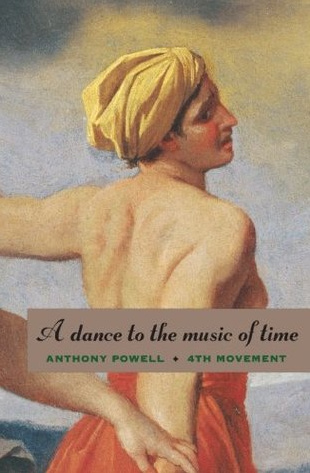
Anthony Powell · 793 pages
Rating: (1.1K votes)
“Even the formal measure of the Seasons seemed suspended in the wintry silence.”
― Anthony Powell, quote from A Dance to the Music of Time: 4th Movement
“One’s capacity for hearing about ghastly doings lessens with age.”
― Anthony Powell, quote from A Dance to the Music of Time: 4th Movement
“In any case the friendships of later life, in contrast wih those negotiated before thirty, are apt to be burdened with reservations, constraints, inhibitions.”
― Anthony Powell, quote from A Dance to the Music of Time: 4th Movement
“Within this hollow bed of the stream the whole range of the quarry was out of sight, except for where the just visible peak of an escarpment of spoil shelved up to the horizon's mountainous coagulations of floating cottonwool, a density of white cloud perforated here and there by slowly opening and closing loopholes of the palest blue light.”
― Anthony Powell, quote from A Dance to the Music of Time: 4th Movement
“For some reason Canon Fenneau made me feel a little uneasy. His voice might be soft, it was also coercive. He had small eyes, a large loose mouth, the lips thick, a somewhat receding chin. The eyes were the main feature. They were unusual eyes, not only almost unnaturally small, but vague, moist, dreamy, the eyes of a medium. His cherubic side, increased by a long slightly uptilted nose, was a little too good to be true, with eyes like that. In the manner in which he gave you all his attention there was a taste for mastery.”
― Anthony Powell, quote from A Dance to the Music of Time: 4th Movement

Anthony Powell
Born place: in Westminster, The United Kingdom
Born date December 21, 1905
See more on GoodReads
“The sky is fucking with me. It's one of those militantly perfect spring days, the kind that seems to be trying just a little too hard, the kind you want to smack in the face, and the sky is bluer than it has any right to be, really, an obnoxious, overbearing blue that implies that staying home is a crime against humanity. Like I've got anywhere to go. The neighborhood is alive with gardeners mowing lawns and trimming hedges, the mechanized hiss of twirling sprinklers and for those just joining us, it's a beautiful day and Hailey is dead and I have nothing to do, nowhere to be.”
― Jonathan Tropper, quote from How To Talk To A Widower
“The hardest part of life was watching a loved one walk straight into fire when all you could do was sit and watch them as they burned.”
― Brittainy C. Cherry, quote from The Gravity of Us
“There were, in Feo's experience, five kinds of cold. There was wind cold, which Feo barely felt. It was fussy and loud and turned your cheeks as red as if you'd been slapped, but couldn't kill you even if it tried. There was snow cold, which plucked at your arms and chapped your lips, but brought real rewards. It was Feo's favorite weather: The snow was soft and good for making snow wolves. There was ice cold, which might take the skin off your palm if you let it, but probably wouldn't if you were careful. Ice cold smelled sharp and knowing. It often came with blue skies and was good for skating. Feo had respect for ice cold. Then there was hard cold, which was when the ice cold got deeper and deeper until at the end of a month you couldn't remember if the summer had ever really existed. Hard cold could be cruel. Birds died in midflight. It was the kind of cold that you booted and kicked your way through.
And then there was blind cold. Blind cold smelled of metal and granite. It took all the sense out of your brain and blew the snow into your eyes until they were glued shut and you had to rub spit into them before they would blink. Blind cold was forty degrees below zero. This was the kind of cold that you didn't sit down to think in, unless you wanted to be found dead in the same place in May or June.
Feo had felt blind cold only once.”
― Katherine Rundell, quote from The Wolf Wilder
“Once the moon gets to be full somebody - some man or other - goes up every day and slices bits of one side until there isn't any more,and then after a bit a new one grows. Men do that with all sorts of things, actually - rose bushes for instance.... The man who slices the bits off brings them down here and then they're used for making those lights on the cars. Clever isn't it... They only last about one night, I should think, because you hardly ever see them shining by day.”
― Richard Adams, quote from The Plague Dogs
“Fire and ice dueled in his throat until his belly heaved and a loud thump rumbled forth from his chest. He felt every nerve in his body twitch, every pore gasp and every follicle surge with electricity. There was no pain but he felt his entire body expand and contract as crackles and slithers wisped in and out of his hearing. Rustles of leaves slowly morphed into distrusting whispers at first and then audible speech. His eyes flashed a calliope of colors and what had been outlines and curves with no tangible meaning, started to curl and curve, until he could see eyes among the foliage, lips on the bark of the trees and much more than just simple greenery. It was a full council discussing his case. “…”
― J.D. Estrada, quote from Only Human

 Jet
Jet
 It's in His Kiss
 Scandal in Spring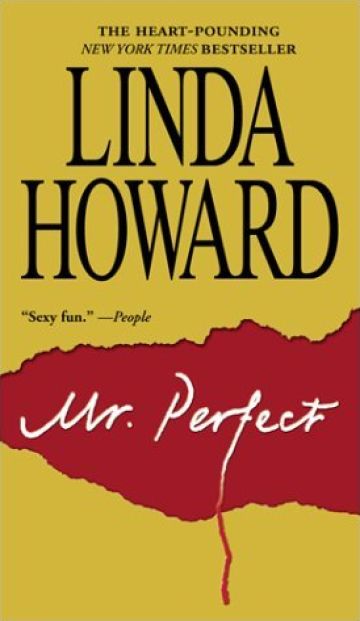
 Mr. Perfect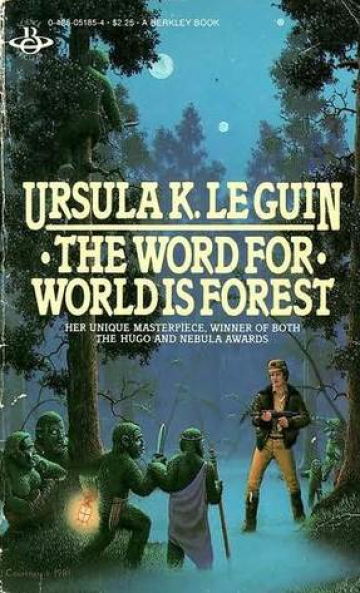
 The Word for World i...
 Laid Bare
BookQuoters is a community of passionate readers who enjoy sharing the most meaningful, memorable and interesting quotes from great books. As the world communicates more and more via texts, memes and sound bytes, short but profound quotes from books have become more relevant and important. For some of us a quote becomes a mantra, a goal or a philosophy by which we live. For all of us, quotes are a great way to remember a book and to carry with us the author’s best ideas.
We thoughtfully gather quotes from our favorite books, both classic and current, and choose the ones that are most thought-provoking. Each quote represents a book that is interesting, well written and has potential to enhance the reader’s life. We also accept submissions from our visitors and will select the quotes we feel are most appealing to the BookQuoters community.
Founded in 2023, BookQuoters has quickly become a large and vibrant community of people who share an affinity for books. Books are seen by some as a throwback to a previous world; conversely, gleaning the main ideas of a book via a quote or a quick summary is typical of the Information Age but is a habit disdained by some diehard readers. We feel that we have the best of both worlds at BookQuoters; we read books cover-to-cover but offer you some of the highlights. We hope you’ll join us.
