
 The Tsar of Love and Techno
Quotes from the Book
We wear clothes, and speak, and create civilizations, and believe we are more than wolves. But inside us there is a word we cannot pronounce and that is who we are.
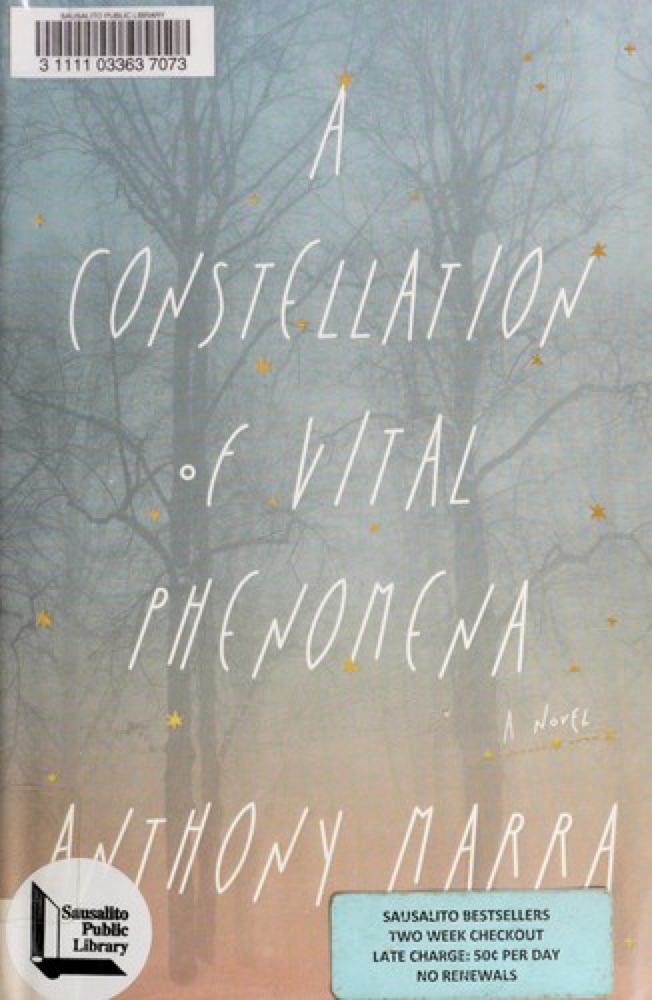
Life: a constellation of vital phenomena—organization, irritability, movement, growth, reproduction, adaptation.
There is something miraculous in the way the years wash away your evidence, first you, then your friends and family, then the descendants who remember your face, until you aren’t even a memory, you’re only carbon, no greater than your atoms, and time will divide them as well.
She wanted to hold foreign syllables like mints on her tongue until they dissolved into fluency.
Perhaps our deepest love is already inscribed within us, so its object doesn't create a new word but instead allows us to read the one written.
At the kitchen table she examined the glass of ice. Each cube was rounded by room temperature, dissolving in its own remains, and belatedly she understood that this was how a loved one disappeared. Despite the shock wave of walking into an empty flat, the absence isn’t immediate, more a fade from the present tense you shared, a melting into the mast, not an erasure but a conversion in form, from presence to memory, from solid to liquid, and the person you once touched runs over your skin, now in sheets down your back, and you may bathe, may sink, may drown in the memory, but your fingers cannot hold it.
How often is immense sadness mistaken for courage?
You are mine. I recognize you. We twist our souls around each other's miseries. It is that which makes us family.
For their entire lives, even before they met you, your mother and father held their love for you inside their hearts like an acorn holds an oak tree.
Invader and invaded held on to their fistfuls of earth, but in the end, the earth outlived the hands that held it.
But inside us there is a word we cannot pronounce and that is who we are.
For months they'd run their fingers around the hem of their affection without once acknowledging the fabric.
He was losing her incrementally...As a web is no more than holes woven together, they were bonded by what was no longer there.
I've always though Marx's view on religion was the one thing he got right. Faith is a crutch.' 'If you step on a land mine,' Akhmed said, "the crutch becomes the leg.
She was fluent in four languages and yet her fists against the rusted hood were the fullest articulation of her defeat.
Those smooth, spit-cleaned cheeks gave no indication of the dreams crowding her skull. Should she make it to adulthood, the girl would arrive with two hundred and six bones. Two and a half million sweat glands. Ninety-six thousand kilometers of blood vessels. Forty-six chromosomes. Seven meters of small intestines. Six hundred and six discrete muscles. One hundred billion cerebral neurons. Two kidneys. A liver. A heart. A hundred trillion cells that died and were replaced, again and again. But no matter how many ways she dismembered and quantified the body lying beside her, she couldn't say how many years the girl would wait before she married, if at all, or how many children she would have, if any; and between teh creation of this body and its end lay the mystery the girl would spend her life solving.
Love, she learned, could reduce its recipient to an essential thing, as important as food or shelter, whose presence is not only longed for but needed.
Her father was the face of her morning and night, he was everything, so saturating Havaa’s world that she could no more describe him than she could the air.
Work isn't meaningful just because you spend your life doing it.
A lizard fucks a crab and nine months later a turtle pops out. It's called evolution.
What parts had she discarded for the sake of her sanity? What had she cut from herself? Had he stared into her pupils he would have emerged, bewildered and blinking, on the far side of the earth. Was he awed by her? Absolutely. Did he respect her? Unequivocally. Want to be anything like her? No, never, not at all.
There was a time when she had indulged in the hypothetical for hours a day, plotting the map that had led her here. But no life is a line, and hers was an uneven orbit around a dark star, a moth circling a dead bulb, searching for the light it once held.
You are a coward,' she said, and with that one word wrote a denunciation, a biography, and a prophecy.
Nothing, she now knew, could be defined in exclusion, and every bug, pencil, and grass blade was a dictionary in itself, requiring the definitions of all things to fulfill its own.
It’s stupid. There are maps to show you how to get to the place where you want to be but no maps that show you how to get to the time when you want to be.
As someone whose days were defined by the ten thousand ways a human can hurt, she needed, now and then, to remember that the nervous system didn't exist exclusively to feel pain.
Entire years had passed when he was rich enough in time to disregard the loose change of a minute, but now he obsessed over each one, this minute, the next minute, the one following, all of which were different terms for the same illusion.
She praised his book and he embraced her from gratitude rather than lust, but she didn't let go. Neither did he. She kissed his cheek, his earlobe. For months they'd run their fingers around the hem of their affection without once acknowledging the fabric. The circumference of the world tightened to what their arms encompassed. She sat on the desk, between the columns of read and unread manuscript, and pulled him toward her by his index fingers.
Don't insult me. Everyone knows a turtle is a crustacean on its mother's side.
Of course he was required to wear a seat belt, just as he was required to give directions to a torture camp, because stupidity was the single abiding law of the universe.
About Anthony Marra
Anthony Marra is the New York Times bestselling author of The Tsar of Love and Techno and A Constellation of Vital Phenomena. His work has won the National Book Critics Circle's John Leonard Prize and the Anisfield-Wolf Book Award, and was longlisted for the National Book Award.
More about the author →More by Anthony Marra
The Tsar of Love and Techno
 Mercury Pictures Presents
About the book
Anthony Marra's debut novel unfolds over five dramatic days in December 2004, in a small rural village and a nearby city in war-torn Chechnya. When eight-year-old Havaa's father, Dokka, is abducted by Russian forces on suspicion of aiding rebels, she flees into the woods with a suitcase. Her neighbor Akhmed, a barely competent, well-intentioned village doctor, resolves to protect her and brings her to a bombed-out hospital where Sonja, a gifted and overworked surgeon, is the only physician still treating a steady stream of wounded rebels and refugees while mourning her missing sister, Natasha. Through extensive flashbacks spanning the previous decade, the narrative uncovers the intertwined lives of these central figures alongside villagers, collaborators, soldiers, and refugees.
The novel's title derives from a medical dictionary's definition of life as 'a constellation of vital phenomena—organization, irritability, movement, growth, reproduction, adaptation,' a phrase that frames the book's exploration of resilience and the persistence of humanity amid conflict. Set against the two Chechen wars from 1994 to 2004, it meditates on the use and abuse of history and on how acts of memory may themselves become acts of survival. It is a story of coincidence, betrayal, and forgiveness, examining the intersection of opportunism and kindness under conditions of constant trauma, torture, and violence.
A New York Times best seller, the novel received starred reviews from Library Journal, Publishers Weekly, and Booklist, and positive notices from outlets including The New York Times Book Review, The Washington Post, NPR, Kirkus Reviews, and The Economist, with mixed reviews from The New York Times and The Boston Globe. Critics praised Marra, a graduate of the Iowa Writers' Workshop, for fresh, graceful prose and a tale 'as tender as it is ghastly'; Kirkus called it 'a somber, sensitive portrait of how lives fray and bind again in chaotic circumstances.' The book has also been referenced in academic journals including War, Literature & the Arts and The Lancet.
Book details
- Author
- Anthony Marra
- Genre
- Fiction
- Goodreads rating
- 4.12 (56k ratings) →
Keep reading
 The Ministry of Utmost Happiness
 Ada, or Ardor: A Family Chronicle
 The Robber Bride
 Palimpsest
The Tsar of Love and Techno
Palimpsest
The Tsar of Love and Techno
 The Signature of All Things
 Ammonite
 The Stone Diaries
 Birds of America
 The God of Small Things
 Falling Man
 Out of Oz
 Atonement
 Little, Big
 The Clockmaker's Daughter
 The Lowland
 The Story of a New Name
 Empress of Forever
 Possession
 The Memory Keeper's Daughter
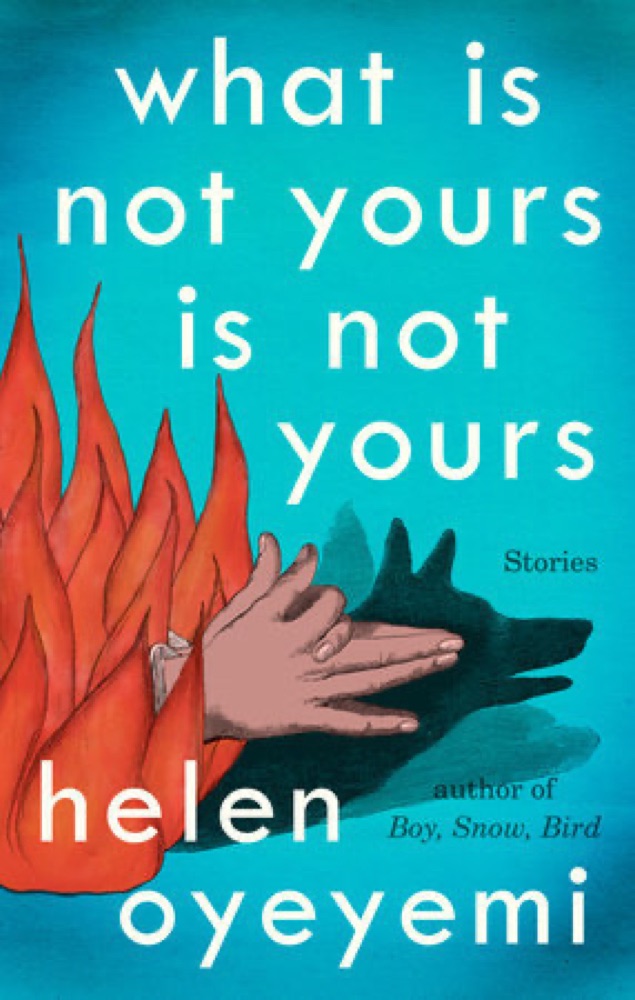 What Is Not Yours Is Not Yours
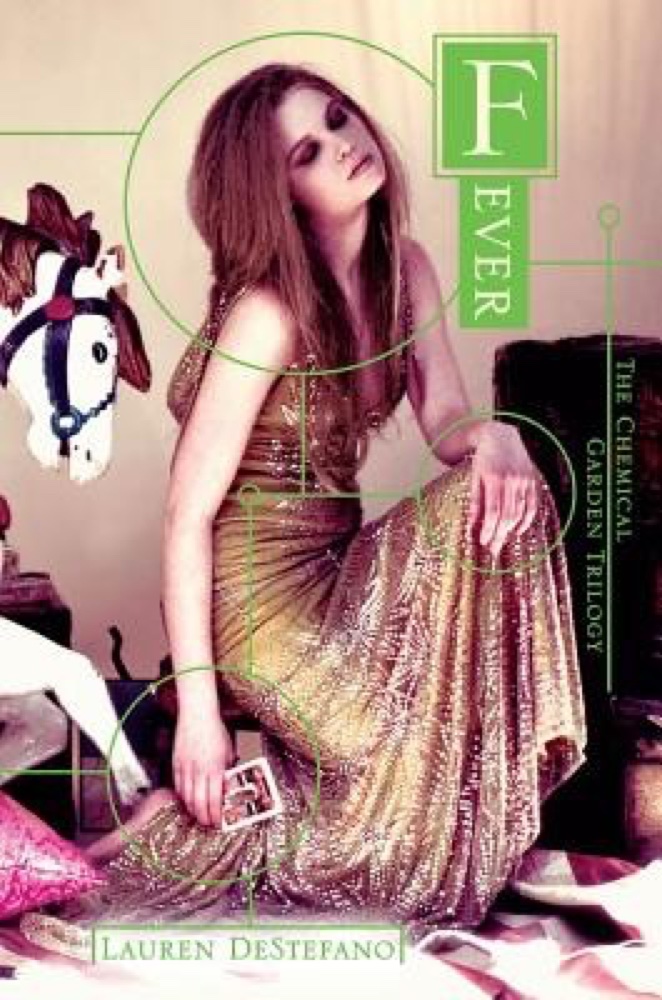 Fever
Fever
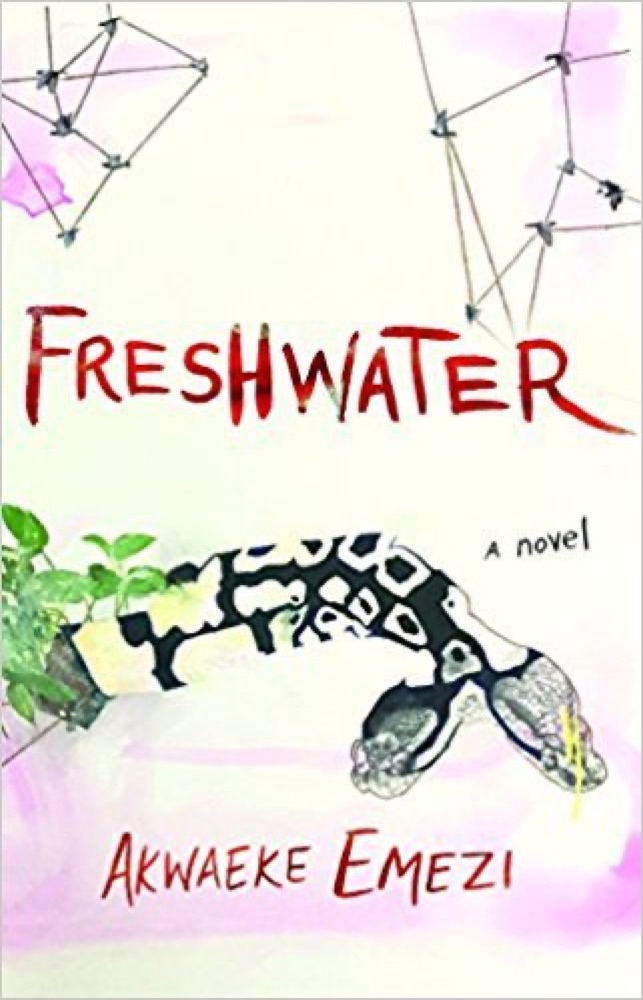 Freshwater
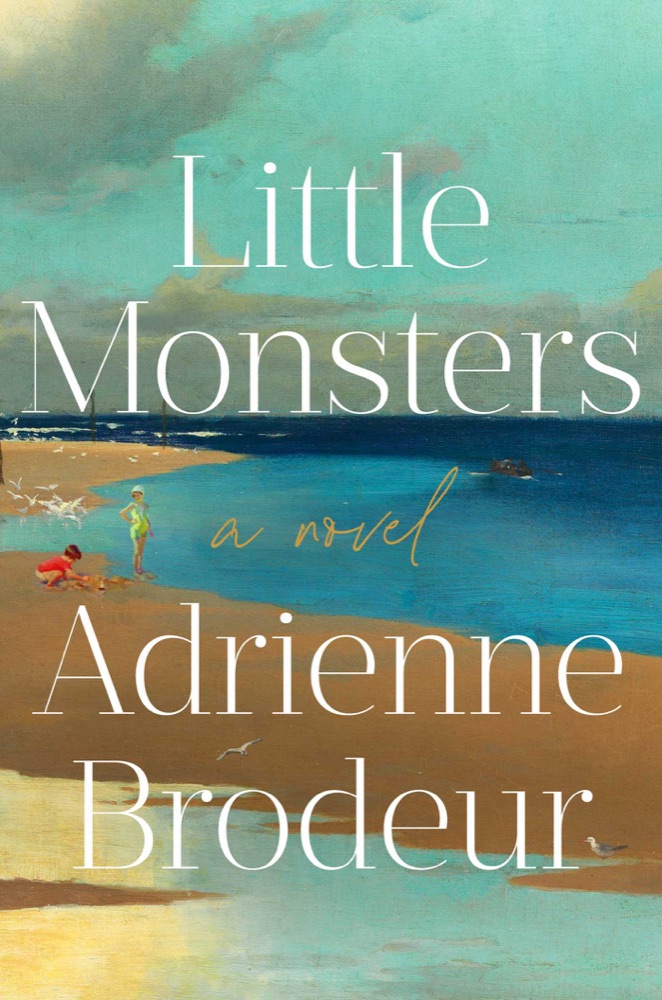 Little Monsters
 The Story of the Lost Child
 Orlando
 State of Wonder
 The Bonesetter's Daughter
 False Memory
 10 Minutes 38 Seconds in This Strange World
 A Lion Among Men
 The English Patient
 The Color Master: Stories
 Sexing the Cherry
 Bag of Bones
 Stone Mattress: Nine Tales
 1Q84
1Q84
 The Passage
 The Book of the Unnamed Midwife
 Teardrop
 A Reliable Wife
 Too Much Happiness: Stories
 Revelation Space
 The Art of Hearing Heartbeats
 Justine
 Home Fire
 Embers
 The Probable Future
 Angle of Repose
 Every Heart a Doorway
 A Conjuring of Light
 Middlesex
 Alone With You in the Ether
 Prodigal Summer
 NOS4A2
 Brick Lane
 Deerskin
 Under the Skin
 The Fates Divide
 Acacia: The War with the Mein