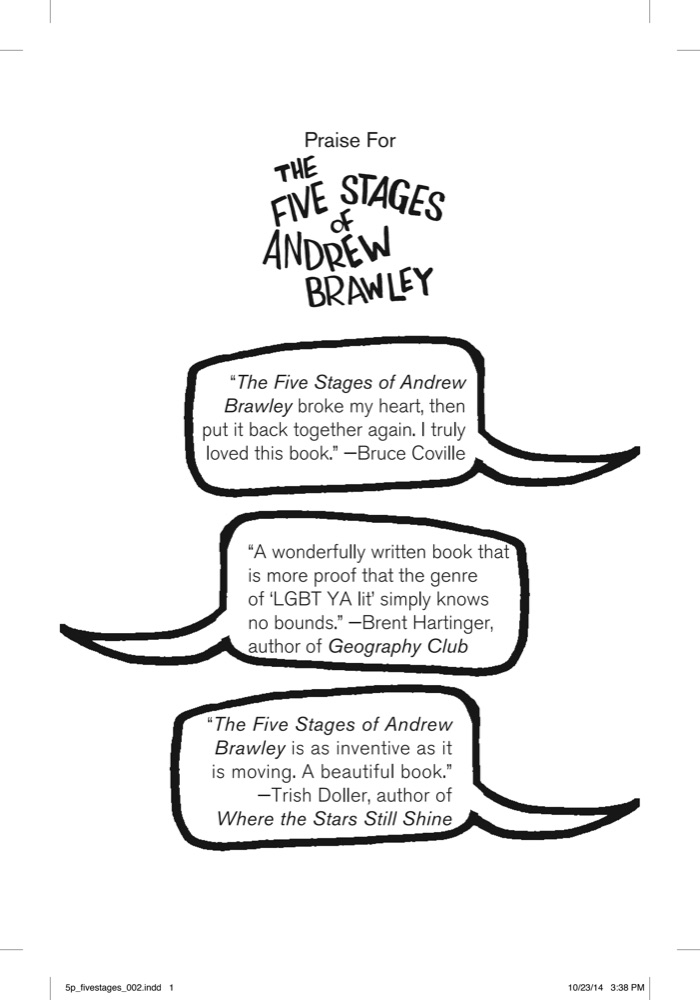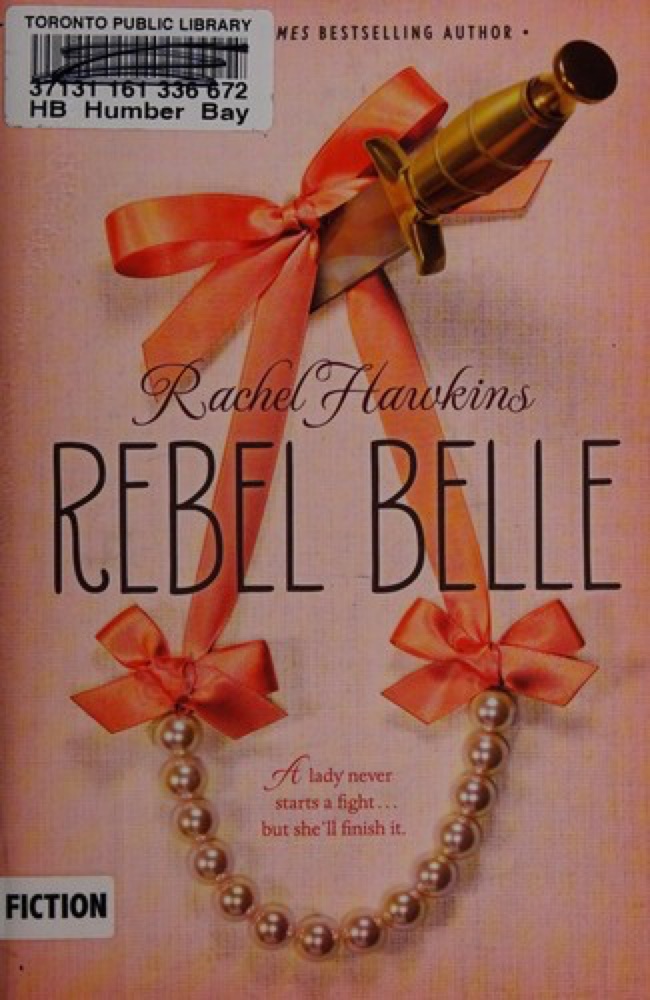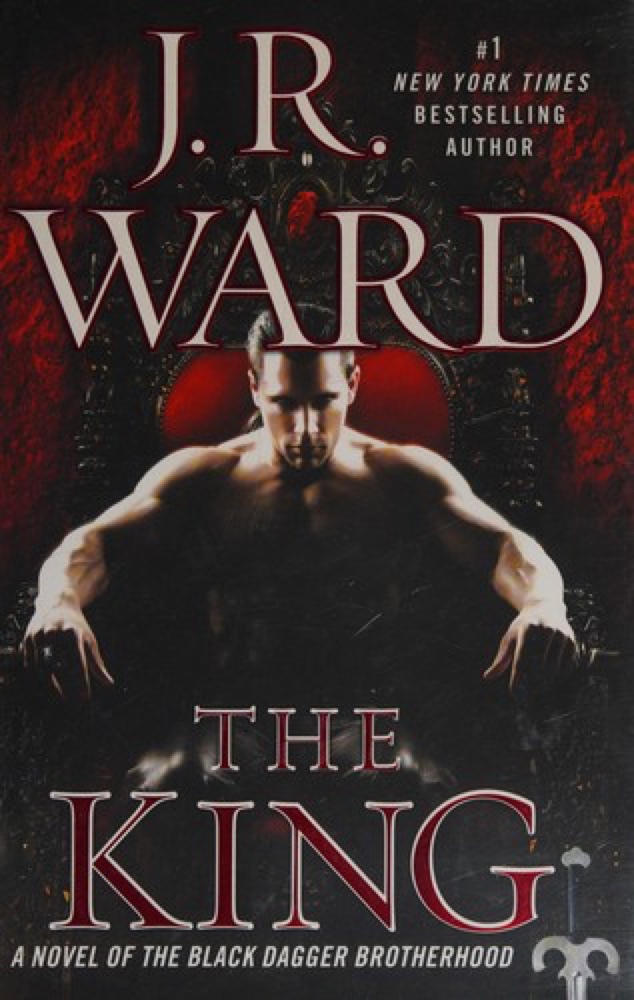


“I know,” I say, slapping the ash off my palm. The words rush from my mouth before she says them. It’s easier to hear it in my own voice. “I ruined your body. Killed your husband.”
― Shaun David Hutchinson, quote from Violent Ends
“Dad rattles the leash he brought in with him, and the noise causes an explosion of doggy joy beside me.”
― Shaun David Hutchinson, quote from Violent Ends
“My mouth fell open. “Is this real life? You’re giving me your dog?” He chuckled. “Yeah. My dog that was supposed to be the consolation prize when our parents forced me to go back to public school. My dog that sleeps in your room and that you walk and feed every day.”
― Shaun David Hutchinson, quote from Violent Ends
“I know there are some who say that because we shared a home and DNA with Kirby, my parents and I deserve to be arrested, tortured, or even killed. At”
― Shaun David Hutchinson, quote from Violent Ends
“He was part of our family, and we weren’t wrong for loving him.” Part”
― Shaun David Hutchinson, quote from Violent Ends
“If you’re ready,” I say, wiping my eyes while he blows his nose, “we should head to the funeral home. Do you think they allow dogs in there?”
― Shaun David Hutchinson, quote from Violent Ends
“Teddy complained to the camp leader that his pack was too heavy, the camp leader mocked him.”
― Shaun David Hutchinson, quote from Violent Ends
“He was . . . nice,” Teddy says. “He was really nice to me. Remember Rick?” His dad nods, frowning. “That kid was a dick.” “Well, Kirby stopped him from being a dick to me.” Something”
― Shaun David Hutchinson, quote from Violent Ends
“The victory Mark had been feeling swelled for a moment, crescendoing into a strange sort of joy. Kirby looked defeated. No, more than that. He looked broken. The expression in Kirby’s eyes dragged Mark’s joy down with it. The”
― Shaun David Hutchinson, quote from Violent Ends
“I’m saying you’re acting like a jerk, and I don’t want to hang out with a jerk.” “Are you breaking up with me?” he asked. Katelyn let out a frustrated noise. “You don’t get it at all, do you?”
― Shaun David Hutchinson, quote from Violent Ends
“POLLARD had known better, but instead of pulling rank and insisting that his officers carry out his proposal to sail for the Society Islands, he embraced a more democratic style of command. Modern survival psychologists have determined that this “social”—as opposed to “authoritarian”—form of leadership is ill suited to the early stages of a disaster, when decisions must be made quickly and firmly. Only later, as the ordeal drags on and it is necessary to maintain morale, do social leadership skills become important. Whalemen in the nineteenth century had a clear understanding of these two approaches. The captain was expected to be the authoritarian, what Nantucketers called a fishy man. A fishy man loved to kill whales and lacked the tendency toward self-doubt and self-examination that could get in the way of making a quick decision. To be called “fishy to the backbone” was the ultimate compliment a Nantucketer could receive and meant that he was destined to become, if he wasn’t already, a captain. Mates, however, were expected to temper their fishiness with a more personal, even outgoing, approach. After breaking in the green hands at the onset of the voyage—when they gained their well-deserved reputations as “spit-fires”—mates worked to instill a sense of cooperation among the men. This required them to remain sensitive to the crew’s changeable moods and to keep the lines of communication open. Nantucketers recognized that the positions of captain and first mate required contrasting personalities. Not all mates had the necessary edge to become captains, and there were many future captains who did not have the patience to be successful mates. There was a saying on the island: “[I]t is a pity to spoil a good mate by making him a master.” Pollard’s behavior, after both the knockdown and the whale attack, indicates that he lacked the resolve to overrule his two younger and less experienced officers. In his deference to others, Pollard was conducting himself less like a captain and more like the veteran mate described by the Nantucketer William H. Macy: “[H]e had no lungs to blow his own trumpet, and sometimes distrusted his own powers, though generally found equal to any emergency after it arose. This want of confidence sometimes led him to hesitate, where a more impulsive or less thoughtful man would act at once. In the course of his career he had seen many ‘fishy’ young men lifted over his head.” Shipowners hoped to combine a fishy, hard-driving captain with an approachable and steady mate. But in the labor-starved frenzy of Nantucket in 1819, the Essex had ended up with a captain who had the instincts and soul of a mate, and a mate who had the ambition and fire of a captain. Instead of giving an order and sticking with it, Pollard indulged his matelike tendency to listen to others. This provided Chase—who had no qualms about speaking up—with the opportunity to impose his own will. For better or worse, the men of the Essex were sailing toward a destiny that would be determined, in large part, not by their unassertive captain but by their forceful and fishy mate.”
― Nathaniel Philbrick, quote from In the Heart of the Sea: The Tragedy of the Whaleship Essex
“They gave no alms; in their view charity simply demoralized people. If you worked as hard as they did then you would earn as much too: it was open to everyone to do so, and if you didn’t know how to get on in life that was your own fault.”
― Władysław Szpilman, quote from The Pianist: The Extraordinary Story of One Man's Survival in Warsaw, 1939–45
“Let temporal things be in the use, eternal things in the desire.”
― Thomas à Kempis, quote from The Imitation of Christ
“Kell would say it was impossible. What a useless word, in a world with magic.”
― V.E. Schwab, quote from A Gathering of Shadows
“Reality is far more vicious than Russian roulette. First, it delivers the fatal bullet rather infrequently, like a revolver that would have hundreds, even thousands of chambers instead of six. After a few dozen tries, one forgets about the existence of a bullet, under a numbing false sense of security. Second, unlike a well-defined precise game like Russian roulette, where the risks are visible to anyone capable of multiplying and dividing by six, one does not observe the barrel of reality. One is capable of unwittingly playing Russian roulette - and calling it by some alternative “low risk” game.”
― Nassim Nicholas Taleb, quote from Fooled by Randomness: The Hidden Role of Chance in Life and in the Markets
BookQuoters is a community of passionate readers who enjoy sharing the most meaningful, memorable and interesting quotes from great books. As the world communicates more and more via texts, memes and sound bytes, short but profound quotes from books have become more relevant and important. For some of us a quote becomes a mantra, a goal or a philosophy by which we live. For all of us, quotes are a great way to remember a book and to carry with us the author’s best ideas.
We thoughtfully gather quotes from our favorite books, both classic and current, and choose the ones that are most thought-provoking. Each quote represents a book that is interesting, well written and has potential to enhance the reader’s life. We also accept submissions from our visitors and will select the quotes we feel are most appealing to the BookQuoters community.
Founded in 2023, BookQuoters has quickly become a large and vibrant community of people who share an affinity for books. Books are seen by some as a throwback to a previous world; conversely, gleaning the main ideas of a book via a quote or a quick summary is typical of the Information Age but is a habit disdained by some diehard readers. We feel that we have the best of both worlds at BookQuoters; we read books cover-to-cover but offer you some of the highlights. We hope you’ll join us.